

REVIEW · MANASLU CIRCUIT TREKS FROM KATHMANDU
Private Manaslu Circuit Trek at Himalayas
Manaslu feels quieter than most Himalayan treks. On this private, restricted route, you get Manaslu paperwork handled and a licensed guide plus first-aid tools, so you can focus on the trail and the views.
The downside is altitude and long travel days: you’ll climb toward a high pass near 5,160 m, and this trek still asks for moderate fitness and solid hiking stamina.
Key points before you go

- Restricted-area permits are included, which saves you time and paperwork in a trek that can be harder to organize.
- A government-licensed guide travels with you, and the package includes guide food and a well-equipped first aid kit with an oximeter.
- Meal plan is built into the itinerary (breakfast 13 times, lunch 13 times, dinner 12 times), so your daily budgeting is easier.
- Acclimatization is not an afterthought, with a dedicated day at Manaslu Base Camp and another in Samdo.
- You borrow key cold-weather gear if needed, including sleeping bag, down jacket, and a duffle bag (returned after the trek).
- Private trek for your group, but the trek does require a minimum of two people to book.
Why the Manaslu Circuit feels quieter than most Himalayan treks

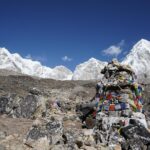
The Manaslu Circuit has that “go slower and notice more” vibe. You’re trekking in a restricted region, so you won’t get the same crowds you may find on more famous routes. Instead, you feel the rhythm of small villages, prayer wheels, and mani walls as part of the daily walk, not as a roadside photo stop.
I also like that the route is built around real changes in terrain. You move from lower, warmer areas up through alpine country, and the views gradually sharpen into Manaslu-range panoramas. One day you’re thinking about foot placement on a narrow path, and the next you’re looking out from higher ground where the air feels thin and still.
You can also read our reviews of more private tours in Kathmandu
Price and what is included for $1,500 per person
Let’s talk value, because $1,500 can feel steep until you break down what you’re actually paying for. This price includes much of the “hard work” parts: restricted trekking permits and conservation permits, a professional trekking guide (licensed, with insurance, plus guide food), and tea-house style lodging during the trek.
You also get transport that matters. The package covers Kathmandu to Machha Khola by bus at the start, and Dharapani to Kathmandu by bus at the end. That matters because this trek is not a quick shuttle. Even though the hiking is the headline, the ground logistics still take time.
Meals are another big value piece. You get breakfast 13 times, lunch 13 times, and dinner 12 times during the trek. What’s missing is also clear: all meals in Kathmandu are not included, and drinks during trekking are not included. If you like hot tea, soft drinks, or extra snacks, budget for that separately.
Two things you should consider when judging the price:
- Porter service is not included. If you want your bag carried, you’ll need to arrange that yourself (or consider hiring one separately).
- Personal travel insurance is not included, and rescue or evacuation is also not included. The package says a helicopter can be arranged in an emergency, paid through your travel insurance, so your insurance choice is not a minor detail.
Getting to the trail from Kathmandu, then landing at Machha Khola
The trek starts with a long but necessary day of travel. Day 1 is a drive from Kathmandu toward Machha Khola, typically about 7 to 8 hours, and your starting altitude is around 1,400 m. You’ll feel it in your legs at first, but that’s why Day 2 is a walking day that eases you in.
On Day 2, you’ll walk about 6 to 7 hours, reaching around 1,410 m at Jagat. This is the kind of day that helps you get comfortable with the rhythm of the trail and the local trail conditions. The route crosses the Tharo Khola, you pass through Khorlabesi, and there’s even a hot spring along the way. That’s a very practical bonus on a first real hiking day because soaking sore feet can help you avoid “Day 2 stiffness” turning into a week-long problem.
Day-by-day trek walkthrough from Jagat up to Larkya La and down to Dharapani

Here’s the trek in plain terms, with what each section is really about. I’m using the altitudes you’re given to help you picture how the air changes.
Day 1: Kathmandu to Machha Khola, intro altitude around 1,400 m
You drive to Machha Khola, setting up the trek’s start. This is the day to hydrate, eat normally, and keep your pack organized so you aren’t fiddling with gear while also trying to recover from travel.
You can also read our reviews of more hiking tours in Kathmandu
Day 2: Jagat area around 1,410 m, narrow trail and a hot spring
You walk 6 to 7 hours with a steady climb. The trail is narrow and crosses the Tharo Khola, then heads toward Khorlabesi. A hot spring stop appears along the way, which is great if your guide timing allows a quick pause.
Consideration: narrow sections plus early altitude make good footwear non-negotiable.
Day 3: Toward Pewa, about 1,860 m (walking plus travel time)
Day 3 includes about 7 hours of travel and reaches around 1,860 m at Pewa. It’s a transition day that moves you deeper into the circuit and toward higher villages. The main value here is gradual progress without jumping straight into the toughest altitude zones.
Day 4: Scenic trek toward Namrung, up to about 2,630 m
You leave Pewa and move to Namrung, reaching around 2,630 m. This is another day where you’ll likely feel the change in vegetation and the air. It’s also a day that tends to reward steady hiking, because it builds your confidence on uneven surfaces.
Day 5: Shorter day toward Lho, about 3,180 m
Day 5 is described as relatively short (about 4 hours of travel time) and reaches about 3,180 m at Lho. Even though it’s shorter, it’s still important. This is where you start noticing that each step costs more effort, and you learn how to pace so you don’t arrive breathless and stressed.
Day 6: From Lho to Sama Gaon, about 3,530 m
Day 6 heads to Sama Gaon and reaches around 3,530 m. This is still in the “work your legs” phase, but you’re closer to the big acclimatization blocks now. If you’re the kind of hiker who wants to charge uphill, this is where you resist that urge.
Day 7: Acclimatization at Manaslu Base Camp, around 4,400 m
This day is specifically an acclimatization day, reaching about 4,400 m at Manaslu Base Camp. The idea is you’re gaining altitude without forcing your body to keep climbing the same day.
You’ll likely use this time to rest, adjust to the cold nights, and let your body adapt. This is also when you’ll feel the importance of having a plan. “Just walk more” is not the strategy on this trek.
Day 8: Samdo and the route toward higher terrain, up to about 3,690 m
Day 8 is a 4 to 5 hour walk, and your max altitude is around 3,690 m at Samdo. Even though you’re not at your highest altitude today, you’re moving through a key section of the circuit, descending toward the Budhi Gandaki River and heading back toward base camp areas while also starting to align with the Larkya La route.
This is a useful kind of day, because it gives you movement without constant steepness.
Day 9: Extra day in Samdo for acclimatization, excellent views toward Tibet trade passes
Day 9 keeps you in Samdo, with the max altitude again around 3,690 m. This is where you get flexibility. The plan includes exploring the village and possibly hiking up the valley to a trade pass area toward Tibet for excellent views.
That mix is practical: a bit of “see more” time, without a heavy push higher in altitude.
Consideration: this is also a day where you choose how ambitious to be. If you’re feeling off, keep it light.
Day 10: Trek toward Dharamshala or Larkya Base Camp, max around 4,460 m
On Day 10 you walk about 4 to 5 hours toward Dharamshala, also described as Larkya Phedi or Larkya Base Camp. You cross a wooden bridge over the Budhi Gandaki and then cross two streams.
This day sets up the most demanding section. Crossing points matter when the ground is cold and conditions feel slick. Your pace here affects how you feel on Day 11.
Day 11: Larkya La Pass day, max around 5,160 m
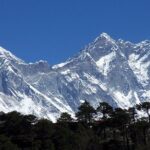
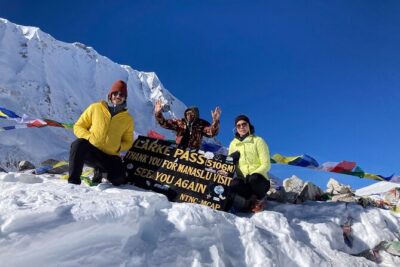
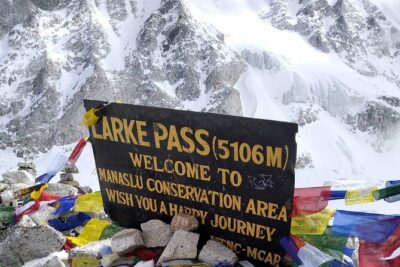
This is the big one. You walk about 7 to 8 hours to reach the pass area at around 5,160 m, described as Larkya La Pass. The route goes through a valley with great views of Cho Danda and Larkya Peak, then heads through moraines (that rough, jumbled ground left behind by glaciers).
This is where you need a strategy: take it slow, keep breathing steady, and focus on consistent steps. The pass day is not the day to “prove something.”
Day 12: Descend toward Bimthang, travel time about 9 hours, max around 3,720 m
Day 12 is mostly return movement. You travel about 9 hours and reach around 3,720 m at Bimthang. It’s a descending route, and that matters for your overall fatigue. After the pass, a controlled descent often feels like relief, but still keep attention on footing.
Day 13: Finish at Dharapani, then back to Kathmandu, max around 1,963 m
On the final day you travel about 8 to 10 hours to Dharapani, reaching around 1,963 m. It’s a long wrap-up day, but it’s also a strong payoff day: you’ve come down into easier air, and the finish line feels earned.
The acclimatization rhythm that matters most at 4,000 m and up

What I like about this trek is the “time you’re not climbing” days are built in, not optional. You get an acclimatization day at Manaslu Base Camp around 4,400 m, then another acclimatization-focused day in Samdo. That means your plan respects what your body needs after you’ve gained altitude.
This matters because the Manaslu region is restricted, and you’re heading into high terrain toward Larkya La. There’s no trick that replaces slow, steady climbing. The schedule here gives you the right rhythm: climb, stabilize, explore lightly, then move up again.
If you want a simple rule: on this trek, you treat rest days as part of the climb, not time to “catch up” on extra mileage.
Lodges, meals, and how comfort is handled on the circuit

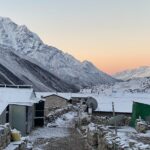
You’re staying in tea-house style lodges during the trek. That’s not luxury, but it’s practical and predictable, and the package includes it as part of the trek cost. You’ll also get breakfasts and lunches and dinners on the trail, which helps keep the day simple.
Nighttime comfort depends mostly on cold. That’s why the included cold-weather gear loan is such a big deal: the package can provide a sleeping bag, down jacket, and a duffle bag if necessary (returned after the trek). If you already own quality gear, you might not need all of it. If you don’t, this inclusion can save you from buying gear you’ll never use again.
One thing to watch: drinks during trekking are not included. That doesn’t mean you won’t find tea or hot drinks, but it does mean you should plan a small daily budget for extra warmth and hydration.
Your licensed guide, safety tools, and what to expect in an emergency

This is a private trek, but it still runs like a professional operation. You get a professional trekking guide with government license and the guide has insurance and food included. That’s not just paperwork. A licensed guide is also the person managing pacing, route choices, and safety decisions.
Safety is also supported with equipment: the trek includes a well-equipped first aid kit and an oximeter. That’s useful because altitude symptoms can be subtle early, and having the tool matters for monitoring.
In a true emergency, the package states that a helicopter service can be arranged and paid through your travel insurance. That last part is key. If you take only basic coverage, double-check it covers evacuation. This trek is in a remote restricted area, so assume “getting out fast” is not guaranteed unless your insurance supports it.
In feedback for this trek style, guides like Yaka and Raj have been praised for caring, keeping pace comfortable and safe, and pairing hiking rhythm to the group. Laxman is also mentioned in relation to carrying bags, which highlights a real comfort factor: you can travel lighter, and that reduces strain when altitude stacks up.
Who this trek suits best, and who should think twice

This trek is aimed at people with moderate physical fitness. It’s also in a restricted area with a minimum group requirement, so you should expect there must be at least two people to book.
This trek suits you if:
- You like a calmer pace and want fewer crowds.
- You’re okay with tea-house style lodging and meals already planned.
- You understand acclimatization is part of the journey, not wasted time.
- You want a high pass day and you’re planning for the physical demand.
You should think twice if:
- You’re not comfortable with long walking days and long travel days.
- You have limited hiking experience at altitude.
- You rely on a porter for every kilogram, since porter service is not included in the package.
Should you book this private Manaslu Circuit trek?
I’d say book it if you want a structured, safety-minded way into the Manaslu region, with permits handled, meals built in, and acclimatization scheduled at the right times. The value is strongest when you compare what’s included versus what you’d otherwise spend separately: guides, lodging, permits, and most trail meals.
Hold off or ask more questions if you know you’ll want porter support, because that’s not included. Also, treat travel insurance as a non-negotiable purchase for this kind of high-altitude trek, not an afterthought.
If you’re mentally prepared for a real mountain circuit, this itinerary is the kind that gets you to Larkya La and then brings you down with your body still in one piece.
FAQ
What permits are included in the Manaslu Circuit trek?
The package includes the Manaslu Restricted Permit, Manaslu Conservation Area Permit (MCAP), and Annapurna Conservation Area Permit (ACAP).
Are meals included on the trek?
Yes. The trek includes 13 breakfasts, 13 lunches, and 12 dinners. Meals in Kathmandu are not included.
How high do you go on the itinerary?
The itinerary lists a maximum altitude of about 5,160 m at Larkya La Pass.
Is this a private tour?
Yes. It is private, meaning only your group will participate. The trek also requires a minimum of two people to book.
What transport is included?
Kathmandu to Machha Khola is included by bus at the start. Dharapani to Kathmandu is included by bus at the end.
What safety and emergency support is included?
The package includes a well-equipped first aid kit and an oximeter. In an emergency, a helicopter service can be arranged and paid through your travel insurance.
More Hiking & Trekking Tours in Kathmandu
More Private Tours in Kathmandu
More Tour Reviews in Kathmandu
Not for you? Here's more nearby things to do in Kathmandu we have reviewed


Manaslu Circuit Treks from Kathmandu, compared.
 ★ 5.0Manaslu Circuit Trek (15 Days)From $1,65750 reviews
 ★ 5.016 Day Private Manaslu Circuit Trek from KathmanduFrom $1,13542 reviews
 ★ 5.0Manaslu Circuit Trek 13 DaysFrom $1,40030 reviews
 ★ 5.010 Days Manaslu Circuit Trek in Larke La PassFrom $1,04930 reviews
 ★ 5.0Manaslu Circuit Trek 8th Highest in the WorldFrom $1,60014 reviews
 ★ 5.0Dancing in the Manaslu Circuit TrekFrom $1,39010 reviews
14 days Manaslu Circuit TrekkingFrom $2278 reviews
★ 5.0Dancing in the Manaslu Circuit TrekFrom $1,39010 reviews
14 days Manaslu Circuit TrekkingFrom $2278 reviews
 ★ 5.0Manaslu Circuit Trek to the Beauty of 8th Highest MountainFrom $3657 reviews
Browse the lists this tour appears in