
REVIEW · MANASLU CIRCUIT TREKS FROM KATHMANDU
Manaslu Circuit Trek (15 Days)
Manaslu Circuit feels quieter than the big-name treks. This 15-day route mixes serious mountain days with Tibetan-influenced villages, plus a practical support system that keeps logistics clear from Kathmandu onward. Safety planning and permit handling are handled up front, so you spend more energy on the trail and less on guesswork.
What I really like is how the trek is paced with built-in acclimatization days, not just a straight line toward Larke Pass. I also appreciate the group size limit of 15 travelers max, along with a porter system designed around a 2 trekkers to 1 porter ratio. One consideration: meals during the trek are not included, so you’ll want a realistic budget for teahouse breakfasts and dinners plus hot drinks.
Key points before you go
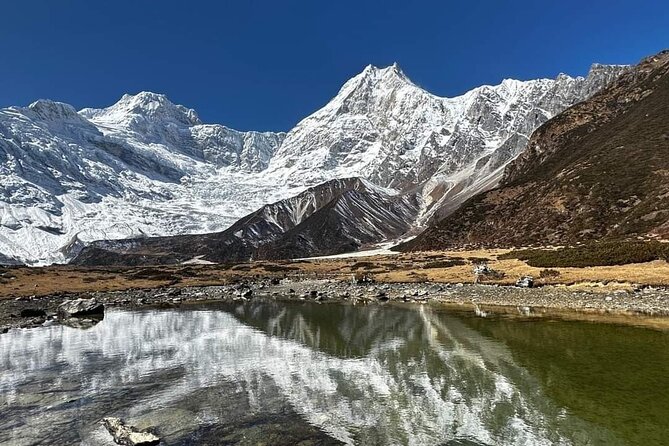
- Quiet, remote trail that swaps crowds for long views and slower village life
- Acclimatization days in Samagaun and Dharamsala that help you handle the high pass approach
- Licensed, first-aid trained guide plus assistant support for a safer group rhythm
- Original passport required for the Manaslu restricted-area paperwork
- Teahouse stays are standard, with extra costs likely for charging, Wi-Fi, and hot showers
- Porter and bag-carry system at 2 trekkers to 1 porter, so you can travel lighter
Why Manaslu feels different on a 15-day circuit
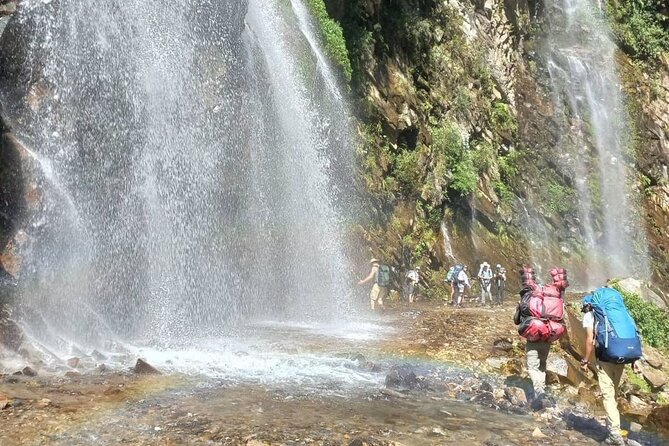
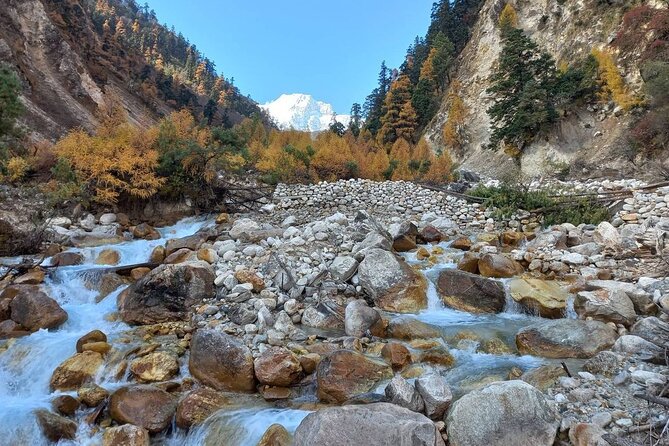
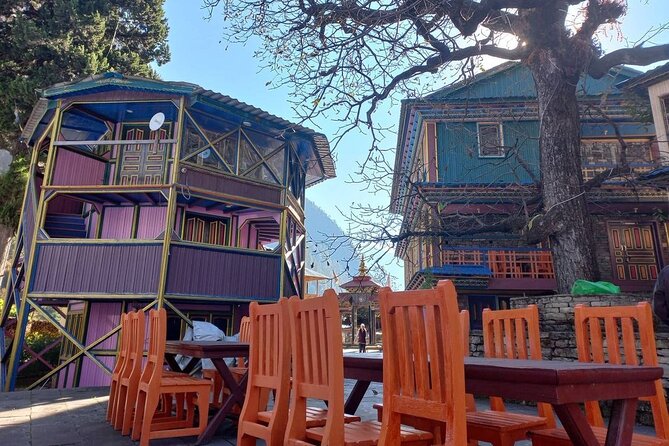
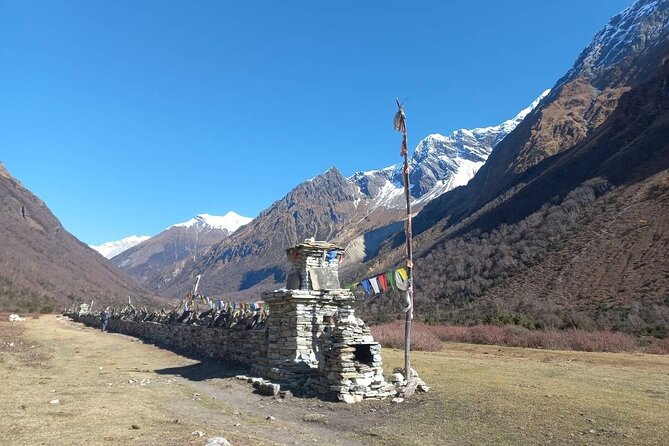
If you want Nepal’s mountains without the nonstop traffic of the best-known routes, the Manaslu Circuit delivers. The itinerary is built around the Budhi Gandaki River valley first, then shifts you gradually toward higher, more alpine terrain and monastery stops. You’ll also see the Nubri region’s Tibetan influence in daily life, from stone houses to mani walls.
I also like that the trek’s “story” changes each phase. You start in subtropical forests and river paths, then move into dry yak pasture country, and finally hit the big pass day with a predawn start. That means you’re not just collecting altitude, you’re collecting variety.
The practical upside is fewer stress points. A support team handles the chain from Kathmandu to the first trekking village, then back to Kathmandu at the end, so you’re not fighting transport on your own.
You can also read our reviews of more hiking tours in Kathmandu
Price and what you actually get for $1,657.50
At $1,657.50 per person, this isn’t a budget trek, but it is also not “everything included at any cost.” The value comes from the heavy logistics that are expensive and annoying to DIY in a restricted area: permits, licensed guiding, porter support, and transport that gets you deep into the route.
Here’s what’s included that matters on the trail:
- Kathmandu hotel in Thamel (3-star) with breakfast
- Standard teahouses during the trek
- Private transport for airport arrival and departure, plus drop from Kathmandu to Machha Khola and from Behisahar to Kathmandu
- Shared jeep from Dharapani to Besisahar
- A government-licensed, first-aid trained trek guide
- Porters with a 2 trekkers to 1 porter ratio
- 1 assistant guide per 5 trekkers
- Permit fees for Manaslu Conservation Area, Annapurna Conservation Area, and a Special Restricted Area Permit
- Insurance coverage for the trekking crew (guides, assistant guides, porters)
What is not included (and you should plan for):
- International airfare
- Nepal visa fee (noted as USD 30 per person)
- Travel insurance for you, covering medical and helicopter evacuation up to 5200 m
- Trekking meals during the route
- Drinking water
- Tips/gratuities (not mandatory, but expected)
- Extra nights in Kathmandu if the schedule shifts
- Hot showers, charging, and Wi-Fi (usually extra)
That meals gap is the main “budget surprise.” Your trek day will still be warm and friendly, but you’ll pay for breakfast and dinner at the teahouses, so pack cash planning into your budget.
Permits and passport handling in a restricted area
This trek is in a zone where paperwork is not optional. The experience includes the permits you need, but you also need to cooperate on timing and documents.
They require your original physical passport and two passport-sized photos for the Nepal immigration process. The team collects your passport in Kathmandu as part of permit issuance, so don’t plan to keep it with you right away. If you’re the type who likes to carry documents on your person at all times, plan to make an exception for the permit window.
The included permits cover the core administrative requirements:
- Manaslu Conservation Area Permit
- Annapurna Conservation Area Permit
- Special Restricted Area Permit (through immigration)
If you’re traveling with limited flexibility in Kathmandu, this is still manageable, but you need to be on time for the permit day and photo submission.
Gear, fitness, and the altitude reality check
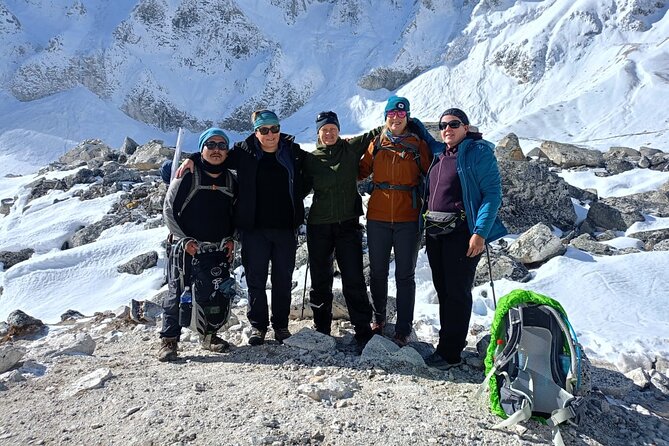
The route requires moderate physical fitness, which usually means you should be comfortable with long walking days and uneven stone paths. Several days list full-day treks in the 6 to 8 hour range, plus real elevation gain on multiple segments.
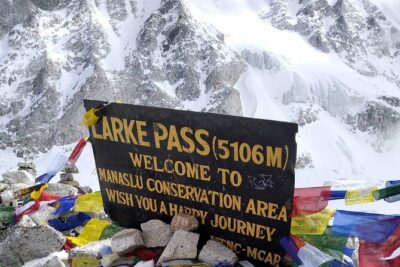
The itinerary also signals that the highest effort comes at the pass approach. Day 12 starts before dawn from Dharamsala, and the route around Larke Pass is typically where people feel it most. That’s not just about stamina, it’s also about pacing, layers, and staying mentally calm when the air feels thinner.
For safety, the setup includes altitude briefings and emergency protocols as part of how the company runs the trek. On top of that, your travel insurance needs to cover medical and helicopter evacuation up to 5200 m altitude. Even if you feel fine in Kathmandu, make sure your policy matches that ceiling.
Practical tip: if you’ve never done a high pass trek, prioritize good boots and traction. A lot of the “hardness” on Larke Pass day is slippery footing, not just leg fatigue.
Getting from Thamel to the trail and back
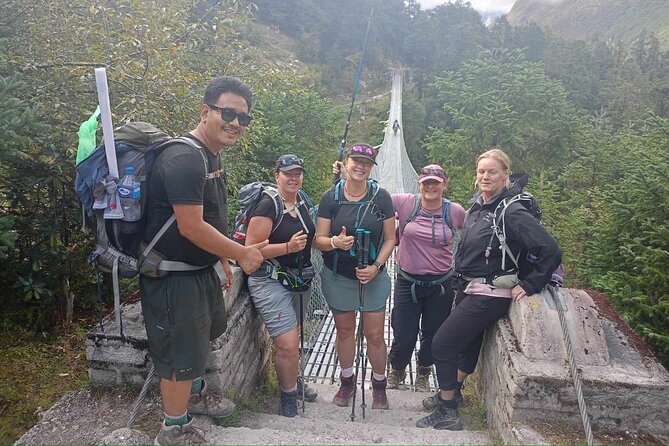
You begin and end in Thamel, Kathmandu. After you land at Tribhuvan International Airport, you’re met and transferred to your Kathmandu hotel. Thamel is convenient because you can handle gear odds and ends without spending hours commuting.
Then the logistics shift into overland travel:
- Day 3 is the long scenic drive from Kathmandu to Machha Khola
- The trek finishes at Dharapani, then you board a shared jeep to Besisahar
- From there, you transfer back to Kathmandu
Why I like this approach: it reduces the number of separate “find-your-own-ride” moments. For a remote circuit, those moments are where plans can get messy.
One more point that matters: the experience has a maximum of 15 travelers. Smaller groups usually mean less waiting at narrow trail sections and a smoother teahouse rhythm.
Day-by-day: from Kathmandu permits to Larke Pass and Dharapani exit
Below is what the trekking rhythm looks like, and what each part is doing for you.
Day 1: Kathmandu arrival, then settle in Thamel
You land at Tribhuvan International Airport, get greeted with Namaste, and transfer to your Kathmandu hotel. After check-in, the rest of the day is yours. This is your chance to sleep early, hydrate, and confirm your packing for cold nights.
Day 2: Kathmandu Valley, permits and document handoff
The focus is trek preparation while permits are issued. You’ll provide your physical passport and two photos, because Nepal requires originals for the immigration permit process. If you like to double-check details, this is where you do it, because after this, you’re moving toward the trail.
Day 3: Kathmandu to Machha Khola, river-valley entry
You drive from Kathmandu to Machha Khola through a cross-section of Nepal’s terrain. It’s a travel day, but it sets expectations for what’s coming: river valleys, village life, and gradual trail energy.
Day 4: River gorge walking, Tatopani area, and the reach to Jagat
You move along the narrow, rocky paths beside the Budi Gandaki River. You pass Tatopani, a natural hot springs site, and then continue through Dobhan near river confluences. The day ends at Jagat with a listed trek of around 15 km and about 600 m ascent.
What to know: it’s not a “big altitude day,” but it can feel rugged because river-edge paths often mean uneven footing and frequent stepping around stones.
Day 5: Jagat to Deng, plus the Salleri ramp-up
Today’s trek is about 18 km, listed at 7 to 8 hours, with roughly 1,050 m ascent and 400 m descent. After Jagat, the trail climbs gradually through subtropical forest toward Salleri, then continues on to Deng.
This is one of those days where you’ll feel how the trek gradually swaps warm forest air for cooler high-valley air.
Day 6: Deng to Namrung via pine and rhododendron
You ascend through mixed pine and rhododendron forest, passing small settlements like Bihi and Rana with Tibetan-influenced stone houses. You reach Namrung after a long hiking day, listed at about 19 km and 7 to 8 hours.
This stretch matters because it teaches your legs how switchbacks feel, and it gives you repeated exposure to trekking rhythm before the higher stages.
Day 7: Lihi, yak pastures, and terraced farming
The trail rises around 700 m and descends about 100 m. Expect terraced fields, forested switchbacks, and yak pastures as you follow a linear elevation gain toward Lihi.
What I like here is the cultural texture. This is where the trek starts to feel like daily life in the hills, not just a scenic hike.
Day 8: Shyala and Samagaun, with big mountain time
You first reach Shyala, a high-altitude village surrounded by peaks like Manaslu, Himalchuli, Peak 29, and Ngadi Chuli. After Shyala, you continue to Samagaon (Samagaun), a major village in the Nubri Valley.
This is a key acclimatization-feel day because the trek moves toward higher altitude but also offers a change in how the air and views behave. If you’re sensitive to cold, start layering early.
Day 9: Pungyen Gompa side hike, then overnight Samagaon
You do a 3 to 4 hour roundtrip walk to Pungyen Gompa, perched on a ridgeline with sweeping views of Manaslu and surrounding peaks. Then you return to Samagaon for the night.
This is one of the best “soft acclimatization” patterns: you move up, but you don’t commit to a huge pass push that day.
Day 10: Samagaon to Samdo, yak pastures and dry terrain shift
You descend gently to cross the Budhi Gandaki River on a wooden bridge, then climb steadily past dry yak pastures and mani walls. You transition further into higher Himalayan conditions and reach Samdo.
This is a day where your sense of temperature changes quickly. The trek starts to feel more exposed, so wind protection becomes more important.
Day 11: Samdo to Dharamsala, short but crucial prep
This is a short acclimatization hike before Larke Pass. The trail ascends through rocky alpine terrain with sparse vegetation and sweeping views. You reach Dharamsala with time to recover.
Why it matters: Dharamsala is a staging point. Getting there rested is not a luxury, it’s how you survive the next day more comfortably.
Day 12: Early start from Dharamsala, Bimthang day and the toughest push
Day 12 is described as the most demanding and rewarding day. You start before dawn from Dharamsala and climb over rocky moraine and glacier-draped terrain. The day is linked to the Larke Pass approach and ends at Bimthang.
Tip for this kind of day: treat it like a controlled climb, slow and steady, and don’t compare your pace to others. The cold and steep parts usually arrive faster than your brain expects.
Day 13: Bimthang to Dharapani, down from alpine scrub to forest
You descend through varied terrain, transitioning from alpine scrub into dense pine, rhododendron, and oak forests. You pass Yak Kharka, a seasonal grazing area where herders bring live animals.
This is your “legs recover, lungs breathe” day. It still has effort in it, but it usually feels more manageable after the pass approach.
Day 14: Dharapani to Kathmandu, then reset in Thamel
After breakfast, you take a shared jeep ride from Dharapani toward Besisahar, then continue back to Kathmandu. The road is described as bumpy but scenic, passing through Tal village and cascading waterfalls.
This day is surprisingly valuable because it gives you a mental break after trekking. Use it to eat well, hydrate, and get some sleep.
Day 15: Kathmandu wrap-up, last hours on your schedule
After breakfast, you have time depending on flight. You can use it for last-minute Thamel exploring and café time while the team ensures your return is handled.
Teahouses, meals, and water: where your comfort budget goes
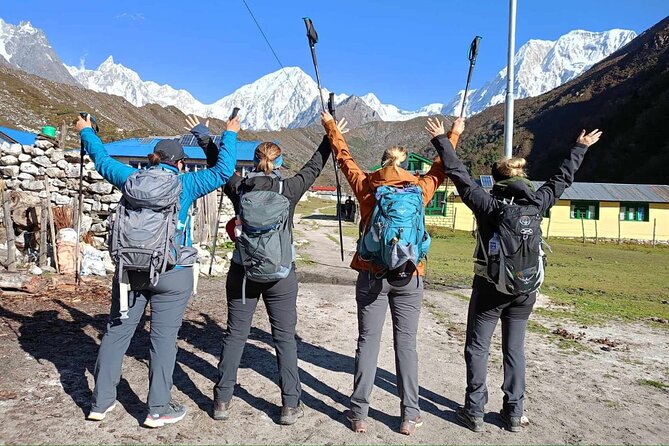
During the trek, you stay in standard teahouses, which usually means basic beds, shared dining spaces, and simple hot meals for extra cost. The important point is that meals during the trek are not included. In Kathmandu, hotel breakfast plus a welcome dinner and farewell dinner are included.
So plan for daily food costs. A smart strategy is to eat breakfast early, carry snacks you like, and be consistent about hydration. When the pass day hits, appetite can go weird, but your body still needs fuel.
Water is also on you. Drinking water is not included, and you’re advised to bring a filter bottle or purification tablets. This is one of those small packing choices that prevents big stomach problems later.
Also budget for the add-ons you might want:
- hot showers typically cost extra
- battery charging and Wi-Fi usually cost extra
Guides and porters: the safety-first part that people remember
A lot of treks list names and logos. What matters is how the day runs.
This experience uses a professional, government-licensed, first-aid trained trek guide, plus 1 assistant guide per 5 trekkers. That ratio matters on narrow sections and during altitude decisions, because it reduces the “everyone panic at once” effect. You also get porters to carry your overnight bag at a 2 trekkers to 1 porter ratio.
The included insurance coverage is for the trekking crew, which helps the operation stay responsible in the background. Your responsibility is matching travel insurance that covers helicopter evacuation up to 5200 m.
The most praised part in past experiences is the human side: clear pre-arrival communication and attentive guidance on the trail. The operations team support has included people like Prashant and Prem, and guidance teams have included Ishwor Rai, Raj Rai, Tshering, and Pemba Sherpa. There are also references to organizers such as Puspa and Dhan Bir Rai.
Even without seeing the back office, those names point to a repeatable pattern: organized logistics, calm safety focus, and a guide who checks in rather than just walking ahead.
Three moments to plan for mentally
High-altitude treks are physical, but they’re also mental games. These are the parts of the route that tend to anchor that mindset.
The early rhythm of the Budhi Gandaki River valley
Your first days follow river-edge trails and villages like Jagat, Deng, and Namrung. It’s steady work that teaches pacing before the pass day arrives.
The monastery and viewpoint break at Pungyen Gompa
The side hike from Samagaun to Pungyen Gompa is a classic altitude-compatible effort. You get views, culture, and movement without the intensity of a full pass day.
The Larke Pass approach day
Day 12 starts before dawn, with rocky moraine and glacier-draped terrain. This is where you should stop overthinking gear and just execute what you practiced, layers on, pace slow, and keep breathing evenly.
Who should book, and who should consider a different trek
You’ll likely love this trek if:
- you want a remote, less-crowded alternative to Nepal’s most famous circuits
- you’re comfortable with long walking days in changing terrain
- you like Tibetan-influenced culture and village stops, not only summit talk
- you want a guided group with assistant support and porter help
You might reconsider if:
- you hate planning for extra trek meals, because they’re not included
- you are unsure about high pass trekking, especially with cold predawn starts
- you need frequent hot showers, charging, or Wi-Fi, since those are extra at most teahouses
This is a strong choice for couples, small groups of friends, and solo travelers who want a structured plan with real local support.
Should you book this Manaslu Circuit Trek?
Book it if you want a well-run, smaller-group Manaslu Circuit with real attention to safety, acclimatization, and logistics from Kathmandu to the trail. The included permits, first-aid trained guiding, assistant support, and porter ratio mean your day-to-day effort stays focused on walking, not organization.
Don’t book it on autopilot if you’ve never budgeted for trek meals and cold-weather comfort. With teahouse meals not included and water not provided, your comfort will depend on what you bring and what you’re ready to pay day by day.
If you’re the type who likes fewer crowds, more Tibetan-influenced culture, and a route that feels like a true circuit rather than a checklist, this one deserves a spot on your shortlist.
FAQ
How do you handle Manaslu permits, and why do you need my original passport?
The team collects your original physical passport and two passport-sized photos in Kathmandu so the permits can be issued through Nepal’s immigration process. You’ll need to be ready to hand over the document during the permit preparation day.
What permits are included in the trek price?
The included permits are a Manaslu Conservation Area Permit, an Annapurna Conservation Area Permit, and a Special Restricted Area Permit issued through Nepal’s immigration department.
Are meals included during the trek?
No. Meals during the trek are not included. In Kathmandu, hotel breakfast is included, along with a welcome dinner and a farewell dinner.
Is drinking water included?
No. Drinking water is not included. The guidance is to bring a filter bottle or purification tablets.
What accommodation can I expect on this trip?
In Kathmandu, you stay in a 3-star hotel in Thamel with breakfast. On the trek, you stay in standard teahouses.
What is the maximum group size?
This experience has a maximum of 15 travelers.
What altitude coverage do I need in my travel insurance?
Your travel insurance must cover accidental and medical coverage and helicopter evacuation up to 5200 m in altitude.
How many guides and porters are provided?
You get a government-licensed first-aid trained trek guide, plus 1 assistant guide per 5 trekkers. Porters carry your overnight bag at a 2 trekkers to 1 porter ratio.
More Hiking & Trekking Tours in Kathmandu
More Tour Reviews in Kathmandu
Not for you? Here's more nearby things to do in Kathmandu we have reviewed


Manaslu Circuit Treks from Kathmandu, compared.
 ★ 5.016 Day Private Manaslu Circuit Trek from KathmanduFrom $1,13542 reviews
 ★ 5.0Manaslu Circuit Trek 13 DaysFrom $1,40030 reviews
 ★ 5.010 Days Manaslu Circuit Trek in Larke La PassFrom $1,04930 reviews
 ★ 5.0Manaslu Circuit Trek 8th Highest in the WorldFrom $1,60014 reviews
 ★ 5.0Dancing in the Manaslu Circuit TrekFrom $1,39010 reviews
14 days Manaslu Circuit TrekkingFrom $2278 reviews
★ 5.0Dancing in the Manaslu Circuit TrekFrom $1,39010 reviews
14 days Manaslu Circuit TrekkingFrom $2278 reviews
 ★ 5.0Manaslu Circuit Trek to the Beauty of 8th Highest MountainFrom $3657 reviews
 ★ 5.0Manaslu TrekkingFrom $1,9005 reviews
Browse the lists this tour appears in