

REVIEW · MANASLU CIRCUIT TREKS FROM KATHMANDU
Manaslu Circuit Trek – 14 days of Himalayan Adventure
One high pass, a whole lot of mountain time, and it is not crowded. The Manaslu Circuit Trek puts you in the Manaslu Conservation Area with views of Mt. Manaslu plus Tibetan Buddhist culture along the way. I like that the route is planned for real trekking rhythm, not just check-the-box scenery.
What I really like is the mix of big mountain moments and everyday details: Budhi Gandaki River valleys, rhododendron forests, Tibetan-influenced villages, and monastery stops. Another strong point is the team support, including a govt.-registered guide and equipment like down sleeping bags and trekking poles, plus an oxi-meter to monitor oxygen saturation.
The main drawback to consider is altitude and effort. Even with a moderate fitness fit, you still cross Larkya La Pass, and that last push is a serious physical test.
Key things to know before you go

- Less-crowded feel: The circuit is known as one of Nepal’s more satisfying and quieter trekking options.
- Big cultural stops: You’ll pass Tibetan-influenced villages and visit monasteries such as Labrang Gompa or Kargya Chholing.
- Altitude monitoring included: The trek provides an oxi-meter for checking oxygen saturation and heart rate.
- Gear is part of the value: A down-filled sleeping bag and walking poles are included.
- Rest day built in: Day 8 is an acclimatization and recovery day, with a short hike to Birendra Taal and a monastery visit.
- Permit coverage is included: Manaslu Conservation Area Permit, Annapurna Conservation Area Permit, and a Restricted Area Permit are part of the package.
Why the Manaslu Circuit feels quieter than other treks
This trek is designed around the idea that you do not need a crowded trail to feel the Himalayas. The Manaslu Circuit circles the Manaslu Conservation Area around Mt. Manaslu (8,163 m), so you get that sense of moving through a protected region rather than just walking through a tourist conveyor belt.
I also like the wildlife and nature framing, because it helps you look for things beyond just views. The route runs through habitat where Himalayan tahr, blue sheep, and even snow leopard are part of the conservation story. You should not expect a guaranteed sighting, but the area is wild enough that you’ll probably pay more attention to animals and tracks when you’re out there.
And then there’s the culture thread. You’re not only hiking landscapes, you’re passing through Himalayan life shaped by Tibetan influence and Buddhism. Think mani walls, chortens, prayer flags, monasteries, and village architecture you can recognize as distinctly Himalayan rather than generic trekking lodge decor. When you stop for tea or rest, the setting makes those breaks feel meaningful.
You can also read our reviews of more hiking tours in Kathmandu
From Kathmandu to the first river valley miles

Day 1 starts with an easy arrival. You land at Tribhuvan International Airport, and a Wonder Himalaya representative meets you in Kathmandu with a name placard. After that, the day-to-day tone is set: you are organized, but you’re still on your own time until the trekking starts.
Day 2 is your first long travel day on the road. You’ll drive from Kathmandu toward Maccha Khola, passing views connected to the Trishuli and Budhi Gandaki River areas. This matters because it prepares your body for the shift from city comfort to constant movement. You’re also getting your first glimpses of river valleys and Himalayan terrain, which makes the first real trail days feel like a continuation, not a hard jump.
Day 3 is where the trek becomes real. After a night in Maccha Khola, you start officially to Jagat, walking along lush subtropical forest trails beside the Budhi Gandaki River. If you like mornings that start quiet and then gently build into altitude and harder footing, this is a good start. The trail energy is gradual, and the river gives you a steady sense of direction.
Possible drawback here: the first days can feel long because you’re traveling and trekking in the same sequence. If you tend to get travel stiff, plan to loosen up early with short walking breaks and stretching during transfers.
Forests, bridges, and Tibetan-influenced villages near Jagat, Deng, and Namrung
Day 4 brings you deeper into forest trekking. You head out from Jagat through dense forest and colorful rhododendron, then cross several suspension bridges. Those bridges are memorable in the best way because the view drops to the rushing rivers below while the trail continues forward. It is a practical kind of excitement: you learn to slow down, keep your balance, and focus on footing.
Day 5 shifts the story from forest to culture villages. You start trekking from Deng toward Namrung, passing through Bihi Phedi and Bihi, both described as culturally rich and more clearly Tibetan-influenced. This is one of the reasons I think the circuit works well if you care about more than just altitude. The village names matter because you can feel the gradual cultural shift as you gain elevation.
You’ll also spend time moving through forested sections on the way, so you’re not only walking in settled village streets. You’re still in a moving corridor between settlements, with the sense that people have lived in these places for generations and adapted their daily lives to the mountains.
A practical tip: suspension bridges and narrow trail sections can be mentally tiring, even when the hiking distance is manageable. If you want a smoother experience, take your time on the bridges, and do not rush to keep pace with others.
Shyala, mani walls, and open ridge views toward Sama Gaon

Day 6 starts with a trek from Namrung to Shyala. The path climbs through rhododendron and pine forests, and you’ll pass traditional Buddhist features like mani walls and chortens. These are not just decoration. They are wayfinding and spiritual markers, and they reinforce the idea that you’re walking through living religious space, not a staged set.
Day 7 pushes you toward higher ridges, trekking from Shyala to Sama Gaon. The route goes through alpine forests and opens up onto ridgelines with breathtaking views of the Manaslu massif. This is the day where the trek often changes from “I’m hiking in the mountains” to “I’m hiking under the shadow of something huge.”
You may also see traditional mani elements and Buddhist cultural details continue along the trail. The rhythm here matters, because you’ll feel your body getting used to altitude gradually while your brain gets more attached to the view line ahead.
The acclimatization day that actually helps: Birendra Taal and Labrang Gompa

One of the smartest parts of this circuit is the built-in Day 8 acclimatization and rest day. After trekking to Sama Gaon, you do not immediately press upward. You take a day to recover physically and mentally so you can continue with better control over fatigue.
You also get a short hike to Birendra Taal Lake, named after the late King Birendra. That is a nice change from long uphill walking because it gives you movement without turning the day into another exhausting distance goal.
Then there’s the monastery visit: Labrang Gompa or Kargya Chholing. This is valuable because you slow down enough to notice details, like how monks and buildings connect to community life. If your goal is cultural understanding as much as mountain achievements, this day gives you both.
Practical note: rest days can tempt you to overdo it with extra hikes. Stick to the plan and keep effort moderate. Your future self will thank you when you’re closer to the pass.
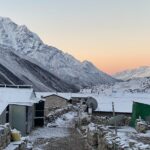
Samdo Village, then the Larkya La Pass crossing to Bhimtang

Day 9 begins the climb toward Samdo Village. Manaslu Peak watches over you as you move higher. As the terrain ascends, the trek becomes more rugged, so your pace and footing habits start to matter more. This is also the part of the trip where you’ll feel the altitude “in the background” even when you are not gasping.
Day 10 continues higher into rockier trails with views of Manaslu and nearby peaks. Prayer flags flutter along the way, and that visual cue can help you stay oriented mentally when weather changes. On mountain days like this, it’s easy to get fixated on one direction, but prayer flags and route markers can become small anchors.
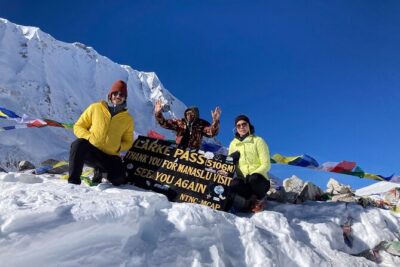
Day 11 is the big day: you cross Larkya La Pass. You start early after breakfast, and then the day splits into two phases. First is the climb and crossing, then you descend toward Bhimtang. The schedule suggests you walk several hours total, and the downhill continues for four to five hours through rocky paths and open valleys before reaching Bhimtang for the night.
This day is the clearest example of why “moderate fitness” is not the same as “easy day.” You can be fit and still find the pass crossing demanding. The best way to handle it is controlled effort: small steps, steady breathing, and no heroic pacing. Also take advantage of the guide and group system, since staying together matters on exposed sections.
Descent into forests, long travel back to Kathmandu, and the final handoff

Day 12 is a descent into lower elevations from Bhimtang. You move through lush pine and rhododendron forests, with occasional glimpses of distant mountains. Descent days feel different from ascent days, and they can be deceptively tough on knees and ankles. Use trekking poles and focus on short steps when footing gets uneven.
Day 13 is a long return travel day. You leave Bhimtang after early breakfast, then begin a drive by jeep to Besisahar, with an overnight travel window described through rough roads. The plan includes exploring scenery from the jeep window through sections like Tilije and onward to Besisahar. This kind of travel day is why I recommend keeping your mind set on comfort and hydration rather than trying to squeeze in extra sightseeing.
Finally, Day 14 ends the circuit with a farewell and transfer to Tribhuvan International Airport in Kathmandu. It is the closing loop, and it feels good because you can finally swap trekking boots for regular shoes, even if your legs take a day to fully bounce back.
Price and logistics: what $1,099 buys you, and what you should budget

At $1,099 per person for about 14 days, the value comes from what’s included, not just the number. Your package includes key permits: Manaslu Conservation Area Permit, Annapurna Conservation Area Permit, and the Restricted Area Permit. In Nepal, that matters because permits can be a confusing add-on if you’re booking piecemeal.
It also includes an experienced govt.-registered trekking guide, and it builds in safety tools like an oxi-meter for checking heart rate and oxygen saturation. You get trekking equipment support too, including a down-filled sleeping bag and walking poles. On a cold-pass trek, that can save you from renting or buying gear at the last minute.
Meals are also part of the deal: lunch (11), dinner (11), and breakfast (13) are included, which helps you budget in the mountains where food options can get limited. Lunch and dinner coverage across most trekking days is a big practical advantage.
What is not included is where you should plan ahead. The package does not include bottled water, coffee and tea, snacks, alcohol, alcoholic beverages, travel insurance and medical evacuation, or electronic device recharges. Private transport is also not included if you want your own car or jeep beyond the scheduled public transport segments.
If you want a simple budgeting rule, add money for drinks, snacks, and any comfort upgrades you prefer at tea houses. Also, do not skip travel insurance for altitude trekking and evacuation coverage, because this trek operates in a remote environment.
Guides and safety habits that matter on a high pass route
The strongest praise from past experiences centers on guide care and group attention. Wonder Himalaya provides a govt.-registered guide and strong porters and support crew. In plain terms, that means someone is paying attention to pacing, route flow, and group cohesion.
Specific examples from guide behavior in the program context stand out. Santosh, one of the guides mentioned in past feedback, is praised for keeping the group together and waiting for anyone who falls behind. That is exactly what you want on exposed stretches and long day climbs, where losing touch with your group can create stress fast. Another guide named Pradip is also referenced in feedback as part of a smooth, well-supported trek experience.
On top of people support, the trek includes an oxi-meter to check heart rating and oxygen saturation. While an oxi-meter does not replace good judgment, it supports a practical safety workflow: you notice how you’re responding and you can adjust pace and rest accordingly. That matters most as you climb toward Larkya La Pass and higher elevations.
Equipment support also reduces risk and uncertainty. Having a down-filled sleeping bag and walking poles reduces the chance you show up without critical cold-weather gear. You still need to pack your personal layers, but the core trekking items are handled.
If you want the best results, follow the guide’s pacing advice and do not treat the oxygen readings like a scoreboard. Use it to guide decisions: slow down, hydrate, and rest when recommended.
Day-by-day feel: what the pace and scenery change really means
Here is how the trek typically “feels” across the 14 days, beyond the basic schedule.
Early on, you build rhythm. The start in Kathmandu and the scenic drive toward Maccha Khola set your expectations for river valleys and long travel days. Then the move to Jagat keeps your hiking effort steady and gives you time to adjust to trail conditions and altitude.
Mid-trek is both beauty and work. Forest sections with rhododendron and pine give you comfort from wind and sun. Suspension bridges add challenge and focus. Village days like Namrung and the Bihi settlements add culture texture so the trek feels like a journey through real communities.
Around Sama Gaon, the trek becomes strategic. The acclimatization and rest day is not a luxury. It’s a plan for your body to handle the push toward Samdo and the pass.
Then comes the high effort zone. Samdo, rockier trails, prayer flags, and eventually the Larkya La Pass crossing are where you need your pace control and your patience. After that, the long downhill to Bhimtang can feel physically easier from a breathing standpoint, but it can tax your legs.
Finally, the lower-elevation descent through forests helps you recover. The jeep ride back toward Kathmandu is not glamorous, but it brings closure and turns your trekking energy into travel energy, which is a welcome shift.
Who should book this trek, and who should think twice
This circuit fits you best if you want a Himalayan adventure with both mountain highlights and meaningful culture stops. You’ll like it if you’re okay with a 14-day commitment, enjoy long hiking days, and care about Tibetan Buddhist elements like mani walls, chortens, and monasteries.
It also suits you if you value a structured support team: experienced guide, strong porters, and an oxi-meter built into the routine. If you travel alone, the trip can still work well because the experience is organized around group movement.
You should think twice if you know you struggle with steep climbs, high passes, or long travel days over rough roads. Even with moderate fitness framing, the pass day and the overall effort level mean this is not a casual hike.
Should you book Manaslu Circuit with Wonder Himalaya?
I think this trek is a smart pick if you want good value without cutting corners on the basics. The permits are included, the guide is govt.-registered, key gear is provided, and meals cover most trekking days. Add in the rest and acclimatization structure, and you have a route that makes sense for altitude management.
If your top priority is a very crowded trail party vibe, you may find the quieter feel less exciting. If your goal is real mountain walking, Tibetan-influenced villages, and big views with a practical safety setup, this one looks like a solid match.
FAQ
FAQ
How long is the Manaslu Circuit Trek?
The trek runs for about 14 days.
Where does the tour begin and end?
It begins in Kathmandu, with airport arrival support, and ends with a transfer to Tribhuvan International Airport in Kathmandu.
Is pickup offered?
Yes, pickup is offered.
What permits are included?
The package includes the Manaslu Conservation Area Permit, Annapurna Conservation Area Permit, and a Restricted Area Permit.
What trekking gear is included?
You get a down-filled sleeping bag and walking poles.
Are oxygen checks included?
Yes. An oxi-meter is included to check heart rating and oxygen saturation.
What meals are included?
Breakfast is included for 13 days, lunch is included for 11 days, and dinner is included for 11 days.
Is bottled water included?
No. Bottled water is not included.
If I need to cancel, is there a refund?
You can cancel up to 24 hours in advance for a full refund. If you cancel less than 24 hours before the start time, the amount paid is not refunded.
More Hiking & Trekking Tours in Kathmandu
More Tour Reviews in Kathmandu
Not for you? Here's more nearby things to do in Kathmandu we have reviewed


Manaslu Circuit Treks from Kathmandu, compared.
 ★ 5.0Manaslu Circuit Trek (15 Days)From $1,65750 reviews
 ★ 5.016 Day Private Manaslu Circuit Trek from KathmanduFrom $1,13542 reviews
 ★ 5.0Manaslu Circuit Trek 13 DaysFrom $1,40030 reviews
 ★ 5.010 Days Manaslu Circuit Trek in Larke La PassFrom $1,04930 reviews
 ★ 5.0Manaslu Circuit Trek 8th Highest in the WorldFrom $1,60014 reviews
 ★ 5.0Dancing in the Manaslu Circuit TrekFrom $1,39010 reviews
14 days Manaslu Circuit TrekkingFrom $2278 reviews
★ 5.0Dancing in the Manaslu Circuit TrekFrom $1,39010 reviews
14 days Manaslu Circuit TrekkingFrom $2278 reviews
 ★ 5.0Manaslu Circuit Trek to the Beauty of 8th Highest MountainFrom $3657 reviews
Browse the lists this tour appears in