
REVIEW · ANNAPURNA TREKS FROM KATHMANDU
Annapurna Circuit Trek with Tilicho Lake (16 Days)
Tilicho Lake changes everything up high. This 16-day Annapurna Circuit adds Tilicho Lake and Thorong La with teahouse nights, permits, and a small group for real trail days. I like the teahouse-based pace and the acclimatization support built around Manang and the long pass approach. One drawback to plan for: you still need to handle serious cold and altitude, plus trek-day meals are typically not included in the package.
If you value logistics that take the edge off, this trip is built for you. You get airport and city transfers, a tight porter setup (2 trekkers per porter for your overnight bag), and a guide plus assistant coverage for safety and pacing. And the payoff is not just summits, you end with a calmer Pokhara lakeside buffer on Phewa Lake before heading back to Kathmandu.
Key things that make this trek hit different
- Tilicho Lake detour at 4,919m: one of the highest alpine lakes you can reach by foot, mixed into the classic circuit rhythm
- Manang acclimatization that is actually scheduled: you do more than just walk higher, you get a planned adjustment day with hike options
- Small-group support (max 14): assistant guidance per group size, plus first-aid trained support for peace of mind at altitude
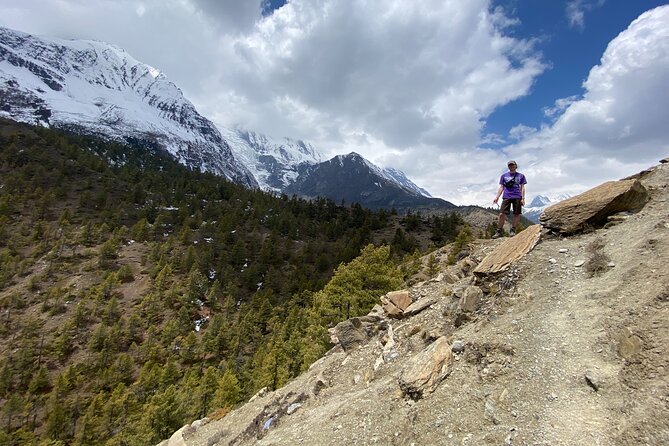
- Real route variety: alpine forests, Tibetan-influenced villages in Manang, then sacred Muktinath and Lower Mustang trails via Kagbeni and Jomsom
- Teahouses plus a proper reset: standard teahouses on trek, then 3-star comfort in Kathmandu and Pokhara to recover
Tilicho Lake plus Thorong La: why this route feels worth the effort
This is not just the Annapurna Circuit. The big reason to pick it is the Tilicho Lake detour, which jumps you into a high, spare-feeling basin before you commit to Thorong La Pass at 5,416m. The circuit already changes scenery every day, but this version adds two “I can’t believe we’re here” moments stacked close together.
I also like the way the route forces smart pacing. You are not thrown from jungle-like lowlands straight into a monster pass. Instead, the plan gradually builds altitude through Manang, then uses staged nights like Yak Kharka and Thorong Phedi to set you up for a safe, pre-dawn style pass crossing.
The consideration: your toughest days are not just “the pass day.” Tilicho also pushes you high, and cold can hit hard even if your legs feel okay. If you do not pack for wind and night-time temperature drops, you will feel it.
You can also read our reviews of more hiking tours in Kathmandu
Kathmandu to Dharapani: the ride days that set your expectations
Day 1 is straightforward: airport arrival at Tribhuvan International Airport, a “Namaste” greeting, then transfer to a 3-star hotel in Thamel. Day 2 is where Nepal-style travel begins in earnest. You travel out of Kathmandu along the Prithvi Highway corridor, with photo stops built around the Trishuli River views and Mugling as a real road-junction snapshot of everyday life.
From there you roll into Besisahar and continue to Dharapani (1,960m). This matters because Dharapani is your first real trekking base for the trek proper. The height is not the goal on Day 2, your goal is to arrive with enough energy to start walking steadily the next day.
Potential drawback: this is a trek where you spend less time on flat roads than many classic hikes, but you still have substantial transport days. If you tend to feel “travel stiff,” plan to loosen up early each evening and don’t save all your discomfort for the morning.
From Chame to Manang: forests, Tibetan-influenced villages, and real acclimatization
Once you leave Dharapani, the corridor climbs through ridge-top villages and pine-covered sections. You start with places like Tachi Bagarchhap (2,160m), then reach Chame (2,670m), the administrative hub of Manang District. Chame is also a good example of how this trek blends practical and cultural Nepal, with Tibetan-influenced architecture mixed with everyday services.
Day 4 brings Bhratang (2,850m), known for apple orchards and small juice farms. Upper villages like Upper Pisang (around 3,300m) then give you big views above the Marsyangdi River valley. These are not just pretty stops. They are also your first “okay, we are actually going higher” reminders.
By Day 5 you reach Manang (3,540m), the cultural and trekking hub. The real win is Day 6, when the itinerary schedules acclimatization. You have options for shorter hike choices in consultation with your guide, and that flexibility is useful if you feel stronger one day and cautious the next.
The main consideration here is altitude fatigue. Even on an acclimatization day, your breathing changes. Go slow, drink water regularly, and let the day be a “build not break” day.
Siri Kharka and Tilicho: the highest detour and how to handle it
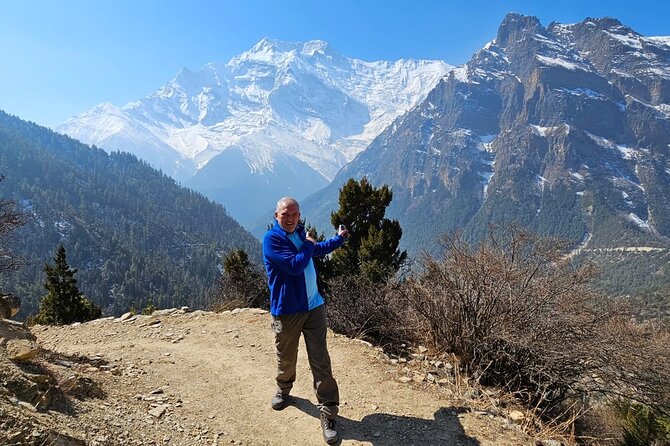
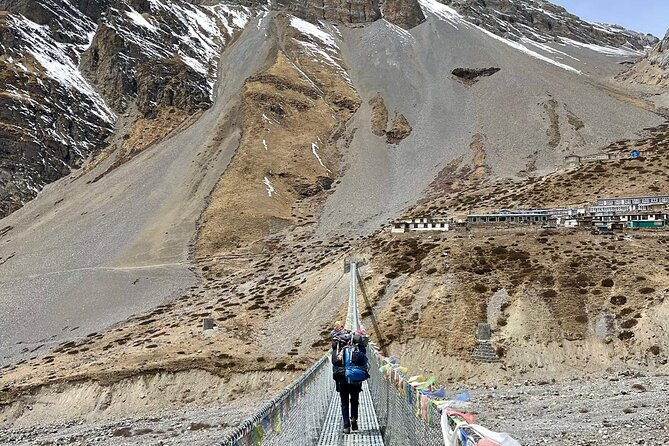
After Manang, the trek turns more remote. You move toward Siri Kharka (4,060m), crossing juniper shrublands and ridge trails where the air thins and the views feel sharper. The next step is Tilicho Base Camp (4,150m). The route is shorter but intense, with narrow paths near landslide areas, so good foot placement matters.
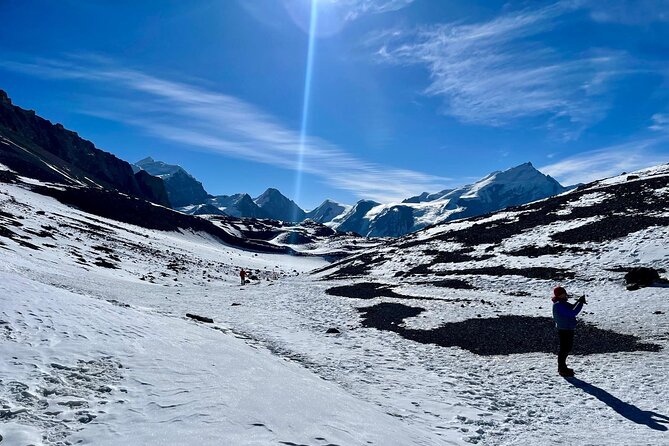
Tilicho Lake day is the headline. You climb up to Tilicho Lake at 4,919m. It is revered in both Hindu and Buddhist traditions, and the setting feels wild in a very different way than villages do. One day can go by fast because you are usually managing effort, cold, and the excitement all at once.
Drawback to plan for: this is high altitude trekking where time matters. Even if the lake itself is reached in a relatively short period on the itinerary, you still need the energy to enjoy it, take photos, and descend without rushing.
Practical tip: treat Tilicho Lake as both a view day and a stamina check. If you feel off, it’s better to slow down early rather than force the pace mid-day.
Yak Kharka to Thorong Phedi: staging for a pre-dawn Thorong La pass
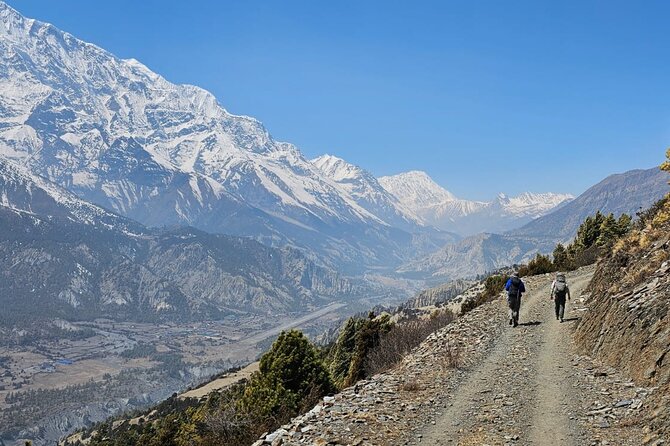
Once Tilicho is done, the trek keeps walking up in a smarter pattern. You head to Yak Kharka (4,050m) as a staging and acclimatization area before the Thorong La build-up. From there the route moves to Thorong Phedi (4,540m), the final overnight stop before crossing.
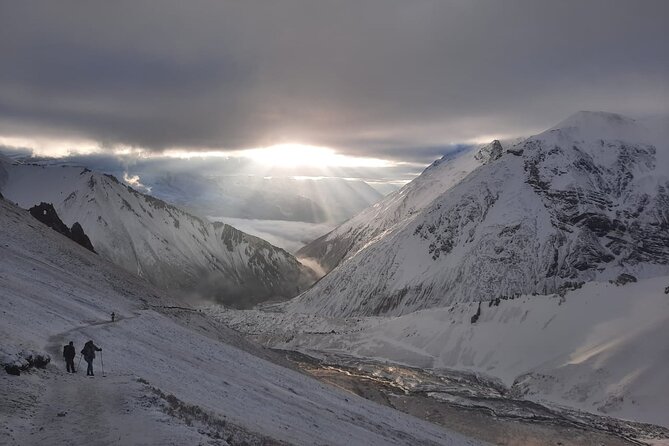
Thorong La Pass is reached by a strenuous pre-dawn climb of over 900m from Thorong Phedi. This is a big deal because a pass at 5,416m is not just a “how many kilometers” question. It is a “how your body works in low oxygen and cold” question.
I like that the itinerary clearly sets up a night before the pass, instead of trying to squeeze it in as a daytime push. That gives you time to eat, hydrate, and prepare your layers so you are not scrambling when it is dark.
Consideration: you might feel nervous on pass day, and that is normal. Your best protection is routine. Keep moving at a steady rhythm, sip frequently, and do not chase other hikers if your breathing changes.
Thorong La to Muktinath, Kagbeni, Jomsom, then Pokhara: the descent that feels like a new trip
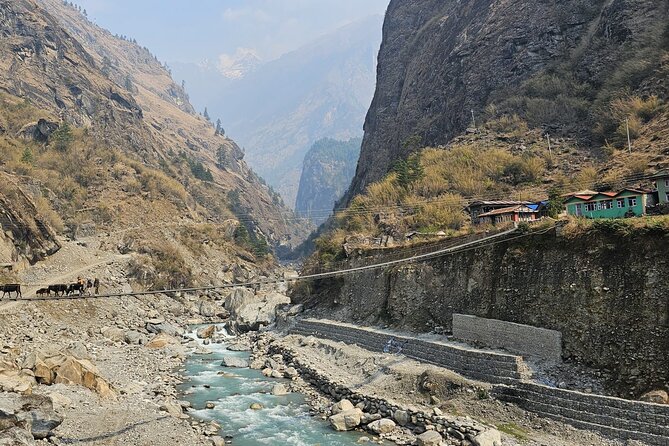
After you cross Thorong La, the descent starts around 1,600m into desert-like valleys toward Muktinath (3,760m). The terrain shifts quickly. You move from harsh high-altitude pass conditions into something more arid, with big views and a sacred feeling tied to pilgrimage culture.
Then you keep heading down toward Kagbeni (2,810m). Kagbeni sits in the Kali Gandaki corridor and is known for ancient red-walled monastery structures and narrow stone lanes. After that, Jomsom (2,720m) becomes your main hub as you follow the windswept Kali Gandaki River.
From Jomsom, you descend and eventually travel by bus down to Kalopani (2,530m) and then onward to Beni (850m). Beni marks a more “return to civilization” vibe, and the next step is Pokhara Lakeside, where you stay near Phewa Lake.
What I like here is the pacing contrast. You get hard altitude effort, then you get a real recovery rhythm in Pokhara before you head back. The trek is demanding, but the finish is gentle enough to let you feel proud, not wrecked.
Teahouses, food, and water: how to stay comfortable without overpaying
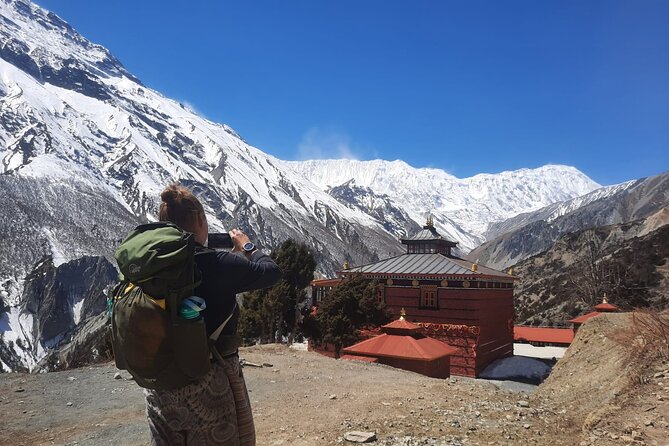
This trek uses standard teahouses for overnight stays. That usually means simple rooms, limited charging, and basic warmth. Hotel breakfasts are included, and dinners are partially included (welcome and farewell dinners). But meals during the trek are not included, so you will buy lunch and dinner along the way.
I suggest you treat food planning as part of training. You’ll likely eat what is available in each village, but you can control your consistency: eat early, aim for warm meals when possible, and keep snacks for long cold stretches.
Water is another big one. Drinking water is not included, and the guidance is to bring a filter bottle or purification tablets. I’m a fan of being ready here. Waiting until you feel thirsty often leads to rushed decisions at high altitude.
Cold comfort matters too. Hot showers, battery charging, and Wi-Fi are available for an extra fee at most teahouses. If your priority is to sleep well and stay warm, budget for battery charging separately so you don’t end up with a dead phone at the pass.
Your support team, permits, and why logistics matter at altitude
This program is operated by Sole Encounters Adventures with a professional, government-licensed trek guide and first-aid trained crew. For support, you also get an assistant guide per 5 trekkers, which is a solid ratio for groups where people have different fitness and altitude responses.
Your porter help is clearly defined: porters carry your overnight bag with a 2 trekkers to 1 porter ratio. That makes a difference on long uphill days. Your legs stay focused on moving, not hauling.
On paperwork, the included items list Annapurna Conservation Area (ACAP) Permit and TIMS Permit, plus government fees and an achievement certificate. Still, the price notes also mention a government fee of $50 per person in the not-included section. I’d confirm the final total with your booking contact so you do not get surprised.
Safety also depends on weather. The experience has a weather requirement, and it may shift dates if conditions are poor, with either an alternate date or a refund offered.
Price and the real cost checklist before you commit
The headline price is $1,800 per person for 16 days, which is not cheap. But when I look at what is included, it feels more realistic than it first appears.
You get:
- Kathmandu and Pokhara 3-star hotels with breakfast
- Teahouse accommodation on trek
- A licensed guide, assistant support, and porters
- Airport and return transfers, plus shared/public transport legs to and from the trail
- Permits for ACAP and TIMS listed as included
What you still pay for:
- International airfare
- Travel insurance (must cover emergency evacuation and the trek’s highest altitude)
- Personal gear
- Trek-day meals
- Drinking water supplies
- Tips, which are not mandatory but are expected as appreciation
- Any extra costs for charging and hot showers
So the real “value test” is this: do you want to spend your energy on hiking, not coordinating permits, transport timing, and teahouse logistics in remote villages? If yes, the package is usually a good deal for the level of support you get.
Should you book this Annapurna Circuit with Tilicho Lake trek?
Book it if you want the classic Annapurna Circuit feel, plus the extra high-altitude payoff of Tilicho Lake, and you like a plan that builds altitude step-by-step instead of guessing. This is also a strong pick if you want small-group trekking with assistant support, porter help, and clear expectations for what is included.
Skip or reconsider if you are not ready for cold, thin air, and a few tough days that demand patience on the trail. Also, if you hate the idea of buying trek meals as you go, mentally adjust now, because the package does not cover most trekking meals.
If you do decide to go, I’d do three things early: confirm the final fee total because the government fee line looks split, pack for wind and nights near pass season, and bring your water treatment setup so you are never stuck on the trail.
FAQ
Where do we meet in Kathmandu?
The meeting point is Thamel, Kathmandu 44600, Nepal.
How does the trip start and end?
It starts with pickup/transfer in Kathmandu after arrival, and it ends back at the same meeting point.
What is the highest point on this trek?
The highest point listed is Thorong La Pass at 5,416m.
Are airport transfers included?
Yes. The package includes airport pickup/drop-off and private transfers from Kathmandu to Besisahar, plus return transfers after the trek.
Is there a limit on group size?
Yes. This trek has a maximum of 14 travelers.
What permits are included?
Annapurna Conservation Area (ACAP) Permit and TIMS Permit are listed as included.
Are trek meals included?
No. Meals during the trek are not included. The package includes hotel breakfasts and welcome or farewell dinners, but you’ll typically buy meals while trekking.
Do I need travel insurance?
Yes. Travel insurance is not included, and it must cover emergency evacuation and the trek’s highest altitude reached.
Is drinking water included?
No. Drinking water is not included, and you are advised to bring a filter bottle or purification tablets.
Are hot showers and charging included?
Hot showers, battery charging, and Wi-Fi are available for an extra fee at most teahouses.
More Hiking & Trekking Tours in Kathmandu
More Tour Reviews in Kathmandu
Not for you? Here's more nearby things to do in Kathmandu we have reviewed


Annapurna Treks from Kathmandu, compared.
 ★ 5.0Annapurna Circuit Trek with Tilicho LakeFrom $1,093368 reviews
 ★ 5.0Annapurna base camp trek 5 DaysFrom $699252 reviews
 ★ 5.0Annapurna Base Camp TrekFrom $935111 reviews
 ★ 5.0Kathmandu to Annapurna Base Camp (ABC) 5-Day TrekFrom $99102 reviews
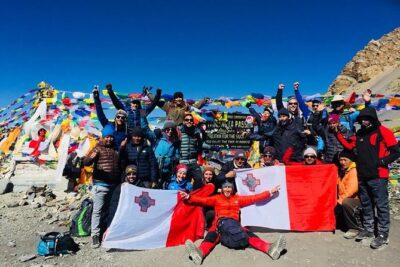 ★ 5.0Annapurna Circuit TrekFrom $1,17594 reviews
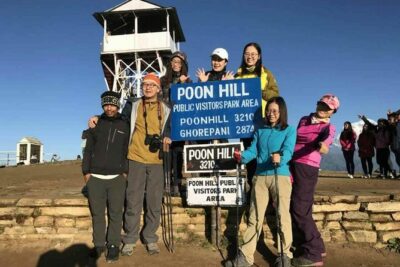 ★ 5.04 Days Poon Hill TrekFrom $40594 reviews
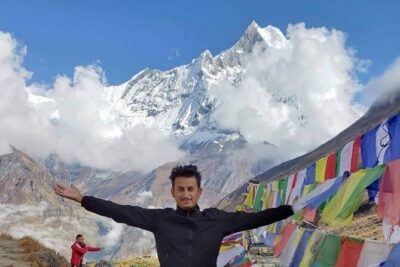 ★ 5.0Annapurna Base Camp Trek 12 DaysFrom $80085 reviews
Annapurna Base Camp TrekFrom $78581 reviews
★ 5.0Annapurna Base Camp Trek 12 DaysFrom $80085 reviews
Annapurna Base Camp TrekFrom $78581 reviews
Browse the lists this tour appears in