
REVIEW · ANNAPURNA TREKS FROM KATHMANDU
Annapurna Base Camp Trekking
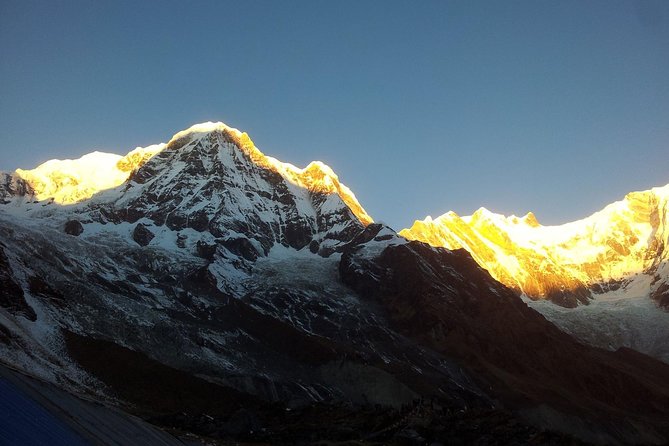
Ropes, rain, and big-mountain views are the point here. This private Annapurna Base Camp trekking package takes you from Kathmandu UNESCO sites to the Annapurna region with all accommodations and meals included and your own private guide. I love that the logistics are handled end-to-end, so you can actually focus on the trail, not spreadsheets. One possible drawback: hot water and drinks are not included, and bad weather can affect how far you trek day to day.
I also like the human rhythm of this trip: early starts, steady hiking days, and real rest at tea houses. If you end up with a guide like Bishnu Bhatta or Vishnu, the vibe you can expect is friendly, hands-on support. This isn’t a couch-to-hero hike either, so plan on moderate fitness and expect some steep moments.
Key things to know before you go
- Private group, private attention: This is set up as a private tour, so you are not juggling decisions with strangers.
- Guide plus porters (2 trekkers per 1 porter): You carry less, and you hike with a team, not just a route.
- UNESCO Kathmandu on Day 2: You get Pasupatinath Temple, Boudhanath Stupa, Patan Darbar Square, and Swayambhunath lined up.
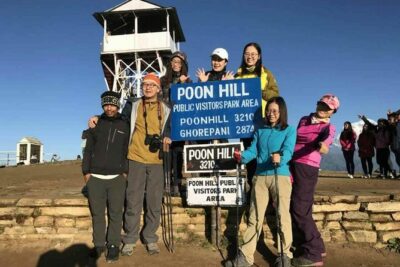
- Poon Hill sunrise timing: You start very early to reach Poon Hill at about 3,210 m for morning views.
- Teahouse meals are included during the trek: Breakfast, lunch, and dinner are handled while you are walking between villages.
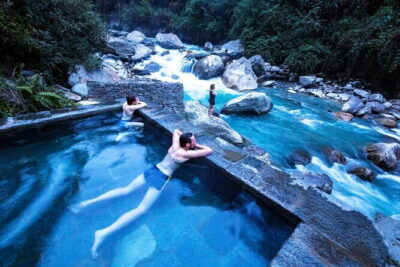
- Hot springs at Jhinu Danda: One day is built around the hot spring break, then you keep moving.
Kathmandu UNESCO day: ancient temples, then trek prep
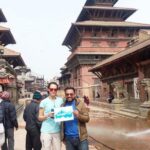
Your trip starts with a straightforward airport pickup from Tribhuvan International Airport to your Kathmandu hotel. Day 2 is a full day of sightseeing in Kathmandu Valley’s major religious sites, all UNESCO World Heritage listed.
Here’s what you’ll hit, in a tight, efficient circuit:
- Boudhanath Stupa: The big stupa dominates the area, and it is one of the valley’s most recognizable sacred landmarks.
- Pashupatinath Temple: A major Hindu shrine on the Bagmati River, with ritual life happening alongside the water.
- Patan Darbar Square: A dense cluster of palace-era buildings and courtyards, known for its craft and temple architecture.
- Swayambhunath Stupa (Monkey Temple): The stupa on a hill that watches over the valley, with monkeys roaming around the complex.
Why I like this setup is simple: you start with culture before you start climbing. You also do the paperwork and trek prep as part of the flow, rather than cramming it into a rushed arrival day.
You can also read our reviews of more hiking tours in Kathmandu
Getting to Pokhara by tourist bus: the calm before the trek
On Day 3, your trekking team picks you up from the hotel in the early morning and escorts you to the tourist bus station. The bus to Pokhara leaves around 7:30 am.
Pokhara matters for a reason beyond convenience. It is described as a calmer base than Kathmandu, and it gives you panoramic Himalayan views to look at while you are waking up to the idea of the trek. This is also where you begin transitioning from city time to trail time.
Practical note: travel days in Nepal can be long and variable, but you at least avoid the hassle of arranging your own transport.
Ulleri to Ghorepani: your first real altitude push
Day 4 starts with the transfer from Pokhara to Nayapul by private vehicle, then you begin walking. The route begins with a short walk along the banks of the Modi Khola, then you move into village and valley sides.
Key stops you’ll work through:
- Birethanti at about 1,015 m
- Hille around 1,495 m
- Tikhedhunga around 1,570 m, in the Ulleri area
This day is about warming up without pretending it is easy. It is a solid first trek segment that sets the tone for the next days. You are building endurance, and you are giving your body time to adjust.
Then Day 5 heads toward Ghorepani (about 2,840 m) and includes the climb through oak and rhododendron forests toward villages like Banthanti and Nangethanti. This is where the trail begins to feel fully in the Annapurna region rather than just a “getting started” walk.
Poon Hill sunrise to Tadapani: views, then descent rhythm
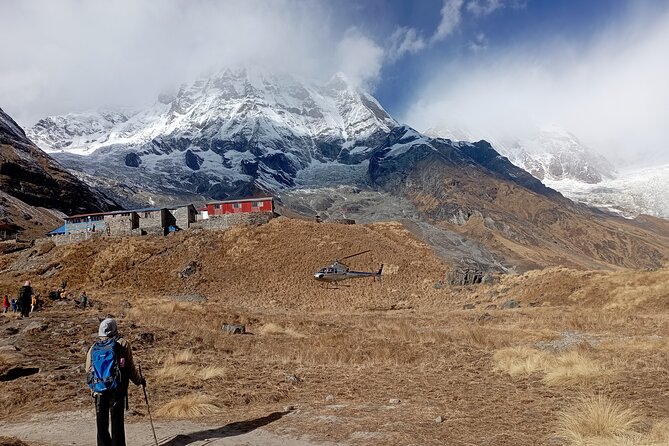
Day 6 is one of the most important moments of the whole itinerary. You start very early with a hike to Poon Hill at about 3,210 m. The goal is sunrise over the Himalayan ranges.
From Poon Hill you get close-up views of ranges including Annapurna and Dhaulagiri, plus far-reaching sights toward places like Mustang and beyond. After the sunrise moment, you head back down to Ghorepani for breakfast and continue trekking toward Tadapani (about 2,700 m).
What I like about this day is the structure:
- Early hike for the big payoff
- Back to a familiar stop for breakfast
- Then a normal walking day into the next village
Also, you walk through rhodedendron forests and past waterfalls before reaching Tadapani. If you trek during monsoon season, the area is described as lush and rain-greened, and that fits this kind of forest-heavy route.
Chhomrong to Dovan: terraced villages, then bamboo and colder air
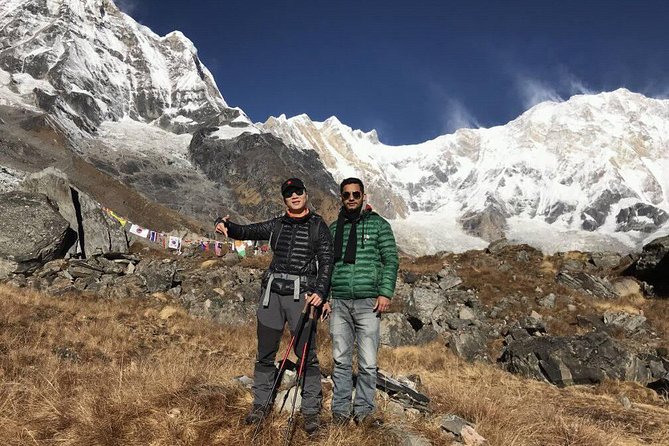
Day 7 drops you from Tadapani to Chhomrong (about 2,170 m). The trail starts with a descent through rhododendron forest, then opens to terraced fields. You pass waterfalls and cross a suspension bridge before reaching Chhomrong, a village below the giant Annapurna massif.
I find this section hits a nice balance. You get variety, forest time, and then a village base with a classic “we are in the Himalayas now” feeling.
Day 8 continues from Chhomrong to Dovan. This is where the weather and vegetation can feel different. You move through a bamboo forest that is described as damp and cold, then you climb, sometimes steep, until the forest opens and you get expansive views. The day also includes places like Hinku Cave and ends at Dovan with views toward surrounding hills and Mt. Dhaulagiri.
Tip if you hate cold starts: Day 8 can be the day you notice the chill most, because of that bamboo forest and time spent in shade.
Deurali, then Annapurna Base Camp: steady effort and a big finish
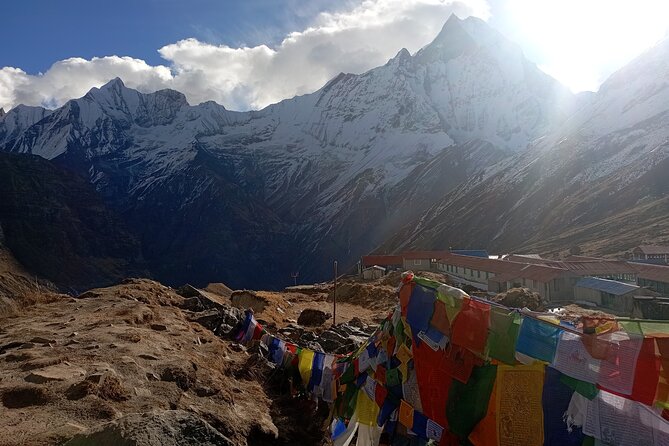
Day 9 is described as a valley trail with a steady climb, sometimes steep, and at points sticking close to rocky cliff edges. You are working upward toward Deurali.
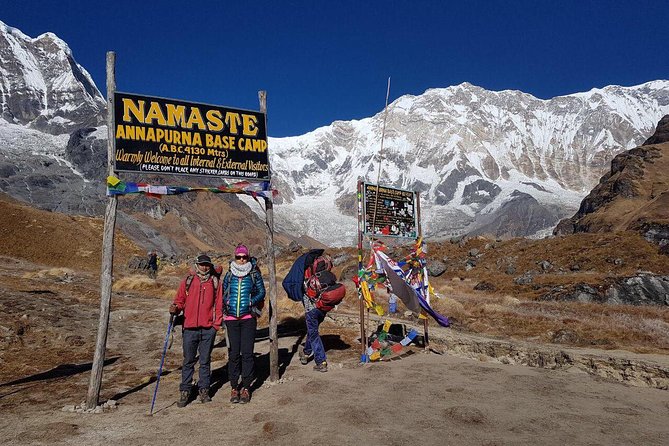
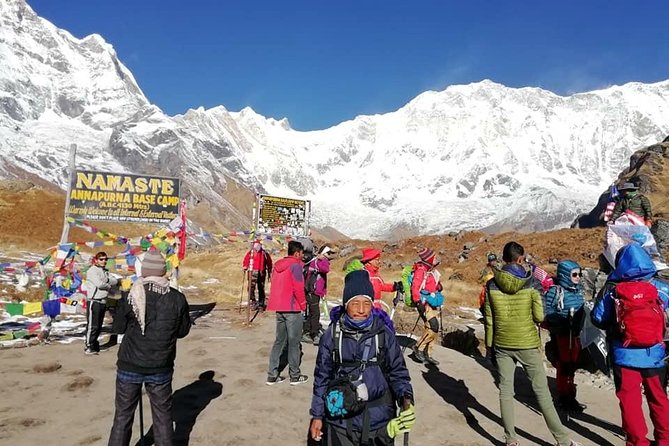
Then you reach the highlight: Annapurna Base Camp. The trek to the base camp is described as a rapid ascent over about 5 to 7 hours. You will pass Machhapuchhre Base Camp along the route, plus stops like Deurali, Himalaya Hotel, and Doban as you move through the broader base camp area.
What you should take seriously here is effort management. The itinerary pushes for early starts and multi-hour climbs, but this is still described as a trek requiring moderate fitness. You do not need to be an athlete, but you do need stamina for repeated long walking days.
Also, be ready for the fact that weather can change plans. One of the experiences shared after booking noted that weather prevented continuing to the base camp as far as planned. In other words, this route depends on conditions, so keep expectations flexible.
The downhill you will remember: Bamboo, then Jhinu Danda hot spring
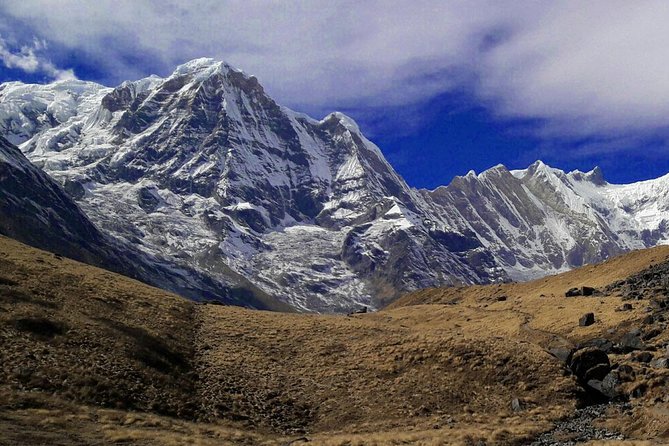
After the base camp day, the route turns into downhill work. The trek down is described as passing those same key waypoints, ending at Bamboo where you spend the night. This section matters because downhill can be as hard on your legs as uphill is, especially after altitude.
Day 11 then retraces your steps back toward Chhomrong for lunch, and you continue the steep descent down to the Modi Khola valley area. If you like hiking because it feels active and real, this part delivers, but it can also be tiring because you keep dealing with gravity.
Day 12 shifts gears. You head from Jhinu Danda area to the hot spring experience, then sleep nearby. This is a built-in recovery day, and it is one of the most enjoyable ways to break up the trek with something you can actually feel in your body.
Pokhara and Kathmandu return: a soft landing back to civilization
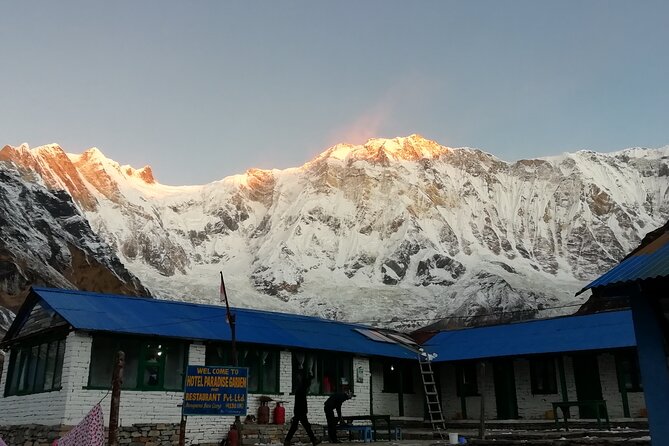
Once you finish the trek, the itinerary drives you back.
- Day 13: You trek to Nayapul, then drive back to Pokhara and overnight there.
- Day 14: You travel back to Kathmandu by tourist bus. The drive is typically listed as 7 to 9 hours after breakfast.
This is the part where you’ll appreciate the earlier planning. When your transportation is already handled, you do not end up bargaining and backtracking while you are tired.
Meals, tea houses, and what is actually included
This package is built around included food and lodging so you don’t have to think about every meal decision while you are climbing.
Included during the trek:
- Teahouses accommodation
- Breakfast, lunch, and dinner (with breakfasts explicitly counted across 13)
Included before and after the trek:
- 3-star category hotels in Kathmandu and Pokhara with breakfast
Not included details that can surprise people:
- Hot water and cold drinks
- Phone calls, laundry, beer, and bar bills
- Entrance fees for sightseeing in Kathmandu
- Lunch and dinner in Kathmandu and/or Pokhara
- Tips for guides and porter
I like this style because it keeps the budget mostly predictable once you start trekking. Still, you should carry some cash for the extras you might want, especially anything related to hot water, drinks, and battery charging.
Price and logistics: is $899 good value here?
At $899 per person, the headline price looks simple. The real question is what you are paying for, and this trip spends that money on real costs that add up quickly on your own:
- Private guide attention throughout
- Porter support with a stated ratio of 2 trekkers per 1 porter
- Permits and paperwork coverage, including ACAP and TIMS plus local and government taxes
- Transportation between Kathmandu and Pokhara by tourist coach
- Lodging and meals during the trek, which is usually where independent trekkers burn money or time
Where value gets less clear is on the non-included list. If you plan to buy lots of cold drinks, want frequent hot water, or expect to pay for sightseeing entrances multiple times, costs can creep up.
So I think $899 is fair if you want a mostly planned, mostly predictable trek with human support, not a self-navigation project.
Who this Annapurna Base Camp trek suits best
This is a strong fit if you:
- Want UNESCO Kathmandu as a bonus rather than arriving and doing random side trips
- Prefer a private guide instead of following a group schedule that does not match your pace
- Plan to hike at a moderate fitness level and take long walking days seriously
- Like having meals taken care of while you are on the move
It might be less ideal if you:
- Want full control to change routes constantly, day by day, without any itinerary structure
- Hate early mornings, since the trek includes a very early push to Poon Hill
Should you book this Annapurna Base Camp trek?
I would book this if you want the Annapurna Base Camp experience with fewer moving parts. The mix of Kathmandu UNESCO sightseeing, a clear trekking build-up from Ulleri to Ghorepani, a signature sunrise day at Poon Hill, and the base camp finish, plus the Jhinu Danda hot spring recovery, makes it feel like a complete package rather than just transportation to a trailhead.
Skip it or ask sharper questions if you are sensitive to extra costs like hot water, drinks, and sightseeing entrances. Also, if you are traveling with strict expectations about reaching specific points no matter what, remember the route can be weather dependent.
If you do book, you’ll get the kind of trip where the hard work is the hiking, not the logistics. That is the real win.
FAQ
What is the starting point and start time for the trip?
Your start time is listed as 6:45 am, and the tour begins with pickup from Tribhuvan International Airport on Day 1.
How long is the Annapurna Base Camp trekking experience?
It is listed as 14 days approximately, covering Kathmandu sightseeing, the trek to Annapurna Base Camp, and drives back to Kathmandu.
What does the tour include during the trek?
During the trekking portion, teahouse accommodation is included along with breakfast, lunch, and dinner.
Are hotel stays included in Kathmandu and Pokhara?
Yes. You stay in 3-star category hotels in Kathmandu and Pokhara, and breakfast is included.
What trekking support do you get?
You travel with an experienced English-speaking trekking guide. Porters carry luggage, with a stated ratio of 2 trekkers to 1 porter.
Do you get permits arranged for the trek?
Yes. The tour includes paper work and permits including ACAP and TIMS, plus government and local taxes.
What is not included in the price?
Hot water, cold drinks, phone calls, laundry, beer and bar bills, entrance fees for sightseeing, lunch and dinner in Kathmandu and/or Pokhara, and tips for guides and porter are not included.
More Hiking & Trekking Tours in Kathmandu
More Tour Reviews in Kathmandu
Not for you? Here's more nearby things to do in Kathmandu we have reviewed


Annapurna Treks from Kathmandu, compared.
 ★ 5.0Annapurna Circuit Trek with Tilicho LakeFrom $1,093368 reviews
 ★ 5.0Annapurna base camp trek 5 DaysFrom $699252 reviews
 ★ 5.0Annapurna Base Camp TrekFrom $935111 reviews
 ★ 5.0Kathmandu to Annapurna Base Camp (ABC) 5-Day TrekFrom $99102 reviews
 ★ 5.0Annapurna Circuit TrekFrom $1,17594 reviews
 ★ 5.04 Days Poon Hill TrekFrom $40594 reviews
 ★ 5.0Annapurna Base Camp Trek 12 DaysFrom $80085 reviews
Annapurna Base Camp TrekFrom $78581 reviews
★ 5.0Annapurna Base Camp Trek 12 DaysFrom $80085 reviews
Annapurna Base Camp TrekFrom $78581 reviews
Browse the lists this tour appears in