

REVIEW · ANNAPURNA TREKS FROM KATHMANDU
13 Days Trekking in Annapurna Circuit
Few mountain routes feel as satisfying as the Annapurna Circuit. This 13-day, tea house trek mixes slow altitude building, big Himalayan viewpoints, and the one big day at Thorong La Pass (5,416m). You get a well-organized flow from Kathmandu to the trail, then on to Pokhara after the crossing.
What I like most is the way the plan supports you logistically, with all standard meals during the trek and tea house lodging each night. I also appreciate the practical safety gear included, like a first aid kit with an oximeter, plus the trek route map and required permits handled for you.
The main drawback to consider is simple: the pass day is demanding, and you should plan for cold mornings, a steep climb, and a strong need for good pacing and acclimatization.
Key highlights you’ll care about

- Thorong La Pass (5,416m) as the signature challenge, with 360-degree Himalayan panoramas
- Tea house style lodging each night, so you carry less and focus on walking
- Two acclimatization-focused days in Manang, with options like Gangapurna Lake or Praken Monastery
- Guide support from a government licensed team, with local know-how and care for food and stays
- Permits and TIMS handled, including Annapurna Conservation Permit fees
Why the Annapurna Circuit still earns attention

The Annapurna Circuit is a classic for one reason: it gives you a real “from here to up there” feel across changing Himalayan terrain. You start lower, gradually climb into the high country, then you hit the big milestone at 5,416m with Thorong La Pass.
This version is lodge-based, meaning you’re sleeping in tea houses rather than wild camping. That matters because it keeps the trek manageable for people with moderate fitness who want the pass experience without turning it into a gear-heavy expedition.
It’s also a trek where timing and routine really matter. You’ll be taught (by how the trip is run) to walk steadily, rest when the plan builds in rest, and take acclimatization seriously once you’re in the higher zone around Manang and Yakkharka.
You can also read our reviews of more hiking tours in Kathmandu
Price and what you truly get for about $809.10
At $809.10 per person, this trek is priced like a “fully run” hiking package, not just transportation and a map. The value shows up in the items that quietly cost money and time when you DIY it.
Here’s the practical core of what’s included:
- All standard meals during the trek (breakfast, lunch, dinner), plus tea or coffee at breakfast
- Tea house accommodation during the trek nights
- A government licensed guide with support for food and accommodation
- Annapurna Conservation Permits and TIMS fee included
- First aid kit with normal supplies, plus an oximeter
- Trek planning extras like a trek route map
- Transport support around the trek: public bus from Kathmandu toward Besisahar, shared transport onward, and private transfer to Pokhara from the trek ending point
- One night hotel in Pokhara with breakfast
What’s not included is equally important. You’ll need to budget for personal expenses, any extra hotel nights or activities in Kathmandu or Pokhara, and the trek does not include transport back to Kathmandu. Also, “porter carrier” for baggage is listed as not included, even though some people in the feedback talked about getting porter help.
So, the value calculation is this: if you want the pass and the route, but you don’t want to manage permits, meal planning, and day-to-day logistics yourself, this package makes sense. If you already have a solid setup and want total independence, the included pieces might feel less necessary.
Getting from Kathmandu to the trailhead, Besisahar and Bulbule

Your first day is mostly about getting your bearings and starting early. The plan sets you up for a long, scenic road transfer, with an aim to reach Bulbule at around 820m, after driving from Kathmandu.
Along the way, expect a steady stream of small villages and terraced fields, plus views that slowly hint at the Himalayan world you’re going into. It’s a good first step because it gets you moving without turning Day 1 into an all-out hike.
A small practical note: since meeting windows are set in the early morning hours, plan on being ready for pickup or departure during that timeframe. If you’re flying in close to the start, ask for pickup from the airport if required so you don’t lose half the day to timing stress.
Days 2 to 6: building altitude the smart way

This is where the Annapurna Circuit starts feeling like a real journey instead of a string of hikes. The route works by mixing gentle elevation gains with terrain changes, so your body has time to adapt.
Day 2: Bulbule to Bahundanda
You trek from Bulbule to Bahundanda, passing through charming villages and terraced farmland. This is a slower start that lets you settle into rhythm: short breaks, regular hydration, and getting used to the steady effort.
The upside is that the views start expanding without demanding everything from you on Day 2. The tradeoff is that you’ll still be walking enough to feel it, so good boots and poles (if you use them) matter here.
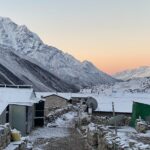
Day 3: toward Chamche, with suspension bridges and the Marsyangdi River
Today’s walk includes dense forest sections and multiple suspension bridges. You’ll also be following the Marsyangdi River and its tributaries as you descend toward Chamche.
This day can feel like a mental reset after Day 2. Forest shade can be a relief, but the bridge crossings and river-adjacent paths can be slick depending on conditions. Take your time, keep your footing calm, and let the walking be work, not a scramble.
Day 4: Dharapani, Gurung and Manangi villages, and a shift upward
As you trek toward Dharapani, you pass through Gurung and Manangi villages. This is a nice cultural stop because you’re not just staring at mountains, you’re moving through communities that have lived with these trails for generations.
The terrain transitions too, shifting from subtropical into more alpine-feeling walking as altitude increases. Translation: you may feel colder as the days go on, even if the climbs are not the steepest.
Day 5: Chame, district center views, and pine forest hiking
You reach Chame, the administrative center of the Manang District. The route is known for strong views, including Lamjung Himal and Annapurna II, plus a move into pine forests as you gain elevation.
I like this kind of Day 5 because it’s rewarding without asking you to sprint for it. You can take photo breaks, but you still keep a steady pace that supports acclimatization.
Day 6: Chame to Lower Pisang and the Annapurna II, III, IV viewpoint run
You continue to Lower Pisang, moving through forests and small villages. As you approach Pisang, the views of Annapurna II, III, and IV become more dramatic, and you’re walking toward a traditional Manangi village.
This is also a day where your pace matters for the mental payoff. If you rush, you’ll arrive tired and cold and miss some of what makes this section special: the way viewpoints open up gradually rather than all at once.
Days 7 and 8 in Manang: the acclimatization that makes the pass possible

The trek becomes more serious when you reach Manang, a large village known for traditional Tibetan culture and Buddhist monasteries. You also get a planned rest and acclimatization period here, which is exactly what you want before going higher.
Day 7: Manang, rest, and Tibetan cultural atmosphere
Day 7 is about rest and adjusting. The practical win is that you’re not forced to chain a hard day immediately after the forest-to-alpine shift.
If you’ve felt your breathing during prior days, this is where you should take it seriously. Eat, drink, and do short, easy movement only. Use this day to help your body catch up to altitude rather than to prove a point.
Day 8: acclimatize day with options
On Day 8, you can hike to Gangapurna Lake or take a short trek to Praken Monastery for panoramic views of Gangapurna, Annapurna III, and Himalchuli.
I like that there’s choice here because not every body feels the same at altitude. If you feel strong, the hike option gives you a purpose-built day outdoors. If you feel heavy or slowed down, you still get something useful, just keep it shorter and calmer.
Days 9 to 10: toward Yakkharka and Thorong Phedi

After Manang, the walk starts feeling more high-altitude and less like settled countryside. You’ll notice the terrain becoming sparser and the air feeling sharper.
Day 9: Manang to Yakkharka, sparse forests and big views
You trek toward Yakkharka, with sparse forests and high-altitude terrain. The viewpoints toward Annapurna II and Gangapurna are described as incredible, and that matches what this area tends to do: the scenery gets quieter, but the mountains get louder.
Overnight in Yakkharka is a key step. It’s part of the logic that gets you ready for the final approach to the pass.
Day 10: Yakkharka to Thorong Phedi, steeper final setup
Today you go to Thorong Phedi, described as the base camp area for Thorong La Pass. The trail gets steeper as you approach higher altitudes, and this is your final stop before the big crossing.
This is not the day to rush. I’d treat it like a “get your body ready” day. Warm layers, good sleep planning, and careful pacing matter because you’re setting up your morning.
Day 11: crossing Thorong La Pass at 5,416m

This is the signature day: start early and tackle Thorong La Pass at 5,416m. The climb is demanding, but the payoff is huge, including 360-degree panoramas of the Himalayas.
What makes this day worth it is not just reaching the highest point. It’s how the trek leads you there: the earlier acclimatization days in Manang, the overnight in Yakkharka, and then the positioning at Thorong Phedi.
Practical advice that helps on a day like this:
- Keep your effort smooth and slow, especially early in the climb
- Expect a cold start, dress in layers, and protect hands and ears
- Plan for a long morning, because weather and snow conditions can affect how the hike feels
After the pass, the route continues toward the trek ending point where you’ll transition to road transport for Pokhara on Day 12. That handoff is part of what makes this package feel efficient: you don’t have to guess the logistics after a hard day.
Days 12 to 13: Pokhara recovery, dinner, and choosing what’s next

You finish the trekking portion and then transfer to Pokhara by bus. Day 12 includes a team dinner together, which is a nice reset after the long walking days.
Then Day 13 is flexible. You can start a new destination from Pokhara, such as more days in Pokhara, tours in Chitwan National Park, or a drive back toward Kathmandu, depending on what you want next.
This matters because many treks leave you stranded with a rough plan. Here, the handoff to a city hub helps you recover in a place with more comforts and more options.
Group size, guide support, and the comfort side of lodge trekking
This is listed as a private tour activity, meaning it’s only your group. That’s a real quality-of-life factor on a trek, because you’re not forced to adjust to a bigger random mix of pacing and preferences.
On the support side, the trek includes a government licensed guide. The feedback also highlights strong guide performance with names like Ravi and Sandip, with praise focused on being attentive, professional, and thoughtful about comfort and food quality.
I also like that a first aid kit and an oximeter are included. It doesn’t remove altitude risk, but it signals that the operator takes safety seriously and gives your guide a tool for monitoring how things are going.
One more comfort detail: breakfast time includes tea or coffee. Small? Yes. Worth it on cold mornings? Also yes.
Who should book this trek, and who should rethink it
This trek fits best if you:
- Want the Annapurna Circuit experience in a lodge-based format
- Have moderate physical fitness and you can manage longer walking days
- Appreciate a structured plan with permits, meals, and lodging handled
- Want a real challenge day at Thorong La Pass but without DIY chaos
It might not be the right fit if you:
- Want fully independent travel with zero guided support
- Are sensitive to cold mornings and steep climbs, because Day 11 is genuinely serious
- Need extra transport flexibility during the trek, since transport in-between during the trekking days is not included as a general feature
Should you book this Annapurna Circuit package?
If your goal is a well-run Annapurna Circuit with fewer decisions you have to make yourself, I think it’s a smart buy. The included meals, tea house accommodations, permits, and safety gear remove a lot of the stress that turns planning into a second job.
The decision comes down to whether you’re ready for the pass day. If you respect the acclimatization in Manang and you keep your pace steady from Day 9 onward, this kind of structured trek can feel like a confident path to a major Himalayan milestone.
If you are unsure about porters or you want extra baggage help, factor that in since porter carrier is listed as not included. And keep a realistic mindset for altitude, cold mornings, and the fact that Thorong La day is the centerpiece.
FAQ
How long is the Annapurna Circuit trek in this package?
It’s listed as about 13 days.
Where does the itinerary start and how do you get there from Kathmandu?
The trek operates out of Kathmandu, with transportation arranged toward Besisahar and onward, then the trek begins from there and continues to Bulbule on the first trekking day.
What accommodation style is used during the trek?
During the trek you stay in tea houses.
Are meals included?
Yes. The package includes breakfast, lunch, and dinner during the trek, with breakfast and dinner listed as 12 each, and lunch listed as 12. Tea or coffee is also included during breakfast.
Is the guide included?
Yes. The tour includes a government licensed guide, and it also includes office service details like route map, permits, and standard support for food and accommodation for the guide.
What permits are included?
The package includes the Annapurna Conservation Permit fee and the TIMS fee.
Is there any first aid or medical support included?
Yes. A first aid box with normal medical supplies is included, and it also includes an oximeter.
Is Thorong La Pass included, and what elevation is it?
Yes. The trek includes Thorong La Pass, listed at 5,416m.
Is transportation back to Kathmandu included at the end?
No. Transportation back to Kathmandu is listed as not included. The package includes transport from the trek ending point to Pokhara.
More Hiking & Trekking Tours in Kathmandu
More Tour Reviews in Kathmandu
Not for you? Here's more nearby things to do in Kathmandu we have reviewed


Annapurna Treks from Kathmandu, compared.
 ★ 5.0Annapurna Circuit Trek with Tilicho LakeFrom $1,093368 reviews
 ★ 5.0Annapurna base camp trek 5 DaysFrom $699252 reviews
 ★ 5.0Annapurna Base Camp TrekFrom $935111 reviews
 ★ 5.0Kathmandu to Annapurna Base Camp (ABC) 5-Day TrekFrom $99102 reviews
 ★ 5.0Annapurna Circuit TrekFrom $1,17594 reviews
 ★ 5.04 Days Poon Hill TrekFrom $40594 reviews
 ★ 5.0Annapurna Base Camp Trek 12 DaysFrom $80085 reviews
Annapurna Base Camp TrekFrom $78581 reviews
★ 5.0Annapurna Base Camp Trek 12 DaysFrom $80085 reviews
Annapurna Base Camp TrekFrom $78581 reviews
Browse the lists this tour appears in