

REVIEW · ANNAPURNA TREKS FROM KATHMANDU
12 Days Annapurna Circuit Trek from Kathmandu
One circuit trek, three climate worlds. This Annapurna Circuit route takes you from the greener Marshyangdi area up into drier Manang and high, windswept sections near Thorong La Pass, with views of big peaks. I like the Sherpa guides (I’ve seen names like Biru, Amrit, Milan, and Krishna come up for good reasons), and I also like that permits and official documents are handled so you focus on hiking. The main tradeoff is simple: the high-altitude days are genuinely tough, and weather and wind can make them feel longer.
If you want a trek that mixes real village life with serious altitude goals, this one fits well. You also get a mix of driving days plus trekking days, plus Kathmandu and Pokhara lodging that breaks up the trip. Still, you should have strong fitness, because this is built for people who can walk consistently for hours, not just take scenic strolls.
Key things I’d clock before you go

- Thorong La Pass at 5,416m is the headline, and the itinerary is paced around getting your body ready.
- Guide quality varies, but names like Biru, Amrit, Milan, and Krishna show up for a reason: steady pace and clear explanations.
- Manang acclimatization time matters, and it helps you handle the push toward higher altitudes.
- You get trekking poles included, which is a practical value add for descents and uneven paths.
- Food is not included, with a rough estimate of about US$25 per day to plan around.
- You’ll reset in Pokhara after altitude, with lake time and an easier rhythm before heading back to Kathmandu.
Price and logistics: what you’re actually paying for

At $680 per person, this trek can feel like a bargain or a fair deal depending on what you compare it to. The important part is what’s included. You’re not just buying a trail. You’re getting a package that covers a trekking guide, trekking permits and official paperwork, Kathmandu and Pokhara accommodation, guesthouse stays during the trek, and round-trip transfers (including a shared bus style transfer).
That’s why the price can work well for you if you want fewer moving pieces. You show up in Kathmandu, you get picked up, you get to the start areas, and you keep moving with a guide. The guide’s job is not only route guidance, but also keeping you safe and comfortable at altitude.
One cost to budget for: food and drinks. They’re not included, and the provided estimate is around US$25 per day. If you’re a heavy eater (or you like snacks and hot drinks), that number can climb. Still, it’s easier to handle than surprise expenses, because you can plan for it.
Also note the style: this is a private tour, meaning only your group participates. And there are group discounts mentioned, which can matter if you’re traveling with friends or joining a group through the operator.
You can also read our reviews of more hiking tours in Kathmandu
Kathmandu warm-up in Thamel: starting on the right foot
Your trip begins in Kathmandu, with pickup at Tribhuvan International Airport and transfer by private vehicle to your hotel. You’ll likely be in Thamel, the area that’s used to trekkers and has easy access to gear shops and small restaurants.
This first day matters more than it sounds. After travel, you want to eat, hydrate, and get your bearings without rushing. A good setup helps you walk better on Day 2, because the first long drive day also takes energy.
Practical tip: if you’re arriving right before the first evening, keep your plans light. Kathmandu can feel busy, but your body will thank you later when you’re climbing.
Road to Chame: river country before the real walking
Day 2 is mostly a road day, but it still has that Annapurna Circuit feel because the drive moves you through different river valleys. You pass places along the Trishuli River and the Marsyangdi River area, and you might even see rafting activity depending on conditions.
Then the trip continues to Besisahar and onward to Chame. Chame is where many trekkers start to feel the shift from city life to trail life. The day is long, around 9 hours, so the goal is to arrive ready to sleep, eat, and not waste time the next morning.
A consideration: if you dislike long seated days, know that this itinerary uses driving to connect parts of the trek. It can be totally fine, but it’s not an all-walking dream schedule.
Upper Pisang to Braga: suspension bridges and Tibetan-style architecture

The next move gets more “trekking” and less “transfer.” From Chame, you trek toward Upper Pisang. Along the way you pass Telekhu, and the early views of the Annapurna ranges and Mt. Pisang (listed as 6,091m) can be a morale boost.
A memorable detail here is the suspension bridge moment. Bridges add a little adrenaline, but they also remind you you’re in a living trail system, not a paved walkway.
Then you reach Upper Pisang, and Day 4 brings you into Manang trekking territory with a stop in Braga, described as a Tibetan village with houses built stacked on top of each other. That’s a small detail, but it signals the cultural shift you’ll keep noticing: the higher you go, the more the region’s architecture and spiritual sites reflect Tibetan Buddhist influence.
Manang acclimatization: the smartest day you can have

In Manang, the itinerary gives you a key type of day: acclimatization. Health and climbing professionals recommend you spend time at higher elevations and stay active rather than just sitting still. That logic is exactly why a Manang stop is so valuable.
The biggest practical takeaway for you: acclimatization isn’t a luxury day. It’s insurance against getting slammed later. Even if you feel fine at first, altitude can catch up when you start chasing big elevation numbers.
What you can expect: you’ll spend time in the Manang area and keep moving at a controlled pace while your body adjusts. Your guide can help you decide how hard to push, and that matters because there’s a difference between being motivated and being smart.
If you tend to overdo it when you’re excited, this is the day to practice restraint.
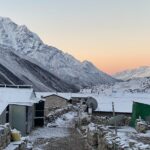
Yak Kharka to Thorong Phedi: juniper shade, yak grazing, and thinner air

Day 6 is a trek to Yak Kharka, described as about 10.4 km uphill. You pass through juniper forests, and you may see yak grazing in alpine pastures. That kind of wildlife scene is part of why I love guided circuits, because your guide knows what’s common and what’s worth looking at without turning your hike into a stop-and-go mess.
There’s also mention of a stop at Thorong Khola, noted for having the only teahouse there. That kind of detail changes your thinking. When teahouses are sparse, your planning gets simpler: you eat and rest when the trail gives you your only real chance.
Day 7 shifts you toward Thorong Phedi, described as reaching the foot area for Thorong La. As you ascend, your body progressively gets used to higher altitude. Follow the slow rhythm here. The trail steepens toward the pass section, and going too fast costs you later.
Thorong La Pass day to Muktinath: when it gets real

Day 8 is the most physically demanding day described, hiking roughly 8 to 9 hours with high altitude making things harder. Winds are mentioned as a factor, and that matters because cold wind plus thin air can slow your breathing more than you expect.
Your route reaches Muktinath, which is also a famous cultural and spiritual stop. The point of a place like Muktinath in this itinerary is that it gives you a payoff after the hardest hiking. You’re not just reaching a high altitude goal, you’re arriving somewhere that has deep local meaning.
Practical advice: pace yourself like you’re saving energy for a second half. If you sprint early, you’ll spend the later hours trying to recover, and that’s not a great way to enjoy the pass crossing.
Muktinath to Jomsom: Kali Gandaki Valley, meadows, and Kagbeni

After Muktinath, Day 9 becomes a different kind of walking. The trail is described through lush meadows, orchards, and streams, which is a nice change from the harder alpine feeling earlier in the week.
You also pass Kagbeni, known for its reputation in the region, and then continue to Jomsom in the Kali Gandaki Valley. Kagbeni is the kind of place where you see how communities adapt to the terrain. Even without a deep historical tour baked in, you can learn by looking: how homes fit the geography, how people farm where they can, and where you’ll find the basics like tea, water, and simple meals.
This day is around 6 hours, so it’s not meant to exhaust you. It helps you arrive ready for the next big connection step.
Jomsom to Pokhara: the long bus day and the lake reset
Day 10 is a drive, about 7 to 8 hours by local bus. The route goes through Tatopani via Beni Bazaar and onward to Pokhara.
Pokhara is described as famous for its lake, Phewa Tal, and known for being popular with travelers. That means you get a different pace now. Instead of guesthouse corridors and trail schedules, you get a real city-like evening with more food choices and easier downtime.
A note for your expectations: even though you’re “only” driving, your legs might still feel it after altitude. This is a good time for an early night and a gentle first meal in Pokhara.
Back to Kathmandu: time for stories and sore legs
Day 11 brings you back to Kathmandu by road, again around 7 to 8 hours. It’s a long day, but it’s also a clean finish line after trekking. You’ll spend time absorbing what you just walked through: the shifts from lush river valleys up to arid sections, the high altitude moment at Thorong La, and the culture stops along the way.
Then Day 12 is airport transfer with the operator taking you to the airport at least three hours prior to your scheduled departure. That buffer reduces stress and helps you avoid last-minute chaos.
Guides and pace: the real differentiator on a tough trek
The trek is built around experienced Sherpa guides who guide your route and share history and culture, not just directions. In the feedback included here, guide names keep coming up in a very specific pattern: Biru, Amrit, Milan, and Krishna.
What stands out from that: people liked the way the guide adapted pace and explained what you’re seeing. On a trek like this, that isn’t a small thing. A guide who can match your energy level keeps your altitude day safer and makes the trip feel more human.
Also, you’ll get trekking poles per person included, which shows they’re thinking about comfort, especially for downhills. If you’ve ever scrambled downhill on uneven stone after a long ascent, you’ll understand why this matters.
What to pack and how to train without guessing
The provided info says travelers should have strong physical fitness. I’d take that seriously. This route includes days of roughly 6 hours and one major push of 8 to 9 hours, plus high passes and altitude effects.
Training idea that works well: practice walking on uneven ground, and build leg stamina gradually. Also get used to slower pace walking. At altitude, “fast” is usually the wrong choice.
Packing basics to consider (since guesthouses and trekking days are part of the plan): warm layers for higher elevations, rain protection, a hat for sun or wind, gloves, and a way to keep essentials handy. Trekking poles are included, so you can travel lighter on that item.
Food is available for purchase, so bring some cash and plan for simple meals and hot drinks.
Who should book this Annapurna Circuit trek
You’ll like this trek most if you want:
- A guided trek with cultural stops and village encounters, including Tibetan-influenced areas like Braga.
- A realistic attempt at Thorong La Pass, with acclimatization time in Manang.
- A structured itinerary that mixes trekking with road transfers, so you’re not constantly arranging connections yourself.
This is less ideal if:
- You hate long days sitting on buses.
- You are looking for a casual hike with no demanding altitude day.
- You can’t handle hours of steady walking.
Should you book this Annapurna Circuit from Kathmandu?
Yes, if you want a classic Annapurna Circuit experience with strong support built into the package. The best reasons are practical: guides who explain and manage pace, permits and official documents handled, and solid lodging structure with Kathmandu and Pokhara built in. It’s also good value when you factor in what’s included versus what you’d likely pay separately.
Before you book, do one honest check. Are you truly ready for a high-altitude day that can last 8 to 9 hours, with wind possible? If your answer is yes, you’re in the right place. If it’s not yet, use the time to train and plan layers. The trail gives you huge rewards, but it expects effort.
FAQ
What does the trip cost?
The price is listed as $680.00 per person.
How long is the Annapurna Circuit trek?
The duration is listed as 12 days (approx.).
Where does the tour start and what happens on arrival?
The tour starts in Kathmandu. After you arrive at Tribhuvan International Airport, you are met by a representative and taken by private vehicle to your hotel.
Is pickup included?
Yes. Hotel pick up and drop off round trip are included.
What is included during the trek?
Included items are listed as trekking permit and official documents, English-speaking trekking guide, guest house accommodation during the trek, round-trip transfer by shared bus according to the itinerary, and trekking poles per each one.
What about accommodation in Kathmandu and Pokhara?
You get 2 nights in Kathmandu and 1 night in Pokhara, with breakfast included, plus guest house stays during the trek.
Are meals included?
Meals and drinks are not included. Food and drinks are available for purchase, with an approximate estimate of US$25 per day.
Is the tour private?
Yes. It’s listed as a private tour/activity, meaning only your group will participate.
When do you need to arrive for the start?
The meeting point start time is listed as 4:15 pm.
Can I get a refund if I cancel?
You can cancel up to 3 days in advance for a full refund. If you cancel within 3 days of the start time, the amount paid is not refunded.
More Hiking & Trekking Tours in Kathmandu
More Tour Reviews in Kathmandu
Not for you? Here's more nearby things to do in Kathmandu we have reviewed


Annapurna Treks from Kathmandu, compared.
 ★ 5.0Annapurna Circuit Trek with Tilicho LakeFrom $1,093368 reviews
 ★ 5.0Annapurna base camp trek 5 DaysFrom $699252 reviews
 ★ 5.0Annapurna Base Camp TrekFrom $935111 reviews
 ★ 5.0Kathmandu to Annapurna Base Camp (ABC) 5-Day TrekFrom $99102 reviews
 ★ 5.04 Days Poon Hill TrekFrom $40594 reviews
 ★ 5.0Annapurna Circuit TrekFrom $1,17594 reviews
 ★ 5.0Annapurna Base Camp Trek 12 DaysFrom $80085 reviews
 ★ 5.0Ghorepani(Poonhill Trek)From $60081 reviews
Browse the lists this tour appears in