
REVIEW · HIKING & TREKKING
Upper Mustang Trekking
Lo Manthang feels like a time capsule. This Upper Mustang trek puts you in remote Tibetan Buddhist country, walking from Kagbeni through monasteries, walled Lo Manthang, and back again with a clear plan for transport and permits.
I especially like the organization of the route, from Kathmandu pickup and hotel nights to the domestic flights and lodge stays. I also like that the itinerary keeps the walking realistic, with clear day-to-day segments like Kagbeni to Chhusang and later a big, obvious downhill toward the Kali Gandaki River.
One thing to think through first is logistics around access. You need both an ACAP trekking permit and a special Upper Mustang permit (USD 500 per person for 10 days), and the timing for that paperwork matters, especially if you want it done smoothly before you start walking.
Key things I’d watch before you go
- Special Upper Mustang permit, fixed schedule: You pay USD 500 per person for 10 days, and the process has a real checkpoint feel once you enter the restricted area.
- Lo Manthang is the big target: Monastery visits and the King Palace area are built into the day so you do not rush the walled city.
- Apple country is part of the story: You pass apple gardens, and Jomsom is a spot to pick up apple brandy.
- Altitude stays manageable for most people: Elevation often stays around or under 4,000m on this route, and the focus is on trekking time, not technical climbing.
- Private group, guided and portered: You travel as only your group, with a government-licensed guide and a porter set up as 1 porter for 2 people.
Entering the Upper Mustang Zone, from Kathmandu to a Restricted World
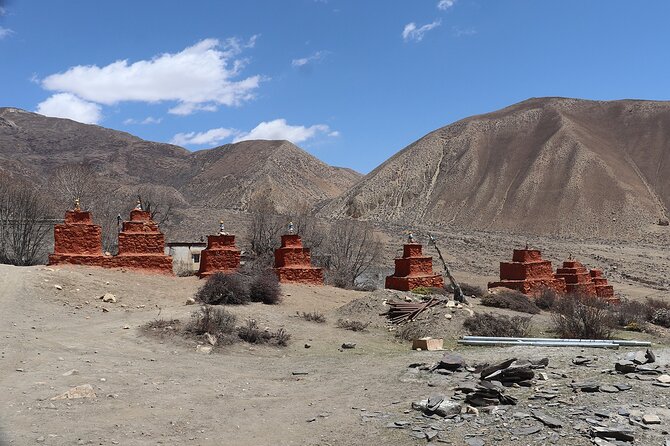
Upper Mustang sits in a dry, high-desert corner of Nepal that feels intentionally off the grid. You are walking in a place that historically has been shaped by Tibetan Buddhism, fortified by walls and gompas, and kept quiet by the access rules.
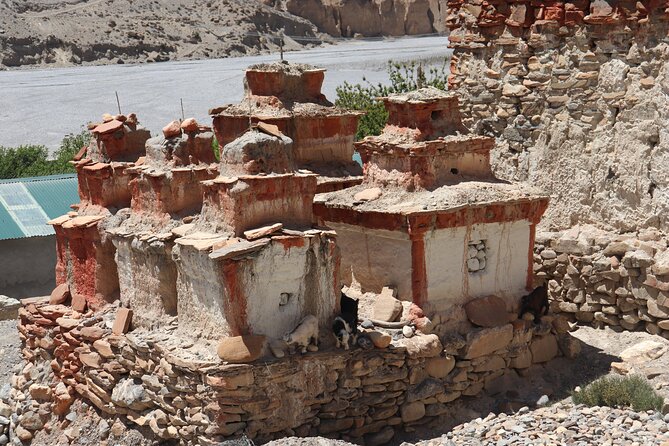
The trek has a big emotional payoff because the culture is visible as you go. You see monasteries on the route, walled-city details in Lo Manthang, and prayer life embedded in daily village rhythms.
You can also read our reviews of more hiking tours in Kathmandu
Permits, passports, and the admin day you cannot skip
Before your first day of real trekking, you handle the access paperwork in Kathmandu. You get the Upper Mustang Special Permit, and you do it using your original passport with a Nepal visa. The permit process takes about a day, so it is not something you want to leave to the last minute.
You also need an ACAP trekking permit (Annapurna Conservation Area Project). This is listed as part of the included items, which is a big time-saver because you are not hunting down offices or deciphering forms while jet-lagged.
If you hate paperwork, plan for it. This trip is built around access rules, and the payoff is that you are walking through a protected, less crowded region.
Getting to Jomsom: flight at 2,715m starts the trek quickly
On the travel days, the plan is efficient. You take a morning bus ride from Kathmandu toward the domestic airport area, then fly to Jomsom. The flight lands you at 2,715m, which means your trekking starts in an already high, dry environment.
From there, the first trail segment is your classic Mustang entry: Jomsom to Kagbeni. The walk takes about 4 to 5 hours, and the terrain feels more like arid valley trekking than “green hillside hiking.”
If you are sensitive to altitude, take it easy on day 4. Start slow, hydrate, and do not try to “make up time” on the first walking day.
Kagbeni and Chhusang: the gate, the restricted area, and the first village rhythm
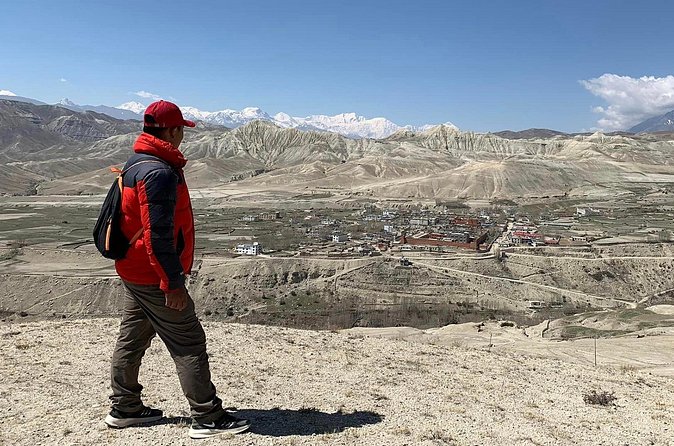
Kagbeni is not just a place to sleep. It is the main entry gate area for Upper Mustang. Once you reach the restricted entry checkpoint, you do the necessary checks tied to the special permit. This is where the whole trip feels real, not abstract.
Then you trek down and over to Chhusang. That day is described as a descent from Kagbeni toward Chhusang, with time set for the entry process once you are in the restricted zone.
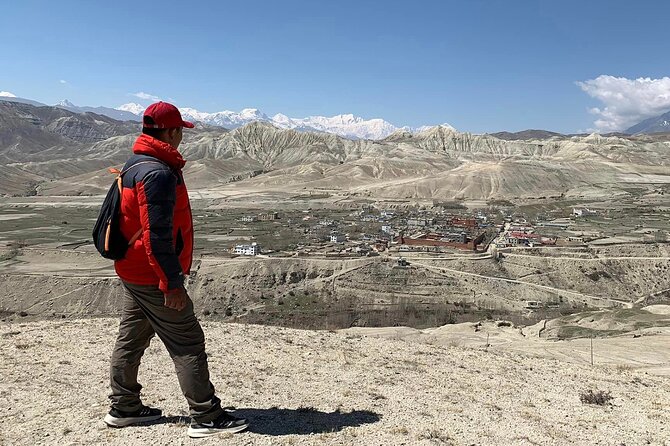
This part of the trek matters because it sets your expectations. Mustang trekking is not about huge peaks every day. It is about walking between stone villages, monasteries, and valley walls, with the wind and dust part of the daily rhythm.
Somare to Syangboche: climbs that pay off with big views
The next section, Chhusang to Somare, shifts the walking style. Some of the trail is described as fairly flat, with a bit of stepwork, then you face the day’s bigger climb toward Syangboche.
Expect around 5 to 6 hours of trekking. You also get small “life on the ground” moments, like passing through apple gardens, which is a key Mustang detail. In a dry region, apple growing feels almost stubborn.
Day 7 pushes more upward. You climb up to Syangboche, mostly uphill, and you stop for lunch and rest. When the weather clears, you get strong views of major peaks like Dhaulagiri (8,167m) and Annapurna I (8,097m).
A practical tip: if weather is clear, use that to your advantage. Move with intent on the uphill days, because fog can steal your views fast in these valleys.
Ghiling and Tsarang on the way to Lo Manthang
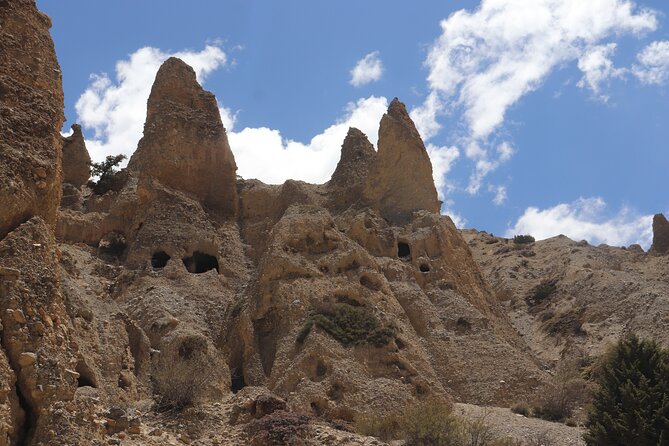
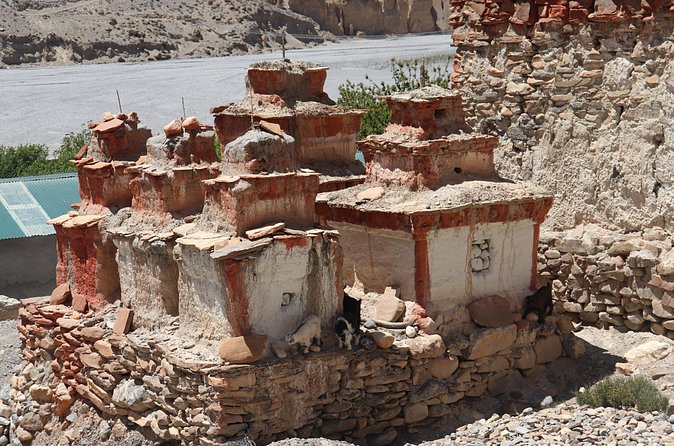
After breakfast, you follow a route that links monasteries and villages. Ghiling village is named specifically, including old monasteries, so this is not just “walk to the city.” You are seeing the religious architecture along the way.
Then you continue toward Tsarang. The itinerary notes Tsarang as one of the larger settlements, and that rings true for how most Mustang villages feel. Bigger villages often mean more activity, more buildings, and more visible lineage through stone and prayer flags.
If the day is clear, you can expect better visibility across farms and the surrounding high valleys. That weather-dependent quality is normal here, so build flexibility into your mindset.
Lo Manthang: walled city focus, monastery visits, and the King Palace day
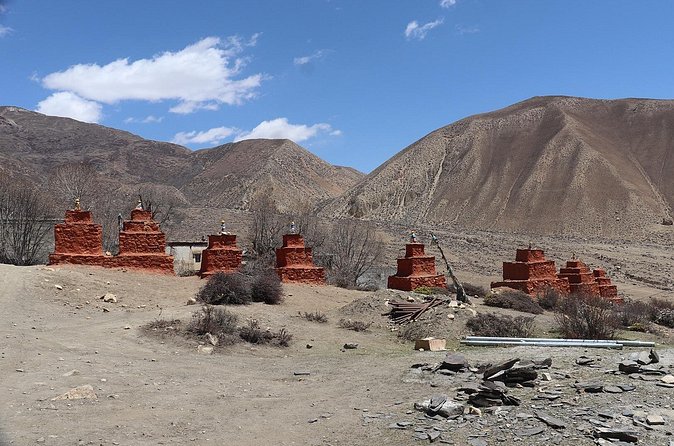
When you finally reach Lo Manthang, the trekking payoff becomes concrete. The walk from the previous stop takes about 5 to 6 hours, with rivers and bridges described along the way and stretches that feel deserted.
Lo Manthang itself is built as a target day. You spend a full day exploring after arriving. The plan includes visits to the monastery and the King Palace area.
This matters because Lo Manthang is not a quick photo stop. It is a walled city, and time inside those lanes helps you understand the place as more than scenery.
You also see colorful village decorations and the feeling of a Himalayan kingdom. Even if you do not know the religious details yet, you still sense the order of the city through walls, structures, and the way daily life works around the gompas.
Dhakmar to Ghami: gompas, valley walking, and apple gardens again
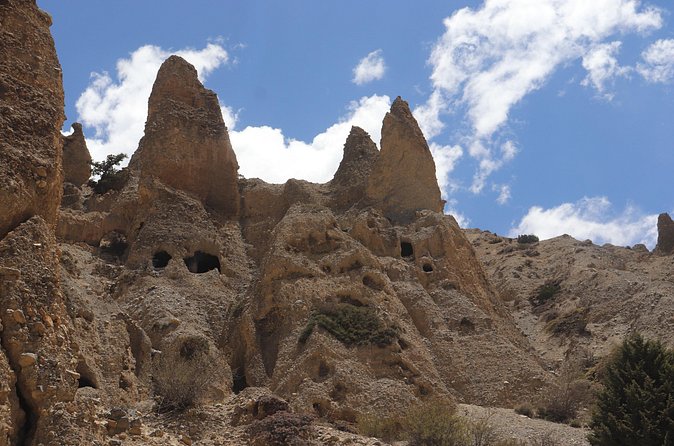
After Lo Manthang, the trek continues deeper into the Mustang valley experience. Day 11 walks toward Dhakmar, and the plan starts uphill to a gompa, with emphasis on the local religious history around these sites.
Day 12 follows the trail from Dhakmar to Ghami. Ghami is described as a big village and monastery area, and the walking continues through the Upper Mustang valley feel. Apple gardens show up again here, and there is also mention of farm products connected to a foreigner, which adds an interesting modern layer to a place built on traditions.
This segment is good for you if you enjoy slower, cultural trekking. The route is not trying to rush you between ticking boxes. It gives you time to notice village life and religious sites as part of the route.
The return: big downhill days, wind timing, and Kaligandaki River terrain
On the way back, you get a major change in energy. A day is described as a big downhill, dropping about 1,000 meters toward the Kali Gandaki River. Along the descent, you pass small villages like Samar, Bhena, and Chele.
Descent can feel easier than climbing, but it often beats up your knees and balance. I recommend trekking poles if you use them, and slow footwork on the steeper sections.
Then comes the key wind factor. On the Chhusang to Kagbeni day, the plan says to leave early, because after about 12:00 PM strong wind can make the trek uncomfortable. The itinerary aims to get you to Kagbeni before that wind intensifies.
That early start strategy is not just “nice.” It helps your day feel controlled instead of getting worn down by the environment.
Jomsom and Pokhara: short hike, flight timing, and apple brandy purchases
Once you reach Jomsom, you do an easy, short hike to the town. The key job there is practical: you check your flight schedule for the next day.
Jomsom is also where you can buy local treats. The itinerary specifically notes apple brandy from apple makers, plus other small items from local producers. This is a fun “Mustang souvenir” that actually fits the region, since apples show up repeatedly during the trek.
The flight back to Pokhara is listed as about 25 minutes. From Pokhara, you transfer to hotel, then later the group takes a tourist bus ride back to Kathmandu, described as about 7 hours.
If you like comfy logistics after days of lodge trekking, this back-half is a relief. You get a reset without losing the momentum of the route.
Price and value: what USD 2,400 covers, and what it does not
At USD 2,400 per person, the value comes from how much is bundled. You are not just paying for a guide and a few hotel nights. The package includes:
- Kathmandu and Pokhara accommodation with breakfasts (3 nights in Kathmandu at a 3-star level, plus 2 nights in Pokhara)
- Domestic flight legs to and from Jomsom
- Lodge/tea house accommodation during the trek
- 16 lunches and dinners plus breakfast each morning listed as 17
- A government-licensed trekking guide and porter support (1 porter for 2 people)
- The ACAP permit and the special Upper Mustang permit (USD 500 per person for 10 days)
- Ground transport, including pickup and drop by private vehicle in Kathmandu and Pokhara areas
What is not included is also clear: extra personal expenses, tips for guide, porters, and drivers, and any extra hotel nights beyond the specified Kathmandu and Pokhara stays.
Who should consider this price? If you want a well-run, permit-based Upper Mustang trek with fewer unknowns, this package fits. If you are the type who can handle your own logistics and paperwork, the cost may feel high. But for most people, the bundled permits, domestic flights, and porter system are exactly what make this manageable.
Should you book this Upper Mustang trekking plan?
You should strongly consider booking if you want a focused Upper Mustang route with Lo Manthang as the centerpiece, and you prefer an organized setup over piecing together flights, permits, and lodge bookings yourself. The tour also fits if you like cultural trekking, gompas, and village heritage more than technical mountaineering.
I would think twice if you dislike paperwork, because the access rules require a real permit process and passport handling in Kathmandu. I’d also plan your expectations around weather and wind. A day that leaves early to beat strong wind is not a suggestion, it is part of how the trek works.
If you want a Mustang experience that feels calm, controlled, and genuinely remote, this one is a solid match.
FAQ
What permits do I need for Upper Mustang trekking?
You need an ACAP trekking permit (Annapurna Conservation Area Project) and a Special Upper Mustang Permit. The Special Upper Mustang Permit is listed as USD 500 per person for 10 days, and it is arranged in Kathmandu using your original passport with a Nepal visa.
How do you travel between Kathmandu, Pokhara, and Jomsom?
You travel Kathmandu to Pokhara and back by tourist bus. You fly between Pokhara and Jomsom using domestic air tickets, and the trek then connects Jomsom to Kagbeni and later returns from Jomsom to Pokhara.
What does the trek difficulty look like?
This trip is listed for people with a strong physical fitness level. The walking days include segments of about 4 to 6 hours, including climbs and a big downhill day toward the Kali Gandaki River. Altitude can be high, and you start trekking from Jomsom at 2,715m.
Where do you sleep during the trek?
You stay in lodge or tea house accommodations during the trek. In Kathmandu you have 3 nights at a 3-star hotel with breakfast, and in Pokhara you have 2 nights of accommodation with breakfast.
Are meals included?
Yes. The package includes 16 lunches and dinners, plus breakfast is included throughout the trip as listed (breakfast for 17 mornings).
Do I get a guide and porter?
Yes. You get a government-licensed trekking guide and a porter. The porter arrangement is 1 porter for 2 people, which helps take pressure off your pack.
Is this tour private?
Yes. It is listed as a private tour or activity, so only your group participates.
When do you meet the team and where?
The meeting point details are listed with opening hours of 8:45 AM to 6:45 PM, Monday through Sunday, during the period 03/19/2024 to 12/31/2026. The tour also includes pickup offered and airport or hotel pickup and drop by private vehicle.
What is the cancellation policy?
You can cancel up to 6 days in advance for a full refund. For a 50% refund, you must cancel 2 to 6 days in advance. If you cancel less than 2 days before the experience start time, the amount paid is not refunded.
More Hiking & Trekking Tours in Kathmandu
More Tour Reviews in Kathmandu
Not for you? Here's more nearby things to do in Kathmandu we have reviewed


Hiking & Trekking, compared.
 ★ 5.0Everest Base Camp Trek – 14 DaysFrom $1,8001,499 reviews
 ★ 5.0Everest Base Camp TrekkingFrom $1,350485 reviews
 ★ 5.0Nagarkot Sunrise View and Day Hiking from KathmanduFrom $45471 reviews
 ★ 5.0Annapurna Circuit Trek with Tilicho LakeFrom $1,093368 reviews
 ★ 5.0Everest Base Camp Trekking – 13 DayFrom $1,399365 reviews
★ 5.0Everest Base Camp Trek -14 DaysFrom $1,420321 reviews
★ 5.0Everest Base Camp Trekking – 13 DayFrom $1,399365 reviews
★ 5.0Everest Base Camp Trek -14 DaysFrom $1,420321 reviews
 ★ 5.0Annapurna base camp trek 5 DaysFrom $699252 reviews
 ★ 5.0Everest Base Camp Trekking – 2025/2026From $1,339199 reviews
Browse the lists this tour appears in