

REVIEW · KATHMANDU COOKING & MOMO CLASSES
Momo, Dhalbhat & Thukpa Cooking Class, Nepal
Your morning gets tastier in Patan. This cooking class pairs a stop at Hiranya Varna Mahavihar with a local vegetable market walk, then you practice classic Nepalese comfort food on a rooftop kitchen.
I love how personal it feels, especially with Esther Rai teaching, plus the way you can ask questions while picking ingredients up close. You are not stuck at a grocery shelf, you are talking to real sellers and learning what to look for.
One possible drawback: if you like a fully step-by-step, start-from-scratch experience, you might feel a bit less hands-on since some parts may already be prepared for the group.
Key things to know before you go
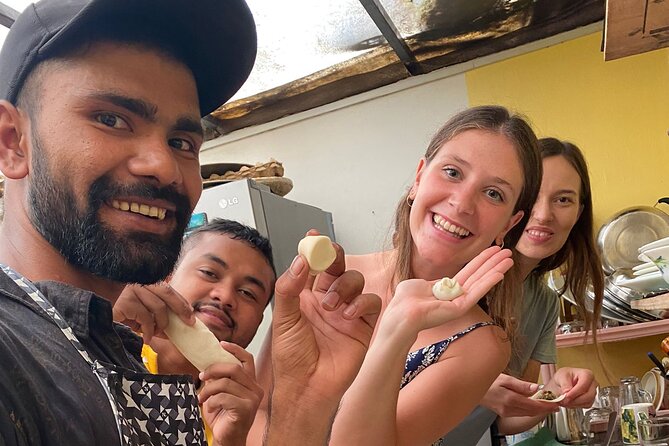
- Local vegetable market walk before cooking so you understand what you are buying and why it matters
- You learn three Nepalese favorites: momo, dhalbhat, and thukpa
- Patan sightseeing that stays short and practical, including time around Hiranya Varna Mahavihar
- Small group size (up to 10 people) for more attention while you cook
- Menu can match your request, so you get to steer what you make
- You eat what you cook, right after the class finishes
Patan Cooking Class Basics: Price, Time, and Who Teaches
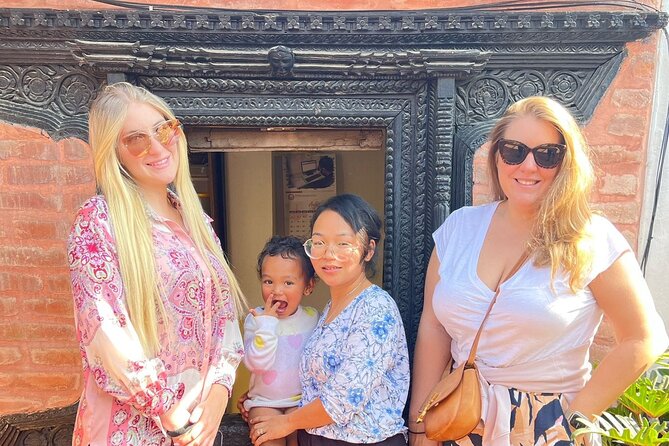
This is a Nepalese cooking class in Kathmandu that runs about 3 hours. You pay $25 per person, and the value is not just the food. It is the whole flow, market to meal, taught by a real home-style cook who wants you to understand how Nepali kitchens work.
The instructor is Esther Rai, who started offering this cooking class program after COVID-19 to support her family. That purpose comes through. This is not a scripted performance. Esther teaches because she loves the process, and because she likes seeing people enjoy what she makes.
You will also notice collaboration behind the scenes. In the class setup, Amos shows up as a key helper in at least some sessions, which is a good sign for keeping the group moving and everyone fed.
Group size is capped at a maximum of 10 people. That matters. In a bigger class, you can spend half your time waiting and half your time scrambling. Here, you are more likely to get a real answer to your question, especially during tricky parts like shaping dumplings or balancing flavor in a bowl of dal bhat.
You can also read our reviews of more cooking classes in Kathmandu
Meeting in Nagabahal and Getting Oriented in Patan
You meet at Nagabahal – Nyadha Galli, Lalitpur 44600, Nepal and the experience ends back at the same meeting point. That makes the logistics simple, especially if you are already spending time around Patan.
The class also includes a cultural walk component with Hiranya Varna Mahavihar as a stop. You get a chance to connect the food you are about to cook with the place you are in. For many people, that is the difference between eating Nepalese food and actually understanding it.
Then there is a second stop focused on Patan (Lalitpur). Patan is close enough to see without burning your whole day, which is perfect when you want a short, meaningful morning.
One practical plus: the meeting area is near public transportation. Another: the cooking spot is extremely close to Patan Durbar Square. One account describes it as about a 5-minute walk, so you can often extend your time outside the class without big detours.
The Market Walk That Actually Changes Your Cooking
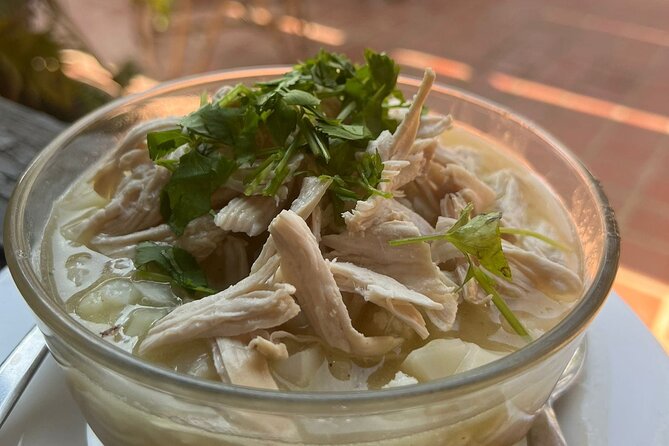
Before you start cooking, you go to a local vegetable market. This part is genuinely useful, not just a photo break.
You get to interact with vegetable sellers and see what is fresh. That matters because Nepalese cooking often depends on ingredient quality and texture. You can follow a recipe, but if you do not know what to look for in the produce, your final dish can taste flat or feel off.
In the class experience, this market time also teaches you how ingredients connect to daily life. You are not only buying items. You are learning how people talk about vegetables, how they choose, and how sellers think about what is needed for household cooking.
This is also your moment to ask questions that never come up in restaurants. Want to know which spices are essential for the flavor base? Want to understand how a certain vegetable behaves when cooked? In a market walk, those answers come faster.
And yes, it feels nice to step away from Thamel. If your Kathmandu routine has been temple, pavement, and coffee, this gives you a morning with purpose.
Making Momo, Dhalbhat, and Thukpa (Not Just Watching)
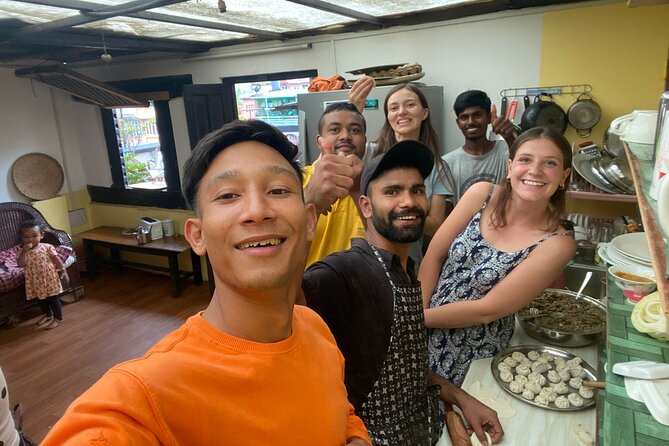
The core of this experience is hands-on practice making three staples: momo, dhalbhat, and thukpa.
Momo: dumplings with real technique
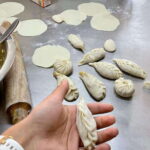
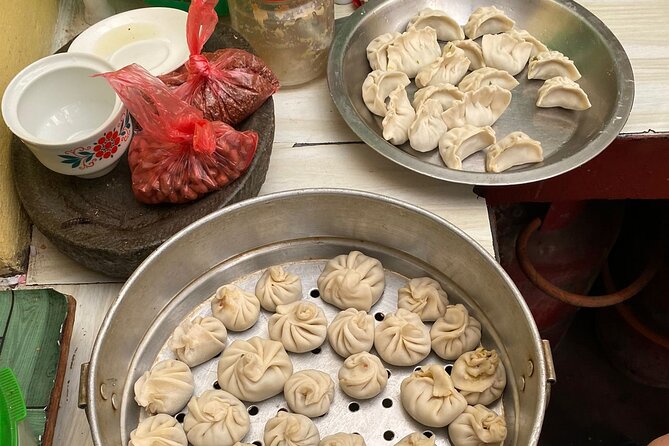
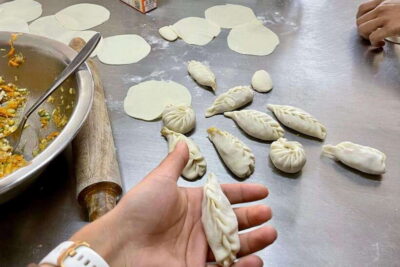
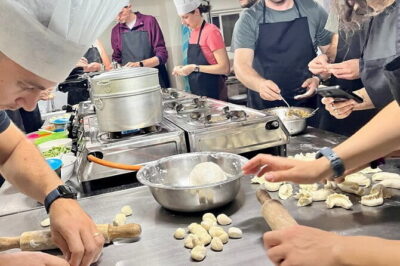
Momo is one of those foods where your first attempt can be either charming or messy. The class focuses on learning and practicing, not just copying. Expect to work through the dumpling process with Esther’s guidance, including how to assemble and season things properly.
The most common satisfaction point people mention is flavor and authenticity, which is what you want from a momo lesson. You are aiming for that home-kitchen taste, not a bland version you would find in a hurry.
A few more Kathmandu tours and experiences worth a look
Dhalbhat: dal, rice, and the comfort formula
Dhalbhat is often the heart of Nepalese meals, and the class treats it that way. You learn the components and how to balance them so the dish tastes like it belongs on a Nepali table.
Multiple people highlight how good the dal bhat is, including calls for it being some of the best they ate during the trip. That is a big deal. If you are going to spend your time cooking, this should be the kind of flavor that makes you glad you did.
Thukpa: noodles and warmth
Thukpa rounds out the meal with noodles and a soup or stew style bowl. Here you learn how flavors come together so it is comforting, not just filling.
Even if you do not think you are a noodle person, thukpa is a good lesson because it teaches you how broth flavors build.
Menu can match your request
Another practical advantage is menu flexibility. Esther notes that she does her menu according to guest request. If you have a specific preference, this is where you can often steer the class toward what you want most.
The Rooftop Kitchen and Family-Style Hospitality
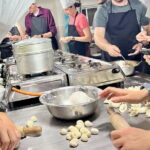
One of the things that makes this class feel different is that it is described as a rooftop cooking location. Rooftops can be a little cooler in the morning and a lot more comfortable for working, especially if you are trying to concentrate on technique.
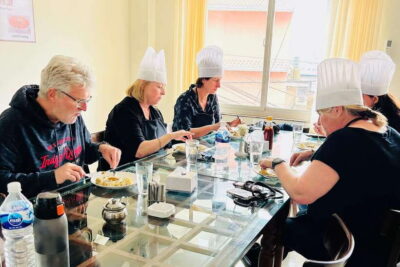
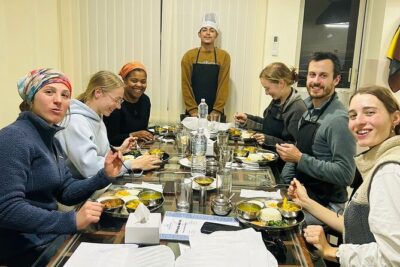
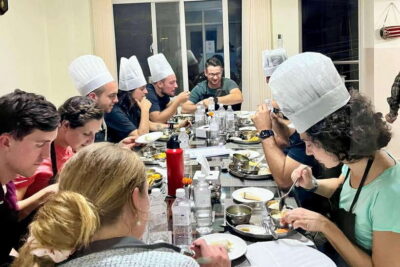
This is also set up like a family home experience. You are not sealed into a lab. People describe feeling welcomed, with a teaching style that is clear and friendly, including during explanation-heavy moments.
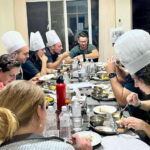
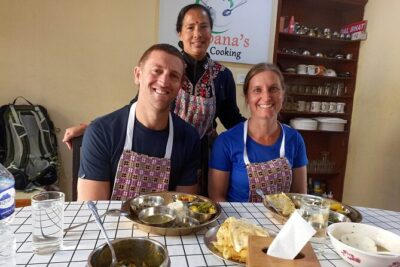
You also get to eat once the cooking is done. That sounds obvious, but it is important. Many cooking experiences let you cook and then send you away with a few bites. Here you sit down for the full payoff, which helps you connect what you did with what it tastes like.
Cultural Stops That Work With the Cooking, Not Against It
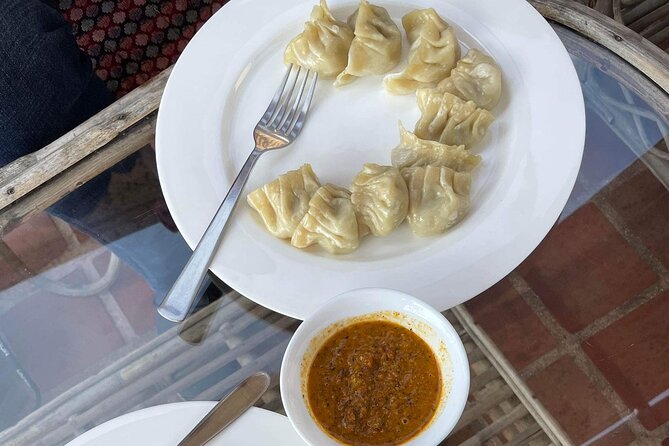
The stops around Hiranya Varna Mahavihar and Patan are not just sightseeing filler. They are there to give context to the food lesson.
In practice, you can think of it like this: you walk through parts of Patan, you learn a bit about traditions connected to daily life, and then you return to the kitchen and turn that context into something you can taste.
Patan Durbar Square is extremely close to where the cooking happens, so if you want to keep exploring after the class, you are already in the right neighborhood.
The only downside with any short cultural stop is that it is not going to replace a full day of wandering. If you want long museum-style time, you should plan those separately. For a 3-hour activity that also includes food practice, this is about balance.
Value for $25: Why This Is More Than a Meal
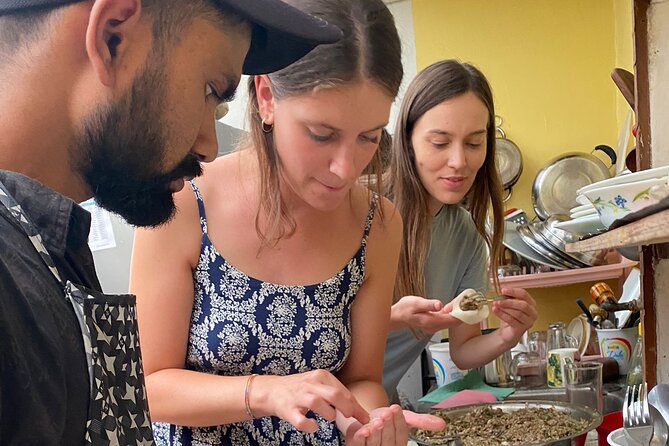
At $25 per person for about 3 hours, this can feel like a deal or like a gamble, depending on what you think you are buying.
Here is what you are actually getting:
- Ingredient shopping with interaction at a vegetable market
- Teaching and hands-on practice for three dishes
- Food included, eaten at the end
- A small group setup, up to 10 people
- A local instructor, Esther Rai, whose teaching is tied to family support after COVID-19
That last point is not charity talk. It is practical: when someone is teaching out of real need and real love, you often get better care, better explanations, and a more personal pace.
Also, when a class includes both market walk and cooking, you are not just paying for dinner. You are paying for learning how ingredients and spices behave in Nepalese meals.
One more value angle: learning even a small technique in momo or a flavor balance in dal bhat usually pays off later, because you can recreate a meal at home and know it will taste closer to the real thing.
Practical Tips to Make the Most of the 3 Hours
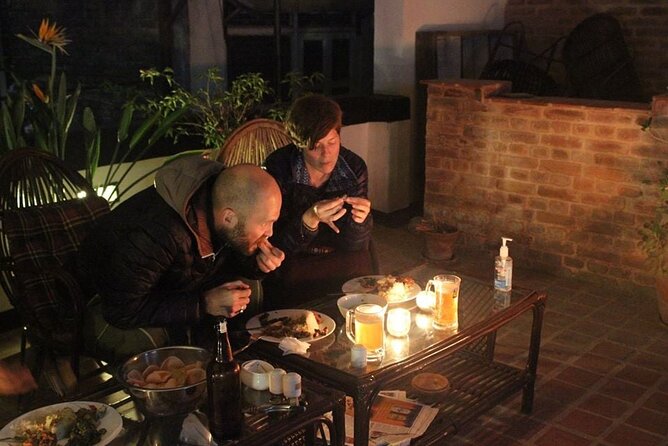
You can do a lot to improve your experience before you even arrive.
First, bring an appetite and some patience. Dumplings and soup take time, and you will do better if you focus on process instead of perfection.
Second, wear comfortable shoes. The class includes walking components in Patan and time around the market area, and you do not want to feel rushed because your feet are angry.
Third, be ready to ask questions. If you want to know why a certain ingredient matters, this is the best moment to ask while you are looking at it in the market.
Fourth, consider your spice tolerance. Nepalese dishes can be flavorful and warm, but your personal preference counts. If you want it mild, ask early.
Finally, plan around good weather. The experience requires good weather, so if it is rainy or stormy, you might need to switch dates or take a refund depending on how it is handled.
Should You Book This Momo, Dhalbhat, and Thukpa Class?
I think this is an easy yes if you want a hands-on way to taste Nepal beyond the usual restaurant loop. You get three dishes instead of one, you visit a local vegetable market, and you cook in a small group with Esther and support from Amos.
Book it if:
- You want to learn real Nepalese technique, especially momo shaping and flavor building in dal bhat and thukpa
- You like morning activities that feel connected to place, not just food
- You are staying around Kathmandu and want something short enough to fit your schedule
Skip it or choose a different option if:
- You want every step from scratch with no prepped elements at all
- You hate walking around markets, even briefly
- You can’t do outdoor or rooftop weather-dependent activities
If you are on the fence, check your timing and weather window. When conditions are good, this kind of class can become one of those trip moments that is not just tasty, it sticks.
FAQ
How long is the cooking class?
The class lasts about 3 hours.
How much does the class cost?
It costs $25.00 per person.
What dishes will I learn to make?
You will learn and practice making momo, dhalbhat, and thukpa.
Do we visit a market during the experience?
Yes. You go to a local vegetable market before you start cooking and interact with vegetable sellers.
Where do I meet and where does it end?
You meet at Nagabahal – Nyadha Galli, Lalitpur 44600, Nepal, and the activity ends back at the same meeting point.
How big is the group?
The experience has a maximum of 10 travelers.
Is food included?
Yes. You eat the food once it is cooked.
What happens if the weather is bad?
This experience requires good weather. If it is canceled due to poor weather, you will be offered a different date or a full refund.
What is the cancellation policy?
You can cancel for a full refund if you cancel up to 24 hours in advance of the experience start time. If you cancel less than 24 hours before, the amount you paid will not be refunded.
More Workshops & Classes in Kathmandu
More Cooking Classes in Kathmandu
More Tour Reviews in Kathmandu


Not for you? Here's more nearby things to do in Kathmandu we have reviewed


Kathmandu Cooking & Momo Classes, compared.
 ★ 5.0Half day cooking class in Thamel kathmanduFrom $28607 reviews
 ★ 4.9Local Women-Led Nepali Cooking & Momo ClassFrom $4360 reviews
 ★ 5.0Local Lead Nepali Cooking & Momo-Making ClassFrom $5212 reviews
Local Women Lead Nepali Cooking ClassFrom $30125 reviews
 ★ 5.0The best Private Nepali Cooking Class in KathmanduFrom $2483 reviews
 ★ 4.8Traditional Momo Making Class & PickupFrom $460 reviews
 ★ 5.0Traditional Nepali Momo Making ClassesFrom $1853 reviews
 ★ 4.9Local Women-Lead Nepali Cooking & Momo ClassFrom $545 reviews
Browse the lists this tour appears in