
REVIEW · KATHMANDU SACRED SITES TOURS
Kathmandu Spiritual Sites: Bodhnath & Pashupatinath Tour
Evening prayers in Kathmandu feel personal. This half-day tour strings together Boudhanath Stupa and Pashupatinath Temple in one smooth arc, so you get two different religions, one city, and a lot of real-life spiritual rhythm without trying to cram it all solo. You start in Thamel, take local transport, and end after the famous evening lights at Pashupatinath.
I especially like the hands-on moments, like rotating prayer wheels with local Buddhists at Boudhanath and lighting a traditional butter lamp as part of the visit. I also like that the pace is built for understanding, since your guide explains what you are seeing, from Hindu ideas about birth and death to how sadhu monks practice devotion.
One thing to plan for is that Pashupatinath happens in a crowd, and the cremation area along the Bagmati River is emotional and sensitive. You will want to keep close to your guide and skip photos or lingering near mourning families.
Key highlights worth your attention
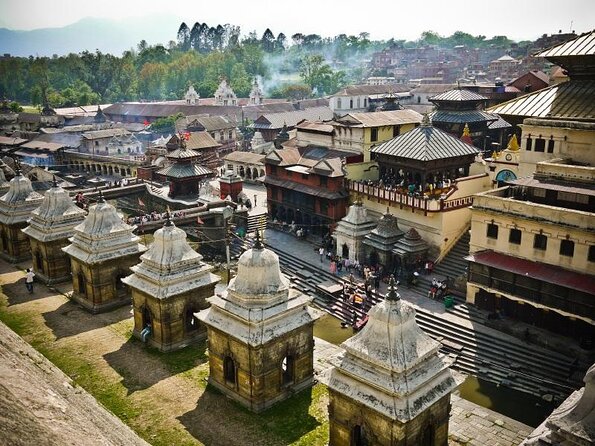
- Two UNESCO sites in one afternoon: Boudhanath Stupa and Pashupatinath Temple, both UNESCO World Heritage listed.
- Prayer wheels and butter lamp time: you actively join the ritual at Boudhanath, not just pass by.
- Sadhu spotting with real context: your guide explains what you are looking at and why it matters.
- Evening aarti at Pashupatinath: you watch the offering of lights as the sun goes down.
- Bagmati River cremations, with respect rules: you can witness ceremonies while keeping appropriate distance and no photo behavior near families.
- Small group max 12: easier movement in crowds and more chances to ask questions.
How this Kathmandu spiritual evening actually feels
This tour is designed for the time of day when Kathmandu’s major religious sites stop looking like monuments and start looking like places people live inside. You begin at 3:00 pm, and you finish after sunset energy builds at Pashupatinath. That timing matters. It is when the action concentrates around rituals, families, and the steady flow of local visitors.
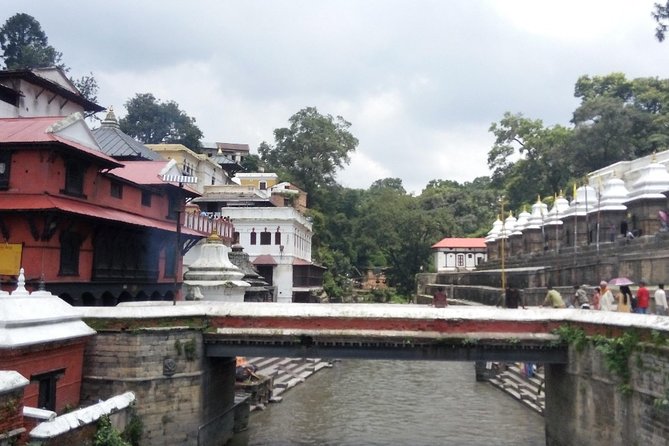
You are also not stuck in a “see it from the sidewalk” mode. At Boudhanath, you rotate prayer wheels with locals around the huge white stupa dome. At Pashupatinath, you get the full sequence: sadhu context, the Bagmati River cremation area, and then the aarti ritual with offerings of lights to Lord Pashupatinath.
Price-wise, $60.56 per person is not low, but it is not only a seat in a vehicle either. Entrance tickets for both UNESCO sites are included, transportation between sites is included, and your guide’s time is included for about a half day. If you are already paying Kathmandu entry fees on your own, this often works out more sensible than cobbling together two guides and two separate trips.
You can also read our reviews of more tours and experiences in Kathmandu.
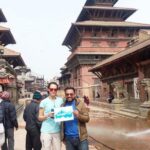

Meeting point in Thamel, then straight into local Kathmandu
Your tour starts at Hotel Marshyangdi on Chaksibari Marg in Kathmandu, with Thamel as the staging area. Thamel is famous for being convenient, but the whole point here is that you use it as a launchpad, not a destination. You will board your transport at the meeting point and head out to Boudhanath.
There is a short stop in Thamel during the flow of the tour, so don’t panic if you feel like you are just getting organized. This is the moment to get oriented with your guide, confirm what you will do at each site, and get the timing right before the crowds peak.
You’ll also appreciate the choice to use public transport. It helps you avoid the bubble effect that sometimes happens when a tour only uses private cars. Even a short ride through neighborhoods can sharpen your sense of where you are, and it nudges you toward behaving like a visitor, not like a passenger.
Stop 1: Boudhanath Stupa and the ritual you can join
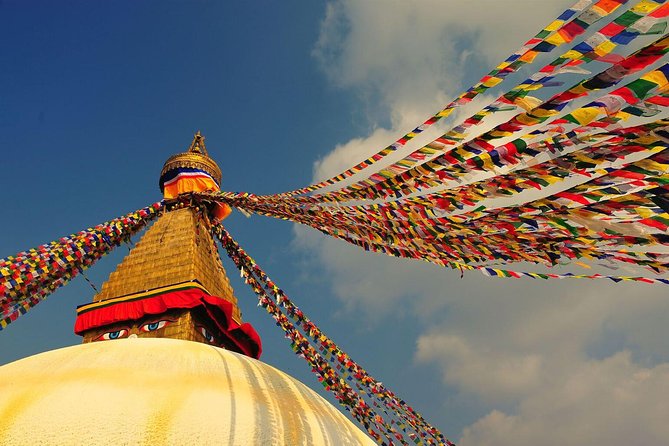
Boudhanath Stupa is the first big spiritual anchor on this route. It is described as the largest Buddhist stupa in Nepal and a center for Tibetan Buddhism, and you get a full chunk of time there, about 1 hour 25 minutes.
What makes this stop worth it is that it is participatory. You circumnavigate the stupa with locals and rotate prayer wheels as you go. That is a simple action, but it changes the experience. You stop watching from the outside and start doing something that locals recognize as part of the place.
You also have the option to offer a traditional butter lamp. That is not mandatory, but it is one of the easiest ways to understand the site beyond architecture. It connects what you are doing physically with what people believe spiritually.
Practical note: this is a very popular site, so you will see lots of people. In the daytime, that can mean shoulder-to-shoulder walking. In the evening, it is easier to notice layers of devotion, like people pausing, repeating motions, and moving around with a purpose.
The walk to Pashupatinath, and why it matters
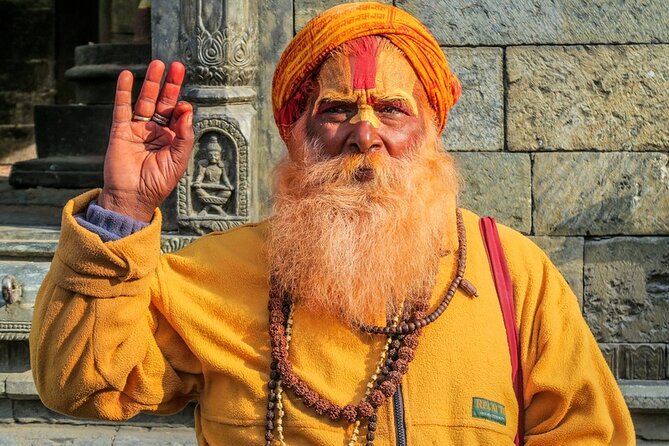
After Boudhanath, you shift toward Pashupatinath with a brief walk segment. The route includes walking for around 15 minutes to reach Pashupatinath, and the overall approximate walking distance is listed at about 2 km for the tour.
For many visitors, that walk is part of the value. It is long enough to feel like you are moving through real Kathmandu, but short enough that the main focus stays on the sites. You should wear shoes you trust. Temple stones and uneven pavement are a normal part of Kathmandu sightseeing.
A key point here is expectations. Pashupatinath is not a single viewpoint. It is a temple complex and a river edge where major ceremonies happen. Your guide’s job includes helping you position yourself, follow rules about where you should not film, and keep the group together when the crowds swell.
Stop 2: Pashupatinath Temple, sadhu life, and what you need to respect
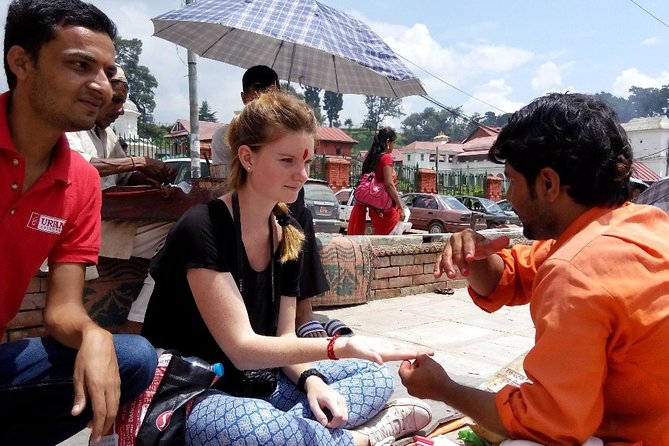
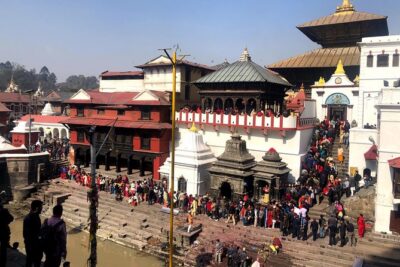
Pashupatinath Temple is the other UNESCO World Heritage highlight, and the tour gives you about 2 hours 20 minutes there. It is dedicated to Shiva and is one of the holiest Hindu shrines in Nepal.
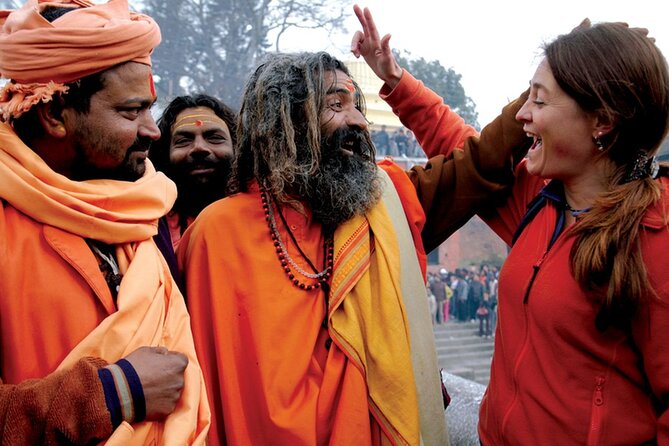
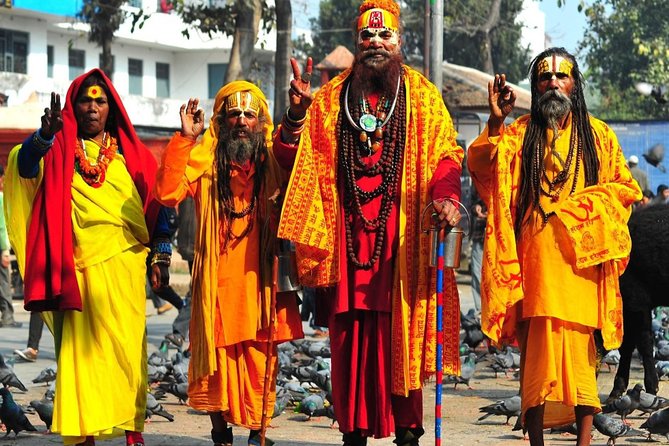
This stop is more intense than Boudhanath for one simple reason: it is tied closely to life stages, including death. Your guide explains Hindu beliefs, including the cycle of birth and death. You also see the colorful garb worn by sadhu monks, and your guide talks about their beliefs, including the idea of sacrificing material possessions as a sign of devotion.
Cremations along the Bagmati River are part of what you can witness here. The tour specifically notes that cremation ceremonies take place along the edge of the river, and that they happen close to where visitors often gather. You are asked to refrain from taking photos or watching the rituals out of respect for mourning families.
That respect rule is not a suggestion meant to be ignored. It affects how you stand, how close you linger, and how you behave. If you keep that in mind, the experience becomes meaningful rather than uncomfortable.
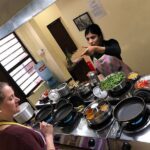

The palm reader option, and how to treat it as a cultural moment
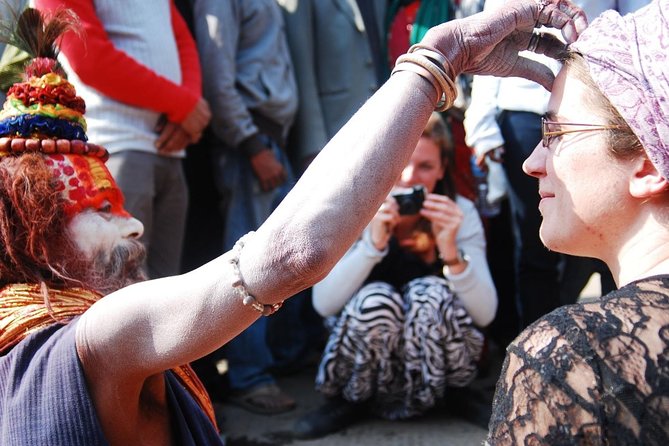
Near the Pashupatinath entrance area, the tour includes the option to get a future read by a local palm reader. This is optional and the palm reader’s fees are not included. The info provided includes an estimated range of about $7.5 to $9 per person.
There’s a second related optional element mentioned too: you may offer butter lamps at Boudhanath and may interact or take photos with sadhus, with an estimated cost listed as $7.5. The guide can also assist with negotiating accordingly.
How I think about this: I do not see palm reading as a scientific service. I see it as a cultural interaction you can choose to try, like a quick question-and-response moment with a local who has a consistent livelihood tied to visitors. If you want to do it, budget extra and be prepared for the fact that it is not about getting a bargain. It’s about participating in a local tradition in a respectful way.
Aarti at sunset: the lights, the crowd, and staying with your group
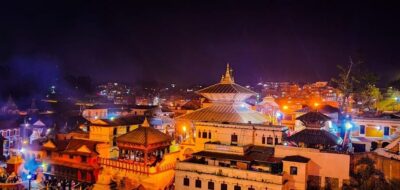
As the sun goes down, the tour shifts into the heart of Pashupatinath’s evening energy. Locals gather around the Bagmati River banks on the eastern side of the temple, and you watch the aarti ritual, described as an offering of lights to Lord Pashupatinath.
This is the part many people remember most, and for a reason. The whole site changes temperature, both literally and emotionally. You go from walking and listening to standing still and watching something ceremonial unfold in front of you.
Crowds are a reality here. The tour specifically warns to keep near your guide and your group so you don’t get lost in the crowd. That advice is practical. It is easy to drift when the ritual starts, so you’ll want to anchor yourself to your guide’s position.
Also remember the earlier sensitivity about the cremation area. The evening can feel intense, but you should separate your curiosity from the grief happening nearby. If you keep respectful distance and follow the guide’s lead, you will get the best of what this place offers.
Transportation, group size, and why the small group matters
This experience runs on a maximum group size of 12, with the option for small-group or private formats. That detail matters at these two sites. Boudhanath and Pashupatinath both get packed, but a smaller group moves more cleanly through space and makes it easier for your guide to spot you if you drift.
The tour also includes transportation costs between the meeting point and Boudhanath, and between Pashupatinath and the endpoint. It is not just “we give you directions” sightseeing. It removes the friction that can drain energy from religious visits.
You also get a mobile ticket. That sounds minor, but it reduces hassle when you are navigating entry points and keeping your group together.
Value check: is $60.56 a smart deal?
Let’s talk value, not just price.
What you are paying for:
- Entrance tickets for both UNESCO sites are included.
- A local English-speaking Nepali guide is included.
- You join the evening aarti ritual experience at Pashupatinath.
- You take part in the Boudhanath prayer wheel circuit, plus the butter lamp option.
- Transportation costs between the two sites are included.
- Your guide provides tips on what else to see, do, and eat in Kathmandu.
What you pay extra for:
- Lunch or dinner is not included.
- Palm reader fees are not included.
- Any optional offerings or interactions, like butter lamps or paid sadhu interactions, are listed as extra.
On paper, it is a lot to include for a half day. In practice, the biggest value is time and confidence. When you visit places like Pashupatinath, you do not want to guess where to stand, what to photograph, and when to step back. Paying for a guide here is like paying for emotional navigation.
Also, the reviews are very strong on guide quality. Names like Rita, Rozit, Amit, Bipin, Subash, and Ramhavi come up as examples of guides who paced the visit well and explained things clearly enough that you could actually connect the dots.
Earthquake damage, renovations, and what that means for your expectations
The tour notes that some sites were damaged in the 2015 earthquakes and that the sites you visit are renovated. That is important context because visitors sometimes arrive with older photos in their heads.
In other words, don’t treat this as a relic of an ancient ruin. It is a working place of worship that has been restored, so you can expect active religious life, repair work completed, and improved conditions compared with what you might see in older imagery.
Should you book this Kathmandu Bodhnath and Pashupatinath tour?
Book it if you:
- Want a one-afternoon plan that covers two UNESCO sites without burning a whole day.
- Like guided context. This tour is built around explanations, not just sightlines.
- Care about seeing actual daily religious practice, including sadhu presence and the Bagmati River aarti.
- Prefer a max 12-person group in crowded settings.
Skip it or choose a private option if:
- You dislike crowds, especially around the Bagmati River during evening rituals.
- You are sensitive to witnessing cremations, even with the tour’s respect instructions.
- You want total control to wander at your own pace without group positioning.
If you are on a short Kathmandu stay and you want the spiritual big hitters in a single evening block, this is one of the most efficient ways to do it. Just come prepared to behave respectfully, wear good walking shoes, and stay close to your guide when the crowd thickens.
FAQ
How long is the Kathmandu Spiritual Sites tour?
It runs for about 4 hours (approx.).
What time does the tour start?
The start time is 3:00 pm.
Where is the meeting point?
The meeting point is Hotel Marshyangdi, Chaksibari Marg, Kathmandu 44600, Nepal.
What are the two main stops?
You visit Boudhanath Stupa first, then Pashupatinath Temple.
Is entrance to the UNESCO sites included?
Yes. Admission tickets for both Boudhanath Stupa and Pashupatinath Temple are included.
Do I get to participate in any rituals?
Yes. You rotate prayer wheels at Boudhanath, and you join the evening aarti offering of lights at Pashupatinath Temple.
Is the palm reader included?
No. A palm reading is optional, and palm reader fees are not included.
Does the tour include transportation?
Yes. Transportation costs between the meeting point and Boudhanath, and between Pashupatinath and the endpoint, are included.
Is lunch or dinner included?
No. Lunch/dinner is not included.
FAQ
How big is the group?
The maximum group size is 12 travelers.
Are children allowed?
Yes. Children under age 6 can join free of charge.
Is there free cancellation?
You can cancel for a full refund up to 24 hours in advance of the experience start time.
More Tours in Kathmandu

More Tour Reviews in Kathmandu
Not for you? Here's more nearby things to do in Kathmandu we have reviewed


Kathmandu Sacred Sites Tours, compared.
 ★ 4.8Chandragiri Cable Car and Monkey Temple TourFrom $3139 reviews
 ★ 5.0Monkey Temple – Swayambhunath Tour – Private/Small GroupFrom $1550 reviews
 ★ 5.0Pashupatinath Temple Evening Aarati TourFrom $4536 reviews
 ★ 5.0Chandragiri Cable Car & Monkey Temple Tour- Private/GroupFrom $532 reviews
 ★ 5.0Private Chandragiri Cable Car and The Monkey Temple TourFrom $530 reviews
 ★ 4.8Pashupatinath Temple Aarti Night TourFrom $7129 reviews
 ★ 5.0Pashupatinath Temple, Hindu Crematorium and Aarati in-depth TourFrom $9025 reviews
 ★ 4.5Pashupatinath Evening Aarati: Few Divinely Hours in KathmanduFrom $3523 reviews
Browse the lists this tour appears in