

REVIEW · KATHMANDU COOKING & MOMO CLASSES
Cook and Eat: Cooking Class in Kathmandu near Thamel
Cooking in Kathmandu is a fun skill shortcut. In just about 3 hours, you go from choosing dishes to cooking them, with a guide helping you shop for ingredients and a chef showing the steps.
What I like most is the hands-on flow. You welcome with tea or coffee, pick any three cuisines from the menu, then head to a local market with a guide to gather ingredients before you start chopping. I also really like the teaching setup, since you cook in a clean kitchen with staff like Chef Vikram and Kamal, and instruction is in excellent English.
One drawback to think about: you need to get yourself to the meeting point near Thamel. Pick up and drop off by private vehicle costs extra, and beverages beyond what is served with class are not included.
Key things to know before you go
- Pick any 3 dishes from the menu so you can tailor the class to your tastes (for example, people have chosen Thukpa, dal Bhat, and yomari when those are on offer).
- You shop at a local market with a guide, then cook using what you buy.
- Chef Vikram and Kamal-style instruction means you get clear, English explanations as you cook.
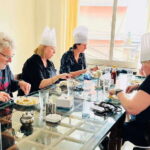
- A small group format keeps things moving, with a maximum of 15 travelers, and in practice it can be very small.
- You eat what you cook, plus you get tea or coffee at the start and again before you leave.
Near Thamel, in a real Kathmandu kitchen

This cooking class runs out of a local kitchen in Kathmandu near the Thamel area, starting and ending at Shepherd Holidays on Yapikhya Marg. That matters, because it means you are not stuck commuting half the day. You can plan a morning or afternoon with enough time left to explore on your own right after.
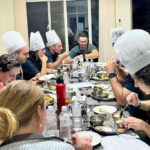
The class structure is built around being practical. You do not just watch. You start cutting and preparing ingredients, then move into cooking, and then you sit down to eat the food you made. If your goal is to leave with recipes you can actually repeat at home, this format helps you remember the sequence.
Group size is also a quiet advantage. It is capped at 15 travelers. In smaller groups, the kitchen vibe tends to be calmer, and you get more attention when you have questions. One participant described the experience as professional and clean, and the chef environment is set up for real cooking, not just a demo.
A few more Kathmandu tours and experiences worth a look
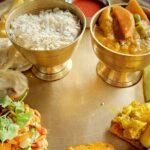

Tea welcome, menu choices, and the market with a guide
The first stretch of the class is designed to get you oriented fast. You start with tea or coffee and a staff introduction, then you choose three cuisines from the menu. This is the part where you can make the experience feel personal.
Next comes the local market visit with a guide for ingredients. This step is more than a photo stop. It turns shopping into a lesson. You see what you are cooking with, you learn what ingredients matter, and you understand how Nepali cooking relies on specific staples and seasonings.
If you are the type who always wonders what makes a dish taste like itself, the market walk is where that clicks. Even if you already know the dish names, seeing the ingredients in the context of Nepal helps you remember what to look for at home later.
Practical note: the kitchen later uses what you selected and bought, so it pays to choose dishes you genuinely want to eat. Picking three you are excited about makes the cooking time feel shorter and the meal feel better.
Cutting, prep, and cooking steps with Chef Vikram and Kamal

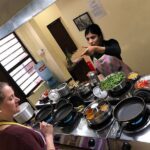
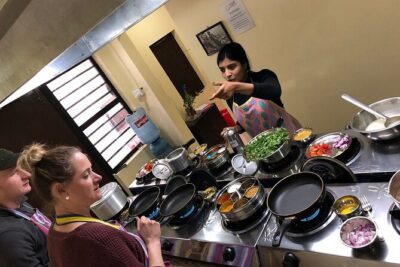
After the market, you move into the kitchen and start prepping. Cutting and preparing ingredients comes first, so your hands learn the basics before the stove work begins. This is a smart pacing choice. By the time cooking starts, you already understand the shape and size of what you are working with, which affects texture and timing.
Then the chef takes the lead and cooking commences. Based on past participant feedback, Chef Vikram and Kamal provide clear instruction in excellent English, which is a big deal if your Nepalese cooking vocabulary is still under construction. You get guidance as you go, so you are not left guessing what the next step is supposed to look like.
One more useful detail is control over how hands-on you want to be. The class is set up so you can be actively involved, but you are not forced to do everything if you prefer to learn by doing in shorter bursts. That flexibility helps if you are traveling solo, feel a bit nervous in a kitchen, or simply want to watch closely first.
Why this part is worth your time: Nepali dishes often rely on balance, not just spice. When you prep properly, you have a better chance of getting the right consistency and flavor at the end. This is exactly the kind of skill that general restaurant meals do not teach.
Serve, savor, and actually taste your work
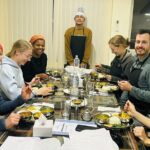
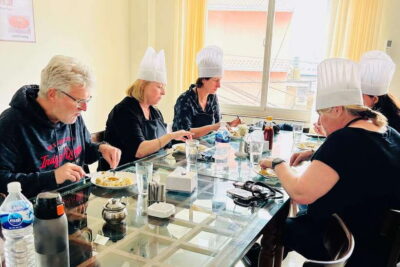
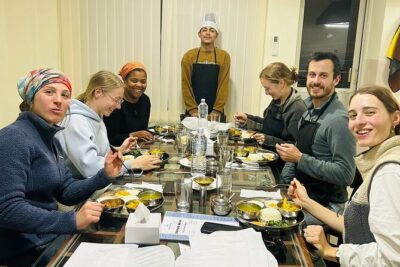
Once the cooking is done, you serve and savor the dishes you prepared. This is where the whole class becomes satisfying in a very practical way. Cooking classes can sometimes end with a small bite and a quick exit. Here, you get to eat the food that came out of your efforts.
The meal is also an education. As you taste, you can connect your decisions earlier, like which ingredients you picked and how you prepared them, to what you experience on the plate. You start to notice how sauces, broths, and seasonings come together, and that makes future cooking at home less of a mystery.
Tea or coffee appears again before you depart, which helps you wind down rather than walking away straight into the chaos of the afternoon streets.
One more small but meaningful detail from past guests: staff made sure the experience ended smoothly for them, including help getting back to their hotel. Even if private vehicle drop off is not included, the takeaway is that the staff seems to care about your wrap-up.
Price and value for a 3-hour cooking class
At $24 per person for about 3 hours, this is positioned as a budget-friendly way to learn Nepali cooking without shelling out big tour money. The value comes from what is included, not just the price tag.
What you get included:
- Ingredients and all equipment to prepare your food
- Instructor and helper support
- Food and drink that are prepared during class
That bundle is important. If you tried to copy this on your own, the costs would sneak up fast. Ingredients, spices, and kitchen setup are one thing. The larger value is the guided technique, especially with English explanations and live coaching as you cook.
What is not included (and worth planning for):
- Accommodation and personal expenses
- Beverages beyond what the class provides
- Pick up and drop off by private vehicle (available for extra charge)
So, the best value is when you are already able to reach the meeting point and you are comfortable keeping your spending aligned with the class inclusions. If you are counting every dollar, this is one of those deals that stays fair because most of what you pay for is directly used in your cooking and meal.
You can also read our reviews of more cooking classes in Kathmandu
Who this class suits best
This cooking class is a strong fit if you want:
- A hands-on introduction to Nepali food that is not locked behind language barriers
- A structured way to learn a few signature dishes and their cooking rhythm
- A short activity near Thamel that does not swallow your whole day
It is especially good for first-time visitors who want something more meaningful than a single dinner out. You get a guided market walk, chef-led cooking, and a meal at the end. That sequence gives you both context and results.
It also works well if you travel in a small group. Smaller groups typically mean better attention, and the class format already supports that. Even if you are solo, the experience still makes sense because you are learning with staff right there.
Practical tips so you get the most out of it
To make the experience smoother, I’d plan around a few basics.
First, choose dishes you genuinely want to eat. You pick three cuisines, and you will also be responsible for prepping and cooking them. If you are unsure, pick one comforting staple, one dish you have heard of before, and one adventurous choice.
Second, come ready to participate. The class includes cutting and preparation, then cooking starts. Even if you do not want to do every step, you will get the most value by staying close and learning the reasons behind the process.
Third, think about your arrival. The class starts at Shepherd Holidays on Yapikhya Marg, Kathmandu 44600, and ends back at the meeting point. Plan your route so you are not rushing at the start time.
Finally, expect good weather to matter. The experience requires good weather, and if it is canceled due to poor conditions, you will be offered a different date or a full refund.
Should you book this Kathmandu cooking class?

If your goal is to learn real Nepali cooking skills in a short time, I think this is an easy yes. For $24, you get ingredients, equipment, guided cooking help, and the meal itself, all in about three hours near Thamel. The English instruction and professional kitchen setup are the kind of details that reduce stress and improve your results.
I would skip it only if you strongly need private transport included, or if you want a longer experience than three hours. Otherwise, it is a practical way to turn Kathmandu into something you can cook at home later.
FAQ
How long is the Kathmandu cooking class?
It runs for about 3 hours (approx.).
How much does it cost?
The price is $24.00 per person.
Where do I meet for the class?
The start and end point is Shepherd Holidays, Yapikhya Marg, Kathmandu 44600, Nepal.
Is the class limited to small groups?
Yes. It has a maximum of 15 travelers.
What dishes can I cook?
You can choose any three items from the menu.
What happens during the sessions?
The flow includes a tea or coffee welcome, staff introduction, choosing three cuisines, visiting a local market with a guide for ingredients, preparing and cutting ingredients, cooking with the chef, serving and eating the prepared dishes, and tea or coffee before departure.
What is included in the price?
The price includes ingredients and all equipment, an instructor and helper, and the food and drink prepared during the class.
Are beverages included?
Tea or coffee is included during the class (welcome and before departure). Extra beverages are not listed as included.
Is pick up and drop off included?
No. Pick up and drop off by a private vehicle is available only for an extra charge.
What is the cancellation policy?
Free cancellation is available. You can cancel up to 24 hours in advance for a full refund, and the experience requires good weather, with a different date or a full refund if canceled due to poor weather.
More Cooking Classes in Kathmandu
More Food Experiences in Kathmandu

More Tour Reviews in Kathmandu
Not for you? Here's more nearby things to do in Kathmandu we have reviewed


Kathmandu Cooking & Momo Classes, compared.
 ★ 5.0Half day cooking class in Thamel kathmanduFrom $28607 reviews
 ★ 4.9Local Women-Led Nepali Cooking & Momo ClassFrom $4360 reviews
 ★ 5.0Local Lead Nepali Cooking & Momo-Making ClassFrom $5212 reviews
Local Women Lead Nepali Cooking ClassFrom $30125 reviews
★ 5.0Local Lead Nepali Cooking & Momo-Making ClassFrom $5212 reviews
Local Women Lead Nepali Cooking ClassFrom $30125 reviews
 ★ 5.0The best Private Nepali Cooking Class in KathmanduFrom $2483 reviews
 ★ 4.8Traditional Momo Making Class & PickupFrom $460 reviews
 ★ 5.0Traditional Nepali Momo Making ClassesFrom $1853 reviews
 ★ 4.9Local Women-Lead Nepali Cooking & Momo ClassFrom $545 reviews
Browse the lists this tour appears in