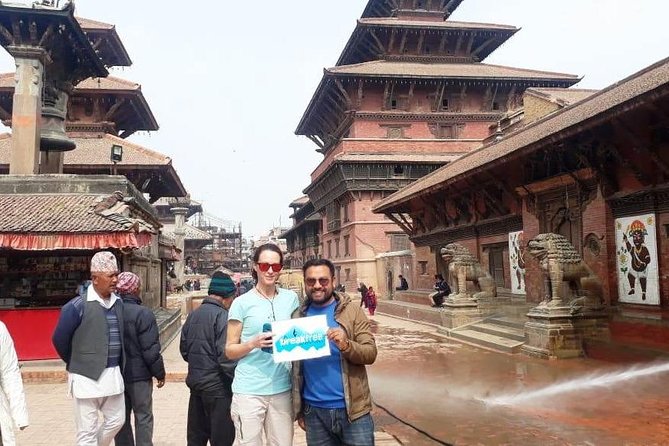
REVIEW · KATHMANDU UNESCO HERITAGE TOURS
Kathmandu Heritage Tour – Private Full-Day UNESCO Sites & Temples
This day in Kathmandu feels like time travel. You get a private, full-day run through key UNESCO sites of the Kathmandu Valley, with a guide who explains what you are seeing, and how the 2015 earthquake changed daily life and some monuments. It is built for first-time visitors, with hotel pickup and drop-off and a comfortable private vehicle.
I love how the sights connect to real meaning, not just postcard views. In the hands of guides like Krishna A., Jamuna, Janina, or SuJan, you get history that lands fast, plus practical context for Hindu and Buddhist sacred spaces. I also like the day’s focus, you move between major stops like Swayambhunath (Monkey Temple), Kathmandu Durbar Square, Pashupatinath, and Boudhanath without spending the day on detours.
One thing to plan for: entrance fees are extra, and the earthquake left some areas damaged, so not every corner may feel fully intact. Also, this is a packed 5 to 8 hour day, so if you hate stairs, crowds, or quick turnarounds, you may want to pace yourself with breaks.
Key highlights to watch for

- A private guide who explains what matters, not just what it looks like
- Temple intensity in a smart order, hilltop views, palace squares, then riverfront sacred sites
- Kumari and living-goddess mystique, with chances to see her during visits to Kathmandu Durbar Square
- Pashupatinath with crematoria access nearby, a sobering look at Hindu mourning rituals
- Boudhanath’s four pairs of eyes, a powerful Buddhist landmark
- Garden of Dreams as a calmer landing, a neo classical garden break in the middle of the city
Why Kathmandu Valley UNESCO makes sense in one private day

Kathmandu Valley UNESCO sites can be overwhelming fast. You arrive, you see stone, gilding, prayer, incense, and crowds, and you wonder what you are actually looking at. This tour solves that problem with a simple structure: one guide, one route, and enough time at each stop to understand the place before you move on.
The added earthquake context matters. Nepal’s 2015 earthquake affected buildings, access, and the way people talk about places. When you hear that while you stand in front of the temples and squares, the sites stop being static museum objects. They feel like living spaces that are still recovering, still used, still respected.
This is also good value for a short trip. At this price point, you are not paying for a half day of random stops. You are paying for someone to translate the city for you, guide your pacing, and handle the logistics so you can focus on the monuments.
You can also read our reviews of more private tours in Kathmandu
Hotel pickup, private vehicle, and the pace you should expect
You should expect a smooth start. Hotel pickup and drop-off are included, and you ride in a private vehicle with bottled water provided. The tour is private, with a maximum group size of 10 people per booking, so it does not feel like a cattle-cart situation.
Timing is flexible in the sense that you can change your date and time for free, and the day is typically around 5 to 8 hours. Practically, that means you will have time to see key areas, not time to wander for hours on your own.
I would plan your day around the idea of moving steadily. Even with short stops, Kathmandu’s traffic and crowd flow can slow things down. The best part is that your guide can adapt the pace to your group, and multiple guides on this route are praised for being patient and for keeping the schedule running smoothly.
Stop 1, Swayambhunath hilltop views and temple energy

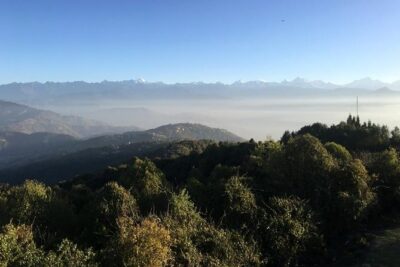
Swayambhunath, often called Monkey Temple, is one of Nepal’s best introductions to the valley. You go up to the hilltop complex and get a panoramic peek at the city. Even if you have only a few hours in Kathmandu, this viewpoint gives you orientation.
What you should expect:
- Stairs and a bit of uphill walking at the start of the day
- Close-up temple areas where you feel the atmosphere of living worship
- Monkeys around the complex, which means you should keep small items secured and follow your guide’s cues
The practical win here is the order. Starting at a hilltop temple helps you understand Kathmandu’s layout before you hit the dense squares and river temples later.
The only real drawback is physical. If stairs are an issue for you, this stop may be tiring early in the day. For most people, it is worth it because the views help everything else click.
Kathmandu Durbar Square, Kumari window moments and palace-era details

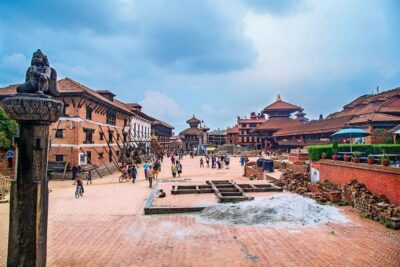
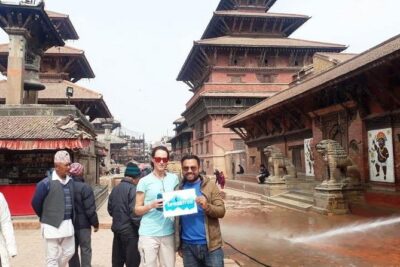
Kathmandu Durbar Square is where the city’s ornate palace and religious power shows up in stone. You spend about an hour here, which is the right amount of time to see major structures and still understand what they are.
This is also where the living goddess element comes in. You get a look at Kathmandu’s one-of-a-kind Kumari, a virgin girl worshipped as the goddess Durga in human form. Sometimes she can be seen briefly at her windows, so you get that rare, almost surreal feeling of waiting for a moment that may or may not happen. When it does, it is unforgettable in a very different way than a sunset viewpoint.
You will also hear about the royal residence and the symbolism built into the architecture. This tour’s guides are repeatedly praised for English and for clear explanations, so you are not left guessing why certain carved elements exist.
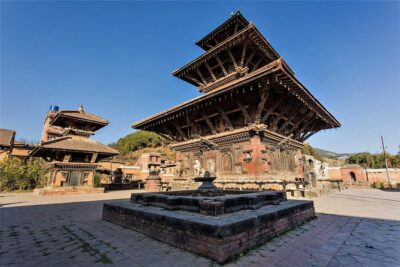
In the Durbar Square area, there are also shorter temple stops that add variety without eating the schedule. Think of these as quick hits: a chance to see older Hindu temple forms and extra layers of worship tied to the Malla royal era.
Short temple breaks that add depth without dragging the day

Not every stop needs a long stay to matter. After Kathmandu Durbar Square, you have brief stops like Basantpur Dabali, plus quick visits tied to Durbar Square’s temple complex, such as Taleju Bhawani Temple and Kumari Chowk.
These short breaks are actually useful for two reasons:
- They keep the day from turning into one long slog of stone and shade-less walking
- They give you a broader sense of how temple worship is organized in the squares, not just one monument
The time slots are usually around 10 to 15 minutes at these points. Your guide can point out what you might miss if you only walked through quickly, which is where a private tour earns its money.
You can also read our reviews of more historical tours in Kathmandu
Hanuman Dhoka square, monkeys, and quick orientation inside the palace complex
Hanuman Dhoka sits within the Kathmandu Durbar Square sphere, and it is another reminder that this is not a dead historical site. You may even see real monkeys in the square, connected to Hanuman, the mischievous and courageous monkey god.
This stop is short, but it helps you understand Nepal’s blend of religion, folklore, and daily life. If you have ever wondered how myth becomes part of city identity, this is a good place to notice it.
Also, because Hanuman Dhoka is within the broader Durbar Square area, it does not require extra travel time. That keeps the day efficient.
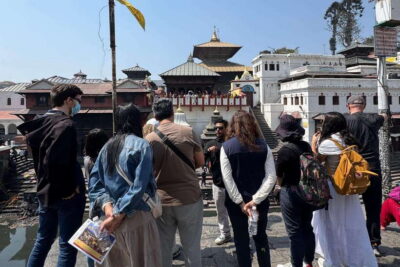
Pashupatinath and the crematoria area, a respectful look at Hindu sacred life
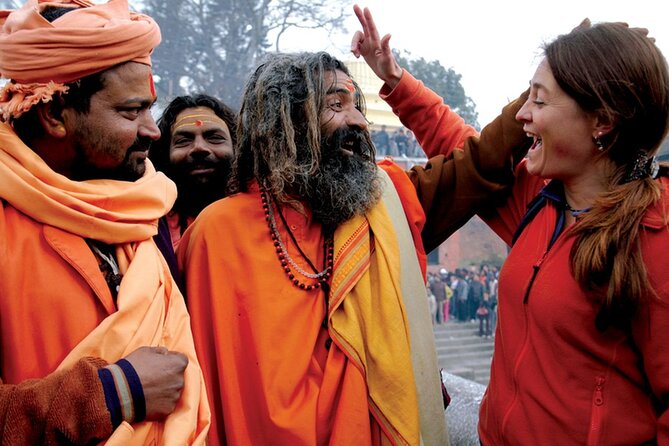
Pashupatinath is one of the most sacred Hindu shrines in the world, and it hits with full intensity. You spend about an hour at Pashupatinath, and your guide brings context so it does not turn into just a spectacle.
Key things you should know ahead of time:
- It is a working religious site, and people come here for worship and for end-of-life rites
- The richly ornamented pagoda area is the centerpiece you will be drawn to, and your guide helps you interpret what you are seeing
- The crematoria area near the temple is constant action and emotionally heavy
One review described the cremation atmosphere as similar to India but with more reverence and less hype. That line is a good guide for how to approach this place. You are not there to treat it like a shock show. You are there to witness something sacred.
Practical advice: wear something comfortable, move slowly, and follow your guide’s lead on where to stand and how close to get. If you are sensitive to emotion, give yourself a minute before you step closer. This stop is powerful.
Boudhanath Stupa, the four pairs of Buddha eyes

Boudhanath is a big contrast from Pashupatinath. Instead of Hindu riverfront rites, you shift to a major Buddhist stupa with a long timeline. You visit for about an hour.
The most striking detail is the symbolism: four pairs of eyes of Lord Buddha looking in four cardinal directions. Your guide will explain the meaning behind the design so you do not just see painted eyes, you understand what the stupa is communicating.
If you are tired from walking and crowds, this is a good place to slow down a bit. The stupa gives you a focal point, and you can step back and take in the monument without feeling like you have to keep moving.
Garden of Dreams, a neo classical reset in the city
A visit to the Garden of Dreams adds variety and gives your brain a breather. This is a neo classical historical garden set in the middle of Kathmandu. The design is influenced by formal European-style garden layouts, with paved perimeter paths.
This is not about UNESCO stones. It is about atmosphere, shade, and resetting after the intensity of the temples and crematoria area.
If you like having one calm stop on a day full of sacred sites, this is a smart inclusion. It also helps break up your energy so you do not feel wiped out when you head back.
Price and logistics, what you pay and what you should budget too
The headline price is $60 per person, which is solid for a private guide plus a private vehicle and hotel pickup and drop-off. You also get bottled water. On a day that covers major Kathmandu Valley landmarks, that base cost buys you convenience and interpretation.
But there are two budget items you should not ignore:
1) Entrance fees are not included.
Multiple people reported paying additional amounts at the sites, often in the range of 10 to 15 per person per stop, with some sites cheaper. One group calculated entrance fees around $60 total for their day. Plan for this. It is the most common “sticker shock” item.
2) Food is on you.
Local lunch can run around $10 USD, based on the provided expectation. If you snack in between stops, it could be more, so plan a small buffer.
Other small costs can appear too. Souvenir photos are available for purchase, and tips are always a thoughtful add-on in Nepal since your guide and driver do the work of making the day run.
The way to get good value from this tour is to go in with a realistic total budget: tour price plus entrance fees plus a simple lunch. Once you do that, the day feels worth it because you save time and confusion.
Who should book this Kathmandu heritage tour
This tour is a strong fit if:
- You are in Kathmandu for a short stay and want the biggest UNESCO hits in one day
- You want a guide who can explain Hindu and Buddhist meaning without making you feel lost
- You like private convenience, not shared vans and rigid schedules
- You want a day plan that includes both sacred intensity and a calmer garden stop
It is also a good option for many ages, since there is no age limit listed, and service animals are allowed. The max group size of 10 per booking keeps things controlled.
If you do not enjoy crowds, or you struggle with stairs, you may want to adjust expectations for Swayambhunath. If you are very budget sensitive, entrance fees can feel like an added hit, so consider that before booking.
Should you book this Kathmandu UNESCO day tour?
I would book it if you want a first-rate orientation day and you care about understanding what you are seeing. The best version of this experience happens when you take your time with your guide, ask a couple of questions, and accept that this is a full, efficient day.
Book it with eyes open if entrance fees are a big concern for you, and especially if you are worried about earthquake damage changing access at some sites. When that happens, you still get the interpretive value, and you should feel like you got a solid overview of Kathmandu’s sacred map.
If you can, ask your operator in advance about which areas might be restricted that day due to earthquake damage. Then pack comfortable shoes, keep a small cash buffer for entrances, and let the private guide do the heavy lifting while you focus on the monuments.
FAQ
How long is the Kathmandu Heritage Tour?
The tour runs about 5 to 8 hours.
Is hotel pickup and drop-off included?
Yes. Pickup and drop-off from Kathmandu hotels are included.
Are entrance fees included in the tour price?
No. Entrance fees are at your expense.
Do I need to pay for lunch during the tour?
Food and drinks are not included. The tour notes you should expect to spend around $10 USD for lunch purchased locally.
What is included besides the guide and transport?
Bottled water, a private tour guide, and transport by private vehicle are included.
Is this tour private or shared?
It is a private tour. Only your group participates, with a maximum of 10 people per booking.
How many UNESCO-related sites will I see in a day?
You’ll cover several major Kathmandu Valley sacred sites, including Swayambhunath, Kathmandu Durbar Square, Pashupatinath, and Boudhanath, plus additional stops within the area.
Is there a mobile ticket?
Yes, mobile tickets are part of the experience.
Can I change my booking date or time?
You can change the date and time for free.
More Private Tours in Kathmandu
More Tours in Kathmandu
More Tour Reviews in Kathmandu
Not for you? Here's more nearby things to do in Kathmandu we have reviewed
Kathmandu UNESCO Heritage Tours, compared.
★ 5.0Private Kathmandu Sightseeing Tour | UNESCO World Heritage sitesFrom $17756 reviews
★ 5.0Full Day 7 UNESCO Tour with Lunch – Private/GroupFrom $10415 reviews
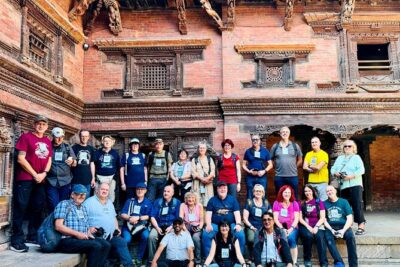
★ 5.0Full Day Top 4 UNESCO Tour with Lunch – Private/GroupFrom $10269 reviews
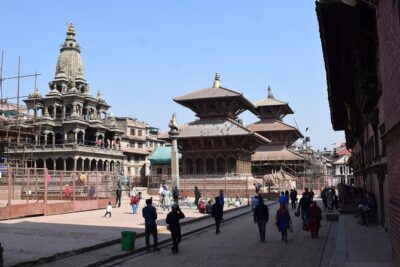
★ 5.0UNESCO Seven World Heritage Tour in KathmanduFrom $180253 reviews
★ 4.9Full-Day 7 UNESCO Tour with Lunch – Private/GroupFrom $5247 reviews
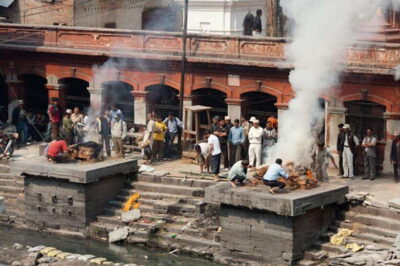
★ 4.97 UNESCO Sites Tour in 1 Day (Private Tour)From $4204 reviews
★ 4.9Top 4 UNESCO Tour with Lunch – Private/GroupFrom $5181 reviews
★ 5.0Kathmandu Private Sightseeing Tour | UNESCO World Heritage SitesFrom $35109 reviews
Browse the lists this tour appears in