Annapurna Base Camp Trek

REVIEW · ANNAPURNA TREKS FROM KATHMANDU

Annapurna Base Camp Trek

5.0 · 13 reviews From $906 Operated by Nepal Mountain Trekkers - Day Tours · Bookable on Viator
Book on Viator →

Eleven days later, the Himalaya feels close. I loved the all-in trek support with guides, porters, and rented gear, and I also loved how the route layers scenes, from rhododendron and bamboo forests to Gurung villages. The one thing to plan for is altitude, with Annapurna Base Camp at 4,130 meters, plus some steep trekking days.

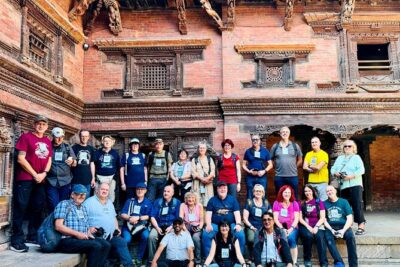
This trip has a clear rhythm: Kathmandu first, then a quick hop to Pokhara, then days on foot, and finally a return to Kathmandu with time for a real cultural stop at Kathmandu Durbar Square. If you get the chance to meet the team the way others have described it, the human side is strong, with airport meet-and-greet care and guide and porter support that keeps your focus on walking and enjoying the mountains.

Key highlights you should care about

Annapurna Base Camp Trek - Key highlights you should care about

  • Annapurna Base Camp overnight at 4,130 meters for the full sense of arrival
  • Jhinu Danda hot springs right after your first trekking push from Nayapul
  • Machhapuchhre Base Camp route with big mountain-name views along the way
  • Small group size (max 15) with an English-speaking guide and assistant team
  • Porter support built in (1 porter for 2 trekkers, max 30kg load)
  • Permits and ACAP TIMS fees included, so you avoid last-minute paperwork

Annapurna Base Camp, 4,130 meters, and why the timing matters

Annapurna Base Camp is not just a checkbox here. The itinerary is built so you reach the base camp area after a gradual climb, then stay overnight once you get there. That overnight matters because it turns the stop from a quick photo moment into something you can actually feel, with towering peaks around you and time to settle in.

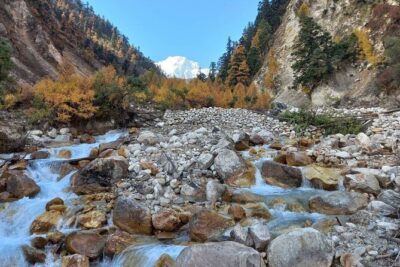
At 4,130 meters, you will be high enough that the experience starts to feel different. The trek description even notes that as you near base camp, vegetation becomes sparse and the path widens, which is a useful clue that you are truly transitioning into a high-alpine world.

You can also read our reviews of more hiking tours in Kathmandu

Kathmandu to Pokhara, the day your trip really starts

Annapurna Base Camp Trek - Kathmandu to Pokhara, the day your trip really starts
Most trekking plans dump you into the mountains immediately. This one starts by helping you get your bearings first. Day 1 is built around an airport pickup and a transfer to Hotel Green Horizon in Thamel. Day 2 keeps things gentle in the travel sense, with a trek briefing and then moving on to Pokhara by flight.

I like this pacing because it prevents the classic mistake of arriving tired and rushed. You get time to meet your guide, get your plan, and then travel to Pokhara, where the trek begins in earnest.

Pokhara itself is positioned as your staging point, with time to explore Lakeside after you check in. It gives you a calmer contrast to Kathmandu’s busy feel, and it also helps you think about the next days in a practical way: boots on, bag ready, and your mind finally on the hike.

Day 3: Nayapul to Jhinu Danda, your first taste of river valley trekking

Annapurna Base Camp Trek - Day 3: Nayapul to Jhinu Danda, your first taste of river valley trekking
Your trek begins from Nayapul, reached by a drive from Pokhara. From there, you follow the Modi River area into the start of trekking territory. The route description includes passing settlements like Chandrakot, and it also mentions switching directions and climbing past steps near Tolga, so you can expect a trail that changes rhythm rather than a straight line up.

What I love about Day 3 is Jhinu Danda as a reward. You are trekking toward a place where you can soak in the natural hot springs at the base of the ridge. It is the kind of payoff that makes early fatigue worth it, especially after your first long day.

One practical note: the day is described as a full trekking block, and the trail includes descents and ascents plus river confluences mentioned along the way. So, if you tend to move fast when you start, you’ll want to slow down. This is where your long-term success on the trek starts.

Day 4: Terraces, stone steps, bamboo, and the Bamboo Lodge night

Annapurna Base Camp Trek - Day 4: Terraces, stone steps, bamboo, and the Bamboo Lodge night
Day 4 is a classic Annapurna-style progression: terraces, stone steps, then forest. The route takes you through the Chhomrong area and includes crossing and climbing elements tied to the Chhomrong River and ridge above the Modi River.

Then it changes again. After you pass villages like Nayagaon, you go into bamboo forest and terraced fields, and the walking begins to feel more textured. The itinerary specifically names Siruwa and then Bamboo as your destination, with overnight at Bamboo Lodge Restaurant.

I like that this day builds endurance without pretending it is easy. Bamboo forest trekking plus a steep marching section is exactly what you want before the bigger ascent days. It also helps you get used to the idea that your progress is measured by trail segments, not by clock time.

Day 5: Dovan and Deurali, where the trail starts turning serious

Annapurna Base Camp Trek - Day 5: Dovan and Deurali, where the trail starts turning serious
Day 5 is described as a short trek to Dovan to help you prepare for the climb toward Annapurna Base Camp. Even though it is shorter in the schedule, you still cross streams and move through rhododendron and oak forest.

Then you push toward Deurali, and the terrain gets more demanding. The description includes steep sections, a waterfall crossing, and onward toward the Himalaya hotel. You will also pass the area near Hinku cave and then reach Deurali village.

If you’re the type who gets anxious when the day feels heavy, this is your warning day, but it is also manageable. The itinerary gives you a built-in preparation step (Dovan), which means you should not feel like you are leaping from flat to high-alpine overnight.

Here's some more things to do in Kathmandu

Day 6: Machhapuchhre Base Camp to Annapurna Base Camp, the views stack up

Day 6 is the day with the big mountain-name payoff. You reach Machhapuchhre Base Camp as a stepping stone before turning toward Annapurna Base Camp.

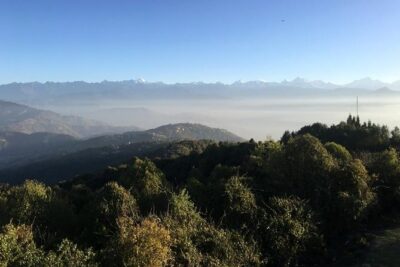
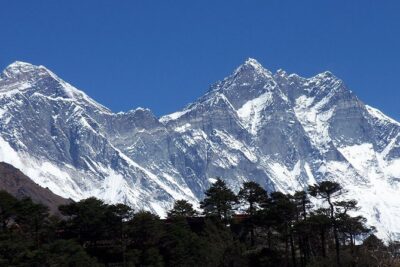
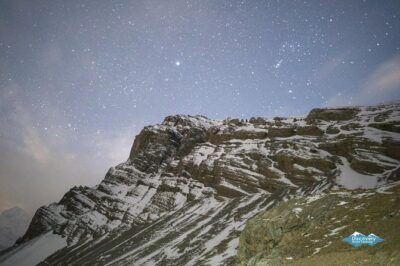
The trek route described here is a gentle climb at first, then continues onto a strenuous terrain segment. Along the way, you pass Bagar and then arrive at Machhapuchhre Base Camp, where the description explicitly calls out a view of Fishtail Mountain plus peaks including Hiuchuli, Annapurna South, Annapurna I, Annapurna III, and Gagapurna, among others.

Then you branch away from the Modi River area. The itinerary notes that as you approach base camp, vegetation becomes sparse and the path widens. Finally, you turn right toward the base camp itself, and you have the overnight there.

This is the heart of why I think this short trek works. It does not just drop you at the destination. It gives you a sequence where each day feels like it is building to the next.

Day 7: A sunrise return and an avalanche-prone reality check

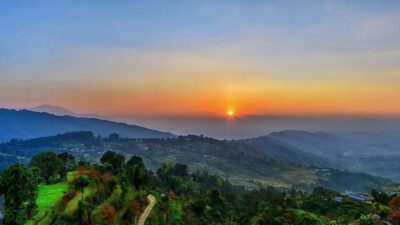
After the base camp experience, you do not fully disappear into the return trails. Day 7 is set up for a downhill march back toward Bamboo, but you also get the special moment of sunrise over the Himalayas.

The route description includes passing through areas described as prone to avalanche, then continuing through places like Dovan and Deurali again, plus rhododendron and bamboo forests at lower elevations. It also mentions crossing a wooden bridge before reaching Bamboo.

I appreciate that the day is realistic. Yes, it is a return, but it still has real terrain tasks, and the itinerary’s mention of avalanche-prone sections is a good reminder that your pace and your route matter in the mountains.

Day 8: Retracing to Sinuwa, then back to Jhinu Danda Hot Springs

Annapurna Base Camp Trek - Day 8: Retracing to Sinuwa, then back to Jhinu Danda Hot Springs
Day 8 is another retrace day, but it is structured in a way that keeps you moving. The schedule describes about six hours of trekking, including an uphill climb to Khuldighar, a village that hosts a helipad.

From there, you trek through twisting trail segments toward Sinuwa village. The route passes settlements including Tilche and Chhomrong, then goes toward Taulung village, where the itinerary mentions trail junctions leading to Landruk, Tadhapani, and Kot Danda.

Finally, you reach Jhinu Danda again after about an hour. This is your second chance to relax in the hot springs, which makes Day 8 feel like a reset day before the longer final trekking push down to Nayapul.

Day 9: Jhinu Danda down to Nayapul, ending the trekking loop

Day 9 is your descent story. You trek down from Jhinu Danda into the Modi Khola valley, following a route via New Bridge. The itinerary notes rivers flowing in a serpentine shape and describes trekking on stone staircases with hillside trail segments.

It also calls out farms with crops, and wooden and suspension bridges, plus traditional houses as you move to lower elevations. As you keep going, the valley feels wider and the fields larger, and the mountain view remains part of the scenery you walk with.

You finish at Nayapool, marking the end of the physical trekking portion. It is a satisfying landing day, because the itinerary is clear that your steps stop here.

Day 10: Pokhara to Kathmandu, then Kathmandu Durbar Square time

With trekking completed, Day 10 becomes transportation plus culture. You return by scenic drive from Pokhara’s valley back to Kathmandu for about 5 to 6 hours, with views of hills, terraced fields, and valleys mentioned along the way.

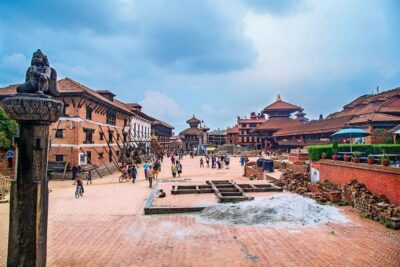
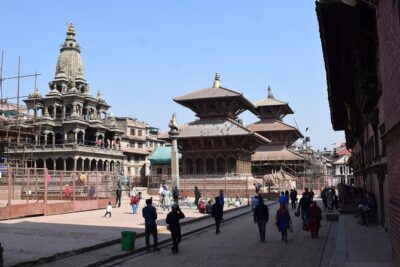
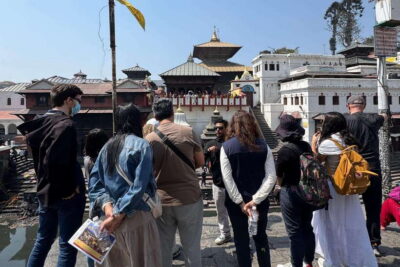
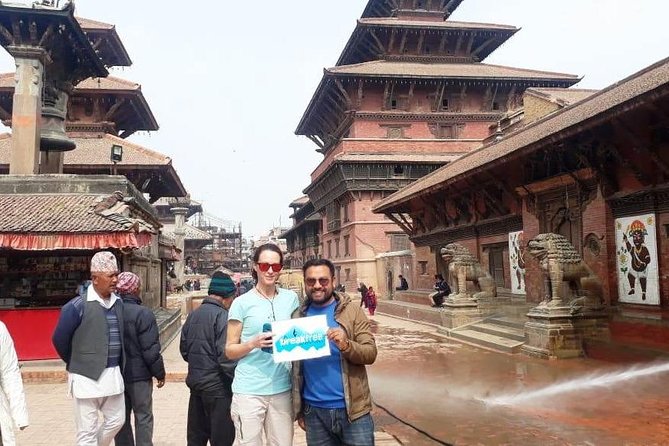
Once you arrive, you move to your hotel, then you have a two-hour window for Kathmandu Durbar Square and surrounding areas. The plan includes time for stone-paved areas of the royal palace complex and also time in nearby Thamel for souvenir shopping.

I like this because it gives you something tangible to do after your legs are tired. You get a sense of Kathmandu beyond check-ins and airport transfers.

Day 11: Airport transfer, and a clean finish

Day 11 is short and straightforward. You are transferred to Tribhuvan International Airport at least three hours before your onward flight.

After a trip like this, the last day is not about adventure. It is about getting home without stress. The itinerary is built so you are not gambling with timing.

Price and what $906.67 really covers

At $906.67 per person for around 11 days, the key question is what you are paying for besides the walking. Here, a lot is included, which is why this can feel like strong value if you match the trek style.

You get 3 nights of hotel in Kathmandu and 2 nights in Pokhara, plus all lodging and meals during the trek with breakfast, lunch, and dinner included. You also get transportation costs, an English-speaking trekking guide, an assistant guide, and porter support.

Most importantly for a trip that can be paperwork-heavy, you get trekking permits included: TIMS card and Annapurna Conservation Area (ACAP) fees. You also get a first aid medical box and trekking gear rentals like sleeping bags and down jackets.

What is not included is also important. Visa fees, international flights, food in Kathmandu and Pokhara, travel insurance and rescue costs, and tips for guides and porters are not included. If you are budgeting, this is where your personal expenses will show up.

If you want a quick mental math check, you are paying roughly $80-ish per day when averaged across the itinerary length, and that average includes city hotel nights and permit costs, not just trekking days.

The people logistics: guide, assistant, porter, and why that matters

This trek is built around human support, not just route maps. You will have a professionally trained English speaking trekking guide, plus an assistant guide and porters.

The porter rule is clear: 1 porter for 2 trekkers with a maximum load of 30kg. That matters because it changes how you feel when you start getting tired. It also means you can pack with the expectation that the heavy lifting has a system.

It also helps that the itinerary includes an airport pickup and drop service. After long travel days, that alone can save you time and stress, especially in a country where you likely want someone to handle the first steps.

Who should book this Annapurna Base Camp short trek

This is a good fit if you want a guided Annapurna Base Camp short trek with a defined pace, built-in meals, permits, and equipment rentals. The operator also states that you should have moderate physical fitness, which matches the mix of steep sections and full trekking days described throughout.

It is also well suited if you like traveling in a small group. The max group size is listed as 15 travelers, which usually keeps the experience from feeling like a big parade.

If you know you need a longer buffer for acclimatization, or if your walking experience is minimal, you might feel rushed by the schedule. This itinerary is designed to be doable, but it is still a real mountain trek.

Should you book this Annapurna Base Camp short trek?

I think you should book it if you want the classic Annapurna story, but you also want structure. The combination of Pokhara first, the early Jhinu Danda hot springs moment, the Machhapuchhre Base Camp stepping stone, and the overnight at Annapurna Base Camp is a strong sequence.

Before you commit, check your budget for what is not included, especially visa fees, international flights, and travel insurance. And be honest about your fitness for steep trail days and higher altitude at base camp.

If that all lines up, this is the kind of trip where you come home with real mountain memory, not just photos.

FAQ

What is the starting point and where does the trek end?

The experience starts at Nepal Mountain Trekkers, Pyramid Galli, Kathmandu 44600, Nepal. It ends back at the same meeting point.

How long is the Annapurna Base Camp trek?

The tour duration is listed as 11 days (approx.).

What is the highest altitude on this trek?

Annapurna Base Camp is at 4,130 meters above sea level.

Are airport transfers included?

Yes. The tour includes airport pickup and drop service.

Are trekking permits included?

Yes. TIMS card and Annapurna Conservation Area (ACAP) fees are included.

Is food included during the trek?

Yes. Lodging and all foods during the trek are included, with breakfast, lunch, and dinner.

Do I need to bring a sleeping bag or down jacket?

You can rent trekking gears such as sleeping bags and down jackets as part of the included services.

Can I cancel and get a full refund?

Yes, free cancellation is offered. You can cancel up to 24 hours in advance for a full refund.

What is the porter support like?

The itinerary includes porter support with a ratio of 1 porter for 2 trekkers, and each porter has a maximum load of 30kg.

More Hiking & Trekking Tours in Kathmandu