REVIEW · ANNAPURNA TREKS FROM KATHMANDU
Annapurna Base Camp Trek 10 Days
Sudam and Ganesh turn a tough trek into a friendly win. This 10-day Annapurna Base Camp route blends big mountain views, classic Gurung and Magar village life, and the big finish at 4,130 meters.
Two things I like right away: the professional, government-licensed guidance and the way your trip is handled end to end, including key permits like ACAP and the TIMS card. One possible drawback to plan for up front is altitude and long days, especially with steep stone steps and mountain weather shifts.
Smooth setup before the first step

You start with pickup and Kathmandu sightseeing by private vehicle, then you move to Pokhara by a tourist bus that typically takes 6 to 7 hours. I also like that you get porter support with a clear limit (2 guests per porter, 25 kg max), which matters when you’re trying to trek smart, not heavy.
If you hate early mornings, note that the start time is 8:15 am and the trek days begin with real hiking time, not a gentle stroll.
Key highlights you will care about
- Licensed guides with real group control: Sudam and Ganesh are repeatedly praised for support, attentiveness, and making the route feel manageable.
- Permits included: Annapurna Conservation Area Project (ACAP) permit and TIMS card are handled as part of the trip.
- Porter strategy (25 kg max): Two guests per porter keeps your load reasonable.
- Village-to-mountain rhythm: You go from Pokhara and village stops like Ghandruk and Chhomrong into higher terrain.
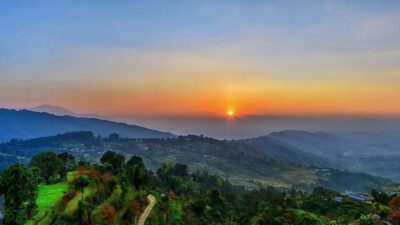
- Sunrise at ABC: One of the most memorable moments is having morning views right from Annapurna Base Camp before you descend.
- Pokhara recovery time: A full leisure day gives you room to breathe after the trek.
You can also read our reviews of more hiking tours in Kathmandu
The pull of Annapurna Base Camp, at 4,130 meters

Annapurna Base Camp is special because it is not just a high point. It is surrounded by the Annapurna massif, with viewpoints opening like layers as you gain altitude. The climb ends at 4,130 m, high enough that the air feels different, but not so high that you are dealing with the extreme altitude of some other Himalayan treks.
The route also gives you variety. You start in more settled areas, then you move through forests, ridges, and step-heavy sections as you go higher. That mix is why the trek can feel like a real journey instead of one long uphill grind.
Kathmandu to Pokhara: the ride you either love or dread

This trip starts in Kathmandu (meeting point at The Great Adventure Treks & Expedition Pvt. Ltd, Chhusya Galli) and typically begins at 8:15 am. After early setup, you take a tourist bus to Pokhara, about 6 to 7 hours.
This is a practical choice. By the time you reach Pokhara, you are already positioned for trekking logistics, and you can often rest without losing another full day to travel. The main thing to watch is comfort. A long bus day can leave your legs stiff, so plan to do an easy first evening and hydrate well.
Day-by-day trekking rhythm, from Ghandruk to Chhomrong

From Pokhara, you drive toward Ghandruk, roughly 3 to 3.5 hours, reaching an altitude around 1,940 m. Ghandruk is one of those places where the views are immediate and the village life feels grounded. You also get that first sense that the Annapurna trek is not only about mountains, it is about people and daily routines in the hills.
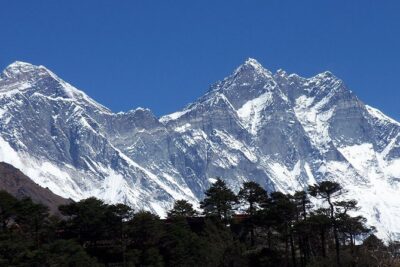
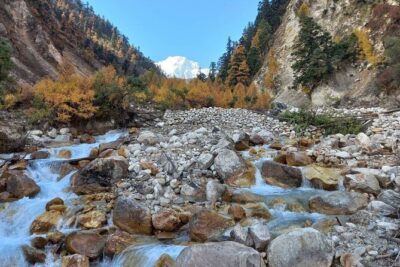
On the way from Ghandruk toward the higher stops, you start dealing with the familiar Annapurna style: steady uphill sections and lots of steps. The day that includes Chhomrong brings big payoff in the form of mountain views, including Annapurna South, Hiunchuli, Machhapuchhre (Fishtail), and Gangapurna.
Then you settle into the Chhomrong area, which is a key hub for this trek. The route here often includes major step sections and a suspension bridge crossing in the broader itinerary flow, so it is a good place to remind yourself: slow feet win. Your pace matters more than hero moments.
What to expect at Chhomrong and why it matters
Chhomrong is where the trek starts to feel more “serious.” You will likely notice the trail getting steeper and the air feeling cooler. Also, this is the point where you stop thinking in “hours” and start thinking in “breath.”
If you pace well here, the next high sections feel harder in a fair way. If you rush, you will pay for it later, especially as altitude rises.
Khuldighar, Deurali, and the stretch where the trek gets technical

After Chhomrong, the path typically descends through thousands of steps down toward Chomrong Khola, then climbs again. The itinerary flow heads onward to Khuldighar at 2,380 m, crossing a suspension bridge along the way.
This section matters because it builds the legs you need for the highest days. It also teaches you a key trekking habit: you cannot force altitude. You have to keep moving while letting your breathing settle.
Later, you reach Deurali after about an hour from the Himalaya Hotel area, then the route shifts again. You follow gentler uphill travel through river-bed terrain before steeper sections lead you onward toward Bagar and the path that eventually points toward Annapurna Base Camp.
You might notice a pattern on this trek: the steep bits come in manageable chunks, but they add up. So the best approach is to take short breaks on the climb, drink consistently, and treat every “summit” moment as one step at a time, not a big burst.
Annapurna Base Camp day: sunrise morning plus altitude reality

Your Annapurna Base Camp approach typically builds from higher base areas, and it is a day you should respect. One of the most memorable moments comes in the morning when you are able to enjoy the view around sunrise at Annapurna Base Camp before descending.
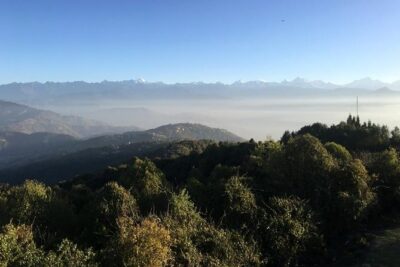
Forest vegetation tends to thin out as you get closer to ABC, and that shift can feel like the mountains are turning up the volume. You are moving into more exposed terrain where views are wider and the weather can change faster.
Altitude tips that keep you comfortable
ABC is at 4,130 m, so altitude is the real challenge, not just the incline. Plan to move slower than you think you need to. Use your guide’s pacing. Your government-licensed guide is there for more than route finding, they are also managing group speed and decision-making.
Also, take your time at viewpoints. Quick photos are fine, but if you rush and breathe hard, you will feel it later.
The return loop: Bamboo, Chhomrong, Jhinu Danda, and the descent work

This trek is not a one-way climb. You return down and backward through key areas, which is sometimes harder on knees and hips than the uphill days.
After your ABC morning, you start descending back down the route. A stop at Bamboo is part of the descent days, and you can expect hours on trails rather than quick transitions. The return is a good time to focus on technique: shorter steps downhill, light foot placement, and steady hydration.
Then the trek continues with a route toward Chhomrong again, before heading down to Jhinu Danda and its wider valley scenery. From Jhinu Danda onward, the itinerary flow includes more step work and descents, ending at Naya Pul, then onward to Pokhara.
Why the Jhinu Danda and Naya Pul ending feels like a reward
Jhinu Danda is a morale boost moment because it signals you are moving back toward civilization and hot meals you do not need to chase via trail logic. From Naya Pul, you connect by private vehicle to Pokhara, which gives your body a break from continuous walking.
This is where you start thinking less about altitude and more about recovery. Use the ride to reset, stretch gently, and get your sleep back.
Pokhara leisure day and the scenic way home

After the trek, you head to Pokhara for an overnight stay, then you get a full leisure day. This is one of the smartest parts of the itinerary because it gives your body time to recover instead of rushing straight into another long travel day.
Pokhara offers lake sightseeing, and the route specifically points to options like Phewa Lake and Begnas Lake. If you want a low-effort plan, lakes are perfect here. You can keep the day light while still seeing why Pokhara is a favorite stop in Nepal.
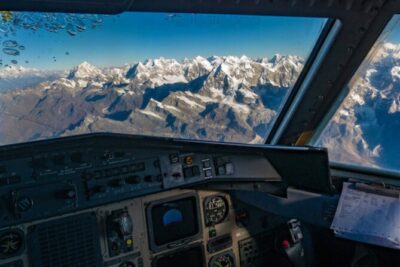
Your final day returns to Kathmandu by scenic flight or bus from Pokhara. The flight is described as extremely scenic, giving you one last look at the Annapurna region mountains.
Price and value: what you are really paying for
At $996 per person for a 10-day trek, you are not just paying for walking trails. You are paying for coordination, permits, and mountain staffing.
Here is what makes the price feel more reasonable than “just a guide” packages:
- Transport is included for the Kathmandu to Pokhara leg by tourist bus, plus private vehicle transfers (Pokhara to Nayapul, and Nayapul back to Pokhara).
- The trip includes an ACAP permit and the TIMS card, which are non-negotiables for this region and add cost on your own.
- You get a guide and porter. The porter is capped at 25 kg max per porter for a small group ratio of 2 guests per porter.
- Meals are included on the trek: 8 breakfasts, 8 lunches, and 8 dinners.
- Key gear is included: sleeping bag and down jacket.
What is not clearly spelled out is lodging type for every stop beyond the Pokhara overnight. If you are comparing value, ask the operator what is included for rooms along the trek days so you can be sure you are comparing apples to apples.
Who this Annapurna Base Camp package suits best
This trek fits best if you have moderate physical fitness and you are comfortable with steep ascents, high-altitude conditions, and days that keep moving. It also suits you if you like village trekking where you see how people live, not just where you pass through.
You will probably enjoy this package most if:
- You want a licensed guide to manage route choices and pacing.
- You prefer not to carry heavy gear, thanks to the porter plan.
- You want built-in permits so you do not have admin headaches mid-trip.
If you are very sensitive to altitude or you have knee or balance issues on steps, you should plan your pacing carefully and ask questions before booking. This is still a classic ABC trek with real altitude and real trails.
The guide factor: Sudam and Ganesh are a big deal
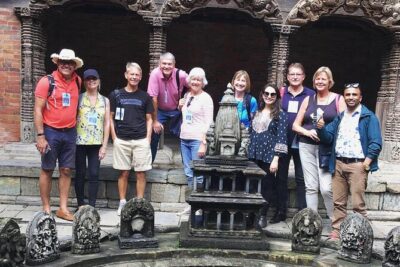
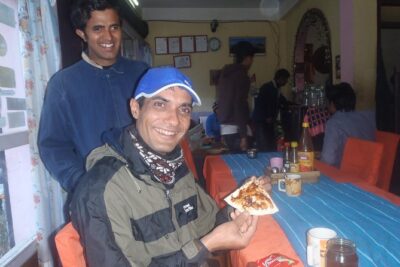
One theme that shows up again and again is guide quality. Sudam and Ganesh come up as attentive and supportive, with a focus on meeting needs along the way. That matters, because on a trek like this, the difference between tough and miserable often comes down to pacing, encouragement, and problem-solving.
There are also specific helpful details you can consider:
- Porter support is repeatedly credited with reducing luggage stress.
- Sudam is mentioned as speaking Chinese, which can be useful for some travelers if language support matters to you.
Even if you never need “extra” help, having guides who manage the group smoothly is what makes the trek feel like it runs on time and doesn’t turn into guesswork.
Should you book this Annapurna Base Camp trek?
Book it if you want a well-organized 10-day ABC trek that handles the important bits for you: permits, staffing, transport, meals, and core gear. The guide team you are likely to get, including names like Sudam and Ganesh, is a big part of why this style of trip works well.
Think twice if you do not want to deal with altitude and step-heavy hiking, or if you need a more flexible walking schedule than a fixed route. If you go in ready for steady effort, you are set up for the kind of reward that makes the hard days worth it, especially the morning views at Annapurna Base Camp.
FAQ
What time does this Annapurna Base Camp trek start?
The start time is 8:15 am.
Where do I meet for the start of the trip?
The meeting point is The Great Adventure Treks & Expedition Pvt. Ltd, Chhusya Galli, Kathmandu 44600, Nepal, and the activity ends back at the same meeting point.
Is pickup from the airport and transfer to a hotel included?
Yes. Pickup from the airport and transfer to your hotel is included, along with Kathmandu sightseeing by private vehicle.
How do you get from Kathmandu to Pokhara?
Kathmandu to Pokhara is by tourist bus, about 6 to 7 hours.
What permits are included for the trek?
Your trip includes an Annapurna Conservation Area Project (ACAP) permit and a TIMS (Trekkers Information Management system) card.
What trekking equipment is provided?
The package includes a sleeping bag and a down jacket.
How much baggage can my porter carry?
The porter carries your baggage with a limit of 25 kg max, and the ratio is 2 guests per porter.
Is this trek physically demanding?
It is listed for travelers with moderate physical fitness. The route includes steep ascents and high altitude, so you should be prepared for long hiking days.
What is the cancellation policy for a full refund?
You can cancel up to 6 days in advance for a full refund. You must cancel at least 6 full days before the experience’s start time.
More Hiking & Trekking Tours in Kathmandu
More Tour Reviews in Kathmandu
Not for you? Here's more nearby things to do in Kathmandu we have reviewed
Annapurna Treks from Kathmandu, compared.
★ 5.0Annapurna Circuit Trek with Tilicho LakeFrom $1,093368 reviews
★ 5.0Annapurna base camp trek 5 DaysFrom $699252 reviews
★ 5.0Annapurna Base Camp TrekFrom $935111 reviews
★ 5.0Kathmandu to Annapurna Base Camp (ABC) 5-Day TrekFrom $99102 reviews
★ 5.04 Days Poon Hill TrekFrom $40594 reviews
★ 5.0Annapurna Circuit TrekFrom $1,17594 reviews
★ 5.0Annapurna Base Camp Trek 12 DaysFrom $80085 reviews
★ 5.0Ghorepani(Poonhill Trek)From $60081 reviews
Browse the lists this tour appears in