REVIEW · KATHMANDU UNESCO HERITAGE TOURS
Kathmandu: Full Day Top 4 UNESCO Tour with Lunch – Private/Group
Kathmandu can feel loud and chaotic fast, but this tour gives it structure. I like the well-paced route that links four UNESCO sites without wasting hours in traffic, and I also like how guides such as Sumit and Anon keep explaining what you are seeing in plain English. One thing to plan for, though, is the pace, you cover a lot in about 5 to 6 hours, so you may feel a bit rushed if you want to linger at every stop.
You also get round-trip hotel pickup and drop-off by air-conditioned vehicle, plus an included lunch box to keep energy steady between temples. The tradeoff is that monument entrance fees are not included by default, so budget extra if you are paying site-by-site.
Key things to know before you go

- Four UNESCO highlights in one packed day, Swayambhunath, Patan Durbar Square, Pashupatinath, and Boudhanath
- Pickup and drop-off included, so you spend your time sightseeing, not negotiating Kathmandu traffic
- Lunch box in the middle of the day, with bottled water and fruit plus snack items
- English-speaking guide, with time for questions and a style that keeps the day moving
- Entrance fees extra unless you choose the all-inclusive option, where fees and meals are bundled
- A “private tour” feel even when booked in a group option, since only your booking party participates
Why this Kathmandu Top 4 UNESCO day works so well

If you only have one real day in the Kathmandu Valley, this itinerary is a smart way to get your bearings fast. You hit a major hilltop stupa (Swayambhunath), a royal palace square in Lalitpur (Patan Durbar Square), the most famous Hindu temple complex in the valley (Pashupatinath), and the big Buddhist landmark that draws visitors from everywhere (Boudhanath). It is a tight sweep of Hindu and Buddhist Kathmandu, plus the Newar artistic legacy of Patan.
What makes it worth your time is the way the day is organized. Multiple stops, sure, but the route is designed to keep transfers efficient. In practice, that means fewer dead minutes stuck waiting in the car and more actual viewing time at each site. Guides like Sumit and Sajina are repeatedly praised for keeping things moving and answering questions without making the day feel like a race.
The main consideration is simple: four UNESCO sites in half a day range is not “slow travel.” Some people enjoy the high tempo, others wish they had more time at one place. If you know you get obsessed with details, consider adding a separate day later for your favorite stop.
You can also read our reviews of more private tours in Kathmandu
Hotel pickup, transport, and the lunch that stops the mid-day crash

This is one of those tours that feels easier than it sounds, because it starts with you being collected. You get pickup from your hotel and drop-off afterward, by private vehicle. That removes a lot of friction in Kathmandu, where finding the right route, parking, and timing can be its own mini-adventure.
You also get air-conditioned transportation. Even on a good day, Kathmandu can be warm and dusty, so that comfort matters when you are bouncing between hilltop steps and temple courtyards.
Then there is lunch. You do not just get a vague “meal on request.” You get a lunch box with water (500 ml bottled), muffin, donut, banana, seasonal fruit, and juice. That set-up is good for a temple day because you can eat quickly, not hunt for a place, and you do not end up with a grumpy stomach mid-tour.
If you choose the all-inclusive option, your food plan expands: soft drinks, entrance fees, and a Khana set or choice of dishes are included. That is the version to think about if you hate surprise add-ons at the monuments.
Stop 1: Swayambhunath Monkey Temple, hilltop views and sacred symbolism
Swayambhunath is the famous Monkey Temple, perched on a hill west of Kathmandu. It is also one of the oldest and most sacred sites in Nepal, with a history dating back over 2,500 years, and it is UNESCO-listed.
You have about 40 minutes here. That is enough time to walk around, take in the hilltop setting, and understand the significance without turning the visit into a full-day hike. Still, plan on steps and uneven ground. Wear shoes you can trust.
A practical tip: keep an eye on your belongings. The site’s nickname is not just marketing. If monkeys get curious, you do not want to be scrambling for your phone, bag, or snacks.
Also note that admission tickets to the monument are not included in the base setup. If you are paying fees separately, factor that into your day. A guide helps a lot here because they can explain what you are seeing as you go, rather than leaving you to piece the meaning together alone.
Stop 2: Patan Durbar Square, Newar art and palace-era architecture

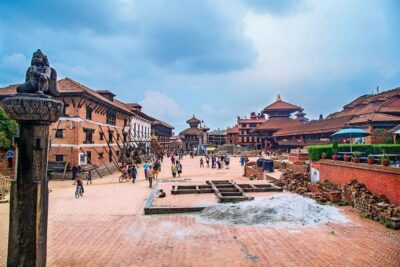
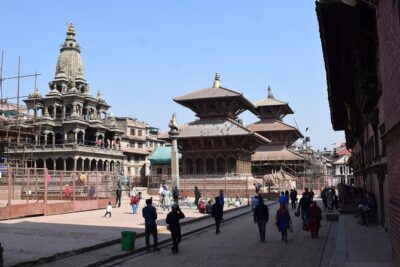
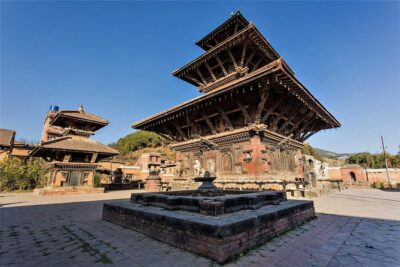
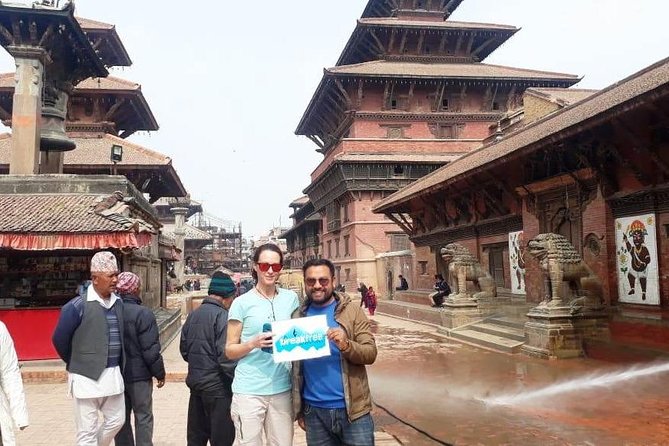
Next up is Patan Durbar Square, in Lalitpur. Think of it as a showcase of Newar architecture and the artistic style that grew from the Malla kings of Patan. You get about 1 hour at this stop, which is a healthy window for wandering the square and focusing on what catches your eye.
This is a great contrast to Swayambhunath. One is a hilltop stupa complex with sweeping symbolism. Patan Durbar Square is more about sculpted stone, temple details, and the feel of a royal-era civic space.
Admission is not included by default, so again, budget for fees if you are not using the all-inclusive option. The upside is that you are not just “looking.” With guides such as Ram, people often mention spending enough time at each site to actually explore and not just pass through.
One more thing to keep in mind: Patan is a working historic neighborhood. You may see locals going about their day. That is part of the authentic feel, and it also means the experience is not staged for tourists.
Stop 3: Pashupatinath Temple, Shiva shrine and the Bagmati riverfront reality

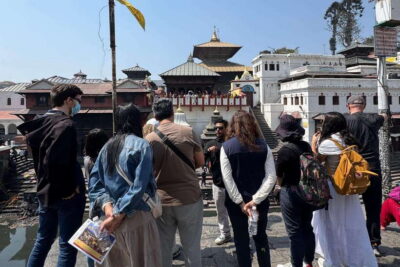
Pashupatinath Temple is a UNESCO World Heritage site and one of the holiest Hindu shrines in the world, dedicated to Lord Shiva. It sits on the banks of the Bagmati River.
You have about 1 hour at this stop. That time can feel short for a site this famous, but it is long enough to understand the setting, see the main temple zone from the right viewing areas, and hear how the guide connects the place to Nepalese religious life.
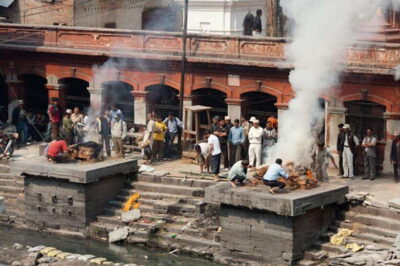
Here is the part where you should go in with open eyes. Some visitors experience a cremation ceremony view from the riverfront area at Pashupatinath. One tour feedback note specifically mentions this can be tough to watch and that not everyone in the group chooses to view it. The key is that you are not forced. If you need to step away, you can.
If you want to stay comfortable, dress respectfully and keep your behavior calm. This is not a “walk fast, take a quick photo” stop. It is a living religious site, and the more respectful you are, the more meaningful the visit becomes.
Admissions are not included by default here either, so plan to pay directly if you are not booking the ticket-inclusive/all-inclusive variant.
A few more Kathmandu tours and experiences worth a look
Stop 4: Boudhanath Stupa, big Buddhist landmark and a calmer finish

Boudhanath Stupa is one of the largest and most important Buddhist stupas in the world, also UNESCO-listed. The day ends with this stop for a reason. After temple complexity and the intensity of Pashupatinath, Boudhanath tends to feel more open and steady.
You have about 40 minutes here, which is enough time to see the massive stupa and soak up the atmosphere of peace and spirituality that people associate with the site. Again, your guide can help by translating what you are seeing into context, so you are not just staring at a landmark with no idea how it fits into Buddhist practice.
Admission is not included in the base version. If you select the all-inclusive option, those entrance fees are bundled, which can be easier on your budget and sanity.
This stop is also a good place to slow down your pace a bit. Even with a time limit, you can step back and just watch the flow of visitors moving around the area. That quiet moment can be the payoff after a busy day.
Price and logistics: how the $10 base turns into a real budget

The headline price shown is $10 per person, which is impressively low for a tour that includes hotel pickup, air-conditioned transport, and an English-speaking guide plus lunch. But there is an important detail: entrance fees to sightseeing monuments are not included and must be paid directly, listed as $20 per person.
So your “real cost” depends on the option you pick:
- Base tour pricing plus separate monument entrance fees.
- All-inclusive option, which specifically says it can include food, soft drinks, entrance fees, and a Khana set or a dish choice.
If you like clear totals and fewer cash moments at each site, the all-inclusive version often makes sense. If you prefer to pay as you go and you are comfortable with a little budgeting, the base option can still be good value.
Also remember that the tour duration is about 5 to 6 hours. That length matters because you are not paying for a full day, but you still get four major UNESCO stops. For many first-time visitors, that is the sweet spot between “too short to matter” and “too long to enjoy.”
Private vs group vs ticket-inclusive: which option fits your style

This experience is offered in multiple formats, including group, private, and ticket-inclusive style options. The tour description also says it is private in the sense that only your group participates.
Here is how to choose based on your travel habits:
- Choose private if you want more flexibility, more time for questions, and a schedule that matches your pace. Private tours are also the best fit if you want to ask your guide to repeat explanations when something clicks.
- Choose group if you are comfortable sharing the day with others. The strong guide focus still matters, and the route is kept efficient.
- Choose ticket-inclusive or all-inclusive if you want fewer uncertainties. This can be especially useful if you do not want to handle separate entrance fees at each UNESCO site.
One more practical note from real tour experiences: guides can be flexible with small additions, like popping by a supermarket during the day. That kind of adjustment only happens when the format and timing allow for it, so if you might want a small detour, lean toward the private option.
What you should expect from the guide
The biggest “quality signal” here is the guide style. Multiple guide names show up in standout feedback, including Sumit, Anon, Shanti, Sajina, and Ram. The common thread is not just talking, it is explaining with patience, including time for questions.
That matters because UNESCO sites are not self-explanatory. If you go in cold, you might see impressive architecture and think, nice, then move on. A good guide turns what you see into meaning, like why a stupa matters, what Patan’s palace square represents, and how Pashupatinath fits into Hindu life.
You also get English-speaking professional guidance. That reduces the mental load. Instead of translating in your head, you can focus on the place.
Pace check: can you handle four UNESCO stops in one day?
Let’s be honest. You are going to feel busy. That is not a bad thing, it is the design.
A number of experiences mention the day is non-stop in a good way, and guides keep things moving. Others mention the schedule can feel fast, with not enough time at each stop if you want to linger.
So be strategic:
- If you are short on time, this is a strong fit.
- If you are a slow wanderer, pick just one or two sites for deeper repeat visits later.
One clever way to make this work is to pick your top priority before you go. For example:
- If religious life is your focus, put Pashupatinath high on your list.
- If art and architecture pull you, make Patan Durbar Square the anchor.
- If you want a calmer end to the day, plan Boudhanath as your unwind stop.
Quick prep tips for a temple-heavy day
Because this is weather-dependent, it helps to plan for a decent day. Good weather is required, and if conditions are poor, you may be offered another date or a refund.
For what you wear and bring:
- Go with modest, comfortable clothing. Temples are not the place for stiff outfits.
- Wear shoes for steps and uneven stone. Swayambhunath is the one likely to test your footing.
- Bring your patience. Even with a smooth route, you will encounter real-life crowds and small delays in historic areas.
- Take the lunch seriously. The included snack-heavy lunch box is there to prevent the mid-afternoon crash.
Who should book this tour, and who should skip it
You should book this if:
- You want a high-impact introduction to Kathmandu’s UNESCO sites in about half a day.
- You value transport and guide structure, so you spend time viewing rather than planning.
- You like learning the meaning behind what you see, especially around Hindu and Buddhist sites.
- You prefer an included meal, not a scramble for food between monuments.
You might skip or choose a different pace if:
- You know you get annoyed when a schedule is tight.
- You want long, quiet time at a single place. Four stops in 5 to 6 hours can feel like a sprint.
- You are very sensitive to seeing religious ceremonies up close. At Pashupatinath, you might encounter views of cremation activity. The choice to watch varies by visitor, but it is good to go mentally prepared.
Should you book the Kathmandu Top 4 UNESCO tour with lunch?
For most first-timers, yes. This is one of those rare deals where the price feels almost too good for what you get: pickup, air-conditioned transport, an English guide, four UNESCO sites, and a real included lunch box.
My advice: book it if you want structure, efficiency, and context. Use it to learn the basics and decide which place deserves a slower revisit later. If you are already a temple-focused traveler with lots of time, you may still like it, but you might want to swap to a slower route that lets one site become the whole story.
If you hate surprise costs, choose the all-inclusive option so entrance fees are handled in advance. If you do not mind budgeting along the way, the base setup can still be excellent value.
FAQ
How long is the Kathmandu Top 4 UNESCO tour?
The tour runs about 5 to 6 hours.
Does the tour include hotel pickup and drop-off?
Yes. Pickup and drop-off are included by private vehicle.
Is lunch included, and what does it include?
Yes. Lunch box includes bottled water (500ml), muffin, donut, banana, seasonal fruit, and juice.
Are entrance fees included?
Entrance fees to sightseeing monuments are not included by default and are paid directly by guests. An all-inclusive option can include entrance fees.
Which UNESCO sites are included?
The stops are Swayambhunath, Patan Durbar Square, Pashupatinath Temple, and Boudhanath Stupa.
Is there a mobile ticket?
Yes, a mobile ticket is mentioned as part of the experience.
Is this tour private?
It is described as private in the sense that only your group will participate.
Do I need good weather?
Yes. The experience requires good weather, and if it is canceled due to poor weather, you will be offered a different date or a full refund.
Is cancellation free?
Cancellation is free. You can cancel up to 24 hours in advance for a full refund, and within 24 hours it is not refunded.
More Private Tours in Kathmandu
More Tours in Kathmandu
More Tour Reviews in Kathmandu
Not for you? Here's more nearby things to do in Kathmandu we have reviewed
Kathmandu UNESCO Heritage Tours, compared.
★ 5.0Private Kathmandu Sightseeing Tour | UNESCO World Heritage sitesFrom $17756 reviews
★ 5.0Full Day 7 UNESCO Tour with Lunch – Private/GroupFrom $10415 reviews
★ 5.0UNESCO Seven World Heritage Tour in KathmanduFrom $180253 reviews
★ 4.9Full-Day 7 UNESCO Tour with Lunch – Private/GroupFrom $5247 reviews
★ 4.97 UNESCO Sites Tour in 1 Day (Private Tour)From $4204 reviews
★ 4.9Top 4 UNESCO Tour with Lunch – Private/GroupFrom $5181 reviews
★ 5.0Kathmandu Private Sightseeing Tour | UNESCO World Heritage SitesFrom $35109 reviews
★ 5.0Full Day 7 UNESCO Tour with Lunch – Private/GroupFrom $5101 reviews
Browse the lists this tour appears in