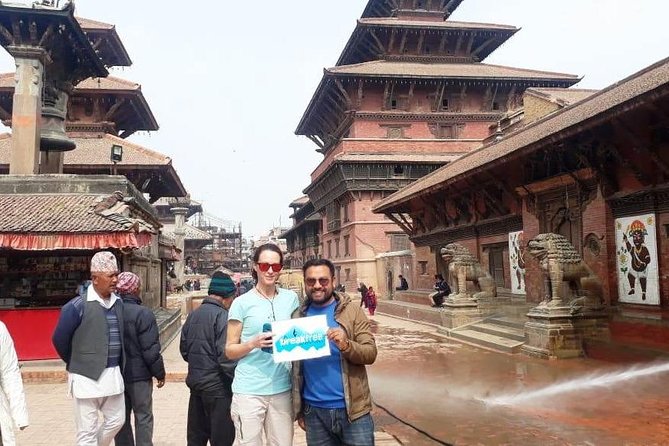
UNESCO Five World Heritage Tour in Kathmandu

REVIEW · KATHMANDU UNESCO HERITAGE TOURS

UNESCO Five World Heritage Tour in Kathmandu

5.0 · 12 reviews From $130 Operated by Himalayan Advisor Pvt. Ltd. · Bookable on Viator
Book on Viator →

One day can feel like a whole valley. This private UNESCO route in Kathmandu strings together Buddhist stupas, Hindu temple complexes, and Newari royal architecture with a tight plan and guide commentary. You also get entry fees included, which matters a lot when you are moving site to site.

I particularly like that pickup and drop-off are built in inside the Ring Road area, including the Bouddha side. The main drawback is simple: with a full schedule, food and drinks are not included, so you will need to sort meals on your own during the day.

Key things to know before you go

UNESCO Five World Heritage Tour in Kathmandu - Key things to know before you go

  • A full-day UNESCO loop (about 7 to 8 hours) that covers both Kathmandu and Patan highlights
  • Admission tickets are handled for each heritage stop
  • Hotel pickup and drop-off are included within the Ring Road area, including Bouddha
  • A private setup where only your group participates, with a professional guide
  • A Hindu and Buddhist mix that is explained as you go, from Swayambhunath to Boudhanath

Why This Kathmandu UNESCO Route Works So Well

Kathmandu Valley has a talent for packing big meaning into small spaces. This tour leans into that strength. You start with Swayambhunath and then swing through Kathmandu Durbar Square, Patan Durbar Square, and key temple complexes before ending at Boudhanath and Pashupatinath.

The value is not just that it is UNESCO-heavy. It is that the day is paced as a sequence, not a random grab bag. Stops include major landmarks plus smaller, highly specific places like Amideva Buddha Park (near the Swayambhunath hill) and the Kaal Bhairab statue in Kathmandu Durbar Square.

The other reason this works is logistics. With a private car and guide, you skip the stress of negotiating transport between crowded heritage zones.

You can also read our reviews of more historical tours in Kathmandu

Price and Timing: What You’re Really Paying For at $130

UNESCO Five World Heritage Tour in Kathmandu - Price and Timing: What You’re Really Paying For at $130
The price is $130 per person for a day that runs about 7 to 8 hours, starting at 9:00 am. On paper, that can look like a lot or a steal depending on what you would do on your own.

Here is the honest math of it: you are paying for (1) private transport, (2) a professional guide, and (3) admission tickets at multiple heritage sites. If you try to DIY this, the tickets plus the time lost coordinating multiple stops can turn the day into a hassle.

Also, the day is structured with short visits at some points and longer ones at others. The itinerary adds up to a full sweep, including one-hour blocks at major stops like Swayambhunath, Kathmandu Durbar Square, Patan Royal Palace area, and both Pashupatinath and Boudhanath.

One more practical point: the tour is booked on average about 55 days in advance, so if you are traveling during peak season or on a tight schedule, earlier is smarter.

Ring Road Pickup and Private Car Comfort (Minus Taxi Chess)

If you hate taxi bargaining, you will appreciate how this tour handles transport. It includes hotel pick up and drop off inside the Ring Road area, including the Bouddha area.

That matters because Kathmandu’s traffic and heritage zones can make “just hop in a taxi” feel like a mini project. With a private car, your guide can keep the timing tight as you move from square to temple to stupa.

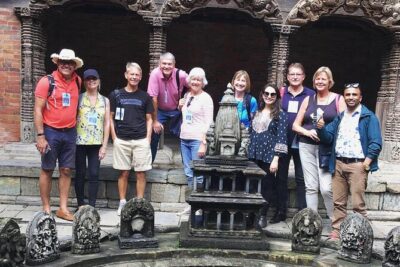
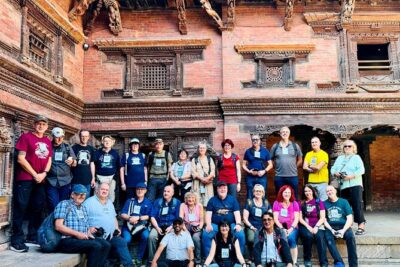
And you do not have to share the day with strangers. It is a private tour/activity, meaning only your group participates. If you want to ask extra questions, pause for a moment, or keep your own pace through a specific stop, you are not stuck inside a rigid group flow.

Swayambhunath and Amideva Buddha Park: A Calm Start With a Big View of Belief

Stop one is Swayambhunath, listed as a UNESCO World Heritage Site and considered holy for both Buddhist and Hindu communities. This is a strong opener because the site’s identity is built around overlap and shared spiritual geography.

The visit is about 1 hour, and it is paced to let you take in the stupa environment without turning the day into a sprint. Your guide also has a job beyond pointing. They explain how the Buddhist and Hindu cultures blend in Kathmandu, which helps you understand why the same holy ground can mean different things to different people.

Right next door is Amideva Buddha Park, a quick 15 minutes. It is a small hangout area with three large statues of Shakyamuni Buddha. If you only had time for one “bonus stop,” this is a good one. It gives you a different angle from the big stupa scene and offers a calmer moment before the day gets more architectural.

Practical note: this is an early foundation. If you get your bearings here, you will recognize patterns later in the day, especially in how temples and courtyards express Newari artistic identity.

Kathmandu Durbar Square: Royal Courtyards, Reconstruction, and Specific Shrines

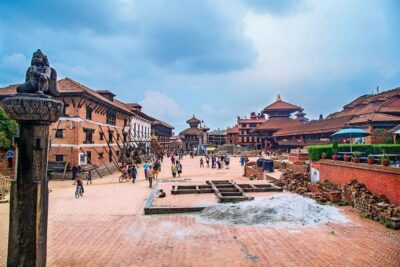
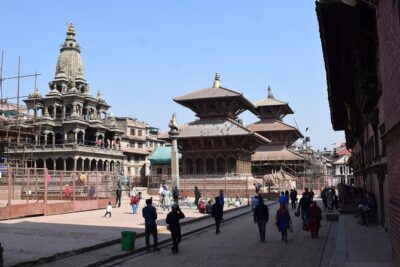
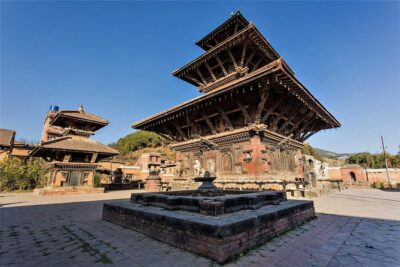
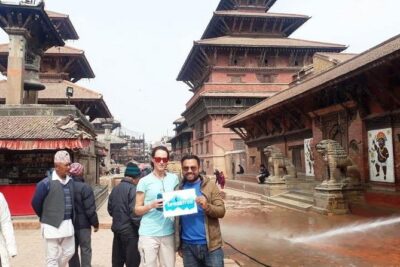
Next up is Kathmandu Durbar Square for about 1 hour. This is one of the royal squares of Kathmandu Valley, and it has many historic and religious structures. Your route also includes a key reality check: parts of the square are under reconstruction, so you may see restoration work alongside older architectural forms.

Within that same Durbar Square complex, your itinerary includes:

  • Basantapur Tower (about 30 minutes), an attractive structure tied to the square’s historic layout.
  • Degu Taleju Temple (about 10 minutes). Taleju Temple is noted as being built in 1564.
  • Kumari Chowk (about 10 minutes), a sacred courtyard inside a red-brick, three-level building that was once home to Kumari, the living goddess until puberty.
  • Kaal Bhairab (about 5 minutes), a statue of Bhairav in Kathmandu Durbar Square.

These are all short stops, but that is part of the design. Durbar Square is dense. You do not want to spend half a day trying to “figure it out.” A guide keeps you focused on what each stop represents.

A balanced way to think about Durbar Square: it is visually impressive, but it can also be emotionally intense because many places connect to living religious traditions. Even if you are not into temples, the way these shrines sit inside courtyards and civic spaces is exactly what makes Kathmandu architecture feel like a functional system, not a museum display.

Here's some more things to do in Kathmandu

Patan Royal Palace Area: From Palace Rooms to Temples With Purpose

Then you head to Patan, starting with Patan Royal Palace for about 1 hour. This area sits around Patan Durbar Square in Lalitpur and is described as one of the oldest royal palaces of Patan.

You will also hear about nearby temples in this complex zone, including the Krishna Temple and Tulaja Devi Temples. Even if you only spend an hour here, it is enough time to notice how Patan’s heritage expresses itself through layered sacred and royal space.

If you like architecture, pay attention to how the palace area sets up your later Patan Durbar Square experience. It makes the next stops feel connected rather than separate.

Patan Durbar Square and Taleju Mandir: Newari Craft in the Open

After the palace area, you get Patan Durbar Square (about 45 minutes). This square is described as the adobe for Newari architecture, meaning you see many temples and artistic creations tied to the Newar community.

Next is Taleju Mandir Temple for about 15 minutes. It is noted as being rebuilt after a fire in 1676 by Srinivasa Malla. That little timeline detail matters because it shows the site is not frozen in time. Religious and artistic expression keeps renewing.

This section is one of the strongest “architecture plus story” chunks of the day. You are not just looking. You are learning why certain places were built, repaired, and maintained.

Patan Museum and the Golden Temple: Two Ways to See the Same Culture

A good add-on in Patan is Patan Museum for about 15 minutes. The museum is specifically noted for old statues and carved windows and wooden pillars. That means even if you feel temple fatigue, you still get cultural context through crafts and objects.

Then comes Golden Temple (Hiranya Varna Mahavihar) for about 10 minutes. It is a 12th-century temple described as pagoda-style, with bronze statues covered in silver and golden decorations and a golden image of Lord Buddha. Even with a short stop, this is a high-impact sight.

If you are sensitive to religious sites feeling crowded, keep expectations realistic. Short visits here can feel like a highlight reel. The trade-off is that you still get to cover the full UNESCO sequence in one day.

Shiva Temples and Bhimsen Temple: Business, Trade, and Devotion

From the Golden Temple zone, the itinerary includes two very short temple stops:

  • Vishwanath Mandir Temple (about 5 minutes), built during the reign of Siddhi Narsingh Malla and dedicated to God Shiva.
  • Bhimsen Temple (about 15 minutes), built in 1680 by Srinivasa Malla and worshiped as a god of business and trade by the Newar community.

This is one of those “you either notice or you miss it” parts of Kathmandu Valley culture. People often think temples are only about worship. Here, you see how faith also connects to work life, trade, and community roles.

It is also a nice rhythm shift. After earlier royal and palace spaces, these are more pointed acts of devotion. They make Patan feel lived-in, not just historically impressive.

Pashupatinath and Boudhanath: The Big Two, Hindu Main Temple and a 36-Meter Stupa

Now the day shifts to the heavy hitters: Pashupatinath Temple and Boudhanath Stupa.

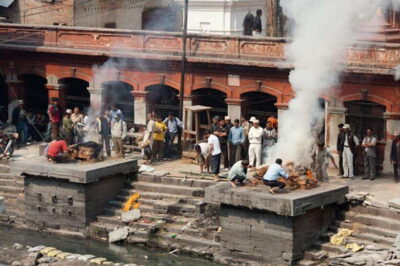
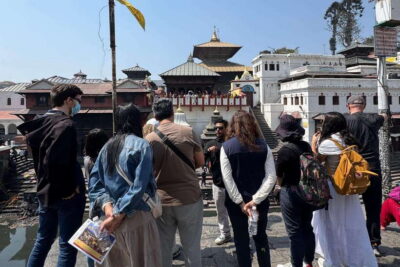
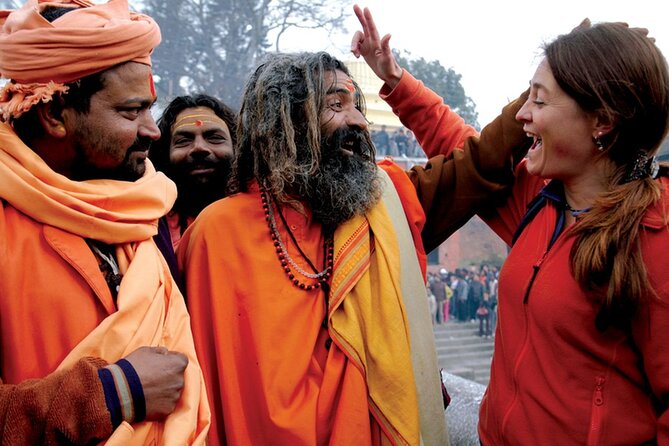
First is Pashupatinath for about 1 hour. It is a Hindu temple complex with over 500 shrines and temples and described as the main temple for Shiva devotees. Even without getting lost in details, that scale alone changes your understanding. This is not one building. It is a whole temple ecosystem.

Then you finish with Boudhanath Stupa for about 1 hour. The stupa is described as 36 meters high, with prayer wheels and picture carvings of Buddha around it. It is a symbol of Buddhism in Nepal and provides a clear visual contrast to the Hindu density you saw at Pashupatinath.

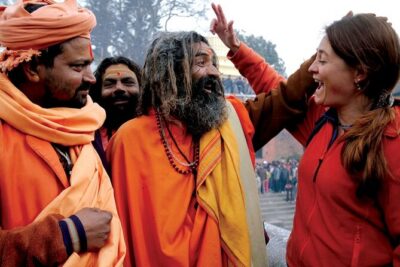
Together, these two stops give you a practical understanding of how Kathmandu functions as a shared spiritual city. You do not have to choose one tradition to appreciate the other. The tour’s order also helps you feel the change in atmosphere: from complex temple clusters to the large stupa form that anchors the Buddhist world.

The Guide Factor: Why People Mention Names Like Shanti and Sarita

What consistently drives satisfaction on this kind of UNESCO day trip is simple: you can see the sights without a guide, but you cannot easily connect them into a real picture of Kathmandu without context.

In this tour setup, your guide provides commentary on Kathmandu’s blend of Buddhist and Hindu cultures. That context helps at every stop, especially at the ones that sound unfamiliar at first like:

  • Amideva Buddha Park and Shakyamuni Buddha statues
  • Kumari Chowk and the living goddess tradition
  • Taleju Temple built in 1564 and later rebuilt after the fire in 1676

The guide experience is also something people praise by name. You may hear about guides such as Shanti, Sarita, Tej, and Rabina being professional, attentive, and able to answer questions in detail. That is not just nice to have. On a day where you visit 16 sites, clear explanations reduce the feeling that you are just collecting photos.

Pacing and Real-World Expectations for a 16-Stop Day

This tour is built as a full schedule. You can count on a steady run of sites, including short stops like Kaal Bhairab (5 minutes) and longer ones like Swayambhunath and the hour-long main complexes.

The good side: you get variety across Kathmandu and Patan in one day. You also get a smooth flow that reduces decision fatigue. The not-so-good side: you are not doing deep, slow wandering. If you want to linger for an hour at one single temple, this is not that kind of tour.

Timing also matters for your own comfort. Since food and drinks are not included, plan your day around that reality. If you tend to get hungry quickly, you might want to have snacks ready or plan your meal separately during the gaps you get between stops.

Who This Tour Is Best For

This is a strong match if you:

  • Want maximum UNESCO coverage without planning every ticket and transit leg
  • Care about culture, history, and architecture, not just photo ops
  • Prefer a structured route in a place where navigating on your own can take time
  • Are traveling as a small group and want private transport and a guide

It is also a good fit for first-time visitors who want a single day that gives you a foundation. After this, you will know which areas you want to return to at your own pace.

If you dislike temples and religious sites, you will find the day intense. But if you can handle spiritual architecture and cultural storytelling, the itinerary hits the core of the Kathmandu Valley experience.

Should You Book This Kathmandu UNESCO Tour?

I think you should book it if you want a one-day answer to Kathmandu Valley’s biggest questions: how the city’s Hindu and Buddhist worlds overlap, why the royal squares matter, and what Patan’s Newari artistry looks like in real space.

I would skip it if your travel style is slow and flexible, with lots of unplanned wandering and long breaks. This schedule is tight by design. Also, since food and drinks are not included, be ready to handle meals separately.

If you are on the fence, look at the big picture: a private day with a guide, included tickets, and Ring Road pickup for $130 is hard to beat for a UNESCO-focused itinerary in Kathmandu. If you want the essentials covered well, this is a smart way to spend your day.

FAQ

What is the price of the UNESCO Five World Heritage Tour in Kathmandu?

The price is $130.00 per person.

How long does the tour last?

It runs for about 7 to 8 hours.

What time does the tour start?

The start time is 9:00 am.

Is hotel pickup included?

Yes. Hotel pick up and drop off are included within the Ring Road area, including Bouddha.

Is the tour private or shared with other groups?

It is private, and only your group will participate.

Which UNESCO-related heritage sites are included in the itinerary?

The stops include Swayambhunath, Kathmandu Durbar Square, Patan Royal Palace, Patan Durbar Square, Pashupatinath Temple, and Boudhanath Stupa, plus additional temple and courtyard stops in those areas.

Are entry fees included?

Yes. Entry fee of all heritage sites is included, and admission tickets are listed for each stop.

Is food included in the tour price?

No. Food and drinks are not included.

Can I cancel for a full refund?

Yes. You can cancel up to 24 hours in advance of the experience for a full refund.

How far in advance is this tour commonly booked?

On average, it is booked about 55 days in advance.