Pick 2-Wonders of Kathmandu: A 3-Hour Heritage Hop

REVIEW · HISTORICAL TOURS

Pick 2-Wonders of Kathmandu: A 3-Hour Heritage Hop

5.0 · 22 reviews 3 hours From $3 Operated by Cordial Trek Pvt. Ltd. · Bookable on GetYourGuide
Book on GetYourGuide →

Kathmandu in three hours sounds tight, until you do it. This 2-Wonders heritage hop lets you choose two UNESCO sites and links them with a local guide, a private car, and time-saving hotel pickup and drop-off. One minute you’re watching the Kumari tradition, the next you’re up at a hilltop stupa with wide-open views.

I love how clearly the tour gives you the must-sees without trying to cram in everything. The big win is the chance to see Kathmandu Valley’s signature practices, including Kumari (the living goddess), plus the hilltop 360-degree vistas from Swayambhunath. The second standout is how customizable it feels because you can pick your pair from the six UNESCO options.

One consideration: you need to choose your option upfront, and monument entrance fees are not included, so you should budget for add-ons if you want full access where tickets apply.

Key highlights worth prioritizing

Pick 2-Wonders of Kathmandu: A 3-Hour Heritage Hop - Key highlights worth prioritizing

  • Kumari viewing tied to Kathmandu Durbar Square’s living traditions
  • Swayambhunath 360-degree views from the hilltop stupa, plus monkey-area atmosphere
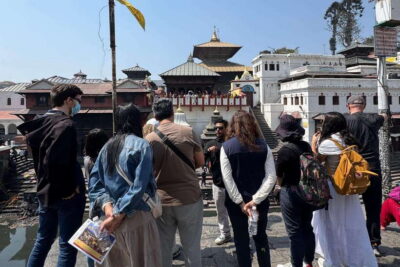
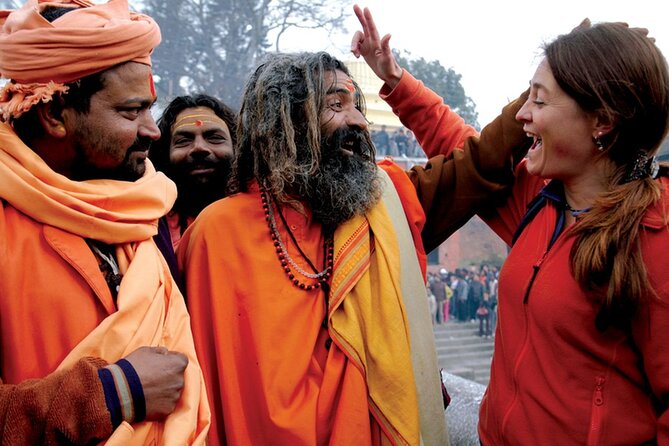
  • Pashupatinath on the Bagmati River, where traditional Shiva rituals may be visible
  • Boudhanath’s Buddhist scale, including the sense of history around the stupa
  • Newari architecture and Durbar Square detail, especially the craft-heavy red-brick areas

A 3-hour Kathmandu plan that respects your time

Pick 2-Wonders of Kathmandu: A 3-Hour Heritage Hop - A 3-hour Kathmandu plan that respects your time
If you only have a half-day in Kathmandu, the best tours are the ones that get you to the right places fast. This one works because it is built around two UNESCO sites, not a long list. You get the feel of Kathmandu Valley without spending most of your trip stuck in transit or queueing.

I also like the pace flexibility. Even within a fixed 3-hour window, a good guide can slow down at the parts you actually care about. In the feedback I saw strong praise for guides like Nilakantha Acharya and Prakash, with mentions of patient explanations and adjusting to questions on the spot. That matters, because Kathmandu rewards curiosity, not speed.

And you’ll start and end in Thamel, which is useful if you’re using it as your base. Private transport plus a live guide means you avoid the guesswork of figuring out which entrance is best, where to stand, and how to read what you’re seeing.

You can also read our reviews of more historical tours in Kathmandu

Choose your pair: how to pick the right “2-Wonders” combo

Pick 2-Wonders of Kathmandu: A 3-Hour Heritage Hop - Choose your pair: how to pick the right “2-Wonders” combo
This tour lets you select two sites out of six UNESCO World Heritage options. The four popular pairings typically group sites by theme, location, and walking style. Here’s how to choose based on what you want to feel in Kathmandu.

Option 1: Kathmandu Durbar Square + Swayambhunath (Monkey Temple)

Choose this if you want royal history and daily spiritual life in the same sweep.

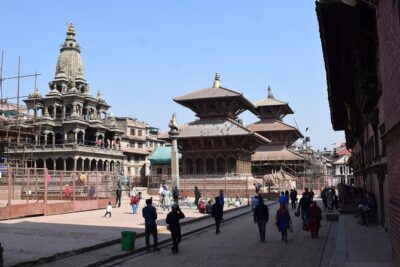
Kathmandu Durbar Square is the old-city heart where you’ll see palaces and courtyards tied to the Malla and Shah dynasties, including the nine-storied Nautale Durbar. It’s also where the Kumari tradition is linked to her temple, making it one of the rare chances to witness that kind of living cultural practice.

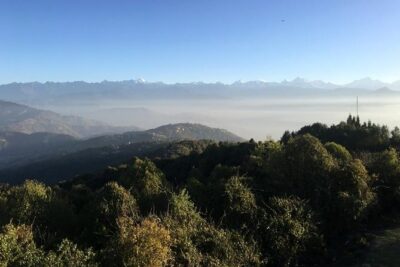
Then you climb to Swayambhunath, a UNESCO stupa on a hilltop. It’s famous for the Mahachaitya area and, yes, the monkey presence. The real payoff is the 360-degree view over Kathmandu Valley, which gives you instant geography. When you see the city laid out from above, the rest of your sightseeing makes more sense.

Option 2: Pashupatinath + Boudhanath

Choose this if you want high spirituality with two very different religious atmospheres.

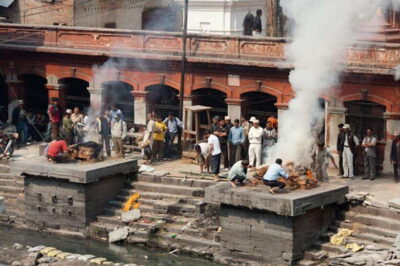
Pashupatinath Temple is dedicated to Lord Shiva and sits on the sacred Bagmati River. The tour description specifically notes you may witness traditional cremation rituals along the banks. Even if you don’t catch a ceremony, the site’s role in Hindu practice is the point.

Then you shift to Boudhanath Stupa, one of Nepal’s largest and described as the largest mandala in Nepal. It’s historically tied to the ancient trade route to Tibet, which helps explain why the stupa carries such a strong sense of time and exchange. The mood here tends to feel quieter and more meditative compared with the temple intensity of Pashupatinath.

Option 3: Patan Durbar Square + Kathmandu Durbar Square

Choose this if you’re drawn to art, craftsmanship, and Newari architecture.

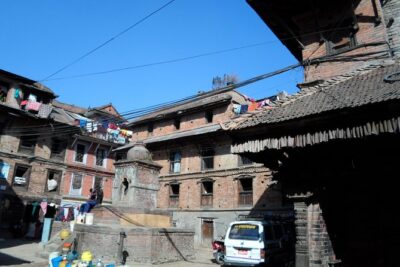
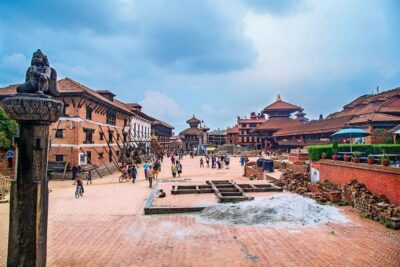
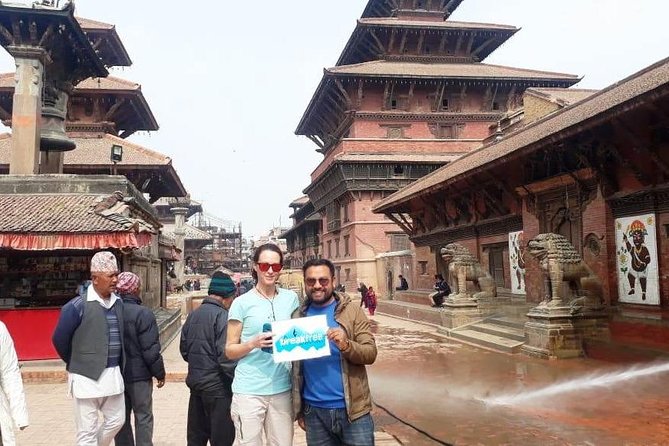
Patan Durbar Square is in Lalitpur and is known for its exquisite Newari buildings, temples, and statues. You’ll also hear about its red-brick pavement, which gives the square a strong visual identity. If you like details like carved facades and temple clusters, Patan is the one.

Pairing it with Kathmandu Durbar Square makes sense because you get two major palace-square experiences back-to-back, both recognized as UNESCO heritage sites. It’s the best pick if your brain lights up when you compare architectural styles across sites.

A few more Kathmandu tours and experiences worth a look

Option 4: Bhaktapur Durbar Square (timeless charm)

Choose this if you want a slower feeling and dense monument focus.

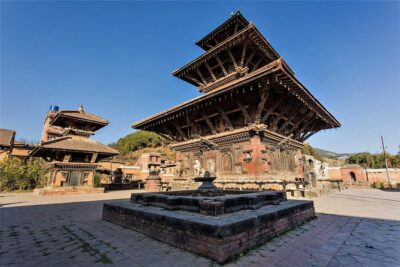
Bhaktapur is described as the smallest district but home to the largest Durbar Square in Nepal, with UNESCO heritage across four smaller squares. The standout mentioned is the five-storied Nyatapola Temple, noted as Nepal’s tallest. If you like dramatic vertical forms and the kind of palace-square layout where you keep finding new angles, this option is a great use of a short time.

Kathmandu Durbar Square and Swayambhunath: where stories turn into real places

Pick 2-Wonders of Kathmandu: A 3-Hour Heritage Hop - Kathmandu Durbar Square and Swayambhunath: where stories turn into real places
This is the combo I’d pick for first-timers who want a clean start to Kathmandu Valley. You’re not just looking at monuments. You’re seeing how people live with them.

At Kathmandu Durbar Square, the royal-palace setting tells you what Kathmandu used to be. The tour highlights the palaces connected to the Malla and Shah dynasties, including Nautale Durbar, a nine-storied structure. That’s the kind of feature you can see and remember because it creates a skyline signature. The guide is what makes it click: the goal is not only knowing the name of a palace, but understanding what royal rule and ritual life meant in this exact layout.

Then comes Kumari, the living goddess who resides in her temple. The key detail here is that Kumari is not treated like a museum exhibit. It’s linked to living cultural practice, which is why this stop feels different from standard sightseeing. You’ll want to keep expectations realistic. You may be able to sight Kumari depending on what’s happening at the time you arrive, but the tour is structured around that possibility.

After Durbar Square, you head to Swayambhunath, the Monkey Temple. Because it is on a hilltop, you get a change of perspective. You’re moving from palace courtyards to a stupa complex on higher ground, and that shift is part of why the pair works in just 3 hours. The Mahachaitya area is a focal point, and you’ll see the famous monkeys roaming around. Most importantly, the 360-degree views let you map Kathmandu Valley in your head.

Pashupatinath plus Boudhanath: Hindu ritual intensity and Buddhist calm

Pick 2-Wonders of Kathmandu: A 3-Hour Heritage Hop - Pashupatinath plus Boudhanath: Hindu ritual intensity and Buddhist calm
If you’re choosing Option 2, you’re basically choosing two kinds of sacred atmosphere in one short window.

Pashupatinath Temple is dedicated to Lord Shiva and is positioned on the Bagmati River. The tour description specifically calls out that you may see traditional cremation rituals along the banks. That detail matters because it signals that this is not a quiet scenic viewpoint. It is a working religious site. Even if you don’t witness a ceremony during your visit, you’ll still get a strong sense of the temple’s role in ongoing practice.

Then you shift to Boudhanath Stupa, described as the largest mandala in Nepal and one of the largest and most significant Buddhist stupas in the country. It’s tied to the ancient trade route to Tibet, which helps explain why the area carries a strong layer of movement, connection, and shared faith history. Compared with Pashupatinath, this stop tends to feel more still and spacious, which gives your mind a breather.

This is also a pairing that benefits from a strong guide. You’ll get more from the stupa when someone explains what you’re looking at in practical terms, like how the place fits Buddhist tradition and why the stupa’s scale matters. The feedback I saw repeatedly praised guides for clear, patient explanations, which is exactly what you want for sites that are meaningful but not always intuitive on first visit.

Patan vs Bhaktapur: Newari detail and Durbar Square geometry

Pick 2-Wonders of Kathmandu: A 3-Hour Heritage Hop - Patan vs Bhaktapur: Newari detail and Durbar Square geometry
If you’re the kind of person who notices how cities are built, you’ll likely enjoy the Newari-heavy Durbar Square options.

With Patan Durbar Square, the tour focus is on Newari architecture, the cluster of temples and statues, and the red-brick pavement that defines the square. Patan is also described as the artistic heart of Lalitpur, which makes sense because the whole place feels like a concentrated workshop of stone and wood design. If your travel style includes stopping for a few extra minutes just to examine carvings or layout, a Durbar Square day is your type.

Pairing Patan with Kathmandu Durbar Square (Option 3) creates a useful comparison. You’re looking at two UNESCO palace-square worlds with overlapping themes of monarchy, religion, and city identity, but you get differences in how the buildings express style. In a short time, that comparison is more valuable than trying to add a third destination.

Then there’s Bhaktapur Durbar Square, which is described as the largest Durbar Square in Nepal, even though Bhaktapur is called the smallest district. That contrast is what makes it interesting. The tour points to four smaller squares within the heritage area, which means you’re not stuck staring at one single courtyard. You move across sections and see how the whole town layout supports its monuments.

Bhaktapur’s highlight is the Nyatapola Temple, described as Nepal’s tallest and built in a dramatic five-storied form. This is the kind of feature that photographs well, but it also rewards being close, because stacked temple levels give you scale cues. In a 3-hour format, Bhaktapur can feel more like one concentrated monument experience, compared to the two-stop geographic hopping of options that combine distant sites.

How private pickup, transport, and skip-the-line entry help

Pick 2-Wonders of Kathmandu: A 3-Hour Heritage Hop - How private pickup, transport, and skip-the-line entry help
In cities like Kathmandu, time leaks fast. You lose it to finding your pickup point, waiting for slow lines, and figuring out what to do next. This tour cuts down the wasted time in a few concrete ways.

First, you get private hotel pickup and drop-off. The meeting pattern is straightforward, you wait at the hotel lobby or at your residential apartment entrance about 5 to 10 minutes before pickup. Because you are picked up privately, you’re not trying to join a moving group at random street corners.

Second, there’s an air-conditioned private vehicle and bottled drinking water included. That sounds like a small comfort, but after a long day of walking or traffic stress, it actually helps you arrive at your first site in better shape.

Third, there’s a skip the ticket line benefit. Even when entrance fees are extra, skipping queueing can still save your mental energy, especially during busy hours.

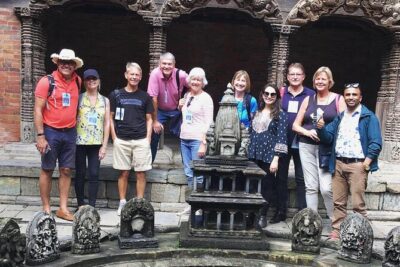
Finally, this is a private group, which is a big deal for a short tour. You can often set the pace, ask questions, and spend extra time where the guide is explaining something you care about. Multiple pieces of feedback emphasized patience and the guide adjusting to your interests, which is exactly what makes a heritage hop feel like a conversation instead of a rush.

Price and value, plus the entrance-fee reality check

Pick 2-Wonders of Kathmandu: A 3-Hour Heritage Hop - Price and value, plus the entrance-fee reality check
The listed price is $3.94 per person for a 3-hour private guided hop that includes hotel pickup and drop-off, an experienced guide, a private vehicle, and bottled water.

That price is strikingly low on paper for the amount of service you get. The honest value breakdown is this: you’re paying for the logistics and the guiding time, not necessarily for monument entry itself. The tour explicitly says monument entrance fees are not included, though there may be an add-on option.

So your budget should be two-part:

  • You cover the tour fee for the guided experience and transport.
  • You plan to pay separate entrance fees for the monuments where tickets apply.

If you’re comparing against full-day tours, the value argument is simple. In 3 hours, you can hit two UNESCO sites with a guide and private pickup, which can be a smarter use of limited time than paying more for slower, multi-stop days where you might spend half your day in transit.

Who this tour fits best, and who should skip it

Pick 2-Wonders of Kathmandu: A 3-Hour Heritage Hop - Who this tour fits best, and who should skip it
This experience is a good fit if you want a structured taste of Kathmandu Valley’s UNESCO heritage without committing to an all-day plan.

It’s especially suited to:

  • First-time visitors in Kathmandu who want the biggest cultural hits fast
  • Travelers who enjoy having context, not just photos of buildings
  • People who prefer private pickup and pacing control

It’s not suitable if you:

  • Use a wheelchair
  • Are traveling with babies under 1 year old
  • Are over 95 years old

Also note the practical constraint on baggage. The tour says no luggage or large bags. That’s a real-life factor. If you have a lot of gear, plan to leave it at your hotel so you can move easily.

Practical tips for a smooth 3-hour heritage hop

Pick 2-Wonders of Kathmandu: A 3-Hour Heritage Hop - Practical tips for a smooth 3-hour heritage hop
Here are the essentials that keep the day from turning into logistics pain.

Bring passport and cash. You’ll likely want cash on hand because entrance fees are not included, and an add-on might require payment during the day. Also bring fewer things. No luggage or large bags is a rule, so travel light for this one.

Be ready to walk and climb. The Monkey Temple is described as a hilltop stupa, so expect some ascent as part of Swayambhunath. Durbar Squares and temple complexes also tend to involve moving between courtyards and viewing points.

And keep your expectations aligned with the structure: you’re visiting only two UNESCO sites. That’s the point. You’ll get better quality time at two places than you would if you tried to sprint through four or five.

Should you book this Kathmandu 2-Wonders hop?

Yes, I think you should book it if your goal is a fast, guided taste of Kathmandu Valley’s UNESCO highlights with minimal friction. The combination of private pickup, an experienced English and Hindi guide, and a short 3-hour structure makes it ideal for travelers with tight schedules.

I’d hesitate only if you hate the idea of committing to a pre-chosen pair in advance, or if you don’t want to budget for entrance fees on top. If that second point applies, choose your pair carefully so you get the most payoff from the tickets you’ll likely need.

If you want Kathmandu to feel personal, not like a checklist, this is a smart way to do it, because you’re not just seeing monuments, you’re getting the why behind them.

FAQ

How long is the Kathmandu 2-Wonders heritage hop?

The tour lasts 3 hours.

Which sites do I visit?

You choose any two of 6 World Heritage sites. The options listed include Kathmandu Durbar Square, Swayambhunath (Monkey Temple), Pashupatinath Temple, Boudhanth Stupa, Patan Durbar Square, and Bhaktapur Durbar Square.

Where do I get picked up and where do I return?

Pickup is included from your hotel in Kathmandu (with Thamel as the stated pickup and return area). Drop-off is back at Thamel.

Is the guide included, and what languages are offered?

Yes, an experienced live tour guide is included. English and Hindi are offered.

Are monument entrance fees included?

No. Monument entrance fees are not included, though an add-on option is available.

What should I bring, and what is not allowed?

Bring your passport and cash. Luggage or large bags are not allowed, and alcohol and drugs are not allowed.

Who can take the tour and who cannot?

The tour is not suitable for wheelchair users, babies under 1 year, or people over 95 years.

More 3-Hour Experiences in Kathmandu