REVIEW · KATHMANDU SACRED SITES TOURS
Kathmandu: Pashupatinath Temple Aarti Night Tour
Night at Pashupatinath makes time feel slower. This Pashupatinath Temple aarti night tour gets you seeing the golden roof and silver doors after dark, with a licensed English guide helping you read the sacred space. One possible drawback is timing, if the driver is running late, you may miss the first moments of the aarti.
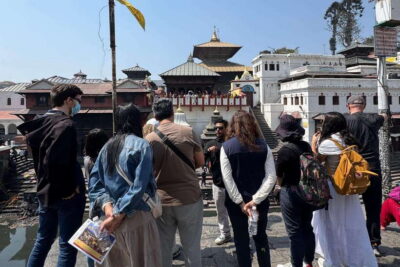
Pashupatinath Temple sits on both banks of the Bagmati River, part of a UNESCO World Heritage Site, and it is dedicated to Lord Shiva. At $71 per person, you are paying for a tight 3-hour plan with hotel pickup and drop-off, transport, guide, and entry ticket, but you will need to handle food and drinks yourself.
Key Things That Make This Night Tour Worth Your Time

- Aarti at night at one of Nepal’s most important Shiva sites
- Golden roof and silver doors you can actually appreciate in the evening
- Licensed English guide who turns on-the-ground details into real meaning
- Private group pacing, so you are not rushed through the sacred grounds
- A visit to the Bagmati River side, where pilgrimage and life rituals coexist
- Transport that usually gets top marks, with pickup designed around you
Pashupatinath by Night: Why the Aarti Changes Everything

Pashupatinath is not just a landmark on a Kathmandu map. It is one of the holiest Hindu pilgrimage destinations connected to Lord Shiva, and the temple complex spreads across the Bagmati River banks with many smaller shrines and ritual spaces. In daylight, you can see the architecture. At night, you feel the rhythm. The aarti lighting makes the temple feel more alive, and you get a better sense of how devotion fills the space rather than just visiting it.
This kind of night visit also helps you fit it into a short stay. With a 3-hour duration, you get a complete experience window without needing to commit to an entire day. For many people, that matters more than squeezing in one more museum stop.
Two things I particularly like about this tour model: you bring along a licensed English-speaking guide, and you are not expected to figure out timing or pathways on your own. That reduces stress, especially if it is your first time in the area.
The other consideration is respect and realism. Pashupatinath is a working pilgrimage site. That means you may have to stand, wait, and follow instructions from temple staff and your guide. It is not a theme park ride. If you arrive late, you can lose the start of the most meaningful moments.
You can also read our reviews of more evening experiences in Kathmandu
From Hotel Pickup to Temple Arrival: The 3-Hour Rhythm

You will be picked up from your hotel, with a driver and guide coordinating the trip to Pashupatinath. Plan to be ready early because you should wait in the hotel lobby about 15 minutes before departure. This tour runs as a private group, so the schedule is built around getting you to the right place in time for the evening rituals.
On the drive in, you typically get time to see Kathmandu’s movement and the day-to-night shift. Even when the focus is the temple, the trip matters because it sets expectations for what you are about to experience: pilgrimage, ceremony, and the Bagmati River edge as a major cultural axis.
Once you arrive, you will have a guided moment centered on the aarti ceremony. This is the core event, so your main job is to listen, watch calmly, and follow your guide’s cues. The tour then continues with time on site so you are not stuck rushing from photo spot to photo spot.
At the end, you are dropped back at your hotel. That hotel-to-hotel structure is one of the biggest practical benefits in a city where traffic can be unpredictable.
Seeing the Golden Roof and Silver Doors Up Close

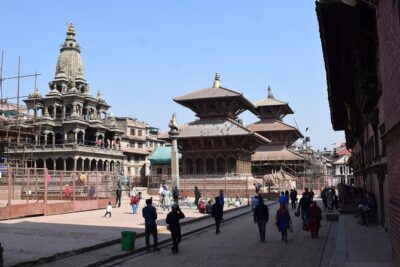
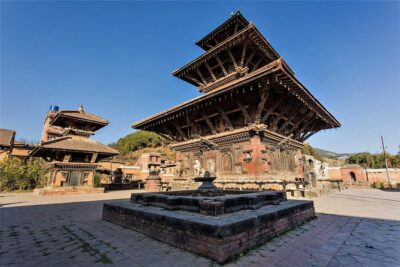
Pashupatinath’s main temple is pagoda-style, famous for its golden roof and intricately designed silver doors. Even if you have seen photos before, the real experience is different because you can see proportions, carving detail, and how the structures align with the ceremonial space.
In this night setting, those features pick up stronger visual contrast. The roof catches the light differently, and the doors become more than a decorative element. They signal that this is a carefully maintained sacred complex, not a temporary stage setup.
Your guide’s job here is important. Without context, you may only notice architecture. With context, you start to connect what you are seeing to why people come, how the rituals work, and what the symbols mean in a Hindu devotional framework. That is where a licensed English-speaking guide adds value, especially if you do not read Devanagari or you are new to Hindu pilgrimage customs.
One more practical note: Pashupatinath draws crowds, particularly around major festivals like Maha Shivaratri. On festival days, the flow changes fast. On a regular evening, you still need patience and respect for the people actively participating.
The Aarti Ceremony: How to Watch Without Getting in the Way
The heart of the tour is the aarti light celebration, a ritual tied to devotion to Lord Shiva. During the ceremony, you are usually observing sacred actions in a way that requires quiet attention. You do not need to be an expert to appreciate it. You just need to watch with the right attitude.
Here is how I recommend you approach it:
- Listen to your guide first, so you know what you are about to see.
- Keep your camera ready, but do not block. Step aside when you can.
- Focus on the movement and sequence, not just the flame.
Timing matters. The tour is only 3 hours long, so missing the start can mean you lose context. That is the one realistic drawback that shows up in the overall experience. If your pickup runs late, you might enter the ceremony after it begins.
If you like your experiences well explained and structured, this is a good match. If you prefer totally independent wandering, you might find the short schedule limits how long you can stay in one exact spot.
Arya Ghat and the Bagmati River: Seeing Ritual Space With Respect

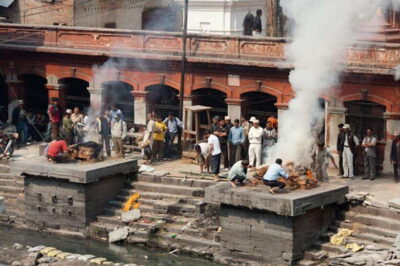
The Pashupatinath complex does not only contain temples. It also includes the cremation area on the Bagmati River bank, known as Arya Ghat. Hindu belief holds that cremation here is connected with the path toward moksha, liberation from the cycle of rebirth. Even if you do not share the belief, it helps to understand that this is a functional ritual site where major life events are handled with established customs.
This is the part where you need to be extra mindful. Watching cremation rituals can be emotionally intense. It is not background sightseeing. If ceremonies are underway during your visit, you may witness the solemn process. Your guide can help you understand what you are looking at and where you can stand to observe respectfully.
The Bagmati River itself is central to the site’s meaning. Pashupatinath stretches across both banks, which reinforces how closely the sacred is tied to the river environment. That is one reason the temple complex feels like it belongs to the city, not just to tourists.
If you are sensitive to death-related rituals, consider whether you want this element included in your night plan. Even without witnessing an active cremation, the existence of Arya Ghat shapes the atmosphere.
Guide Stories That Turn a Temple Visit Into Real Understanding

A great temple guide does more than recite facts. You want someone who can explain what you are seeing, why the site is laid out as it is, and how major rituals connect to the larger Hindu tradition.
The tour provides a licensed English speaking guide, and the most praised tours here tend to be those where the guide is enthusiastic and hands you history in usable pieces. One example name that comes up is Madhu. When a guide like Madhu is on duty, you typically get extra story context along the way, plus clearer cues for what matters inside the complex.
You do not need a lecture to enjoy this. You need the right breadcrumbs. That is what a strong guide delivers:
- What the golden roof and silver doors represent as part of the temple’s identity
- How the complex developed through reconstructions over time
- Why Pashupatinath attracts devotion year-round and peaks during major festivals
This guide-led approach is especially helpful for first-timers. You spend less time guessing and more time noticing.
Price and Logistics: Is $71 Good Value for a Night Tour?

At $71 per person for about 3 hours, the math looks reasonable when you consider what is included: hotel pickup and drop-off, transportation to and from Pashupatinath, entry ticket to the temple, an English guide, and all taxes.
Here is the value angle that matters for you:
- You are paying for convenience. One private pickup and a planned evening reduces stress in Kathmandu.
- You are paying for access and interpretation. Entry ticket plus a licensed English guide is not something you always get with cheaper “just drive you there” options.
- You are paying for a focused window. You are not trying to turn your night into a free-form scavenger hunt.
The tradeoff: food and drinks are not included. If you need a meal before you go, plan it ahead. Also, because the tour is short, you should not expect a long, slow wander with lots of breaks.
Transport quality is usually a highlight, with strong scores for comfort. Still, remember the timing risk. In a city with traffic, lateness can affect your ability to catch the ceremony start.
Who This Kathmandu Pashupatinath Aarti Night Tour Fits Best
I think this tour is a strong choice if you want:
- A religious and cultural experience that feels structured, not improvised
- A night visit where temple lighting and ritual timing do the heavy lifting
- An English guide to translate what you are seeing at Pashupatinath
It is also a good fit if you are traveling solo. Feeling informed and safe matters at major religious sites, and this tour format keeps you connected to a guide and pickup plan.
Who might hesitate? If you dislike crowded religious spaces, or if cremation-related rituals feel too heavy for you, you might want to ask your guide in advance how much visibility you can expect for Arya Ghat during your visit time.
What to Bring, and How to Prepare for a Sacred Evening

This tour asks you to bring your passport, and a copy is accepted. Also think about basic comfort. Night air can feel cooler depending on the season, and you will likely spend time standing and moving slowly within the complex.
Dress and behavior matter at temples, especially active pilgrimage sites. Use your common sense: cover appropriately, keep your voice low, and follow instructions from staff and your guide.
If you want photos, bring a charged phone or camera, but do not treat the aarti like a concert. The goal is respectful observation. Your best shots often come from watching first, then capturing at the right moment without blocking others.
Should You Book This Kathmandu Pashupatinath Temple Aarti Night Tour?
Book it if you want a reliable, guide-led way to see Pashupatinath after dark, and if the aarti ceremony is the main event on your Kathmandu list. For $71, the package covers the parts that usually eat time and energy: pickup, transport, entry, and interpretation.
Skip or reconsider if timing is extremely tight, because a late arrival can mean missing the start of the aarti. Also think carefully if death-related rituals at Arya Ghat would be hard for you to handle emotionally.
If your goal is cultural understanding with minimal friction, this is a practical choice for a short evening in Kathmandu, and one that can leave you with more than a photo.
FAQ
How long is the Kathmandu Pashupatinath Temple Aarti Night Tour?
It lasts 3 hours.
Where is this tour located?
The tour is in Kathmandu, Nepal, around the Bagmati River area at Pashupatinath Temple.
How much does the tour cost?
The price is $71 per person.
Does the tour include hotel pickup and drop-off?
Yes. You will be picked up from your hotel and dropped back after the visit.
What is included in the tour price?
Included are hotel pickup and drop-off, transportation to and from Pashupatinath Temple, a licensed English speaking guide, entry ticket to Pashupatinath, and all taxes.
Is food or drinks included?
No. Food and drinks are not included.
What language is the live guide?
The live tour guide speaks English.
Is the tour wheelchair accessible?
Yes, it is listed as wheelchair accessible.
What do I need to bring?
A passport is required, and a copy is accepted.
What is the cancellation policy?
You can cancel up to 24 hours in advance for a full refund.
More Evening Experiences in Kathmandu
More Tours in Kathmandu
More Tour Reviews in Kathmandu
Not for you? Here's more nearby things to do in Kathmandu we have reviewed
Kathmandu Sacred Sites Tours, compared.
★ 5.0Kathmandu Spiritual Sites: Bodhnath & Pashupatinath TourFrom $60185 reviews
★ 4.8Chandragiri Cable Car and Monkey Temple TourFrom $3139 reviews
★ 5.0Monkey Temple – Swayambhunath Tour – Private/Small GroupFrom $1550 reviews
★ 5.0Pashupatinath Temple Evening Aarati TourFrom $4536 reviews
★ 5.0Chandragiri Cable Car & Monkey Temple Tour- Private/GroupFrom $532 reviews
★ 5.0Private Chandragiri Cable Car and The Monkey Temple TourFrom $530 reviews
★ 5.0Pashupatinath Temple, Hindu Crematorium and Aarati in-depth TourFrom $9025 reviews
★ 4.5Pashupatinath Evening Aarati: Few Divinely Hours in KathmanduFrom $3523 reviews
Browse the lists this tour appears in