REVIEW · KATHMANDU CITY SIGHTSEEING TOURS
Kathmandu City Sightseeing Bus tour (5 Sights)
Kathmandu can feel huge, so a single-bus loop helps. This 5-sight UNESCO day is built around major spiritual stops, with time to watch real rituals up close. I especially liked the chance to see Pashupatinath on the Bagmati River and the Tibetan flavor at Boudhanath with prayer-wheel moments. One thing to consider: this is a budget sharing tour with a tour operator who manages logistics and gives basic info, so English depth can vary by group.
You start late morning, head out in a well-equipped guided bus, and come back the same day with big-name Kathmandu checked off. For $16, it’s a solid way to experience multiple UNESCO sites without piecing together separate rides. Still, do expect a group rhythm and timing that depends on traffic, and some stops involve walking and stairs.
Key Takeaways Before You Go

- You hit five UNESCO World Heritage sites in one day, so it’s efficient for limited time in Kathmandu.
- Ritual viewing is part of the plan, especially at Pashupatinath, where you can observe Aarti-style ceremony moments.
- Your “guide” role is operator-managed, not a full tour guide, so information may be basic and English may not be a priority for everyone.
- Traffic can change departure timing, but the pickup reporting time stays the same, so arrive early.
- Dress and behavior rules matter, because you’re entering active religious spaces.
Why a 5-Site UNESCO Bus Loop Works in Kathmandu

Kathmandu’s top spiritual sights are spread across different neighborhoods and hilltop areas. Doing it by bus in one day is practical, especially when you want the headline sites without negotiating transport all day.
This tour’s strongest value is the mix of Hindu and Buddhist places. You move from Pashupatinath and Guheswori to the Buddhist/Tibetan atmosphere at Boudhanath and the hilltop Swayambhunath, then finish at Budhanilkantha. That sequence gives you a clear sense of how Nepal’s religious life overlaps across the city.
The other big plus is that several stops are about observing sacred practice, not just taking photos. You’re there to witness ceremonies and the rhythm of pilgrims, which tends to feel more meaningful than a quick drive-by.
Meeting Point and Timing: The Part That Makes or Breaks Your Day

Pickup is in Thamel, opposite the main entrance gate of Hotel Malla. The suggestion is to arrive 15 minutes early, around 10:45 am, so you can spot the designated area with clear signage and a representative.
The bus typically leaves around 11:00 am Kathmandu local time, but traffic can affect how long it takes to get to the meeting point. Reporting time remains the same, so if you show up late, you risk missing the bus while everyone else loads.
You’ll want to treat this start like a city tour, not a casual stroll. I’d plan to be at the pick-up spot early, with your shoes on, camera ready, and enough patience for a traffic delay.
Stop 1 and 2: Pashupatinath Temple and Guheswori Temple

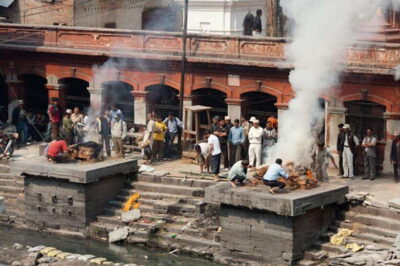
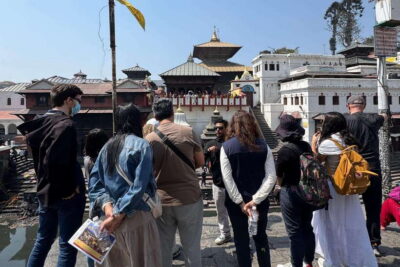
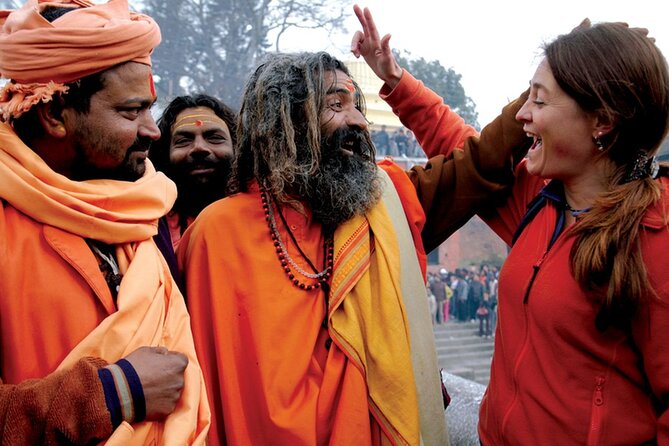
Your day begins at Pashupatinath Temple, one of the most important Hindu spiritual sites in Kathmandu, located on the Bagmati River. The experience here is about watching religion in action. You can observe intricate rituals and the mesmerizing Aarti ceremony, with detailed shrines and centuries-old devotion all around you.
What I like about this first stop is the sensory grounding. The river setting, the focused ceremony energy, and the sheer amount of craftsmanship make it feel like you stepped into the culture’s daily heartbeat, not a staged attraction.
Right next to it is Guheswori Temple, dedicated to Goddess Guheswori. This stop leans more toward a calm, sacred atmosphere, with age-old rituals and an emphasis on the temple’s architecture and serenity.
A practical consideration: both of these areas are religious spaces where people come to practice. That means your experience gets better if you keep your pace respectful, avoid loud talk, and stay aware that others may be observing their own rituals.
Stop 3: Boudhanath Stupa and the Tibetan Atmosphere

Then you head to Boudhanath Stupa, a UNESCO site described as a colossal mandala and a major center for Tibetan culture. This is the kind of place where you can feel the shift in mood as soon as you arrive, with monasteries and shops around the stupa forming a pilgrimage hub.
Your plan here includes time to circumambulate the stupa and participate in the spirit of turning prayer wheels. Expect visual and scent-heavy details: prayer flags, incense, and all the color that comes from a religious district built around daily devotion.
This stop is also a strong “group tour” moment. Even if your operator’s info is basic, the stupa environment explains itself. You can connect the dots by watching how people move, how they pause, and how long they spend in quiet focus.
If you’re a photo person, bring your camera because the scene offers lots of angles. If you’re not, still go. It’s one of those sites where the real payoff is the atmosphere, and it’s hard to reproduce that feeling from a photo alone.
Stop 4: Swayambhunath Monkey Temple and Valley Views

Next up is Swayambhunath Stupa, known as the Monkey Temple. This one sits above the city, so the experience includes climbing ancient steps to reach the hilltop sanctuary.
The viewpoint is a key reason people make the effort. You get panoramic views of the Kathmandu Valley, and the stupa area is described as a place where Hinduism and Buddhism meet in shared reverence. Prayer flags and the watchful Buddha imagery are part of the look and the rituals you can join, including spinning prayer wheels.
What I love about this stop is the contrast between “temple as a building” and “temple as a viewpoint.” You’re not only there to look up at sacred symbols, you’re also looking out at the city that supports them.
One possible consideration: since it involves stair climbing and some walking, it’s not the best fit if you tire quickly. And if you get motion sickness easily, keep in mind you also have a bus ride through traffic to reach and leave.
Stop 5: Budhanilkantha and the Reclining Vishnu Finish

Your day ends at Budhanilkantha, described as a sacred enclave home to a large reclining Vishnu statue. The statue is carved from a single stone, which adds a craftsmanship-focused element to the stop.
There’s also a pond around the deity, and the water creates a reflective setting. That matters because it changes the feeling from busy ceremony to calmer, more contemplative viewing.
This finish works well after the more active feeling of earlier stops. It gives you a slower moment to absorb a big sculptural work, watch the reflections, and wrap up the day with something visually striking but quieter.
If you want a smooth ending, aim to spend a bit of time here without rushing. Even with a tight bus schedule, this is one of the stops where lingering actually improves the experience.
Bus Tour Style, Group Size, and Why English Info Can Vary

This is a budget bus tour (sharing), which shapes your expectations more than you might think. There’s an operator present to manage the tour and help keep the schedule moving, but they are not positioned as a full tour guide. You should plan for basic information, not deep commentary at every stop.
That said, the experience can still be excellent. One strong positive example: a reviewer praised their guide as fantastic, knowledgeable, attentive, and fun. Another highlighted how the agency managed to fit them in even after booking late, and they described the organizer as kind and helpful.
On the other hand, one unhappy experience pointed to a common budget-tour challenge: English support might not be consistent. In that case, the group had mostly non-English speakers and the operator focused more on the local-language clients, providing little English background unless asked directly. The tour also departed about 30 minutes late due to timing at the meeting place.
So here’s how you protect your own experience. If you want context, ask direct questions during each stop. And don’t assume that every moment will come with detailed English narration. If you’re happy using your eyes and enjoying the sacred settings, you’ll likely feel satisfied even with minimal commentary.
Price and Value: Is $16 a Good Deal?

At $16 per person, this tour is priced for affordability, not luxury. The value comes from stacking multiple major sites into one day with pickup and drop included, plus transportation costs covered as part of the package.
However, value is also about what’s not included. Entry fees are not included, and food and a tour guide are not included either. So your real cost is the $16 plus what you spend on entrances and meals.
For me, the bargain logic is simple. If you’re short on time and want a straightforward way to see Kathmandu’s best-known UNESCO sites, this can be a money-saver versus arranging separate rides and paying for multiple guided services. If you want a more language-rich, in-depth explanation at every stop, this may feel thin.
Think of it like this: you pay to get the route and access to the sites in a managed day, not for a full custom guided lecture.
What’s Included, What You Pay Extra, and What You’ll Carry

Included items are:
- Pick-up and drop
- Fuels, taxes, and service charge
- Tour operator to manage the tour, with basic information
Not included:
- Entry fees
- Food
- Tour guide
- Personal expenses
So bring a realistic mindset. Bring cash or card for entrances and snacks. If you skip food planning, you’ll feel it by the end of the day.
For what to bring, the tour suggests:
- Comfortable shoes
- Camera
- Comfortable clothes
- Personal medication
That shoe advice is practical, because Swayambhunath involves ancient steps, and you’ll also do walking at the temples. Plan for uneven surfaces and take your time.
Temple Rules and Bus Conduct That You Should Actually Care About
This tour lays out clear rules for behavior. Smoking in the vehicle is not allowed, and you can’t bring drinks in the vehicle. Alcohol and drugs are also prohibited.
They also ask for quiet respect: no making noise, no making fire, and no nudity. These rules matter because you’re moving through religious areas where the tone should stay calm and respectful.
If you follow that, the day feels smoother. If you don’t, you’ll likely attract attention you don’t want, and you risk getting pulled out of the group flow.
Who This Tour Suits Best
This is a good fit if you:
- Have one day in Kathmandu and want five UNESCO sites in one managed loop
- Prefer a shared group schedule over private logistics
- Feel comfortable with basic operator info and learning mostly through observation
- Want ritual moments, especially at Pashupatinath and the Boudhanath stupa area
It’s probably not the best fit if you:
- Have mobility impairments (not suitable)
- Get motion sickness (not suitable)
- Are over 243 lbs (110 kg) (not suitable)
- Are over 95 years (not suitable)
Because the plan includes bus travel and stair climbing at Swayambhunath, you’ll want to match the physical demand to your comfort level.
Should You Book This Kathmandu UNESCO Bus Tour?
Book it if your priority is checking off Kathmandu’s big UNESCO names in one day, for a low price, with pickup and drop handled. I’d especially recommend it if you’re the type who likes seeing real rituals and you’re okay with basic guidance instead of constant narration.
Skip or consider a different style tour if you need detailed English explanations at every stop, because this is operator-managed and language support can be uneven depending on the group. Also, take care with timing, because traffic and meeting-point confusion can affect departure.
If you do book, do one thing that improves everything: arrive at Hotel Malla’s opposite entrance area by 10:45 am, not 11:00-ish. Then you’ll start the day with less stress, more time at the sacred sites, and a better shot at a smooth flow through all five UNESCO stops.
FAQ
What time does the Kathmandu city sightseeing bus tour start?
The tour starts around 11:00 am Kathmandu local time, with a suggested arrival time of 10:45 am at the pickup point.
Where is the meeting point for the bus?
The meeting point is opposite the main entrance gate of Hotel Malla in Thamel, Kathmandu. Look for the designated area with clear signage and a representative.
How long is the tour?
The experience runs for 1 day.
Which UNESCO sites are included?
The tour visits Pashupatinath Temple, Guheswori Temple, Boudhanath Stupa, Swayambhunath Stupa (Monkey Temple), and Budhanilkantha.
Is entry fee included in the price?
No. Entry fees are not included.
Is food included?
No. Food is not included.
Is a professional tour guide included?
No. A tour guide is not included. You’ll have a tour operator who manages the tour and can provide basic information.
What should I bring for the tour?
Bring comfortable shoes, a camera, comfortable clothes, and any personal medication you need.
Is smoking or alcohol allowed?
Smoking in the vehicle is not allowed. Alcohol and drugs are prohibited, and there are also rules against bringing drinks in the vehicle.
Who might this tour not be suitable for?
It is not suitable for people with mobility impairments, people over 243 lbs (110 kg), people with motion sickness, and people over 95 years.
Kathmandu City Sightseeing Tours, compared.
★ 5.0Private Kathmandu Sightseeing Tour | UNESCO World Heritage sitesFrom $17756 reviews
★ 5.0Kathmandu Highlights: Private UNESCO World Heritage Sites TourFrom $4950 reviews
★ 5.0Explore Kathmandu in 2 Days: UNESCO Sites & Nagarkot Sunrise TourFrom $10037 reviews
★ 5.0Full Day Kathmandu City Sightseeing Tour of UNESCO Heritage SitesFrom $5036 reviews
★ 5.0Private Full-Day Kathmandu All 7 UNESCO World Heritage Sites TourFrom $8030 reviews
★ 5.0Kathmandu City Tour – Private UNESCO World Heritage Sites TourFrom $1720 reviews
★ 5.0Kathmandu City TourFrom $10018 reviews
★ 5.0Explore Kathmandu with Local GuideFrom $7518 reviews
Browse the lists this tour appears in