REVIEW · KATHMANDU UNESCO HERITAGE TOURS
Kathmandu: Full Day 7 UNESCO Tour with Lunch – Private/Group
Seven UNESCO sites, one long day.
This Kathmandu tour is built for people who want the big ideas fast: UNESCO World Heritage sites, old royal squares, major Hindu temples, and the Tibetan Buddhist heartbeat of Boudhanath, all in a single itinerary. I like the way it’s organized around real geography (hilltop viewpoints, riverbank temples, and central squares) so you start to see Kathmandu as one connected story. You also get hotel pickup and drop-off, so the day doesn’t start with a stressful taxi hunt.
I love the practical travel design here. You’re paired with an English-speaking professional guide, and the transportation is air-conditioned, which matters when you’re stacking 8 to 9 hours of sightseeing. The included lunch box is also a solid baseline for a day that can run long, with a mix of sweet and fruit so you do not “crash” in the afternoon.
The main drawback is simple: it’s packed. Entrance fees are not included unless you choose the all-inclusive option, and the schedule can feel fast-paced once you start moving between hilltop stops and busy squares.
Key highlights I’d plan around
- 7 UNESCO World Heritage stops in one day: Swayambhunath, Kathmandu Durbar Square, Patan Durbar Square, Bhaktapur Durbar Square, Changu Narayan, Pashupatinath, and Boudhanath
- Hotel pickup and drop-off with air-conditioned private transportation, which saves energy before you even start walking
- English-speaking guide who explains culture and religion while you move across the city
- Included lunch box with bottled water and seasonal fruit, plus sweet snacks to keep you going
- Two ways to handle monument fees: pay extra on standard options, or choose the all-inclusive ticket option
Seven UNESCO sites in one day: what the route really feels like

This is a “see the best of Kathmandu quickly” tour. You do not just check off temples. You get carried through Kathmandu Valley’s different cultural layers in a tight timeline, which is exactly why this works for short visits.
The rhythm is typical of heritage touring in Kathmandu: a transport jump, a short walk, a viewpoint, then another jump. Even though the tour is listed at about 8 to 9 hours, real days can stretch longer once you factor in city traffic and time spent at each stop. If you’re planning around another activity later that day, I’d treat this as your main event.
The itinerary also makes sense thematically. You begin with a hilltop spiritual panorama at Swayambhunath, then you move into royal-city heritage at the Durbar Squares, then you shift to Hindu pilgrimage energy at Pashupatinath, and end at Boudhanath where Buddhist devotional life is front and center.
You can also read our reviews of more private tours in Kathmandu
Getting around Kathmandu: pickup, AC rides, and less stress between stops
One of the biggest practical wins is the pickup and drop-off. Kathmandu’s traffic and street chaos can turn an efficient day into a tiring one, so having a private vehicle waiting for you matters.
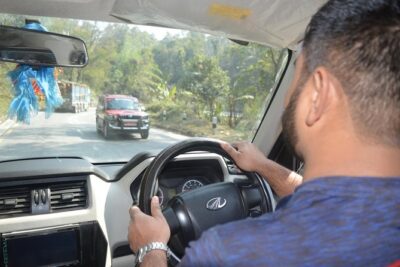
The tour includes air-conditioned private transportation, which I’m grateful for on a day that includes multiple outdoor stops. You also get the convenience of a mobile ticket, so you’re not juggling paper confirmations while your day is already moving.
In the real world, guides often help reduce “search time.” People go a lot slower when they’re trying to find entrances, quiet photo angles, or the right lane for walking routes. Here, the guide leads, you follow, and your energy stays focused on the sites.
Swayambhunath to Kathmandu Durbar Square: the royal-and-religious start

Stop 1: Swayambhunath (Monkey Temple)
Swayambhunath is iconic for a reason. It’s perched above the valley, so your first impression is not just the stupa itself, it’s the entire city in miniature. This stop gives you a strong orientation point early in the day.
Expect walking and stairs. You’ll want comfortable footwear and a little patience for the flow of people. The reward is the sense that you’re standing on Kathmandu’s spiritual rooftop.
A key point: admission tickets here are not included on the standard options, so plan your budget for monuments fees unless you’ve selected the all-inclusive ticket plan.
Stop 2: Kathmandu Durbar Square (Hanuman Dhoka)
From hilltop to old royal center. Kathmandu Durbar Square is where you feel the historical engine of the city: a palace complex area tied to Malla and Shah kings, with temple and courtyard spaces that helped shape the old capital.
This stop tends to move quickly because you’re surrounded by details. A good guide makes the difference between feeling overwhelmed and actually understanding what you’re seeing. In multiple guides I’ve read about for this route, the theme is the same: clear explanations that connect dynasties, symbols, and everyday religious life.
A few more Kathmandu tours and experiences worth a look
Patan Durbar Square and Bhaktapur Durbar Square: where craft becomes a language

Stop 3: Patan Durbar Square
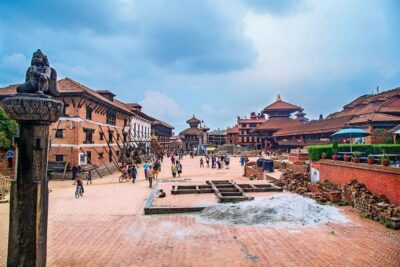
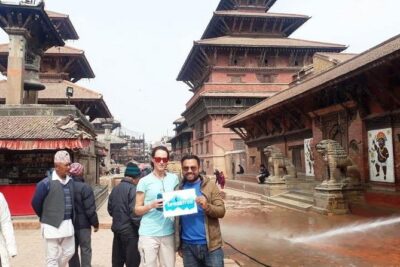
Patan Durbar Square, in Lalitpur, is famous for Newari architecture and its dense cultural atmosphere. If you like carved wood, stone detailing, and the way old city blocks are designed for community life, this is a highlight.
What makes Patan different in a one-day plan is that you’re not just seeing one structure. You’re walking through a whole civic space. Even if you only spend about an hour here, the main patterns start to make sense.
Stop 4: Bhaktapur Durbar Square
Bhaktapur brings another tempo. It’s often the stop where people slow down more, because the medieval palace complex feels intact and readable, with plenty of visual rhythm.
The tour schedule usually gives around one hour at Bhaktapur, which is enough time to appreciate the big shapes and key structures, but not enough to take a deep, slow museum-style approach. If you love lingering, you’ll feel the time pressure. If you love getting the “first mental map” of heritage, this is a smart use of limited hours.
Changu Narayan and Pashupatinath: two Hindu-temple moods in one arc

Stop 5: Changu Narayan Temple
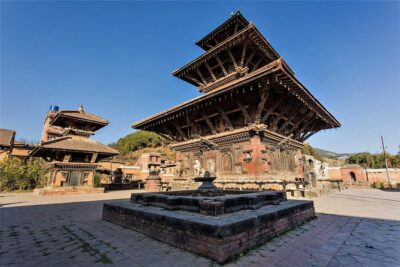
Changu Narayan Temple is perched on a quieter hilltop, northeast of Bhaktapur, and it’s considered one of Nepal’s oldest Hindu temples, with origins tied to the 4th century and dedication to Lord Vishnu.
This is a nice break from dense urban squares. The hilltop setting gives you a calmer stop and a chance to reset your brain after the Durbar Square crowd.
Again, admission fees are not included on the standard options, so the entrance-payments reality repeats throughout the day.
Stop 6: Pashupatinath Temple
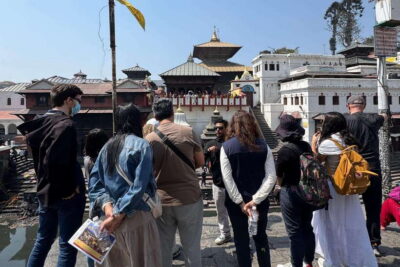
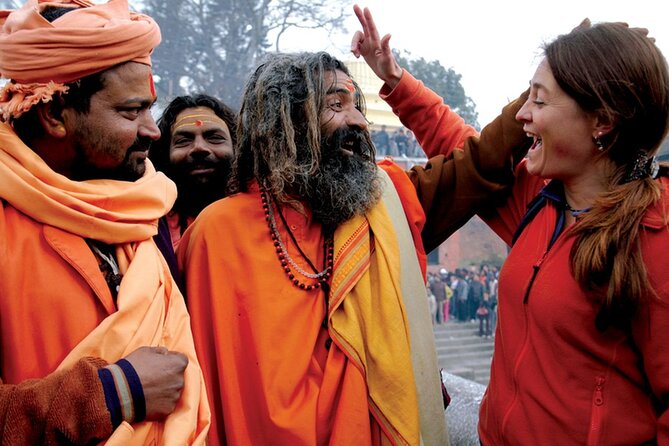
Then you arrive at Pashupatinath, Nepal’s most important Hindu temple site tied to Lord Shiva. It’s on the banks of the Bagmati River, and the atmosphere is pilgrimage-shaped rather than sightseeing-shaped.
This is also where you may notice the day’s pace most. Pashupatinath can feel like a living space, and you’ll likely want time to watch how people move, pray, and pause. You’re usually given about one hour, which means you’ll need to choose: more photos, or more observation.
If you’re sensitive to crowds or intense religious activity, I’d treat Pashupatinath as the stop where you slow down mentally even if the schedule is moving.
Boudhanath Stupa: the Buddhist finish that sticks

Stop 7: Boudhanath Stupa
Boudhanath is one of the biggest spherical stupas in the world and the spiritual heart of Nepal’s Tibetan Buddhist community. You get the iconic white dome and a neighborhood that feels built around devotion.
This is also a satisfying ending because it contrasts with the Hindu focus earlier in the day. You shift from courtyards and palace squares to the steady flow of Buddhist prayer rhythms.
You’ll usually spend around 30 minutes here, which sounds short but works as a closing scene. By the end of the day, even quick time can feel meaningful because you’ve stacked so many heritage layers already.
Lunch box and timing: how not to feel hungry and cranky

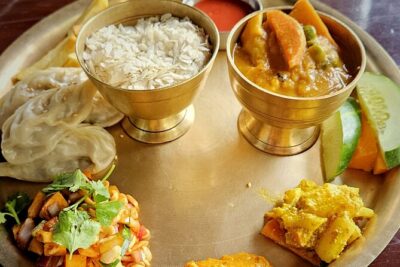
The tour includes a lunch box, plus bottled water. The box includes 500 ml bottled water, a muffin, donut, banana, seasonal fruit, and juice. It’s designed for movement. You get fuel without needing to locate a restaurant and lose time.
In practice, this is a good “keep going” meal. Some people describe it as basic, mostly carbs plus fruit. If that doesn’t match your taste, you can bring extra snacks. One useful tip: consider a small personal stash of water and something salty, because the day includes walking and can run longer than the brochure time.
I also recommend thinking of lunch as a buffer. If you treat it like the start of your afternoon energy, you’ll handle the later temple stops more comfortably.
Price and what you should budget: $10 plus the entrance-fee reality

The headline price shown here starts around $10 per person, which is an excellent entry point for a day tour covering major heritage sites. The value math depends on which option you pick.
On the standard group or private options, entrance fees are not included and you should expect an extra charge (listed as $44 per person for those options). You may also encounter the practical cash detail: multiple guides and visitors report entrance tickets paid in Nepalese rupees, with total entrance costs around 6,000 NR for the day.
The key is: choose wisely.
- If you want less hassle and a predictable total, pick the all-inclusive option that includes food, soft drinks, entrance fees, and meal choices.
- If you’re comfortable paying on the day and carrying cash, the standard option can still be a bargain.
This is one of those tours where “cheap” only stays cheap if you budget correctly for monument fees and have your money ready.
Guide-led storytelling: the difference between seeing and understanding
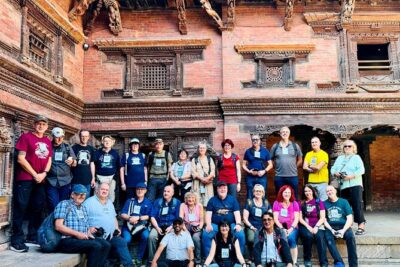
The best part of this tour is the human layer: an English-speaking professional guide who explains culture and tradition while you travel between sites.
Different guides can change the vibe. In the guide names connected to this route, people have mentioned Sumit, Anon, Anant, Suresh, Sajina, and Asmita. The strongest feedback pattern is consistent: they’re clear, calm, and able to connect religious symbols and historical context to what you’re looking at.
That matters because many of these sites are visually complex. Without explanation, a Durbar Square can look like “more temples.” With explanation, you start to understand why specific structures, courtyards, and icons matter.
If you’re the type who likes to ask questions, this tour also gives you a good setting for it, because you’re moving from place to place with context.
Walking shoes, cash, and small choices that make the day smoother
You can make this day a lot better with a few simple decisions:
- Wear comfortable shoes. Swayambhunath and Changu Narayan involve stairs and hill walking.
- Bring cash in Nepalese rupees if you’re on the standard option, since entrance tickets are paid for during the day.
- Pack a small snack backup if you get hungry between stops, even with the lunch box.
- Start early if that’s an option for your departure time, because Kathmandu traffic can get heavier later.
One more smart move: if you’ve already visited one site, you can ask for a swap. Some people did request skipping Swayambhunath on this route because they’d already seen the Monkey Temple, and it worked smoothly.
Who this tour is best for (and who should consider splitting)
This is a great fit for you if:
- You have only a short window in Kathmandu and want a “big picture” day across UNESCO sites
- You care about culture and history but don’t want to plan transport and routes yourself
- You travel on a budget but still want a guided experience
- You like a structured itinerary and you’re okay with a brisk pace
It might not be ideal if:
- You want a slow, gallery-style visit with lots of reading inside temples and museums
- You have another demanding plan the same day or you’re flying the next day without buffer
- You hate walking stairs and hills, because this schedule includes hilltop stops
A couple of people noted the tour feels more like a “whistle stop” format. If that stresses you out, consider a two-tour approach instead, splitting heritage highlights across different days.
Should you book this Kathmandu 7 UNESCO tour?
If your goal is to get your bearings fast and see the best-known heritage anchors around Kathmandu Valley, I think this is a strong choice. The value is real, especially compared to higher-priced private heritage tours you might find elsewhere, and the guided storytelling makes it feel more than just sightseeing.
Book it if you’re prepared for a long day, comfortable with walking, and ready to handle entrance fees unless you choose the all-inclusive option. If you’re sensitive to pace, or you’re trying to recover energy for a trek or another major plan, you’ll likely prefer splitting your UNESCO time into two calmer days.
In short: this is a smart, efficient heritage sampler. Plan well, and it becomes one of the most memorable single days you can fit into Kathmandu.
FAQ
How long is the Kathmandu UNESCO tour?
It runs about 8 to 9 hours.
Is hotel pickup and drop-off included?
Yes. The tour includes pickup from and drop-off at your hotel by private vehicle.
What is included in the lunch box?
The lunch box includes 500 ml bottled water, a muffin, donut, banana, seasonal fruit, and juice.
Are entrance fees included?
Entrance fees to the monuments are not included on standard group and private options. They are included if you book the all-inclusive option.
Do I need to pay entrance fees in Nepalese rupees?
You’ll want Nepalese rupees available, since entrance fees are paid on site and people report paying around 6,000 NR for the day.
Is the guide English-speaking?
Yes. The tour includes an English speaking professional tour guide.
Which UNESCO sites are visited?
The tour includes Swayambhunath, Kathmandu Durbar Square, Patan Durbar Square, Bhaktapur Durbar Square, Changu Narayan Temple, Pashupatinath Temple, and Boudhanath Stupa.
Is the tour private or group?
You can choose among private, group, and ticket-inclusive options. The tour description also notes it can be arranged so only your group participates.
Can I cancel for a full refund?
Yes, free cancellation is available up to 24 hours before the experience starts, with a full refund if you cancel at least 24 hours in advance.
More Private Tours in Kathmandu
More Tours in Kathmandu
More Tour Reviews in Kathmandu
Not for you? Here's more nearby things to do in Kathmandu we have reviewed
Kathmandu UNESCO Heritage Tours, compared.
★ 5.0Private Kathmandu Sightseeing Tour | UNESCO World Heritage sitesFrom $17756 reviews
★ 5.0Full Day Top 4 UNESCO Tour with Lunch – Private/GroupFrom $10269 reviews
★ 5.0UNESCO Seven World Heritage Tour in KathmanduFrom $180253 reviews
★ 4.9Full-Day 7 UNESCO Tour with Lunch – Private/GroupFrom $5247 reviews
★ 4.97 UNESCO Sites Tour in 1 Day (Private Tour)From $4204 reviews
★ 4.9Top 4 UNESCO Tour with Lunch – Private/GroupFrom $5181 reviews
★ 5.0Kathmandu Private Sightseeing Tour | UNESCO World Heritage SitesFrom $35109 reviews
★ 5.0Full Day 7 UNESCO Tour with Lunch – Private/GroupFrom $5101 reviews
Browse the lists this tour appears in