REVIEW · KATHMANDU UNESCO HERITAGE TOURS
Seven World Heritage Day Tour in Kathmandu Nepal
Seven UNESCO stops in a single Kathmandu day sounds intense, but it is practical. You ride in a private vehicle with a local guide, and you can pick from multiple morning start times to fit your schedule. I like that this route hits both the headline sights and smaller details you would miss on your own, and I also love the multiple start times option. The possible drawback is that entrance fees are not included in the price, and the day includes plenty of walking plus a few stair climbs.
This tour is built for travelers who want the UNESCO checklist done without spending the whole day negotiating transport. Your day starts with hotel pickup inside the ring road, then you stay in one comfortable vehicle as you hop between sites. The small bonus that adds up is the mobile ticket for a smoother start.
With a 10 to 12 hour schedule, the experience feels like a well-timed history lesson, not a slow meander. If you are sensitive to crowds, steep steps, or long sit-in-the-car stretches between stops, you will want to plan breaks for yourself. Still, at $65 per person, it is one of the better ways to compress a lot of Kathmandu Valley culture into a single day.
Key highlights that make this tour worth your time

- Seven UNESCO World Heritage Sites packed into one day, without constant taxi-hopping
- Hotel pickup inside the ring road and private vehicle transport between stops
- Fast, focused site visits that still cover famous places plus lesser-known religious corners
- A flexible guide style (including help with slower pacing and stair avoidance)
- Many short free stops along the way, which help stretch your budget
- Professional local guidance that connects what you see to how the places work
Why a seven-site UNESCO day in Kathmandu makes sense

Kathmandu Valley has UNESCO sites that each deserve their own day. This tour does the opposite. It strings them together in a single long day, then tries to keep things human by using private transport and a guide who can explain as you go.
The value is not just that you get a lot of checkmarks. It is that you get context. One stop helps you understand the next. For example, when you start with the hilltop pilgrimage feel of Swayambhunath, then move into Durbar Squares and pagoda-style temples, you can spot the differences in religious design and local artistry instead of treating each site like a separate postcard.
The other reason it works is timing. With pickup and multiple morning start times, you can aim for less harsh light and fewer day crowds. That matters at places like Boudhanath and the Durbar Squares where people gather throughout the day.
You can also read our reviews of more historical tours in Kathmandu
Price and value: what $65 per person really covers

At $65 per person, you are mainly paying for organization: pickup and drop-off inside the ring road, private vehicle transport, and a professional tour guide. Those are the costs that are hardest to DIY when you are trying to cross multiple neighborhoods in one day.
Entrance fees are where you should expect extra spending. The tour notes that entrance fees are not included for heritage sites, based on the choices you make. Many stops are listed as admission not included, while several quick stops are free. Practically, your budget planning should assume that at least several of the UNESCO sites will cost you in entry fees.
Food and drinks are also not included. You can buy food at each site, which is helpful, but it does mean you need to plan for breaks rather than assuming lunch is covered. If you come hungry, you will want snacks and water ready, because the route jumps from one attraction to the next.
Getting picked up, then getting moving
This is a private tour/activity, meaning only your group participates. That changes the vibe. You are not stuck waiting for strangers to decide what pace they want. It also tends to make it easier for your guide to adjust routes on the fly, especially when the day includes stairs.
Your pickup and drop-off are inside the ring road. That is a useful detail because Kathmandu traffic can turn a day into a slow crawl. Staying within the ring road keeps the vehicle transfer more predictable.
The total time is listed as 10 to 12 hours. In real terms, that is a lot of hours for a single day, so you want to be ready for a structure that alternates between short walks, photo moments, and seated travel.
Stop-by-stop route: seven UNESCO sites plus the cultural extras

This day is organized around the seven UNESCO World Heritage Sites in the Kathmandu Valley, with extra stops that add character. The UNESCO sites you will see are Swayambhunath, Kathmandu Durbar Square, Patan Durbar Square, Bhaktapur Durbar Square, Changu Narayan, Pashupatinath Temple, and Boudhanath Stupa.
Swayambhunath Stupa, then a quick Buddha park break
Stop 1: Swaymbhunath (about 1 hour, admission not included).
You start at the hilltop Buddhist pilgrimage site, the one that feels like a whole small world of shrines and viewpoints. The tour notes that there are two entrances: an inclined walk up and a stair route. That detail matters. If your legs feel it early in the day, you can choose the inclined approach to keep energy for later.
Stop 2: Amideva Buddha Park (about 30 minutes, free).
After the stupa, you will pass through a calmer break in the route. The park includes large statues of Shakyamuni Buddha plus smaller religious and architectural elements. It is a good reset between the bigger, more crowded UNESCO area and the Durbar Square zones.
Why it works: you go from elevated pilgrimage energy to something more open, which helps you adjust your pace before the dense city centers.
Kathmandu Durbar Square and Kumari Chowk: power, people, and belief
Stop 3: Kathmandu Durbar Square (about 1 hour, admission not included).
This is one of the core UNESCO civic zones, with historical and architectural buildings. The tour description also notes construction in some areas, which is realistic for Kathmandu. Even when parts are not fully finished, you still get a sense of how the square functions as a cultural center.
Stop 4: Kumari Chowk (about 5 minutes, free).
This is short but memorable. Kumari is described as a Newari girl chosen to be the living goddess until puberty, and the chowk is a red-bricked courtyard with a three-level construction. You do not need long here to understand the symbolism: this is where civic tradition and living ritual meet.
Practical note: because this stop is only listed as about 5 minutes, treat it as a quick snapshot moment rather than a slow museum-like visit.
Patan Durbar Square, Krishna temple details, and Golden Temple style
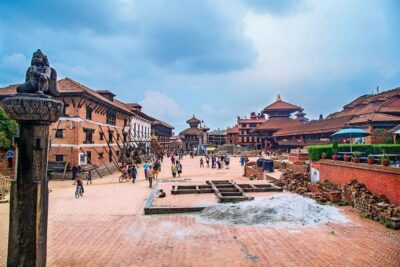
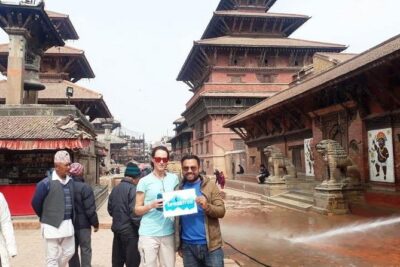
Stop 5: Patan Durbar Square (about 1 hour, admission not included).
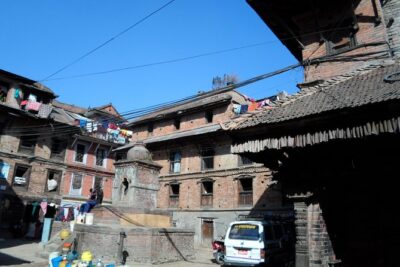
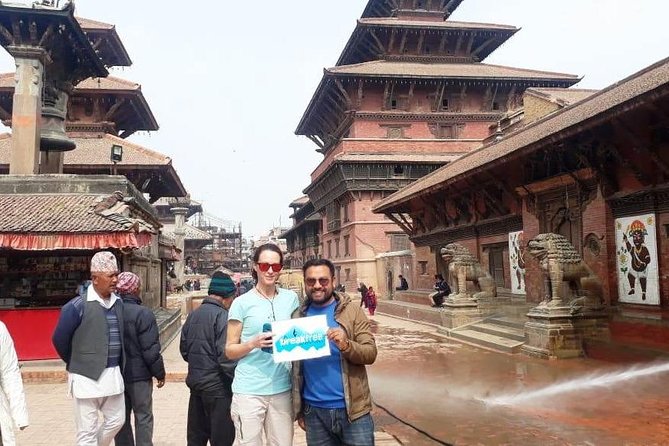
Patan’s Durbar Square is all about Newari architecture, with layered crimson brickwork on the floor. The description frames it as the courtyard of the historic Malla palace at Lalitpur. This is the kind of place where even a short visit can feel like you are stepping into a craft workshop, not just looking at big monuments.
Right after, you will head toward a Krishna temple area with stone architecture and multiple shrines. The description mentions 21 shrines, and carvings related to the Ramayana and Mahabharat. It also notes a large bell nearby. Even if you only get a set of quick looks, those specifics are the kind that make the site feel real, not generic.
Stop 6: Golden Temple, Hiranya Varna Mahavihar (about 15 minutes, admission not included).
This is shorter on purpose. It is a 12th-century pagoda-style temple with bronze statues plus silver and gold decorations. The timing means you will likely focus on the look and the materials rather than long contemplation.
Stop 7: Patan Museum (about 30 minutes, admission not included).
This is the place where you connect the architecture to the people. The tour notes it is the museum at Keshav Narayan Chowk, with records about ancestors’ lifestyles and artifacts. If you want to make sense of what you saw in the Durbar Square, this stop helps you do that.
Why this cluster is smart: you see the palace courtyard first, then a temple style, then you step into the museum to make the cultural link stick.
Bhaktapur Durbar Square plus the temple circuit: lots of small wow moments
After Patan, the route continues to Bhaktapur’s UNESCO zone. This is where the day turns from “one big square” into a chain of architectural highlights.
Stop 8: Bhaktapur Durbar Square (about 2 hours, admission not included).
Bhaktapur is often described as the city of devotees in the tour text, tied to Newari culture and architecture. You will also see the famous 55-window tradition referenced in the square.
Stop 9: Nyatapola Temple (about 10 minutes, free).
This is a five-level pagoda-style temple and is noted as one of the tallest in the area, over 30 meters. Because the stop is short, it is best as a photo and orientation moment.
Stop 10: Dattatraya Temple (about 15 minutes, free).
This one has a specific story in the tour description: it was constructed using the stem of a single tree. That single detail can make you slow down just long enough to really look at the structure.
Stop 11: 55 Window Palace (about 15 minutes, free).
You get an official number here: exactly 55 windows carved into the palace. The description also notes that the palace connects multiple courtyards. This helps you understand why the building feels like a network, not just one façade.
Stop 12: Siddha Pokhari (about 15 minutes, free).
This is your break from monuments. Siddha Pokhari is a human-made pond, 171 meters long and 3 meters deep, and it is described as a hangout place for locals. In a day that is mostly sacred sites and architecture, this pond stop can make your legs feel human again.
Tip: if your group is moving fast, use Siddha Pokhari to reset posture, drink water, and stand in a shaded spot.
Changu Narayan: the quieter UNESCO moment
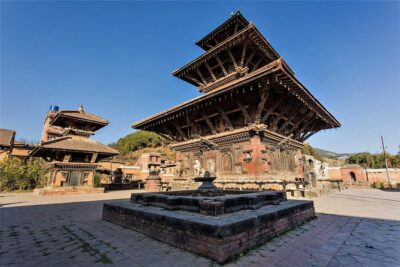
Stop 13: Changu Narayan Temple (about 30 minutes, admission not included).
The tour labels it as the least visited UNESCO World Heritage Site and calls it a gem waiting to be discovered. You will see it framed as a village and a place where Newari craftsmen do traditional carvings. If you want a break from the busiest squares, this stop is where you often get that sense of slower pace.
Even if the visit is only about half an hour, the craftsmanship focus means you can spend that time watching details instead of just scanning for big views.
Pashupatinath: a massive Hindu temple complex
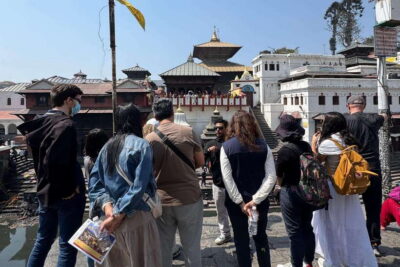
Stop 14: Pashupatinath Temple (about 1 hour, admission not included).
This stop is described as the greatest temple complex in Nepal, with over 500 temples and shrines in the area, spread across 0.64 hectares. It also makes clear that this is a major attraction point for Hindu devotees.
This is one of those places where your guide’s explanations can change how you experience it. Even without extra time, you can understand that you are seeing a living religious landscape, not a preserved set.
Practical note: religious sites can involve crowding and respectful rules. The tour does not list specific dress guidance, so you should come ready to cover shoulders and be mindful with photos.
Boudhanath Stupa: big mandala energy
Stop 15: Boudhanath Stupa (about 1 hour, admission not included).
The description calls Boudhanath one of the greatest mandalas of Nepal. It is listed as 36 meters tall, with over 50 gompas constructed around the vicinity. This is one of the main Buddhist pilgrimage destinations of Nepal.
Boudhanath often feels like a sea of motion. Even if you only spend an hour, you can usually get a good understanding of the stupa’s scale and why it is a magnet for pilgrims.
Guide quality: why Shanti Karki and Pankaj matter to your day

The biggest difference between a tour that feels stressful and one that feels workable is the guide’s pacing. In the feedback tied to this tour, I am seeing a strong theme: guides provide detail, then adjust when people need gentler movement.
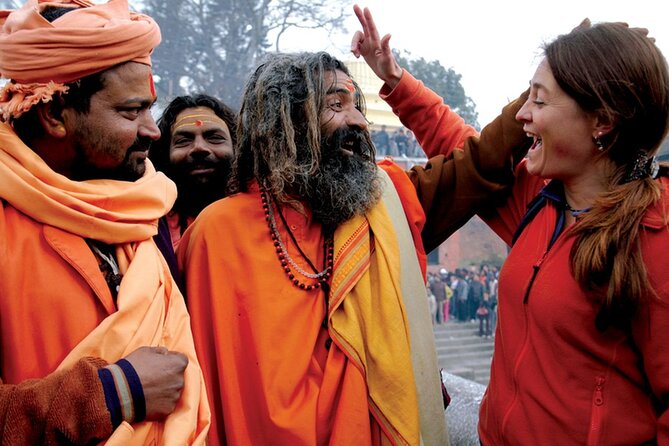
One guide named in feedback is Shanti Karki, praised for being extremely knowledgeable and for adding meaning to what you are seeing. Another name you may encounter is Pankaj, with feedback noting he was flexible and even minimized stair climbing for someone who needed that.
What you should take from that: if you have mobility limits, or you know your legs will hate stairs after several hours, this tour can still be a good fit because the guide approach sounds adjustable. Still, the day is long, so you should aim for comfortable shoes and a realistic expectation of walking.
Practical tips so the 10 to 12 hours feel smooth

Here is how I would prep for this route, using only what the tour information implies.
- Plan for entrance fees. The tour states entrance fees are not included for heritage sites, and several stops are listed as admission not included.
- Expect no included meals. You can buy food and drinks at each site, so bring a plan for breaks and hydration.
- Wear shoes for mixed terrain. The Swayambhunath description includes stairs and an inclined walk. The rest of the day includes temple steps and Durbar Square walking.
- Use the quick free stops strategically. Some stops are free and short, like Kumari Chowk, Amideva Buddha Park, Nyatapola Temple, Dattatraya Temple, 55 Window Palace, and Siddha Pokhari. Treat those as chances to reset without spending time or money.
- Start early if you can. Multiple morning start times are offered, and the duration is long. An earlier start generally helps you feel less rushed when the day gets dense.
One more planning detail: the tour notes it is commonly booked about 67 days in advance. If you are traveling during peak seasons or have a tight schedule, it is smart to book with a bit of buffer.
Should you book the Seven World Heritage Day Tour?

Book it if you want the Kathmandu Valley UNESCO sites grouped into one organized day, and you value a private vehicle plus a guide who can explain what you are looking at. If your time in Kathmandu is limited, this is a solid way to cover the major UNESCO areas in a single push without turning your day into a transport puzzle.
Skip or consider alternatives if you hate long days, you strongly dislike stair climbing, or you budget tightly for entry fees. Because entrance costs are not included and the schedule includes many stops, your final total can rise depending on which heritage site entrances you choose.
If you are the type who loves structure, learning as you move, and photos with context, this tour is likely to fit you well. And if you want reassurance, look for the guide style signals already shown by Shanti Karki and Pankaj in feedback, since flexibility can make the difference on a day like this.
FAQ

Which UNESCO World Heritage Sites are included in the tour?
The seven UNESCO World Heritage Sites included are Swayambhunath, Kathmandu Durbar Square, Patan Durbar Square, Bhaktapur Durbar Square, Changu Narayan Temple, Pashupatinath Temple, and Boudhanath Stupa.
How long is the Seven World Heritage Day Tour?
The duration is listed as about 10 to 12 hours.
Do I get hotel pickup and drop-off?
Yes. Hotel pickup and drop-off are included for locations inside the ring road.
Is food included in the price?
No. Food and drinks are not included, but you can buy them at each site.
Are entrance fees included?
No. Entrance fees for heritage sites are not included, according to the choices you make. Some stops are listed as free, while others are listed as admission not included.
Is this tour private?
Yes. It is described as a private tour/activity, with only your group participating.
If you want, tell me your travel dates and whether you prefer early starts or a slower pace, and I will suggest how to plan around the 10 to 12 hour schedule.
More Historical Tours in Kathmandu
More Tours in Kathmandu
More Tour Reviews in Kathmandu
Not for you? Here's more nearby things to do in Kathmandu we have reviewed
Kathmandu UNESCO Heritage Tours, compared.
★ 5.0Private Kathmandu Sightseeing Tour | UNESCO World Heritage sitesFrom $17756 reviews
★ 5.0Full Day 7 UNESCO Tour with Lunch – Private/GroupFrom $10415 reviews
★ 5.0Full Day Top 4 UNESCO Tour with Lunch – Private/GroupFrom $10269 reviews
★ 5.0UNESCO Seven World Heritage Tour in KathmanduFrom $180253 reviews
★ 4.9Full-Day 7 UNESCO Tour with Lunch – Private/GroupFrom $5247 reviews
★ 4.97 UNESCO Sites Tour in 1 Day (Private Tour)From $4204 reviews
★ 4.9Top 4 UNESCO Tour with Lunch – Private/GroupFrom $5181 reviews
★ 5.0Kathmandu Private Sightseeing Tour | UNESCO World Heritage SitesFrom $35109 reviews
Browse the lists this tour appears in