REVIEW · KATHMANDU UNESCO HERITAGE TOURS
Old Kathmandu Walking Tour, Historic World Heritage Durbar Square
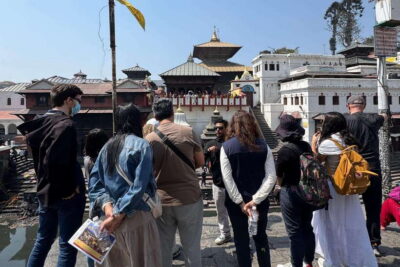
Kumari and temples in one morning walk. Starting from your Thamel hotel lobby or with a quick pickup, this 4 to 5 hour Old Kathmandu walk is an easy, human-sized way to understand the city, with Kathmandu Durbar Square highlights and quiet Buddhist courtyards explained by guides such as Mr. Mahesh Shreshtha.
The tour is strongest when you want more than the usual postcard stops, because it blends market streets, Newar Buddhist monuments, and working religious sites across town. The main thing to plan for: entry fees are not included for Kathmandu Durbar Square premises and the Swayambhu Stupa area.
Key things I’d mark on your Kathmandu map

- Hotel-area pickup and private transport that keeps the walk focused on places you actually want to see
- Durbar Square plus Kumari Chowk, including time set aside to understand the Living Goddess
- Bikramshila Mahavihar (Thambahil), a rare stop tied to the name Thamel
- Asan Bazaar, Kathmandu’s oldest living market for everyday goods and spiritual items
- Seto MachhindraNath Temple, known for Avalokitesvara icons (108 engraved forms)
- Tea or coffee in Thamel to close the loop and ask real questions about what you just saw
Why this Old Kathmandu walk starts at your hotel, not a busy plaza

This tour is built around a simple idea: you should not waste your first morning hunting down a meeting point while jet lagged and trying to read the chaos. If you’re staying in tourist Thamel, the experience starts close to where you are. If not, pickup can bring you to the starting point in a short drive, keeping the “tour part” on foot in the historic core.
You also get private transportation included, which matters in Kathmandu because distances can look small on a map but feel long on foot. With a walking schedule that lasts about 4 to 5 hours, you get a full taste without turning your day into a long slog.
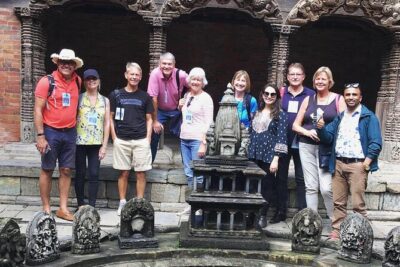
I like how the tour keeps you moving through real neighborhoods, not just a list of monuments. The guides I’ve heard from, like Mr. Mahesh Shreshtha and Modo, are the kind of local-led experts who point out the details people walk past.
You can also read our reviews of more walking tours in Kathmandu
The one catch: entry fees for the big-ticket areas
Kathmandu Durbar Square is the UNESCO anchor of the route, and the same goes for the Kumari Chowk area inside it. But the cost of entering those premises is not included, and entry for the Swayambhu Stupa area is also listed as not included. It’s a normal surprise in Kathmandu tours, so budget for it before you go.
Stop 1: Bikramshila Mahavihar (Thambahil), where Thamel’s name comes from

The walk starts at Bikramshila Mahavihar, a historic Buddhist monument tied to the native Newar community. It’s also known locally as Thambahil. This is one of those stops that feels like a “how did I not know this?” moment, because it’s rarely what first-time visitors plan for.
Here’s the practical payoff: you learn that Thamel’s name has a connection to this old monument. Once you make that link, the rest of the neighborhood makes more sense. You’re not just wandering a tourist zone, you’re walking near layers of older Kathmandu.
Even though the stop is short (about 15 minutes), it sets the theme for the morning: sacred places are not isolated objects, they sit inside the city’s living fabric.
Stop 2: Asan, Kathmandu’s oldest living market for everyday and spiritual life
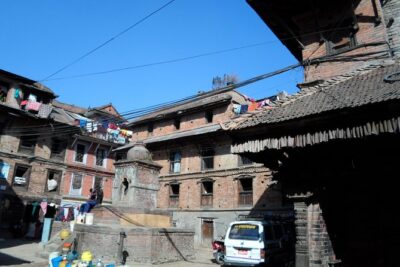
From the quiet monument energy, the tour shifts to Asan, described as Kathmandu’s oldest living market. This is the kind of place where you see what locals actually buy for daily life, from vegetables and clothing to metal items, and even spiritual goods.
What I like about Asan as a tour stop is that it teaches you how religion and daily life share the same streets. You’ll see commerce, rituals, and community needs all tangled together. That context helps a lot once you later reach the more formal temple complexes.
The stop is about 15 minutes, so you’re not stuck in a long market maze. Your guide’s job is to point you to the patterns you might miss if you wander alone.
Stop 3: Janabaha Dyo at Seto MachhindraNath Temple, the 108 Avalokitesvara icons
Next comes Janabaha Dyo, also known as the Seto MachhindraNath Temple. This shrine is tied to a native deity of Kathmandu and to Tibetan Buddhist devotion, commonly connected with Avalokitesvara, the god of compassion.
The most concrete detail here is the shrine’s 108 engraved icons of Avalokitesvara, representing major forms. That kind of specific number gives you something to look for beyond general temple architecture. When you understand what the carvings are pointing to, the building stops being just pretty stone and becomes a message.
It’s another short stop (around 15 minutes), but it’s the kind of moment that changes how you read the rest of the day. You start noticing symbols and themes instead of only looking at the largest structures.
You can also read our reviews of more historical tours in Kathmandu
Stop 4: Itum Bahal, a Buddhist monastery complex from the 11th century
Then you move into Itum Bahal, which used to be one of the largest Buddhist monasteries in ancient Kathmandu. This stop is longer, about 30 minutes, and it’s where the tour earns extra points for atmosphere.
You’re looking at an 11th-century monastic complex, with a remaining section of the original monastic building and courtyards linked to the goddess Tara. In other words, you’re not just staring at a single “main temple.” You’re seeing how monastic life shaped the layout, the courtyards, and the sacred rhythm of the area.
A practical note: courtyards and tucked-away layouts are exactly the kind of places that are easy to miss if you don’t have local guidance. This is one of those mornings where your guide’s route planning quietly makes the difference.
Stop 5: Kathmandu Durbar Square, UNESCO architecture and the palace story

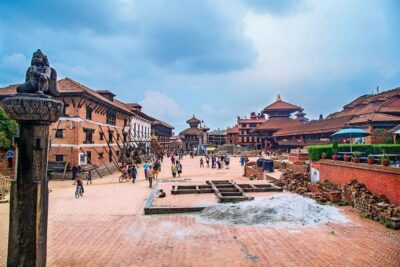
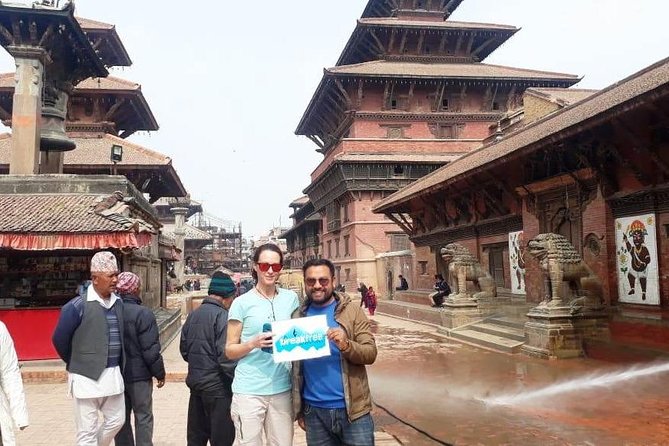
Now you hit Kathmandu Durbar Square, the UNESCO World Heritage Site on the route. The square is described as the 17th-century palace of the kings of Nepal, surrounded by temples that show off traditional Nepali art and architecture.
This is the part many people come for, but the value of having a guide is that Durbar Square becomes more readable. You’re not just seeing many buildings close together, you’re understanding why they’re grouped here and what the sacred center is doing for the city.
The time budget here is about 45 minutes. That’s enough to slow down, spot key temple areas, and connect the dots between the surrounding shrines and the feeling of a royal-sacred center.
Important: this is where entry fees usually come in
Kathmandu Durbar Square premises have an entry fee that is not included. Plan for it so you’re not scrambling at the entrance. Once you pay, you can focus on the sights without the mental friction of last-minute logistics.
Stop 6: Kumari Chowk, the Living Goddess area you should not rush

Inside Kathmandu Durbar Square is Kumari Chowk, home of the Living Goddess. This is one of those experiences that feels personal even though it’s deeply rooted in tradition and community practice.
The building is described as about 300 years old and noted for traditional art and architecture. The point of your stop is not to treat Kumari Chowk like a quick photo spot. It’s to understand the significance of the living goddess shrine and why the space is treated with respect.
The tour gives about 20 minutes at this stop. That’s a good amount of time for your guide to explain what you’re seeing, what the shrine represents, and how it fits into the rest of the square.
One of the strongest highlights in the guide stories I’ve gathered about this tour is that people love the Kumari moment when it finally clicks as more than a stop on a route.
The walk continues to Kathesimbu or Dharmakirti Vihara for a quieter stupa feel

After Durbar Square, the route continues through the old town to the Buddhist stupa complex of Kathesimbu or Dharmakirti Vihara. This complex is described as housing a replica of the Swayambhu Stupa.
That might sound like a detail until you’re there. It’s a different kind of experience than Durbar Square because it tends to feel more focused and less “big attraction.” The tour keeps you moving through old neighborhoods, so the afternoon brain gets a reset: you stop chasing the biggest landmark and start appreciating the smaller sacred spaces tied to the city’s long pilgrimage culture.
The time for this segment isn’t spelled out, but the tour length stays in the 4 to 5 hour range overall, so it’s meant to be a thoughtful finish, not a second heavy peak.
Cafe Mitra in Thamel, where your guide turns facts into context
You end back in Thamel at Cafe Mitra. This final stop is built for a simple reason: your morning is information-heavy, and a quick tea or coffee helps it land.
You’ll share a drink of your choice and have a casual chat with your guide. This is where you can ask the practical questions that come up after you’ve seen the sights: what to do next, what to watch for if you keep exploring on your own, and what religious spaces mean beyond the visible architecture.
I love this structure because it makes the tour more than a route. It becomes a conversation about Kathmandu.
Also, coffee and tea are listed as included, so you’re not getting hit with extra costs at the end just to decompress.
Guides, pacing, and the kind of details you only get in person
If you’re wondering what makes this tour different from a basic walk around the UNESCO site, the answer is pacing plus attention.
The itinerary mixes free-access spiritual and cultural stops with a UNESCO anchor, then wraps with a relaxed conversation. In practical terms, that means you’re not spending the entire morning only on ticketed attractions. You get a balanced spread.
This tour also includes both market streets and religious sites, so you see Kathmandu’s layers in one block. One review highlight I’ve seen repeated is that the guide can point out details in small courtyards and tucked-away public spaces that you would normally miss even if you think you know the neighborhood.
There’s also at least one story about interacting with a Hindu priest at a smaller temple during the walk, which is exactly the sort of real-world connection that adds texture. I can’t promise a specific conversation will happen every time, but the point is that the guide’s local relationships can open doors.
Pacing tip for you
Wear comfortable shoes. Old Kathmandu streets can be uneven and full of small turns. The tour isn’t described as strenuous, but it is a walking morning, so you’ll enjoy it more if your feet are happy.
Price and logistics: is $28 a good deal?
At $28 per person, the tour prices itself as a value option for people who want a guide without blowing the budget. What’s included is the key: private transportation and coffee and/or tea. The tour also offers features like a mobile ticket and group discounts.
What’s not included matters too. Entry fees for Kathmandu Durbar Square premises and Swayambhu Stupa are listed as not included. That means your final total depends on what you pay at the gates for those specific areas.
Still, even with ticket costs, the structure makes sense if you’re going to those exact stops anyway. You’re not paying just for walking directions. You’re paying for a guided route that links Newar Buddhist sites, a major market, multiple shrines, and UNESCO context into one coherent morning.
One small planning note: this experience is commonly booked about 32 days in advance on average. If you’re traveling during a popular season or on tight dates, it’s smart to reserve early so you don’t end up trying to stitch together a guide last minute.
Who should book this Old Kathmandu Walking Tour?
I think this tour is a strong fit if you:
- Want one morning that helps you understand Old Kathmandu without jumping between too many separate plans
- Prefer a guide-led route that includes lesser-visited corners, not just the loudest tourist stops
- Like the mix of culture and religion, where markets sit next to shrines and small courtyards matter
- Appreciate ending with a casual chat, so the day feels organized instead of random
It might be less ideal if you:
- Don’t want to budget for entry fees at Kathmandu Durbar Square and the Swayambhu Stupa area
- Want a totally relaxed walk with minimal turns and fewer stops (this is a structured itinerary with several site changes)
- Have limited mobility or tire quickly with walking and uneven streets
Should you book this tour?
If your goal is to get your bearings fast and understand why Kathmandu’s sacred sites and local markets share the same streets, I’d book this. It’s focused, half-day, and it uses a guide route to bring you to places that are easy to overlook on your own, including the Newar Buddhist connections that link to Thamel.
My biggest reason to recommend it is the combination: Durbar Square and Kumari Chowk for the headline experience, plus smaller courtyards and temples that give the morning meaning. Just go in knowing that entry fees are extra for the UNESCO premises, and you’ll have a smoother, more enjoyable morning.
FAQ
What time does the tour start?
The tour starts at 9:00 am.
How long is the Old Kathmandu Walking Tour?
It runs about 4 to 5 hours.
How much does it cost?
The price is $28.00 per person.
Where does the tour start and end?
It starts at Amrit Marg, Kathmandu 44600, Nepal, and ends at Cafe Mitra on Thamel Marg, Kathmandu 44600, Nepal.
Is hotel pickup included?
Pickup is offered. If you are in tourist town Thamel, the start can be from your hotel lobby, or the company can pick you up and bring you to the starting point by a short drive.
What is included in the price?
Included are private transportation and coffee and/or tea.
Are entry fees included for Kathmandu Durbar Square and Swayambhu Stupa?
No. Entry fees for Kathmandu Durbar Square premises and Swayambhu Stupa are not included.
Do any stops have free admission?
Yes. The itinerary lists admission tickets as free for stops including Bikramshila Mahavihar, Asan, Janabaha Dyo (Seto MachhindraNath Temple), and Itum Bahal.
Is this tour private?
Yes. It is a private tour/activity, so only your group participates.
Can I cancel and get a full refund?
Yes. Free cancellation is available up to 24 hours in advance of the experience’s start time for a full refund.
Is a mobile ticket provided?
The tour features include a mobile ticket.
More Walking Tours in Kathmandu
More Tours in Kathmandu
More Tour Reviews in Kathmandu
Not for you? Here's more nearby things to do in Kathmandu we have reviewed
Kathmandu UNESCO Heritage Tours, compared.
★ 5.0Private Kathmandu Sightseeing Tour | UNESCO World Heritage sitesFrom $17756 reviews
★ 5.0Full Day 7 UNESCO Tour with Lunch – Private/GroupFrom $10415 reviews
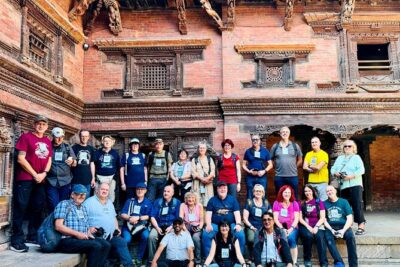
★ 5.0Full Day Top 4 UNESCO Tour with Lunch – Private/GroupFrom $10269 reviews
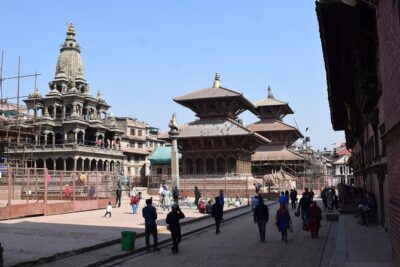
★ 5.0UNESCO Seven World Heritage Tour in KathmanduFrom $180253 reviews
★ 4.9Full-Day 7 UNESCO Tour with Lunch – Private/GroupFrom $5247 reviews
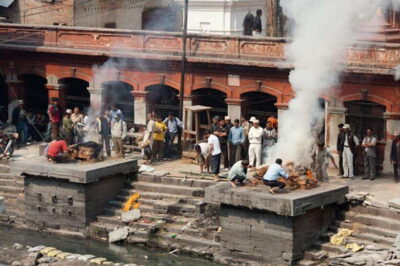
★ 4.97 UNESCO Sites Tour in 1 Day (Private Tour)From $4204 reviews
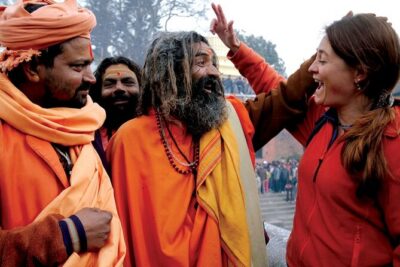
★ 4.9Top 4 UNESCO Tour with Lunch – Private/GroupFrom $5181 reviews
★ 5.0Kathmandu Private Sightseeing Tour | UNESCO World Heritage SitesFrom $35109 reviews
Browse the lists this tour appears in