REVIEW · PRIVATE
Private Half Day Tour in Kathmandu
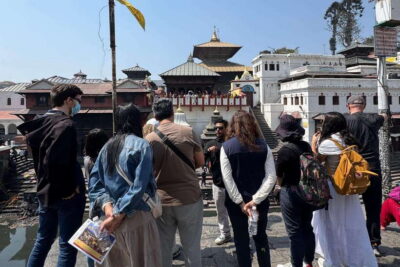
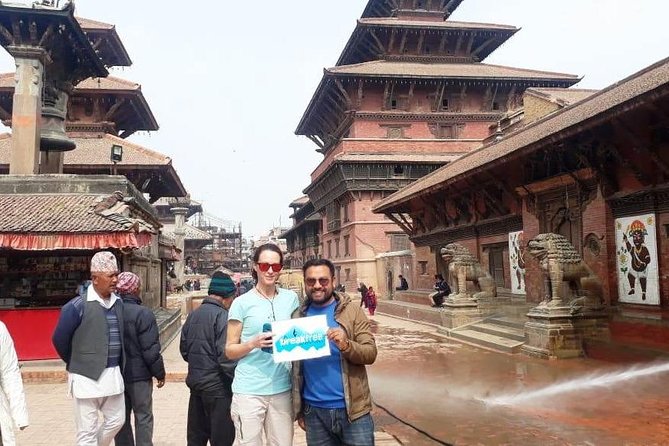
Three hours, two UNESCO sites, Kathmandu sorted. This private half-day tour is a smart way to get your bearings fast, then focus on the parts of Kathmandu Valley you actually want to see, with a guide who can explain what you are looking at. I like that you can choose between itineraries that pair two UNESCO World Heritage sites from the five major targets: Kathmandu Durbar Square, Swayambhunath, Patan Durbar Square, Pashupatinath, and Boudhanath.
What I especially enjoy is the no-rush rhythm for a city like Kathmandu. You get to step into royal palace courtyards and sacred temple spaces, and the guide helps connect the carvings, legends, and daily religious life into something you can follow in real time.
The big catch to plan for is the add-on cost: monument entrance fees are not included. If you are on a tight budget, that extra $20 per person can change the value math.
Key highlights you should care about

- Private, just your group: less waiting, more control of your pace.
- 3 hours, well-focused: a realistic half-day plan for traffic and timing.
- Pick from UNESCO pairs: choose two sites from five iconic areas.
- Guides like Nilakantha Acharya, Kamal, and Kumar: praised for history, patience, and answering questions.
- Air-conditioned vehicle with pickup: helpful when Kathmandu gets hot or congested.
How this Kathmandu half-day tour stays focused in a chaotic city

Kathmandu moves fast. Cars inch, pedestrians weave, and time disappears. That is why I like a tight 3-hour block with a plan you can actually finish.
This tour is designed around two UNESCO World Heritage sites within Kathmandu Valley. UNESCO sites are famous for a reason, but in real life you need more than big “must-see” names. You want someone to point out what matters: why a facade is carved the way it is, what a temple complex symbolizes, and how the living religious traditions fit into the ancient stones.
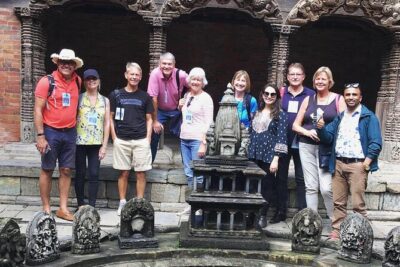
Another practical win is the private format. When it is only your group, your guide can steer the day around your interests, not around a big mixed crowd. If you care about architecture details, you can slow down. If you just want a good overview and photos, you can keep it moving.
You can also read our reviews of more private tours in Kathmandu
Picking your UNESCO combo: two sites, three itinerary options

One of the easiest ways to get value in Kathmandu is to choose fewer things and understand them better. This tour makes that simple by offering three unique itineraries, each built around visiting two of the five UNESCO sites in the valley.
Your options include:
- Kathmandu Durbar Square
- Swayambhunath (Monkey Temple)
- Patan Durbar Square
- Pashupatinath Temple
- Boudhanath Stupa
How you choose depends on what you want your half-day to feel like.
If you want “royal Kathmandu,” pick a Durbar Square pairing. If you want “religion plus views,” Swayambhunath is the obvious choice because the hilltop offers a broad look across the valley. If you want “devotion and ritual atmosphere,” Pashupatinath and Boudhanath are strong targets.
This matters because each site is a different kind of experience. Durbar Squares are palace-courtyard architecture. Temples are sacred religious spaces with different rhythms. When you match your itinerary to your mood, your 3 hours feel like more than a checklist.
Stop 1: Kathmandu Durbar Square, Malla-era carvings and royal courtyards
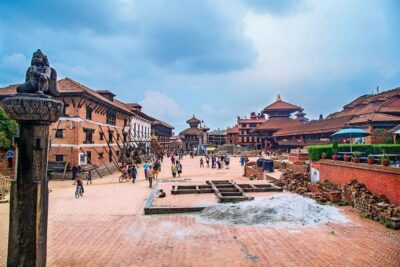
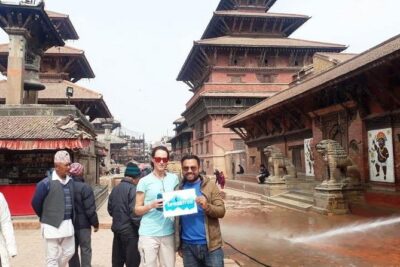
Kathmandu Durbar Square is one of the Durbar (royal palace) Squares of the valley and a UNESCO site. The site’s history stretches back to the third century, but the most recognizable structures came later, with major additions in later periods. That time depth can sound abstract, so you want your guide to translate it into visible clues.
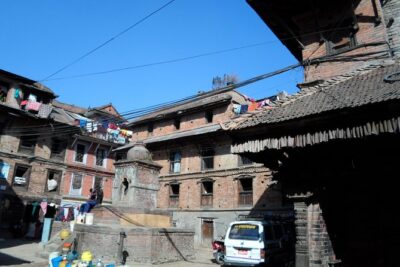
The outer complex includes a number of 16th-century temples built during the reign of the Malla kings. This is where you start seeing Newari architecture in full effect. The facades are carved with meticulous detail, and the patterns are not just decoration. They are a visual language tied to the region’s craft traditions and religious symbolism.
Then you step into the central square, surrounded by palace complexes built across Malla and Shah periods. The standout described here is Nautale Durbar, a nine-story palace linked to Prithvi Narayan Shah. Even if you do not memorize every ruler name, you can still sense what the place was built for: authority, ceremonies, and a palace courtyard that served as a center of life.
What I like about this stop is how quickly you can get “architecture literacy.” After walking through a bit of the square with a good guide, you start noticing what is carved, what is repeated, and what seems to matter most. That is the whole point of taking a half-day guided route instead of trying to wing it.
A practical consideration: you are walking in a historic complex with lots to look at. If you rush, you miss the best details. If you slow down too much, you may feel squeezed by the second stop, so keep your pace.
Stop 2: Swayambhunath (Monkey Temple), sacred hill views and living legends
Swayambhunath, also called the Monkey Temple, is the second highlight on the classic pairing. It is centered on a large stupa known as Mahachaitya. This site matters to both Buddhists and Hindus, and that shared sacred role helps explain why you see so many forms of devotion in one place.
The hilltop is known for its name meanings too. The Tibetan reference is often tied to the idea of sublime trees, and you will also hear the concept of “self-sprung,” tied to the name used by Buddhist Newars. What you should take away is that the legends are not random. They are part of why pilgrims treat the stupa as spiritually central.
Swayambhunath is described as especially sacred among Buddhist pilgrimage sites for the Buddhist Newars. For Tibetan Buddhism, it is considered second only to Boudha. Then there is the Hindu angle as well, since the name is also treated as Hindu. So in practice, the site feels like a crossroads of faith traditions.
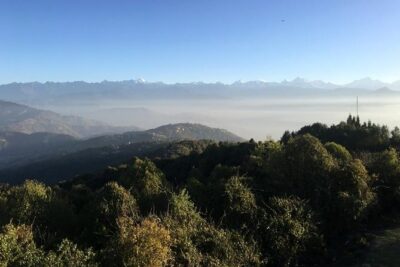
Now add the reason it is so easy to love on a short tour: the 360-degree view over the valley. Even if you do not consider yourself a “view person,” Swayambhunath gives you context. You look down and suddenly Kathmandu Valley feels arranged, not random.
Practical note: it is a hilltop. Comfortable shoes help. And yes, it is called Monkey Temple for a reason, so keep your eyes open for small disruptions and do not treat the area like a silent museum.
Getting picked up and out again: air-conditioned comfort for a half-day plan

Kathmandu’s roads can be slow and unpredictable. That is exactly why I like the combination of pickup and an air-conditioned vehicle.
From the time window side, the tour is built around about 3 hours in total. That is long enough to do two major stops without turning the day into sprint mode, but short enough that you still have time to explore on your own afterward.
It also helps that you get an experienced guide. The value of a guide in Kathmandu is not only facts. It is making sure you spend time where it counts. When a guide can explain what you are seeing, you naturally spend more meaningful moments at each spot instead of scanning everything like a tourist with a tired neck.
And since the tour is private, your group does not have to wait on other groups to finish photos or to recover from misunderstandings. You can keep moving with less friction.
One more small detail that matters: the tour uses a mobile ticket, which makes check-in simpler than digging through papers.
Price and value: $40 for the tour, plus about $20 per person for entry
The listed price is $40 per person, and that includes the basics you need for a smooth half-day: an air-conditioned vehicle, an experienced guide, and the 3-hour city tour.
But the tour does not include monument entrance fees. The additional cost is $20 per person for monuments. So your realistic total to plan around is about $60 per person, before any snacks or drinks.
Is it worth it? For me, the answer is yes if you will actually spend your time learning instead of just taking photos. These UNESCO sites can be confusing if you read nothing and ask no questions. The guide helps you look at the right features first, which is how you get more out of the time you paid for.
This is also the kind of tour where group size changes the value. The info mentions group discounts, and since it is private, the math can work better if you are traveling as a small group rather than as a solo buyer.
Timing wise, the tour is commonly booked around 11 days in advance on average. That does not mean you cannot find something later, but if you have fixed hotel plans or want a specific itinerary pairing, booking earlier is the safer move.
What your guide can do for you at each UNESCO site
A good Kathmandu guide saves you from a common problem: you see everything and remember nothing. This tour’s strength is that the guide is expected to explain the big ideas behind the stones.
The names coming up for this kind of experience include Nilakantha Acharya, plus other guides such as Kamal and Kumar. What stands out is a consistent style: patient answers, history explained in a way that stays connected to real places, and a willingness to tailor the walk.
Here is what you can ask early so your half-day feels personal:
- For Kathmandu Durbar Square, ask which buildings show the clearest Newari carving patterns and why.
- For Swayambhunath, ask what the stupa represents to different traditions and how that shows up in everyday practice.
- Ask what you should focus on if you only remember a few details from each stop.
Also, if you want photos, ask your guide to suggest the best moments for viewpoints. This kind of hilltop site rewards good angles, and a guide who knows where people gather can help you avoid awkward crowds.
One possible drawback to watch for: a half-day schedule can tempt rushed conversations. If something interests you, speak up early and ask for a bit more time. The private nature helps, but you still have only 3 hours.
Best fit: who should book this and who might want to DIY
This tour is a strong fit if:
- You want an organized introduction to Kathmandu Valley UNESCO sites without overcommitting.
- You like temple and palace courtyards but do not want to research for hours.
- You would rather ask questions and get context than wander with guesswork.
It is also a good choice for couples and families who want a controlled plan. The pacing is described as covering what people want in a short window, and the private setup means you are not stuck with someone else’s priorities.
You might skip a guided format if:
- You already have a deep interest in architecture and religious history and have the time to research before you go.
- You prefer fully self-paced wandering and do not want to stick to a vehicle-driven schedule.
For most people, though, this is the sweet spot. It gives you two major stops, a guide who can translate them into meaning, and enough remaining time to see Kathmandu beyond the UNESCO stamps.
Should you book this Kathmandu half-day tour?
Book it if you want a smart, time-respecting UNESCO intro to Kathmandu Valley. The value improves if you plan for monument entrance fees and if you are the type of traveler who enjoys understanding what you see, even in a short window.
Skip it only if your day is already crowded with other must-dos and you cannot absorb the walking and viewpoints. Or if you plan to visit these sites anyway but you want total freedom with no guided explanation.
If you are trying to decide between Durbar Square and Monkey Temple versus other UNESCO pairs, pick the combination that matches your mood: palaces and carving details for Durbar Square, or sacred hilltop atmosphere plus sweeping views for Swayambhunath. Either way, a private half-day with a guide is one of the easiest ways to turn Kathmandu from intimidating into understandable.
FAQ
What UNESCO sites are part of the options for this tour?
The tour options include Kathmandu Durbar Square, Swayambhunath (Monkey Temple), Patan Durbar Square, Pashupatinath Temple, and Boudhanath Stupa, with itineraries designed to visit two of these sites.
How long is the Kathmandu Valley private half-day tour?
The tour duration is about 3 hours.
Is pickup included?
Pickup is offered.
What is included in the tour price?
The price includes an air-conditioned vehicle, an experienced tour guide, and the 3-hour city tour.
Are monument entrance fees included?
No. Monument entrance fees are listed as $20.00 per person and are not included.
Is this tour private?
Yes. It is a private tour/activity, so only your group participates.
How far in advance is this tour commonly booked?
On average, it is booked 11 days in advance.
What is the cancellation policy?
You can cancel for a full refund up to 24 hours in advance of the experience start time. If you cancel less than 24 hours before, the amount paid is not refunded.
More Private Tours in Kathmandu
More Tours in Kathmandu
More Tour Reviews in Kathmandu
Not for you? Here's more nearby things to do in Kathmandu we have reviewed
Private, compared.
★ 5.0Private Kathmandu Sightseeing Tour | UNESCO World Heritage sitesFrom $17756 reviews
★ 5.0Full Day 7 UNESCO Tour with Lunch – Private/GroupFrom $10415 reviews
★ 5.0Private Bhaktapur and Nagarkot Day Tour From KathmanduFrom $20305 reviews
★ 5.0Full Day Top 4 UNESCO Tour with Lunch – Private/GroupFrom $10269 reviews
★ 4.9Full-Day 7 UNESCO Tour with Lunch – Private/GroupFrom $5247 reviews
★ 4.97 UNESCO Sites Tour in 1 Day (Private Tour)From $4204 reviews
★ 4.9Top 4 UNESCO Tour with Lunch – Private/GroupFrom $5181 reviews
★ 4.9Private City Guided TourFrom $40174 reviews