
REVIEW · KATHMANDU UNESCO HERITAGE TOURS
Private Full-Day Kathmandu All 7 UNESCO World Heritage Sites Tour
Seven UNESCO sites. One tight Kathmandu Valley day.
This private tour gives you a smart route through temples, palace squares, and stupa culture, all with a guide to translate what you are looking at. You also get hotel pickup and drop-off and a private vehicle, which matters in a city where traffic can eat your time.
I love the design: all seven UNESCO stops are grouped so you can see Kathmandu’s religious and royal heritage without hopping between random corners. I also like the practical side, monument entrance fees are included (except Swayambhunath, which is free), so you are not stuck negotiating tickets while you are supposed to be sightseeing.
One drawback to plan for: it is a long day, around 9 to 11 hours, with a moderate physical fitness requirement. And there are no meals included, so you will want to manage snacks and water yourself.
Key highlights worth knowing
- Seven UNESCO World Heritage Sites in one day, from Monkey Temple to Pashupatinath
- Private guide + private vehicle, so you control the pace and questions
- Entrance fees included for most stops, with Swayambhunath listed as free
- Tight timing per site, ranging from about 25 minutes to 1.5 hours
- Real religious locations, especially at Boudhanath and Pashupatinath, where daily life is part of the view
Why Kathmandu Valley’s UNESCO loop is a smart use of one day
If you only have a day (or you are trying to make your Nepal trip feel efficient), this loop is built for that. You are not just ticking off famous names. You are moving through different “types” of heritage, close enough together to keep travel time reasonable: a hilltop stupa, palace courtyards, a royal square with arts and crafts, a Vishnu temple on a hill, a major Buddhist stupa, and then a highly sacred Hindu riverfront temple.
The value here is the handoff between places. A good guide helps you notice patterns. You start to see how architecture choices connect to religion and to how Kathmandu Valley societies organized power, worship, and daily ritual.
And because it is private, you can ask what you actually care about. If you want symbolism, ask. If you want “what am I looking at,” ask. If you want a calmer moment to watch people pray or walk around, ask that too.
You can also read our reviews of more private tours in Kathmandu
Price and what you get for $80 per person
At $80 per person, the big question is always: what does that cover, beyond a driver and a checklist?
Here, your price includes the heavy hitters:
- Hotel pickup and drop-off
- A professional private guide
- A private vehicle with fuel and parking charges covered
- Entrance fees to the listed monuments and attractions
- Service charges and taxes
What is not included is also important:
- Meals and drinks
- Gratuities, which are customary for the guide and driver
So the value math is pretty straightforward. If you were to book a vehicle plus separate tickets plus a guide yourself, you would likely spend more time coordinating and more money paying in pieces. This is designed to be “one bill, one day, less hassle.”
One more small detail to like: there is a mobile ticket option and group discounts are listed. Even if you go solo, that signals the operator runs this as a structured experience, not a random day-of workaround.
Pacing and timing: how the 9 to 11 hours typically feel
Expect a full-day sprint, not a slow stroll. The listed time at each stop is fairly tight, especially early and mid-morning.
A rough sense of the rhythm:
- Swayambhunath: about 45 minutes
- Kathmandu Durbar Square: about 45 minutes
- Patan Durbar Square: about 1 hour
- Bhaktapur Durbar Square: about 1 hour 30 minutes
- Changu Narayan Temple: about 25 minutes
- Boudhanath Stupa: about 30 minutes
- Pashupatinath Temple: about 30 minutes
You will feel it in your feet. There is also a moderate physical fitness level requirement listed. And because several stops are hilltop or involve stairs and uneven temple approaches, you should plan for some climbing, not just level walking.
The upside is that you still get context. A guide can use a short time window well by focusing on what matters. The trick is to keep your expectations realistic: you are seeing highlights, not settling into one place for hours.
Swayambhunath to Kathmandu Durbar Square: hilltop views and palace courtyards
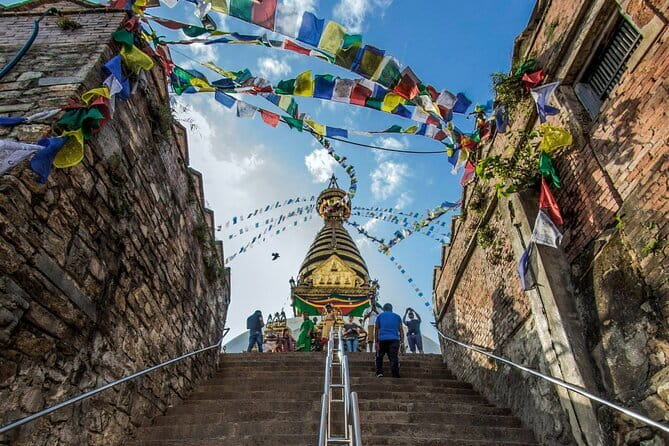
You start with Swayambhunath, also called the Monkey Temple, perched above the city. The ticket detail is great for planning: it is listed as free. You get roughly 45 minutes here, which is usually just enough time to get your bearings, take in the views over Kathmandu Valley, and learn what the stupa complex represents.
One practical tip: because it is a hilltop site, you will spend energy before the day even really warms up. Wear shoes you trust. Then let your guide point out what most visitors miss, like how religious art and temple layout guide your route.
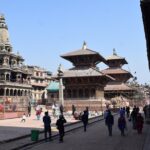
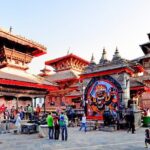
Next is Kathmandu Durbar Square, the historical heart of the old city. Here, you are in about 45 minutes, and entrance is included. This stop shifts the tone from stupa spirituality to palace-era symbolism. You are surrounded by palaces, courtyards, and temples, the kind of space where power and devotion were never separate.
If you love architecture, ask your guide to explain what the courtyards and temple clusters are doing. If you care more about everyday life, ask how locals have used these spaces through time.
Patan and Bhaktapur Durbar Squares: craft detail and royal-square walking
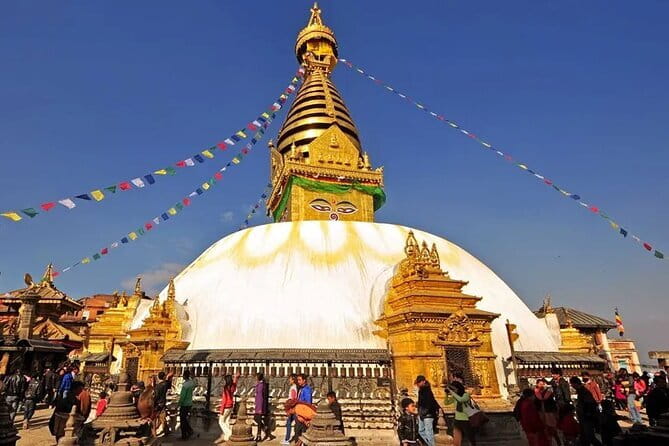
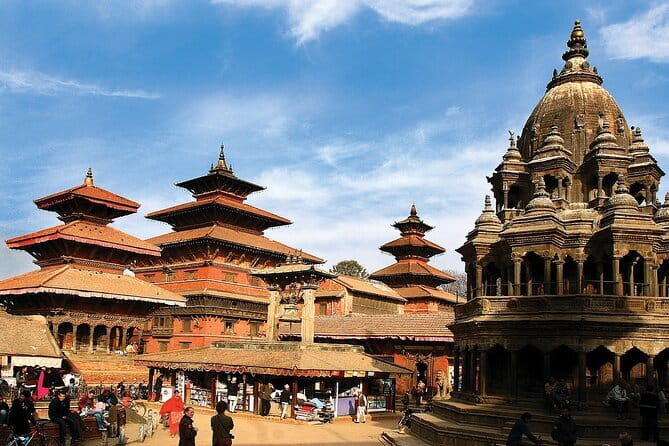
After Kathmandu Durbar Square, you head to Patan Durbar Square in Lalitpur. Time here is about 1 hour, and entrance is included. Patan is known in this context for Newari craftsmanship, and you can actually feel that when you look closely at carving work, temple forms, and the way the square organizes visitors.
This is a good place to slow down for 5 minutes, even if the schedule is tight. Use that pause to pick one detail and examine it. A guide can help you understand what materials, motifs, and craftsmanship patterns mean in the local artistic tradition.
Then you go to Bhaktapur Durbar Square, which is allotted about 1 hour 30 minutes, the longest after Durbar Square itself. Entrance is included.
This stop is where you get more room to breathe. It is described as a royal square with intricate historical and architectural brilliance, and it is the kind of place where the atmosphere comes from scale and repetition. You will want your guide’s help here, not because you need to memorize facts, but because it helps you see what is designed for public movement versus what is designed for worship.
If you are the type who likes a lot of photos, this is a good moment to spend an extra minute framing your shot, because the square environment gives you strong visual angles.
You can also read our reviews of more historical tours in Kathmandu


Changu Narayan and Boudhanath: an older temple stop, then stupa time
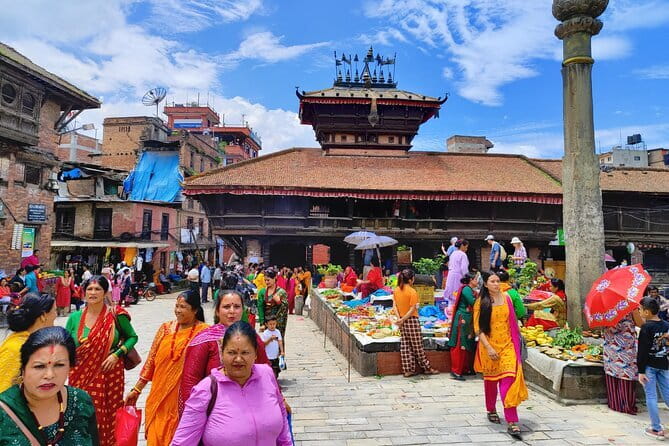
First comes Changu Narayan Temple, listed as the oldest temple in Nepal, dedicated to Lord Vishnu, and perched on a hilltop. Your time is about 25 minutes, and entrance is included.
Twenty-five minutes sounds short, but it works if your guide uses it smartly. This is a “focus stop.” You will likely want one or two photos, a quick walk for perspective, and then let the guide explain what you are seeing. Because it is on a hilltop, you get valley views plus the religious feeling of height and quiet.
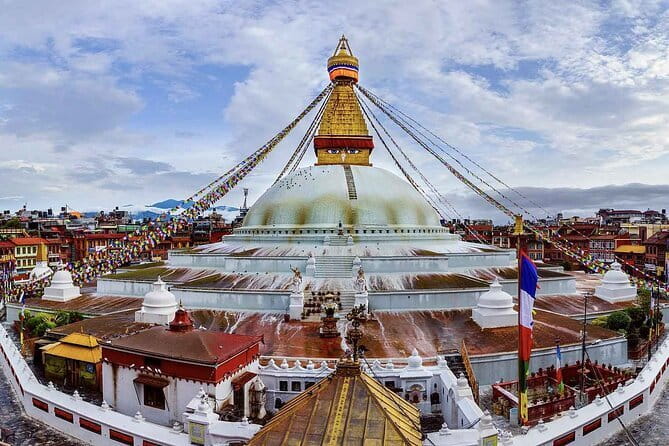
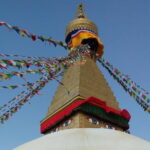
Then you switch to Boudhanath Stupa, one of the world’s largest spherical stupas, with a tall white dome, listed around 36 meters tall, and designated UNESCO. Your time is about 30 minutes, and entrance is included.
This is a very different vibe from palace squares. Instead of royal architecture, you are in stupa-centered spiritual geometry. It is also a place where daily ritual is part of the experience. Expect people moving through the space with practiced routines, and expect your guide to help you read the symbolism without overcomplicating it.
One practical move: if the site is crowded, choose one angle and stay there for a moment. You will get more meaning out of a stable view than from constant walking.
Pashupatinath Temple by the Bagmati River: a spiritual anchor at the end
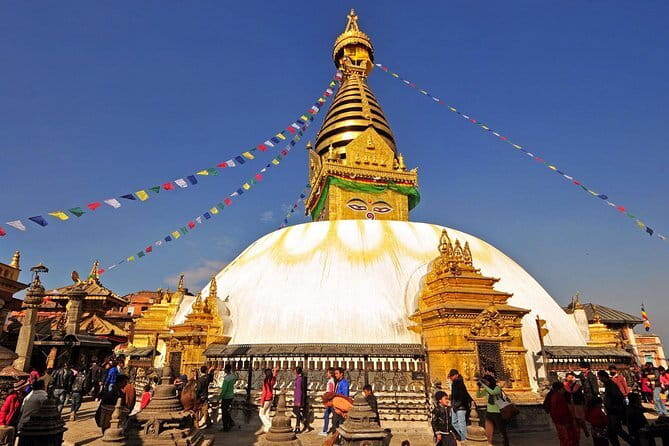
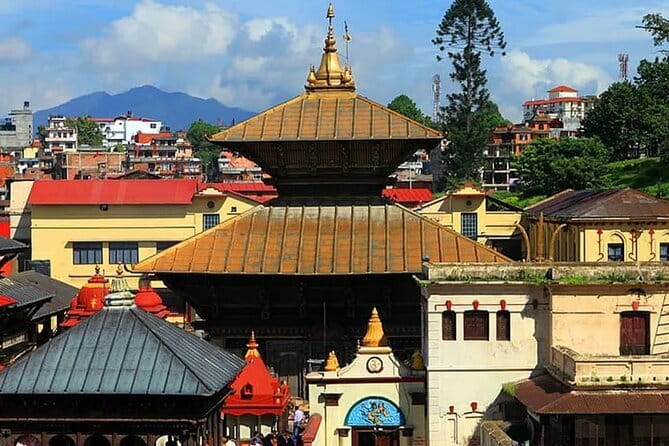
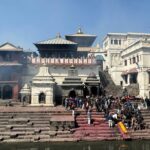
The last major stop is Pashupatinath Temple, dedicated to Lord Shiva, located on the banks of the Bagmati River. Your time here is about 30 minutes, and entrance is included.
This is often the emotional high point for many people because it is a place people treat as sacred in their everyday lives. Even if you are not deeply religious, the scale and intensity of devotion are hard to ignore.
To make this stop worthwhile, go in ready to ask questions. Good guides can explain how the riverfront setting relates to Hindu belief and why the temple is so significant. You do not need a long lecture. You need a few clear points so you can understand what your eyes are seeing.
Private guidance makes the difference, especially when the guide is the right fit
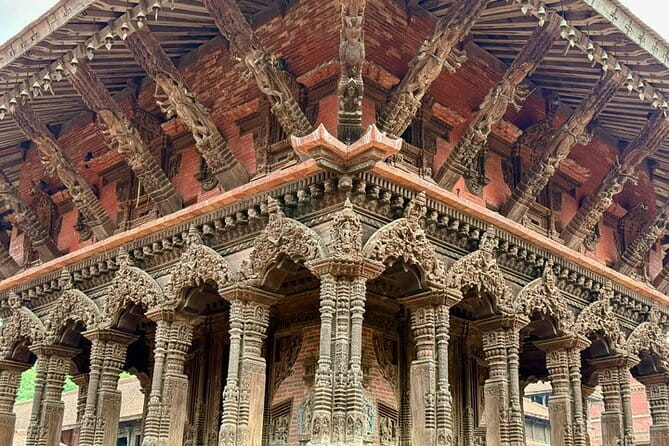
The tour is built around a professional private guide, and the reviews you provided highlight that this is not just a name badge. People praised guides like Shankar and Razz for clear explanations, friendliness, and organizing the day well. Another guide named Subash was specifically praised for history and Hinduism context at Pashupatinath.
You do not need a “human encyclopedia.” You need a guide who can:
- explain each site in plain language
- point out what you can actually see in the time you have
- keep you on schedule without rushing your brain
One more tip: if you want the day to feel personal, plan your questions before the tour starts. For example, ask how each stop connects to different traditions in Nepalese culture, or ask what architectural details are most worth noticing at that specific moment.
And if you are a little worried about timing, the tour format helps. People described the guides as punctual and the tour as organized. That matters because a private car plus strict stop times can either feel smooth or feel stressful.
What to bring (since meals and drinks are not included)
Because meals and drinks are not included, you should treat this as a “pack-and-buy” day. Bring a refillable water bottle if you can. Bring a snack that will not crumble instantly if your day gets busy.
For clothing, you are moving through religious sites, and the tour involves hilltop locations. Dress in layers so you can handle changes in sun and shade. Keep something with you for sun protection. And bring cash or a card if you plan to buy snacks during gaps, since the schedule is tight.
For comfort:
- Wear supportive shoes with grip.
- Use a small day bag so you can keep hands free for photos.
- If you have mobility limitations, tell the operator ahead of time. The tour lists a moderate physical fitness level, and hilltop walking is part of the plan.
Who should book this 7 UNESCO sites private tour
This tour is a great fit if you:
- want a lot of Kathmandu Valley heritage in one day
- enjoy temples and palace squares, not just streets and markets
- like the idea of private transport and an expert guide
- prefer having entrance fees handled instead of ticket hunting
It may be less ideal if you:
- want a slow, relaxed day
- get worn out by long sightseeing hours
- need frequent meal stops built into the itinerary
Final verdict: should you book?
I would book it if your priority is: maximize heritage with minimal planning stress. At $80, with hotel pickup, private vehicle, a guide, and monument entrance fees included for most stops, the structure is practical. The one real warning sign is the length. 9 to 11 hours can be a lot, especially with hilltop sites like Swayambhunath and Changu Narayan.
If you go in with the right expectations, this is one of the most efficient ways to see why Kathmandu Valley is famous for UNESCO heritage. And with a guide who can explain what you are looking at, the day stops feeling like a checklist and starts feeling like a connected story.
FAQ
How long is the Kathmandu Valley 7 UNESCO World Heritage Sites tour?
It runs about 9 to 11 hours (approx.).
What sites are included in the tour?
The tour includes Swayambhunath, Kathmandu Durbar Square, Patan Durbar Square, Bhaktapur Durbar Square, Changu Narayan Temple, Boudhanath Stupa, and Pashupatinath Temple.
Is hotel pickup and drop-off included?
Yes, hotel pick-up and drop-off are included.
Are entrance fees included for the monuments?
Yes. Monument entrance fees for the listed sites are included. Swayambhunath is listed as free in the stop details.
Does the price include meals?
No. Meals and drinks are not included.
Is this tour private?
Yes. It is a private tour/activity, and only your group participates.
What should I do about tipping?
Tipping is not included, but it is customary and appreciated for the guide and driver.
What fitness level is needed?
The tour notes a moderate physical fitness level.
What is the cancellation policy?
You can cancel for free up to 24 hours in advance for a full refund. Canceling less than 24 hours before the start time is not refunded.
More Private Tours in Kathmandu
More Tours in Kathmandu

More Tour Reviews in Kathmandu
Not for you? Here's more nearby things to do in Kathmandu we have reviewed


Kathmandu UNESCO Heritage Tours, compared.
 ★ 5.0Private Kathmandu Sightseeing Tour | UNESCO World Heritage sitesFrom $17756 reviews
 ★ 5.0Full Day 7 UNESCO Tour with Lunch – Private/GroupFrom $10415 reviews
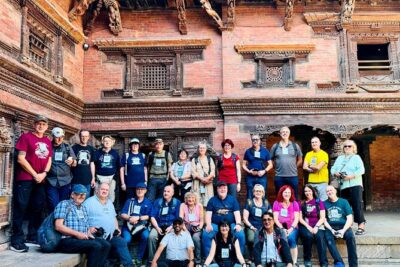 ★ 5.0Full Day Top 4 UNESCO Tour with Lunch – Private/GroupFrom $10269 reviews
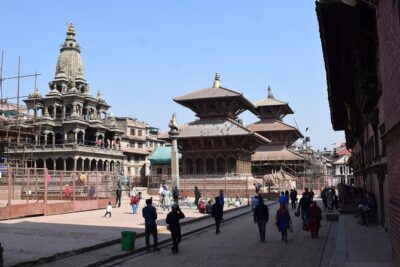 ★ 5.0UNESCO Seven World Heritage Tour in KathmanduFrom $180253 reviews
★ 4.9Full-Day 7 UNESCO Tour with Lunch – Private/GroupFrom $5247 reviews
★ 5.0UNESCO Seven World Heritage Tour in KathmanduFrom $180253 reviews
★ 4.9Full-Day 7 UNESCO Tour with Lunch – Private/GroupFrom $5247 reviews
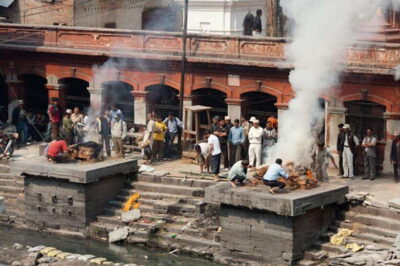 ★ 4.97 UNESCO Sites Tour in 1 Day (Private Tour)From $4204 reviews
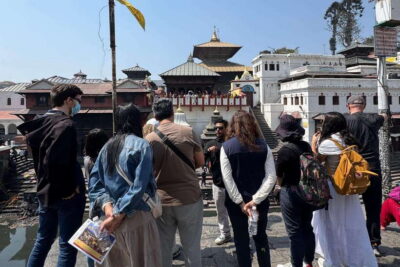 ★ 4.9Top 4 UNESCO Tour with Lunch – Private/GroupFrom $5181 reviews
 ★ 5.0Kathmandu Private Sightseeing Tour | UNESCO World Heritage SitesFrom $35109 reviews
Browse the lists this tour appears in