
REVIEW · WORKSHOPS
Knife Khukuri Making Workshop
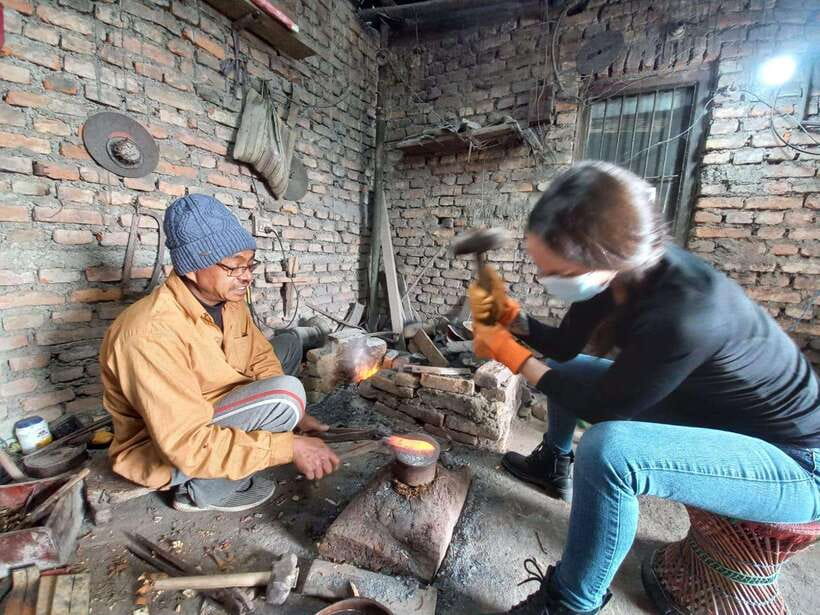
This knife starts as raw iron. In Bagmati Zone, I love how the craft of the khukuri is taught by a maker with decades of experience, with English/Hindi guides such as Namrata helping you understand what you are actually shaping.
You’ll also like that the process is practical, not just a museum-style talk: you hammer, you grind early steps, and you leave with a knife you made yourself.
The main tradeoff is that, for safety, the host does the hot, spark-heavy grinding and sharpening while you handle the safer stages. You’ll also want long pants, and it is not suitable for kids under 10.
Quick hits before you go
- Small group, limited to 5, so you can actually ask questions while you work
- A 6-inch blade sized for a hands-on session that still feels real
- You get history plus technique, including why the khukuri matters to Gurkha culture
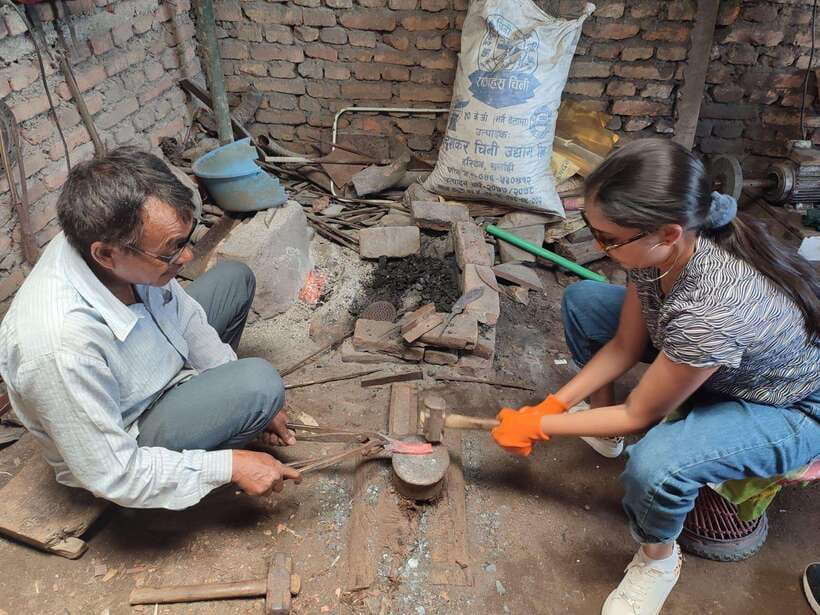
- Hammering and first grinding are your job, while sharpening is kept in professional hands
- Pickup and drop-off included, plus transport earns strong scores
- Tea, water, and snacks keep the session friendly, not rushed
A 4-hour khukuri workshop with a workshop-family feel
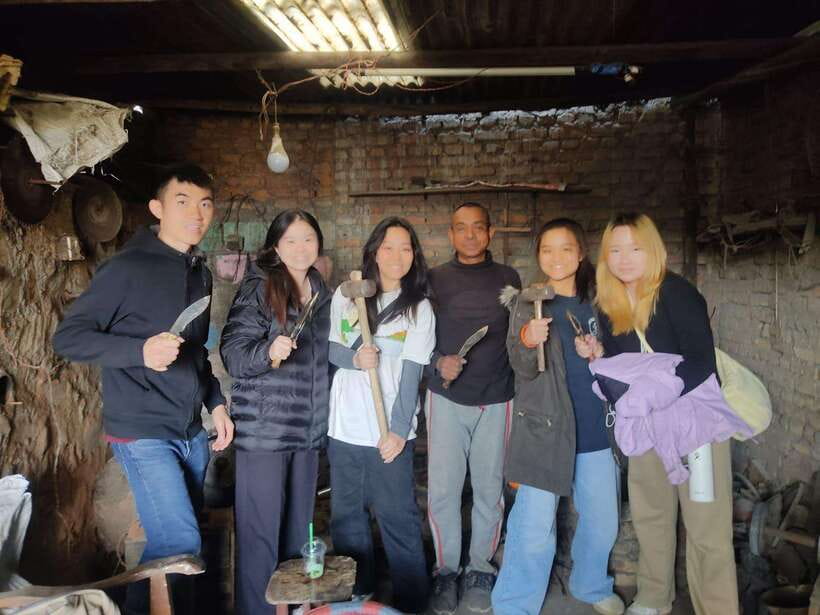
If you like seeing real skills, not just watching, this kind of knife-making class in Nepal hits the right note. In about four hours in Bagmati Zone, you go from raw metal to a small khukuri you can take home, with a blacksmith who has been making knives for roughly 42 years.
I like that the group stays small, limited to five participants. That matters because the blacksmith’s time and your questions both need attention, and the pace stays human.
One more point I appreciate: English support is built in. Guides such as Namrata, Sajeena, or Swayam (depending on your session) help translate the why behind each step, so it’s not just hand movements.
A few more Kathmandu tours and experiences worth a look
What the khukuri really represents, beyond a cool souvenir
The khukuri is more than a tool. It is described as a symbol of loyalty and the Gurkha warrior identity, and it is also regarded as traditional among Nepal’s hill tribes.
You’ll learn the practical side too. A khukuri is multipurpose, used for things like shaping timber and chopping meat and vegetables. That matters when you handle one, because you start to understand why the blade shape and sturdiness are treated seriously.
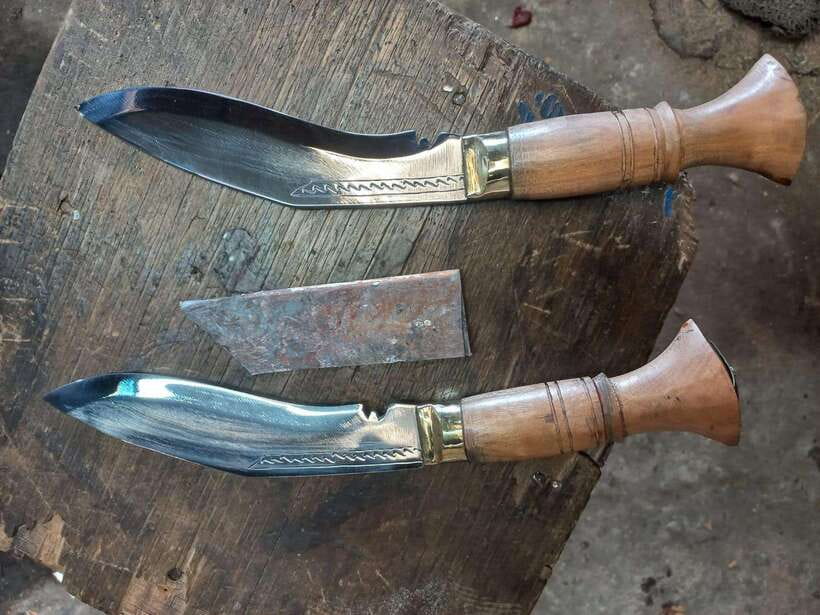
You also get a few cultural details that make the knife feel specific to Nepal. The blade is tempered steel, usually slightly curved and made to be exceedingly sharp. The handle is traditionally wood or buffalo horn, and there is typically a nick close to the handle that serves a purpose in use, while also carrying symbolism connected to the Hindu Trinity of Brahma, Vishnu, and Shiva.
The 6-inch blade: what you’re making in this session
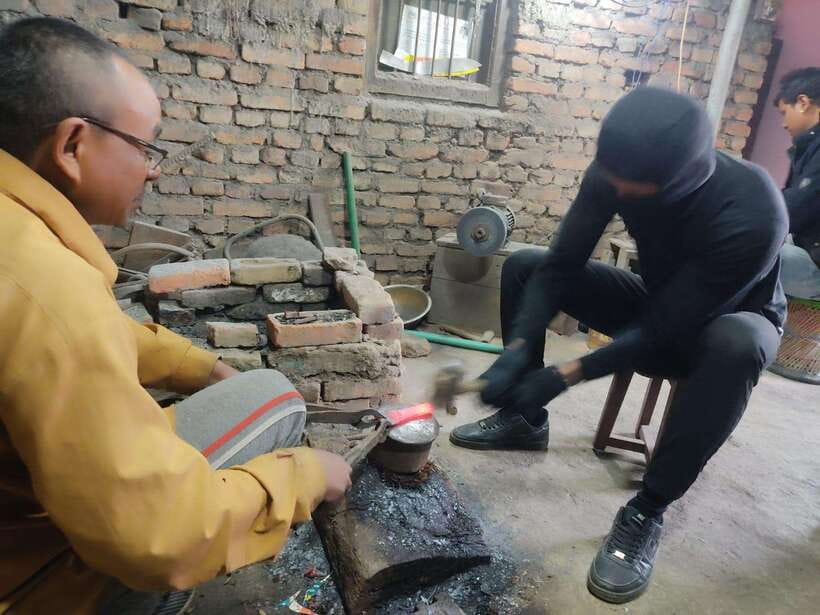
This workshop is designed around a small blade, about 6 inches long. That size keeps the session achievable in a half-day while still letting you experience the real shaping process.
It also helps you manage expectations. You are not learning everything a professional blacksmith learns over years. Instead, you are learning the key moves, and you’re doing the parts that match your skill level.
In plain terms, you’ll participate in taking a raw piece of iron and turning it into the blade shape you can recognize as a khukuri. The host then takes over the stages that require extra expertise and the most controlled heat and sparks.
Hammering and first grinding, your hands on real metal
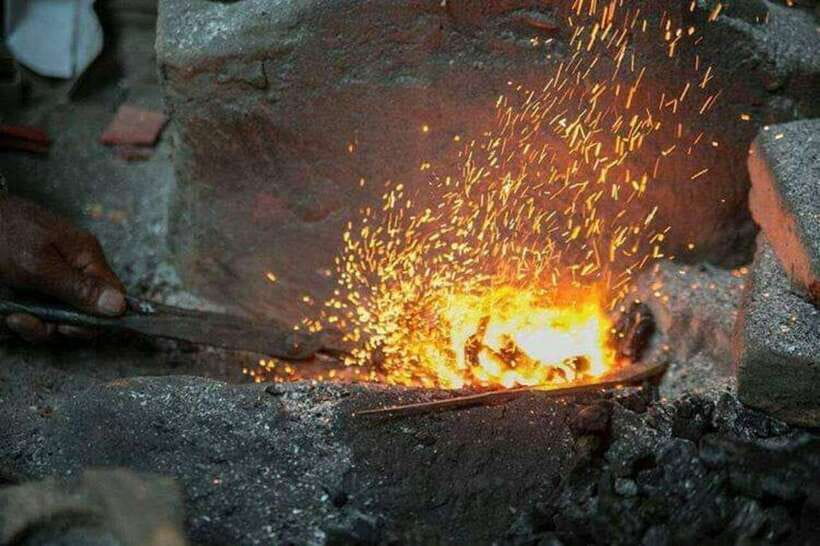
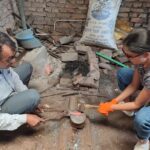
Here’s where the experience becomes genuinely memorable. You will work on the iron, hammering it into the early blade form. Even if you have never held a hammer for metalwork, the motion is learnable, and the transformation is fast enough to feel satisfying in real time.
You’ll also do the first grinding stage, which is the next shift from shape creation to refining the blade profile. You are not alone in this. Your guide helps you understand what you are aiming for, and the host positions you so the process stays safe and productive.
A helpful caution: the grinding that creates sparks and the later sharpening steps are handled by the host. You may see the sparks up close, but you are advised to stay clear during the spark-heavy grinding. Treat that instruction seriously. This is a safety-led workshop, not a free-for-all.
The parts you watch: how the knife becomes sharp
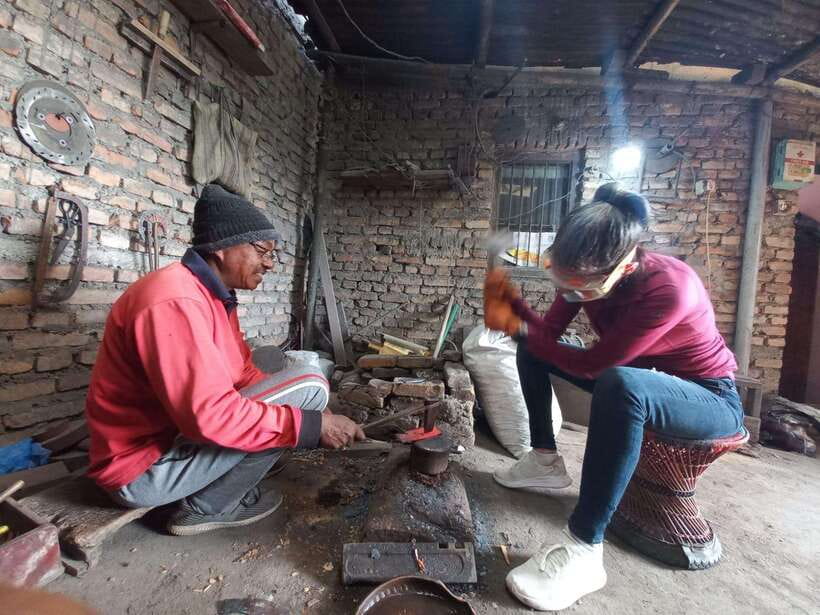
Even when you are not grinding the blade yourself, watching the professional stages is part of the value. You get to see how a maker with around four decades of experience shapes that unique curved khukuri profile and brings the edge to a level that would be hard to achieve safely as a beginner.
This is also where you can learn what separates durable khukuris from lighter, mass-produced blades. One detail that comes up in the experience is that the makers use hard steel that tends to be more durable than softer steel found in some market versions. If you’ve ever bought a knife that feels flimsy after a few weeks, this is the kind of difference you want to know exists before you spend.


Making the handle and knowing what you can upgrade
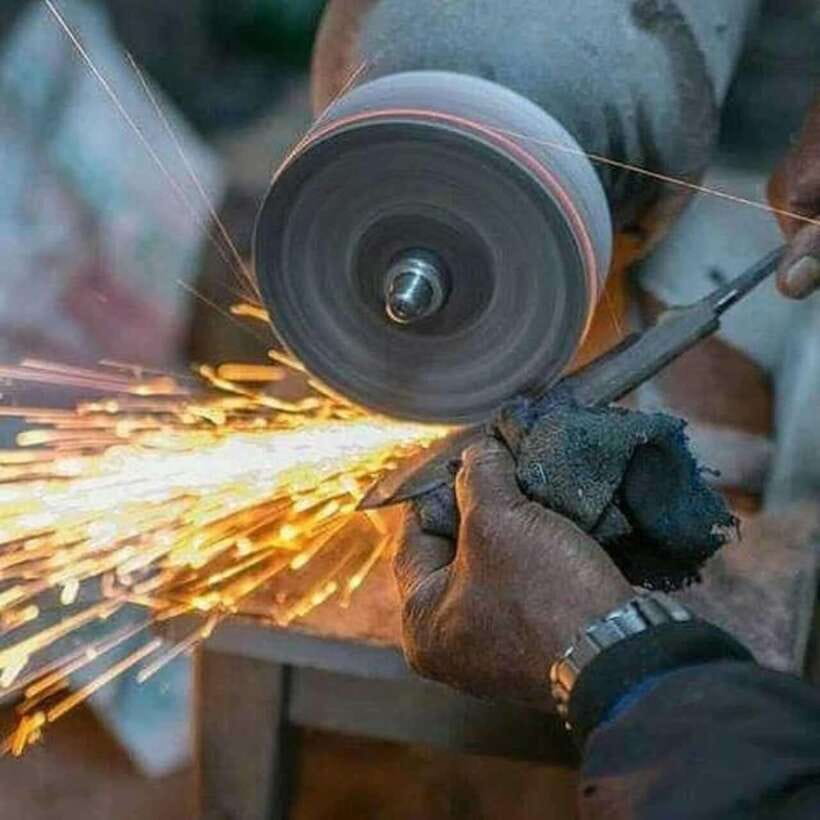
After the blade shaping comes the handle work. In this workshop, you are involved in creating the handle as part of the overall process, so the knife feels complete rather than like a “blade only” craft.
About materials, the khukuri handle is usually wood or buffalo horn. The workshop includes a knife cover, and you can sometimes choose upgrades. Specifically, a horn or bone cover can be made upon extra cost, so if you have your heart set on a certain style, ask ahead of time when that option is available.
If you care about bringing home a useful object, pay attention to the finish. A knife cover matters because it protects what you made and helps you store and transport it safely.
Pickup, transport, and how the day actually flows
This experience is built around convenience. Pickup is included from your hotel lobby, and you return to the hotel afterward. Transport has a strong rating, with 86% of reviewers giving it a perfect score, so you can reasonably expect the drive portion to be straightforward.
Timing-wise, plan for a concentrated half-day. With a 4-hour total duration, it’s not a “wander and snack” activity. It is a focused workshop where your time is split between learning, doing hammering, and watching the host handle the stages that need expert control.
Because it’s a small group, the flow is less about waiting your turn and more about getting guidance in real time. That also makes it easier to ask questions when something about the blade, the handle, or the cultural meaning clicks.
Price and value: is $73 worth it?
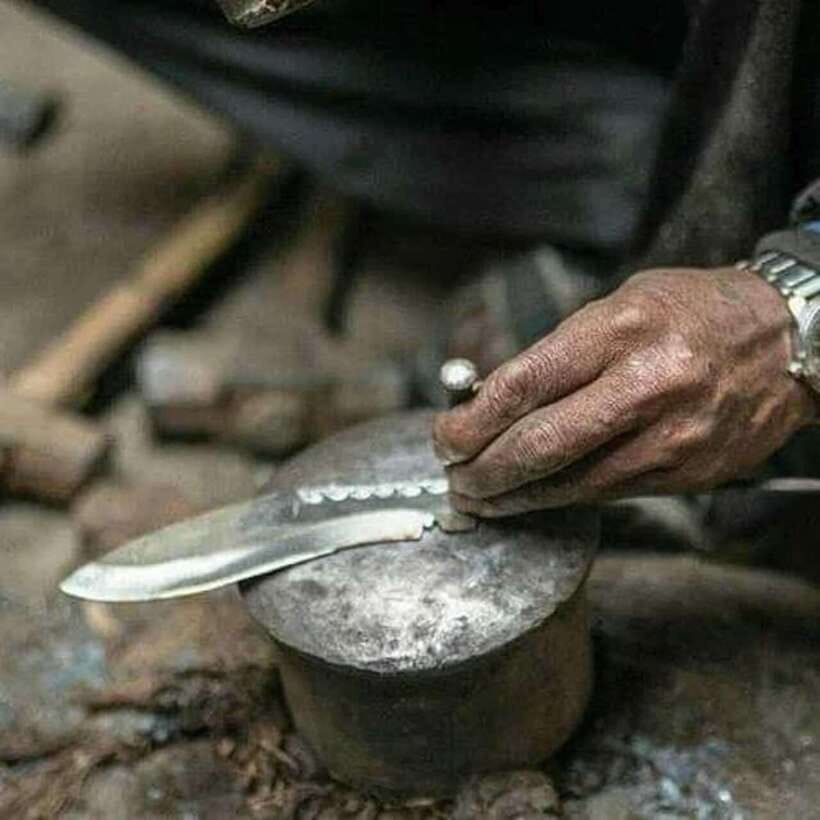
At $73 per person for a 4-hour, small-group workshop, the cost makes sense when you compare it to what you get: hands-on hammering, early grinding participation, a high-quality knife souvenir, and a guided explanation of what you are making.
You’re paying for more than a product. You’re paying for access to a craft that takes years to master and for a structure that keeps beginners safe. The host takes care of the spark-heavy and sharpening steps, which is exactly what you want if you’re not a professional.
Also factor in included extras that feel small until you travel: pickup and drop-off, tools, knife cover, tea or water, and snacks. Those details reduce friction, especially if you’d otherwise spend time figuring out transport and where to go.
The one “watch for” cost is the horn or bone cover option. If you want that upgrade, budget a little more. If you’re happy with what’s included, you can treat this as a straightforward purchase.
Who this khukuri workshop suits best
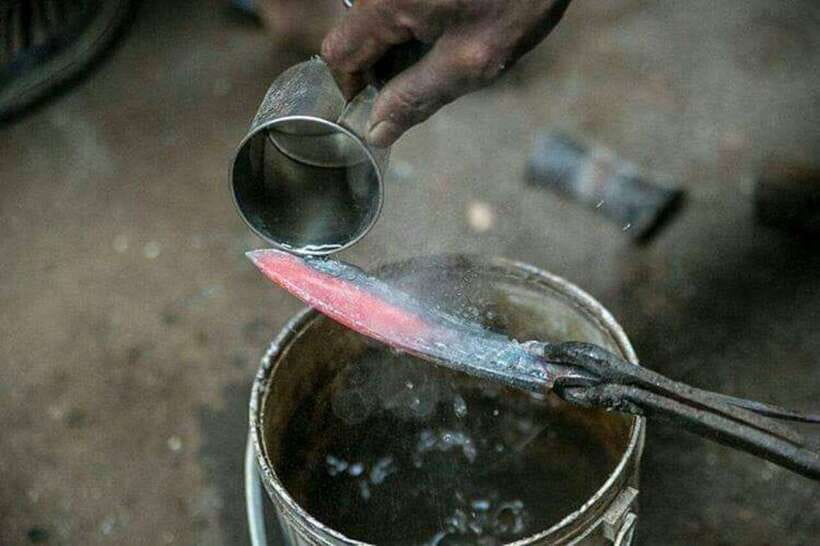
This is a great match if you like hands-on crafts and you care about cultural context, not just a quick photo stop. You’ll likely enjoy it if you want to understand why the khukuri’s shape, materials, and symbolism matter in Nepal.
It also fits well for travelers who appreciate small-group pacing. Limited to five participants, you get room for questions and you don’t spend the whole time waiting.
Who might reconsider: if you need a fully hands-on experience where you do every step, you should know the host does the grinding and sharpening for safety. And if you’re traveling with kids, the workshop is not suitable for children under 10.
Should you book this knife khukuri making workshop?
Yes, you should book it if you want a memorable Kathmandu-area craft experience with a real blacksmith, clear safety boundaries, and a takeaway that feels meaningful. The small group size, the English/Hindi guidance, and the fact that you participate in shaping a 6-inch khukuri are the big wins.
If you dislike the idea of watching part of the process, remember the tradeoff up front: the most dangerous steps are handled by the host. For most people, that is a feature, not a flaw, because you still get a hands-on knife-making experience and leave with a finished souvenir you can be proud of.
FAQ
How long is the Knife Khukuri Making Workshop?
The workshop lasts 4 hours.
How much does the workshop cost?
It costs $73 per person.
Is pickup and drop-off included?
Yes. You are picked up from your hotel lobby and dropped back after the workshop.
How small is the group?
It is a small group, limited to 5 participants.
What parts of the process will I do?
You will participate in hammering the iron and the first grinding. The host handles the remaining steps for safety.
Will I grind or sharpen the blade myself?
No. For safety reasons, the host does the grinding that creates sparks and the sharpening steps.
What blade size do I make?
You make a small khukuri blade around 6 inches.
What should I bring, and is there an age limit?
Bring long pants. The workshop is not suitable for children under 10 years old.
More Workshops & Classes in Kathmandu
More Tour Reviews in Kathmandu
Not for you? Here's more nearby things to do in Kathmandu we have reviewed


Workshops, compared.
 ★ 5.0Half day cooking class in Thamel kathmanduFrom $28607 reviews
 ★ 4.9Local Women-Led Nepali Cooking & Momo ClassFrom $4360 reviews
 ★ 5.0Local Lead Nepali Cooking & Momo-Making ClassFrom $5212 reviews
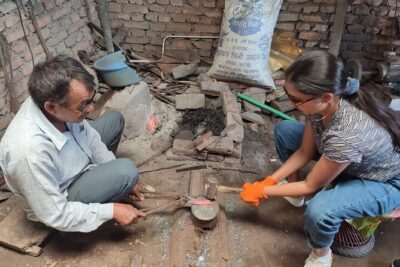 ★ 5.0Knife (Khukuri) Making Workshop- Forge of the GurkhasFrom $68143 reviews
Local Women Lead Nepali Cooking ClassFrom $30125 reviews
★ 5.0Knife (Khukuri) Making Workshop- Forge of the GurkhasFrom $68143 reviews
Local Women Lead Nepali Cooking ClassFrom $30125 reviews
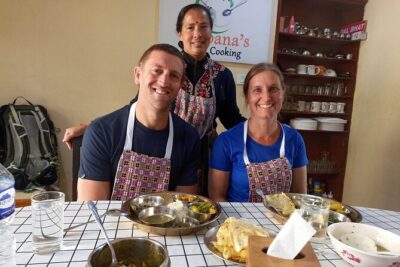 ★ 5.0The best Private Nepali Cooking Class in KathmanduFrom $2483 reviews
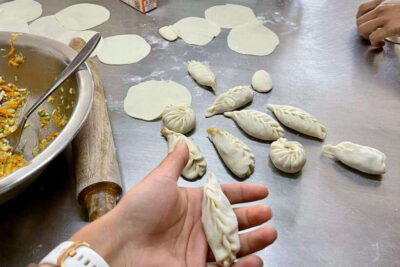 ★ 4.8Traditional Momo Making Class & PickupFrom $460 reviews
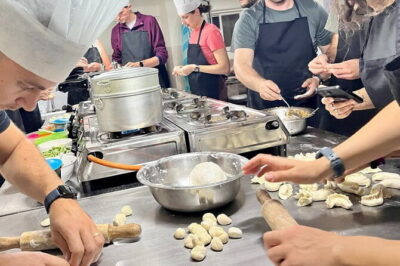 ★ 5.0Traditional Nepali Momo Making ClassesFrom $1853 reviews
Browse the lists this tour appears in