
REVIEW · KATHMANDU UNESCO HERITAGE TOURS
Kathmandu UNESCO World Heritage Tour
Kathmandu has a way of grabbing you fast. This UNESCO World Heritage tour strings together the city’s most important sites with multilingual guide-led storytelling and a visit pattern that makes sense for a first trip. I especially liked having expert narration at major squares and temples, and I liked the fact that you get time to actually look around, not just shuffle past. The one thing to watch is that admission tickets are not included, so you’ll want a little extra cash and time to buy entry if needed.
My favorite moments tend to be when the guide connects buildings and symbols to daily Nepal life, from royal courtyards to sacred riverside space. One recurring theme in the feedback is the guide quality. Deepak gets named again and again, and at least one reviewer had Rabina, a female guide, who shared strong Nepal-history context and also allowed time to enjoy each stop. Still, this is a day that covers a lot, so if you prefer slow travel, you may find the pace firm by the end.
You’ll start at Kaiser Library in central Kathmandu and return there, so the day feels contained. With a maximum group size of 100, it can still get busy at popular viewpoints, but the guide-led flow helps you keep your bearings. If you’re traveling without lunch included, plan ahead so you do not end up hungry and cranky mid-route.
Key takeaways before you go
- A tight UNESCO itinerary that hits Durbar Squares plus both Hindu and Buddhist landmarks in one 9-hour loop
- Multilingual male and female guides, with strong praise for Deepak and Rabina
- Admission tickets not included, so budget for entry fees at the sites
- Pickup offered and the tour starts at Kaiser Library, then returns you to the same meeting point
- No lunch or dinner included, so bring snacks or plan to buy food nearby
A one-day UNESCO loop through Kathmandu’s most meaningful places
If you only have one day in Kathmandu, this tour is built for that reality. You cover multiple UNESCO sites that show different sides of the city: former royal power in the Durbar Squares, centuries-old temple craft in Patan and Bhaktapur, and big spiritual “gravity” zones at Pashupatinath, Boudhanath, and Swayambhunath.
What makes this kind of itinerary work is the sequence. You do not bounce randomly. You move through sites that share themes, so the guide can keep tying symbols and architecture together. That makes your photos better, sure, but more importantly it makes the places feel connected rather than like a list.
The schedule is also guided around the idea that each stop deserves attention. Every stop is allotted about an hour, which is long enough to learn a few key facts, walk the main areas, and then have some breathing room to look independently. That balance matters. Too many “sightseeing tours” turn into a stopwatch game. Here, the structure gives you time to slow down at least once or twice.
You can also read our reviews of more historical tours in Kathmandu

Value and price: why $99 can make sense, and when it might not
At $99 per person for a roughly 9-hour guided UNESCO day, you are paying for more than transport. You are paying for interpretation. For Kathmandu’s UNESCO sites, the difference between seeing buildings and understanding them can be huge, and that is where guides tend to earn their keep.
This price also looks reasonable if you count the “hidden” costs most people forget:
- Guided time across multiple major sites
- A planned route that minimizes decision fatigue
- Pickup offered, which saves you from figuring out local transport on a time crunch
- Mobile ticket support, which reduces last-minute friction
Where value can flip is if you are the type who hates spending extra for admissions. Admission tickets are explicitly listed as not included at each stop, so your final cost will creep up. Also, lunch and dinner are not included. You may spend money on snacks or meals mid-day, and you should not rely on the tour to solve that problem.
Another practical point: air-conditioned vehicle is not included. If you are sensitive to heat, plan accordingly. The city can feel warm depending on season and time of day, and an un-air-conditioned ride can change the comfort level for your whole day.
Pickup, timing, and how the day actually feels
This tour runs for about 9 hours and starts and ends back at the meeting point. That is helpful because you do not have to worry about how you will get home. You meet at Kaiser Library on Kanti Path (Kathmandu 44600). It is also noted as near public transportation, so you have flexibility if you need to reach the meeting point on your own.
Pickup is offered, but the exact pickup timing and vehicle details are not spelled out in the information you were given. So treat pickup as a convenience, then be ready for the meeting point to be your reliable anchor.
Group size is capped at 100. That cap is not “small,” and at the most popular sites you might share space with a lot of people. The good news is that a structured guided route helps you keep your visit efficient. The not-so-fun part is that quiet moments can be harder if you go at peak times.
You also get a mobile ticket. That is a small thing, but it helps. You spend less time digging through paperwork and more time looking at what is in front of you.
Stop-by-stop: what you get at each UNESCO site
The tour visits seven major UNESCO-related stops. Each one brings a different vibe, and each one rewards you when you know what to look for.
Kathmandu Durbar Square: royal space, living city
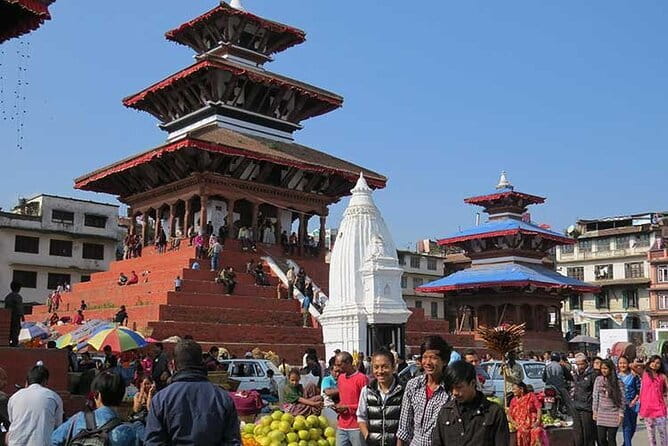
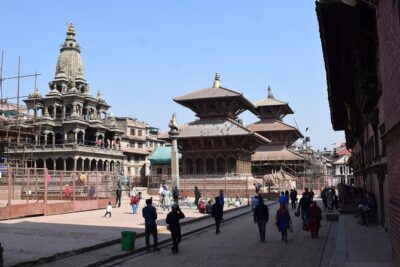
Kathmandu Durbar Square is your first UNESCO stop, and it sets the tone. Expect an ancient royal complex with stunning architecture, plus courtyards and structures that reflect Kathmandu’s historic power centers.
Plan to use your guide’s first-hour momentum well. Early in the day, your eyes are fresh, so this is a good time to ask yourself: what feels ceremonial, what feels administrative, and what feels decorative? Durbar Squares often mix all three, and the guide can help you spot the differences.
One practical drawback: because this is a central Kathmandu landmark, it can feel busy. If you want a calmer experience, take the first few minutes to orient yourself, then come back to key details rather than trying to absorb everything at once.

Patan Durbar Square: fine stonework and craftsmanship
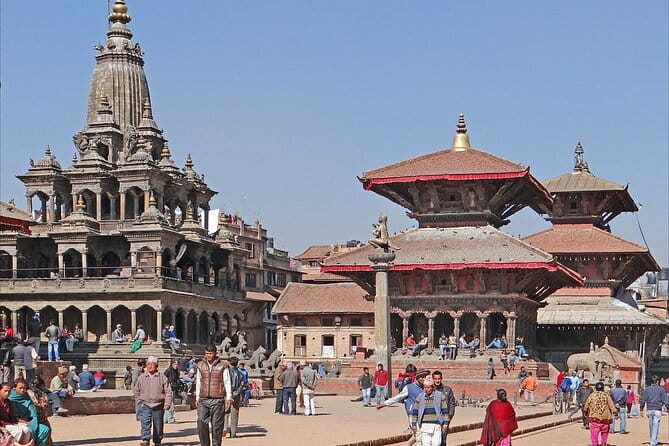
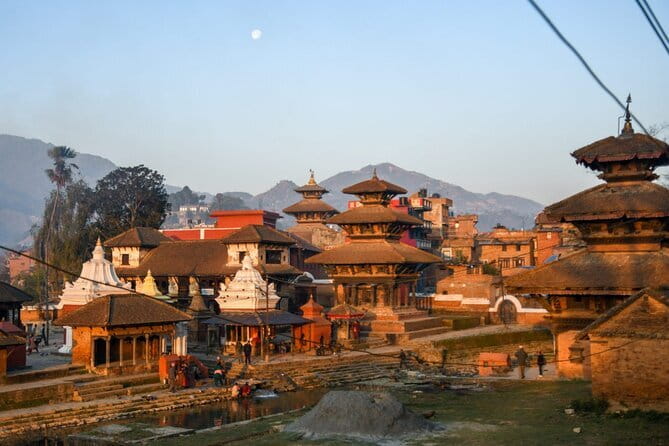
Patan Durbar Square shifts the focus from royal power to craftsmanship. This UNESCO site is described around temples, palaces, and courtyards, and it specifically calls out intricate artistry, including Mahabouddha Temple.
If you enjoy carving details and architectural textures, Patan is usually where you start seeing the “hands-on” side of the UNESCO story. Give yourself time to look at how forms repeat, how surfaces are finished, and how the space guides your movement.
The hour here is useful. Without a guide, Patan can turn into “pretty buildings.” With one, it becomes “this shape means something, and this placement matters.”
Bhaktapur Durbar Square: medieval charm you can walk through
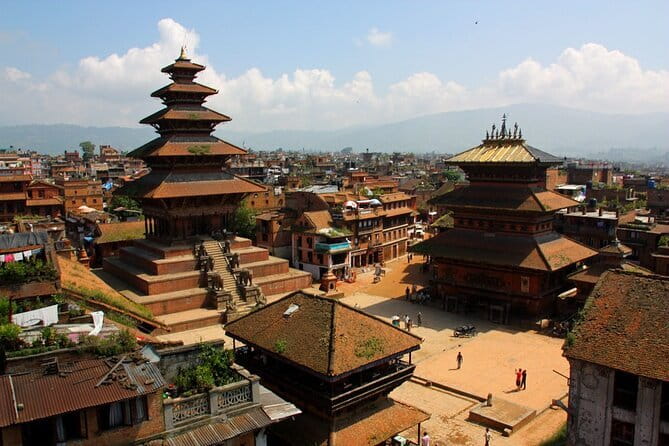
Bhaktapur Durbar Square is another UNESCO royal complex, but it often feels more like a medieval town square you can wander inside. The route highlights intricate artistry and statues, including Vatsala Temple.
If you like atmosphere, Bhaktapur tends to deliver. You can spend time noticing how people use the space and how the architecture frames daily movement. The drawback is simple: you are walking, and you may have to navigate uneven surfaces. Comfortable shoes matter more than you think.
Changu Narayan Temple: oldest temple energy and ancient architecture
Changunarayan Temple is described as Nepal’s oldest Hindu temple and a UNESCO World Heritage site. That age alone is worth the visit, but what makes it special here is the emphasis on ancient architecture and craftsmanship.
At this stop, slow down. Look for details rather than trying to “tour” the place like a museum. An hour is usually enough for a guided orientation and then a second pass on what caught your attention.
If you are expecting something like a massive monument, it may feel more intimate than you imagined. That is not a problem. It is the point.
Pashupatinath Temple: major Hindu spiritual site
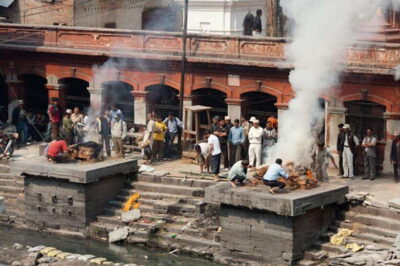
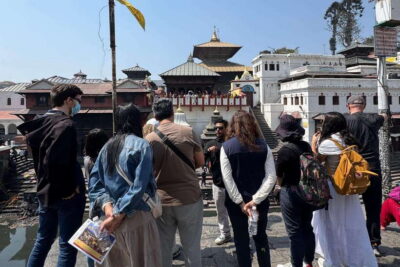
Pashupatinath Temple is one of Nepal’s most revered Hindu temples and a UNESCO World Heritage site. The tour description highlights the spiritual ambiance, including its historic structures and famous riverfront setting.
This is a site where you should adjust your behavior fast. You’ll be in an active sacred area, so be respectful with dress and conduct. You might find that the atmosphere changes moment to moment, because people come for worship, prayer, and observation.
A practical consideration: photography and movement rules can vary around temples and river areas. Since your information does not specify exact rules, I recommend you follow your guide’s instructions on the ground.
Boudhanath Stupa: Buddhist monument scale and daily devotion
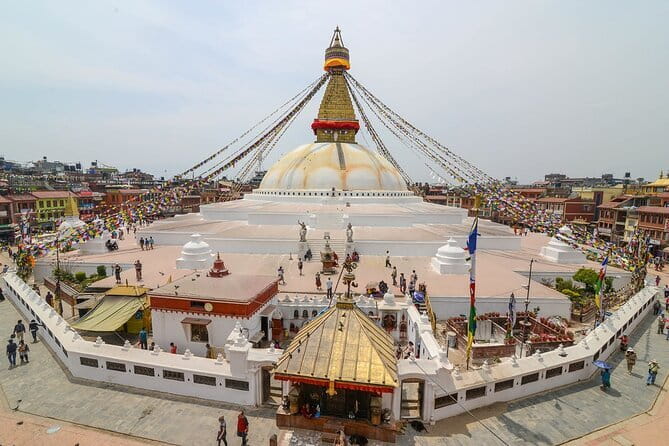
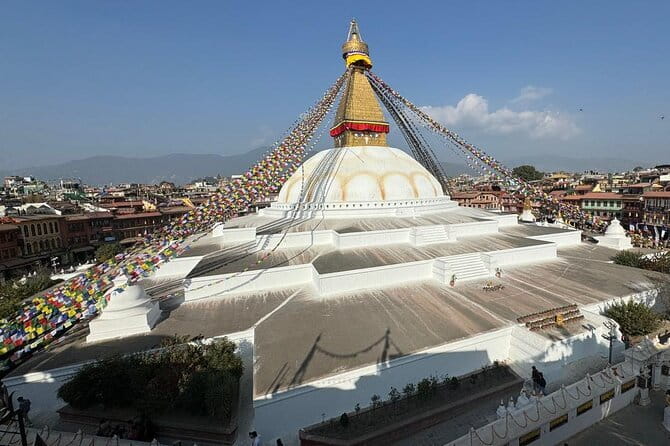
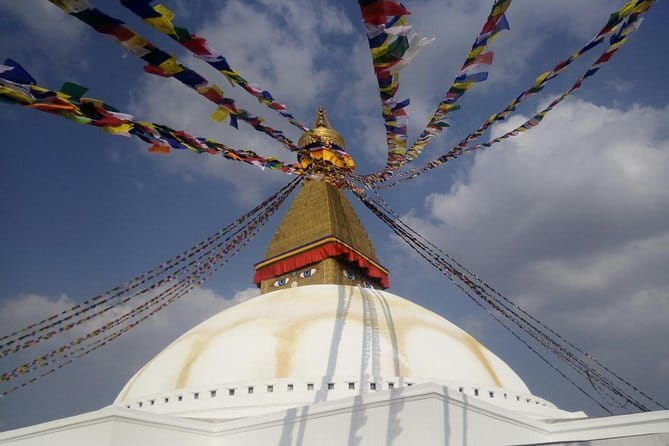
Boudhanath Stupa is described as one of Nepal’s most important Buddhist monuments. This stop is about the colossal stupa and the spiritual experience of walking around it.
If you like Buddhist iconography and the feeling of being part of a lived tradition, this is where your day can start clicking. The stupa is large enough that you can feel small in a good way. The guide’s explanation typically helps you understand what you are seeing beyond the obvious.
Expect crowds at the stupa area. Also expect that the “best angle” for photos might shift as people move. Use your guided time to learn the layout, then choose your view for a quieter minute.
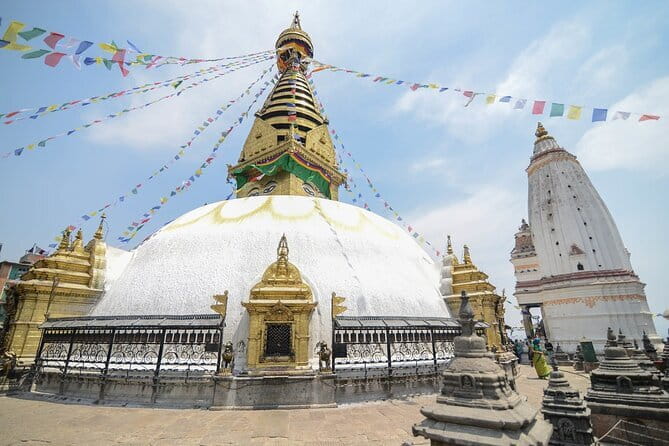
Swayambhunath: hilltop views and the city’s story from above
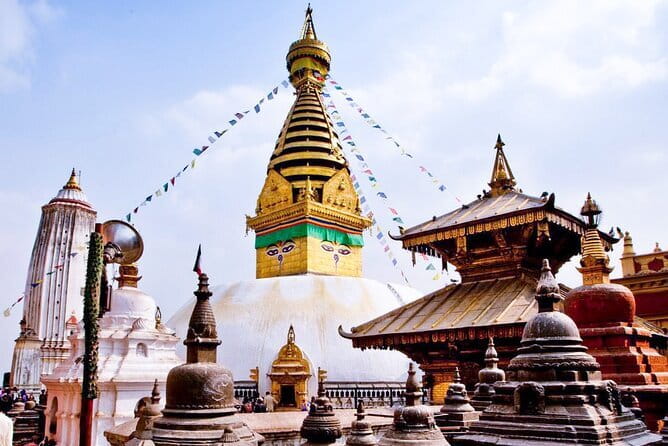
Swayambhunath Mahachaitya is perched atop a hill overlooking Kathmandu. That hilltop setting is not just scenic. It also helps you grasp Kathmandu’s geography. Once you can see the city from up high, the UNESCO locations start to make more sense in relation to each other.
Go into this stop expecting stairs and some uphill effort. The information you have does not list steps, but the hilltop location makes it a natural part of the visit.
This is a great finale. After you’ve absorbed Durbar Squares and temples, the panoramic view gives you context. You end with a sense of place rather than a random set of stops.
Guide quality is the secret ingredient here
The strongest praise in the provided feedback focuses on one thing: the guide makes the day feel meaningful.
Deepak gets repeatedly credited for passion, insight, and a grounded presence. The comments also highlight that he provides lots of info and ensures there is time at each location. In other words, you are not just herded around. You are guided.
There is also specific praise for Rabina, a female guide, including that she is knowledgeable in Nepal history and allows free time at locations. That combination matters: history context plus breathing room.
What should you do if you want the best experience? Ask simple questions when the guide is speaking. Instead of passively listening, ask what to look for in the carvings, what a particular structure represents, or how the Hindu and Buddhist sites connect through Nepal’s wider cultural story. The guides seem to respond well to that kind of engagement.
And if you are not sure you are understanding everything, say so. A multilingual guide can usually adjust their pace and wording.
Admissions not included: plan your budget like a pro
Every listed stop notes admission tickets are not included. That is the big “fine print” impact on total cost.
Here is how I suggest you handle it:
- Assume you will pay some entry fees across the day
- Carry small bills and be ready to buy tickets on-site
- Keep a bit of extra time buffer in your head, even if the tour schedule is structured
Also remember that lunch and dinner are not included. So your $99 is the guided portion. Your day-to-day comfort may require snacks or a meal near one of the stops.
If you have dietary needs, plan early. This tour does not promise any food coordination.
Transportation comfort: what you should and should not expect
An air-conditioned vehicle is not included. That means your ride may be in a standard van or car without climate control. This matters most in hot or humid conditions, or if you get motion-sick.
Good news: the day is guided on foot through the sites, so even a non-air-conditioned ride will not be your whole experience. Still, comfort affects mood, and mood affects how much you enjoy looking at carvings, statues, and temple details.
Who this Kathmandu UNESCO tour suits best
This tour fits best if you want:
- A guided day that covers multiple UNESCO sites without having to plan every turn
- History and cultural context that makes architecture easier to understand
- A structure that returns you to the starting point at the end of the day
It may be less ideal if:
- You dislike structured itineraries and prefer to wander slowly without a schedule
- You do not want to pay extra for admission tickets
- You get grumpy without built-in meals
If you are visiting Kathmandu for the first time and want a high-value “greatest hits plus meaning” day, this works.
Should you book it?
I think you should book this tour if you want a smart, guided UNESCO day with time to look and a guide who knows how to explain Nepal. The $99 price can be strong value because you are buying interpretation across several major sites, and the meeting point and return make logistics simpler.
Hold off or be cautious if admissions and food costs would stress your budget. Also, if you want total quiet and slow pacing, a 9-hour, multi-stop day with up to 100 people can feel a bit full.
If you book, go in with comfortable shoes, a plan for snacks, and the mindset that one good guided hour can turn a building into a story.
FAQ
How long is the Kathmandu UNESCO World Heritage Tour?
It runs for approximately 9 hours.
What is the price per person?
The price is $99.00 per person.
Do I need to buy admission tickets?
Admission tickets are not included at the listed stops.
Is pickup included, and where does the tour start?
Pickup is offered. The tour starts at Kaiser Library on Kanti Path, Kathmandu, and ends back at the meeting point.
Is lunch or dinner included?
No, lunch and dinner are not included.
Does the tour include a guide?
Yes. The tour includes a multilingual male and female guide.
What is the maximum group size?
The tour has a maximum of 100 travelers.
What is the cancellation policy?
Free cancellation is available up to 24 hours in advance for a full refund. If you cancel less than 24 hours before the start time, the amount paid is not refunded.
More Historical Tours in Kathmandu
More Tours in Kathmandu

More Tour Reviews in Kathmandu
Not for you? Here's more nearby things to do in Kathmandu we have reviewed


Kathmandu UNESCO Heritage Tours, compared.
 ★ 5.0Private Kathmandu Sightseeing Tour | UNESCO World Heritage sitesFrom $17756 reviews
 ★ 5.0Full Day 7 UNESCO Tour with Lunch – Private/GroupFrom $10415 reviews
 ★ 5.0Full Day Top 4 UNESCO Tour with Lunch – Private/GroupFrom $10269 reviews
 ★ 5.0UNESCO Seven World Heritage Tour in KathmanduFrom $180253 reviews
★ 4.9Full-Day 7 UNESCO Tour with Lunch – Private/GroupFrom $5247 reviews
★ 5.0UNESCO Seven World Heritage Tour in KathmanduFrom $180253 reviews
★ 4.9Full-Day 7 UNESCO Tour with Lunch – Private/GroupFrom $5247 reviews
 ★ 4.97 UNESCO Sites Tour in 1 Day (Private Tour)From $4204 reviews
 ★ 4.9Top 4 UNESCO Tour with Lunch – Private/GroupFrom $5181 reviews
 ★ 5.0Kathmandu Private Sightseeing Tour | UNESCO World Heritage SitesFrom $35109 reviews
Browse the lists this tour appears in