

REVIEW · KATHMANDU DURBAR SQUARE & KUMARI TOURS
Kathmandu Durbar Square – Private/Small Group
A three-hour walk, and suddenly Kathmandu makes sense. This small-group Durbar Square tour mixes Hindu and Buddhist sights with Newar culture, plus a chance to understand why the Kumari still matters. You start in Thamel and move through the old royal core at a pace that lets the stories land, not just the photos.
I like two things right away: the guide, and the focus on what you actually see on the ground. Tours are capped at max 5 people, and guides like Santosh and Sandip are praised for being punctual, friendly, and strong on religion, local customs, and the street-level stories that connect the monuments. The only real consideration is timing and expectations at the Kumari window, since you may have to wait a bit for a glimpse.
Key highlights you should care about
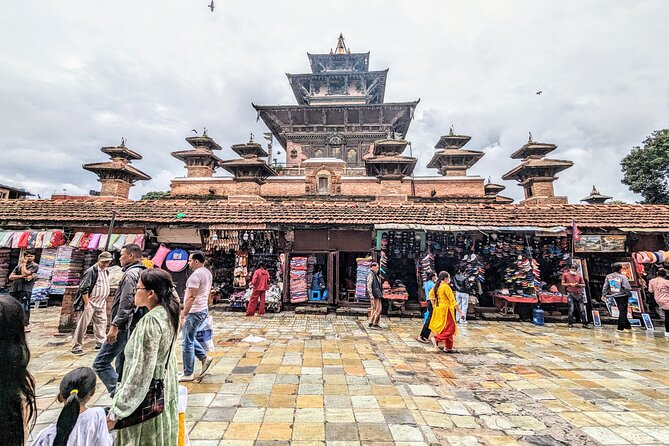
- Max 5 people means questions get answered and the group does not feel herded
- Stops that explain beliefs, like the Toothache Tree and the Seto Machindranath rain connection
- Kumari window moment at Kathmandu Durbar Square, a living tradition tied to power and purity
- Hanuman Dhoka context, so the palace complex feels like more than old stones
- Meeting-point clarity, with guides known to share advance instructions to help you find them fast
Kathmandu Durbar Square is more than a photo stop
Kathmandu Durbar Square can look like a cluster of temples from the outside, but the whole place works like a clock. Each doorway, courtyard, and carved element points to a different layer of Nepal’s long power shifts and everyday spiritual life. A guided walk is what turns the square from a sightseeing list into a place with logic.
What I’d call “value” here is how the tour strings the sites together. You do not just hop from one landmark to another. You get the meaning behind what locals touch, pray to, and treat as important. That matters in Kathmandu, where it is easy to wander past a ritual without realizing what you just saw.
Also, the group size helps. With a small group, you can slow down when something catches your eye, and you can ask practical questions about customs without the rest of the crowd moving on.
You can also read our reviews of more private tours in Kathmandu
Thamel to Durbar Square in about 3 hours, with a human pace
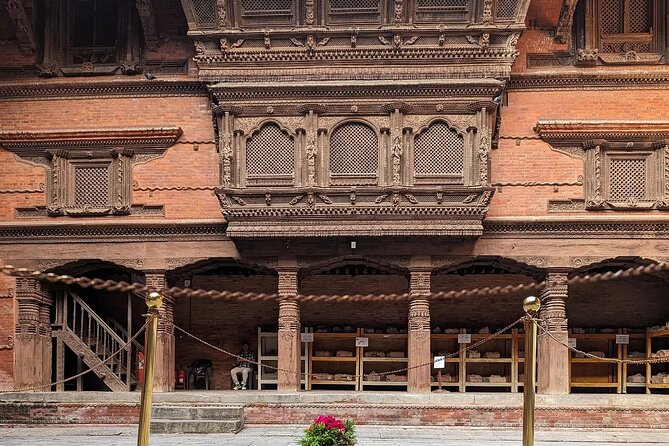
You meet near Pumpernickel Bakery on Paryatan Marg, then head out from Thamel toward the UNESCO World Heritage area. The whole tour runs about 3 hours, and the walking time fits well if it is your first full day in Kathmandu or if you want something more meaningful than a checklist.
A small group also changes how you experience street life. You are not trying to follow a guide through crowds while holding a phone at arm’s length. Instead, you can actually notice small details: how shop fronts line up with temple entrances, how people shift from walking to praying, and how the alleyways around the square hold their own rhythm.
If you are short on time, this duration is a sweet spot. You get multiple stops, but you still have energy left for dinner. If you are visiting for the first time, you will likely feel like you got your bearings fast.
Wasya Dyaa (Toothache Tree): the odd belief that feels oddly real
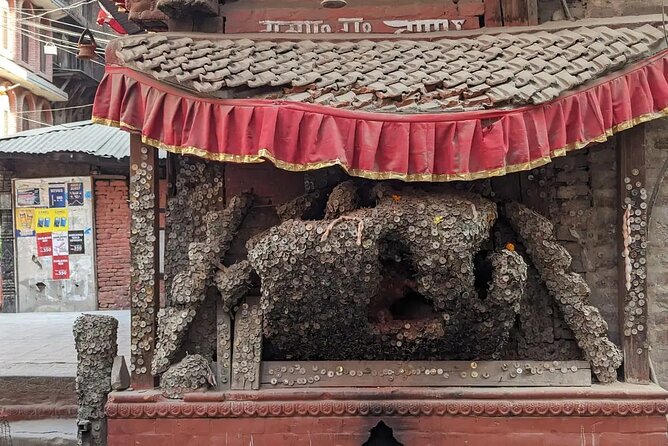
The first stop is Wasya Dyaa, also known as Vaisha Devi in some references, a wooden idol near Thahiti Tole believed to cure toothaches. The tradition goes with a very physical ritual: people hammer a coin into the tree’s wood, as a way to ask for relief.
Even if you are not the superstitious type, I find this stop fascinating because it shows how religion and everyday problems mix in Nepal. This is not a distant concept. It is a coping tool people use, and it has shaped the look of the object over time.
Two practical tips help here:
- Look closely at how the ritual is performed. The motion matters, and watching once makes the story click later.
- Do not rush your visit. Even a short interaction with the belief system can make you calmer as you walk into the busier Durbar Square area.
The trade-off is that this stop can feel unusual if you expected only royal-palace drama. If you want strictly grand architecture, you might find this part more quirky than cinematic.
Seto Machindranath Temple: a rain-bringer shared by communities
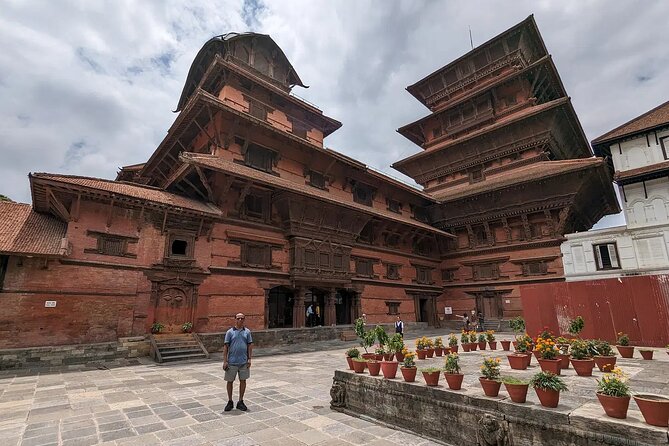
Next you visit Seto Machindranath Temple, southwest of Asan Tole at the junction of Kel Tole. This temple is a real example of how faith works in overlapping ways. Buddhists connect the figure with Avalokiteshvara, while Hindus worship him as a rain-bringer incarnation.
That dual identity is the point. Kathmandu is full of sacred sites where labels change depending on who is telling the story. A guide helps you understand why the same spiritual figure can live in multiple belief systems without friction.
I also like that the tour does not treat this like a quick photo wall. You get time to notice temple features and you get the reason people care. When rain is a matter of survival, a rain-bringer is not a poetic idea. It is a serious promise.
Potential drawback: like many temple visits, you should expect a respectful atmosphere. Dress and behavior matter, and you may be asked to keep your pace and sound level down.
Kathmandu Durbar Square and the Kumari window: patience has a payoff
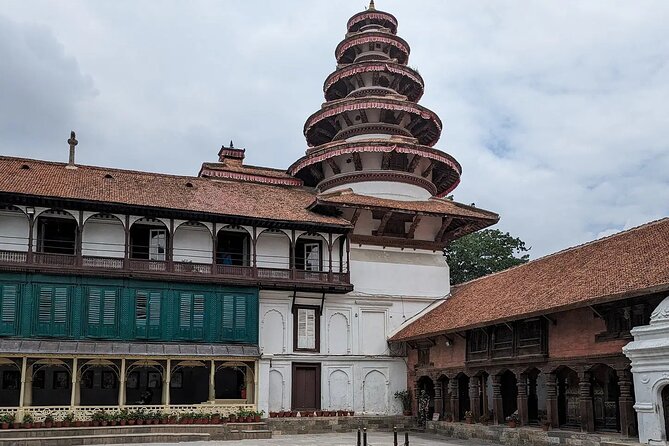
Now you reach the heart of it all, Kathmandu Durbar Square, where the Kumari system anchors the spiritual side of the royal core. The Kumari, often called the Living Goddess, resides in the Kumari Ghar. Her presence is shown from her sacred window, and the tour gives you time to experience the moment when that tradition becomes visible to outsiders.
Here is the honest part: a glimpse depends on timing. In one tour experience, the group waited about 30 minutes but still did not catch the window moment. That is not a failure on your guide’s part, it is how the living system works.
So what should you do?
- Arrive mentally ready to wait a little. Bring patience, not just a camera.
- Keep your expectations flexible. Even if the window is closed, you still get deep context on why the Kumari tradition is about power, purity, and community.
If you love cultural rituals, this stop is a highlight. If you only want monuments, you may miss why locals treat this as the emotional center of the square.

Hanuman Dhoka Palace: where dynasties and legends meet
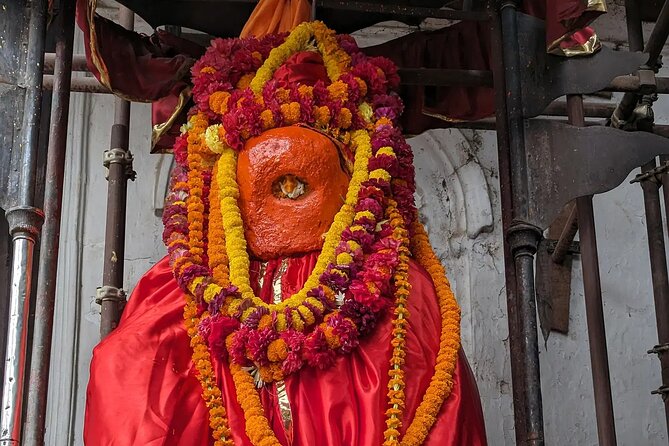
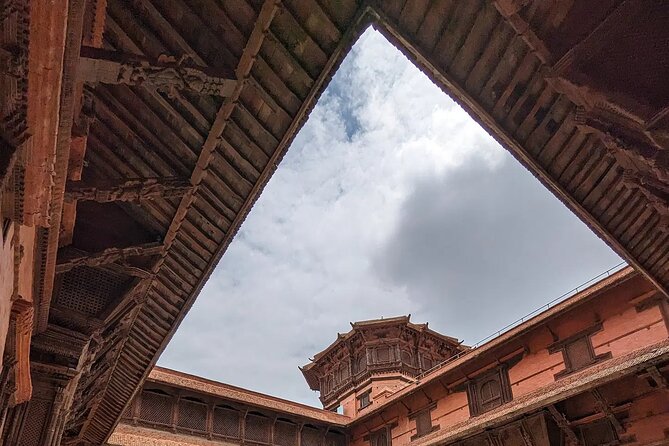
After the Kumari moment, the tour continues to Hanuman Dhoka, a palace complex in the middle of Kathmandu Durbar Square. It served as the royal seat of the Malla kings and later the Shah dynasty. The name ties to the Hanuman connection near the area, and the palace grounds reflect that blend of royal administration and spiritual meaning.
This is where a guide helps you read the space. From street level, you might see courtyards and carved stone and think it is just old grandeur. With context, you start noticing how power was displayed and how religion and royalty were linked.
Also, Hanuman Dhoka feels different from the temple-only stops earlier on the walk. Temples ask you to look upward. The palace complex asks you to think about structure and control, about how a city governs itself.
Practical note: you will likely do a fair amount of standing and slow walking around uneven surfaces. Wear shoes that handle stone steps without drama.
Price and tickets: the real budget for this 3-hour tour
The tour is listed at $15 per person and includes a professional guide. That base price looks like a good deal for a guided cultural circuit, especially because the group is limited to 5 people and you get meaningful time at multiple stops.
But you should budget a bit more because:
- All fees and taxes are $9 per person and are not included in the base price.
- Admission tickets for the stops are not included, so you may pay entry fees at one or more of the site areas during the walk.
If you like to travel with clear totals, plan on adding the taxes/fees and allowing extra money for any admission that applies. I prefer doing that math up front, so the final bill does not catch me off guard mid-tour.
One more detail that matters: the tour uses a mobile ticket. That usually means less paper chaos, and it fits well with modern check-in styles.
What makes the guides here worth trusting
Small-group tourism lives or dies by the guide. In this case, that theme shows up again and again in how people describe their experience.
Guides such as Santosh are noted for being punctual and for strong storytelling around religion, customs, and local street history. Another guide, Sandip, is praised for patience and for showing visitors places off the main track, including narrow alleyways around Durbar Square. There is also mention of Shreeya being upbeat, outgoing, and connecting culture and history in an engaging way.
Two things I recommend you look for in a guide at sites like this:
- Story control: you should get the meaning in manageable chunks, not a lecture.
- Timing flexibility: if the Kumari window requires waiting, a good guide keeps the group calm and uses the time for context.
If you get a guide who does those well, the tour feels worth every dollar.
Who should book this, and who should skip it
This tour fits you if:
- You want a short, guided introduction to Kathmandu’s spiritual and historical center
- You like asking questions and hearing street-level stories
- You enjoy a mix of temples and cultural belief practices, not only “big monument” sightseeing
- You prefer small groups, not a crowded stampede around Durbar Square
You might skip it if:
- You want a long, museum-style experience. This is about walking and seeing key sites, not deep academic study.
- You hate the idea of waiting for the Kumari window. Waiting is part of the reality here, even if your guide does everything right.
- You are only interested in one type of site, like palaces only or temples only. This tour deliberately blends multiple traditions.
Should you book Kathmandu Durbar Square, private or small group?
Yes, I think you should book this if you want Kathmandu to feel understandable in your first visit to the city’s old core. The best reason is the structure: a small-group walk that connects Wasya Dyaa, Seto Machindranath, the Kumari window, and Hanuman Dhoka into one coherent story.
Before you go, do two things for best results:
- Budget for extra fees and possible admissions, since those are not included in the base price.
- Keep Kumari expectations flexible. If you see the window, great. If you do not, the guide’s context still gives you something solid.
If you want a guided taste of Kathmandu’s living traditions without spending a whole day, this one is a strong match.
FAQ
How long is the Kathmandu Durbar Square private/small group tour?
It runs about 3 hours.
What is the group size limit?
The tour has a maximum of 5 travelers.
What does the $15 per person price include?
It includes a professional guide.
What costs are not included?
All fees and taxes of $9 per person are not included, and admission tickets are not included for the stops.
Where does the tour start?
The meeting point is Pumpernickel Bakery on Paryatan Marg, Kathmandu.
Where does the tour end?
It ends back at the meeting point.
Do I get a mobile ticket?
Yes, the tour uses a mobile ticket.
What is the cancellation policy?
You can cancel for a full refund if you cancel at least 24 hours before the experience starts. If you cancel less than 24 hours before, the amount you paid will not be refunded.
More Private Tours in Kathmandu
More Tour Reviews in Kathmandu
Not for you? Here's more nearby things to do in Kathmandu we have reviewed


Kathmandu Durbar Square & Kumari Tours, compared.
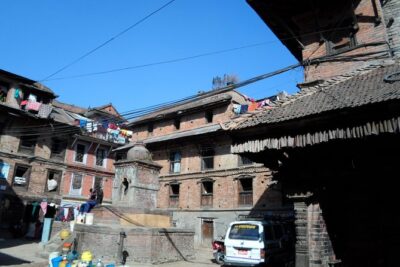 ★ 5.0Bhaktapur & Patan Durbar Square Day ToursFrom $50122 reviews
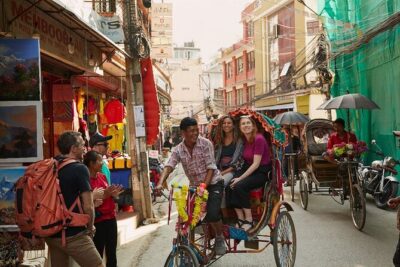 ★ 5.0Kathmandu Sunset Tour by Rickshaw Including Durbar Square VisitFrom $5073 reviews
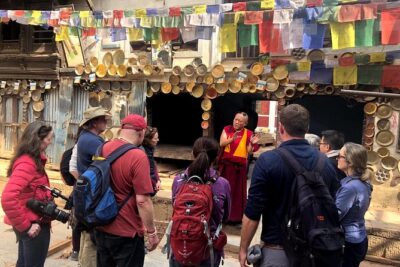 ★ 5.0Old Kathmandu Walking Tour, Historic World Heritage Durbar SquareFrom $2822 reviews
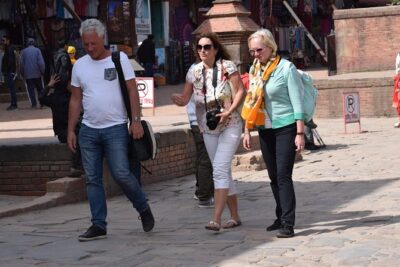 ★ 4.5City tour of Bhaktapur and Patan Durbar SquareFrom $11020 reviews
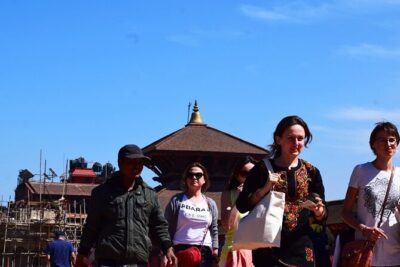 ★ 5.0Bhaktapur Old City and Durbar Square Half-Day TourFrom $6515 reviews
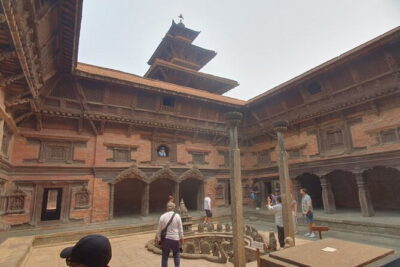 ★ 5.0Kathmandu and Patan Heritage and Living Goddess Experience TourFrom $5012 reviews
 ★ 5.0Nagarkot Sunrise & Bhaktapur Durbar Square UNESCO Heritage TourFrom $5512 reviews
 ★ 5.0Patan & Bhaktapur Durbar Square Tour with Lunch – Private/GroupFrom $511 reviews
Browse the lists this tour appears in