

REVIEW · HELICOPTER TOURS
Everest Base Camp Trek with Helicopter Return – 10 Days
Kalapathar by helicopter changes the whole math, turning a grueling backtrack into a helicopter return and a faster finish in Everest Base Camp country. This is a 10-day small-group trek that keeps the big logistics handled, from Kathmandu pickup to pre-booked flights to Lukla and steady tea house nights along the way.
I really like two things here: gear and support are built in, including a down jacket, sleeping bag, walking pole, and porter help at a 1 porter for 2 trekkers ratio. I also like that meals and lodging during the trek are included, so you can focus on walking and acclimatizing instead of budgeting day by day.
One consideration: this trip needs good weather, and flights and the helicopter return can be affected when skies are rough. Also, the schedule is fast enough to feel serious if you are not already comfortable with altitude hiking.
Key Points You’ll Care About

- Helicopter back from the Kalapathar area means you skip the long slog back toward Lukla.
- A tight 10-day window with built-in acclimatization stops at Namche Bazaar and Dingboche.
- Tea house accommodation plus breakfast, lunch, and dinner on trek days keeps the rhythm simple.
- Included permits (TIMS and Everest Trek permit), plus a guide and porters, reduces planning stress.
- Down jacket, sleeping bag, and walking pole provided, so you can pack lighter.
- Maximum 15 people keeps the trip feeling more personal, not like a cattle chute.
Helicopter Return Makes This Everest Trek Feel Smarter

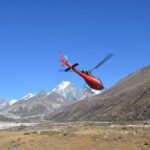
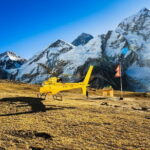
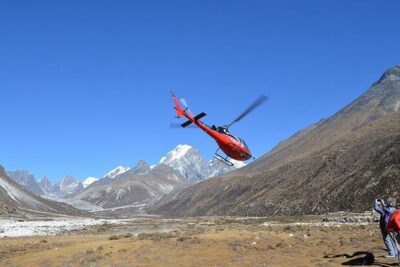
The headline is the helicopter ride back to Kathmandu, positioned right after your second big viewpoint push at Kalapathar. Normally, an Everest Base Camp itinerary asks you to hike back the same way, day after day. Here, the endgame is different. After seeing the Khumbu icefall zone from Kala Patthar, you transition into a group helicopter flight back down to Kathmandu rather than retracing your steps uphill.
That change matters for two reasons. First, it saves your legs at the point when fatigue can stack up. Second, it gives you a more relaxed finale after Everest Base Camp itself, where the day often runs long and cold. You still do the big walking days, but you do not pay for them twice.
There is also a psychological bonus. When you know the trek is a “go forward, then lift out” plan, you tend to pace yourself better. You are not wondering how many more hours you will spend climbing down and then climbing up again. You can also pack your energy for the Kalapathar viewpoint day, which is one of the best payoff moments on the whole trek.
You can also read our reviews of more hiking tours in Kathmandu
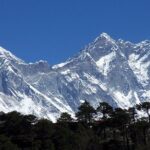
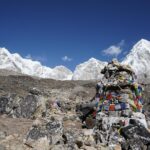
Day 1 in Kathmandu: Easy Start, Real Time to Adjust
Day 1 keeps things light. You arrive in Kathmandu, meet the group, then transfer to your hotel. The rest of the day is yours to rest or explore at your own pace.
For me, that is a practical choice. Kathmandu is not just a waiting room for the mountains. It is useful time to get oriented, handle Nepal entry paperwork, and check that your essentials are where you want them. Even if you feel fine, you will appreciate an unhurried start before you fly to Lukla and start climbing.
Also, because airport transfers are included via private vehicle, you are not scrambling to figure out transport right after a flight. Meeting is set early the next morning, so that first evening helps you sleep well.
Lukla and the First Trail: Phakding to Namche Bazaar
The trek begins with a flight to Lukla, then your walking days open up fast. From Lukla, the route goes to Phakding, with green views and a steady start along the way. A big early win of this itinerary is that it does not waste your first hours on complex navigation. Your guide handles the route, the pacing, and the logistics.
From there, you keep building altitude toward Namche Bazaar, trekking through a pine forest along the Dudh Koshi River. You cross the Hillary suspension bridge, a classic moment on this side of Nepal that helps make the region feel real, not just an idea on a map. Then it is onward to Namche, the Sherpa capital and the main gateway town for the Everest region.
Once you reach Namche, you get a taste of Sherpa culture beyond the trail. The plan includes time at the Sherpa Museum, where you can learn about traditions and life in the Khumbu. It is not a “museum day” that replaces hiking. It is a useful context stop that makes the landscape and the villages feel more connected to the people who live there.
One practical note: Namche often feels like a turning point mentally. You have enough altitude now that every movement feels slower. That is why the following day is built for acclimatization, and why you should treat Namche like a place to breathe, not just a place to pass through.
Acclimatization at Namche: The Everest View Hotel Stop

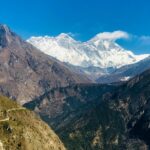
Day 4 is your acclimatization day at Namche Bazaar. You hike up to Everest View Hotel for wide views of Mt. Everest. The route also passes through Syangboche, so you get that “high town” feel without pushing too hard.
This is smart pacing. In a 10-day itinerary, acclimatization is not optional. It is the difference between cruising and feeling punished. The point of this stop is not to chase distance. It is to climb a bit, see the mountains when the air allows, and let your body adapt while you still have time to recover.
If the weather is clear, the Everest View Hotel area tends to deliver those showstopper moments people remember for years. If it is cloudy, you can still treat the day as conditioning for the next climbs. Either way, the structure helps you keep momentum without overdoing it.
Tengboche and Dingboche: Tea House Nights in Sherpa Country

As you move from Namche toward the monasteries and higher villages, the itinerary feeds you gradual altitude gains with enough “in-between” stops to keep the trail manageable.
Day 5 heads toward Tengboche, a key stop with the largest monastery in the Khumbu region. Along the way, you pass areas like Kayangjuma and Sanasa and cross the Dudh Koshi bridge as you work your way upward. It can include a rougher climb section, so treat this day as a steady grind rather than a sprint.
Tengboche is worth it for two reasons. One, it is a major cultural landmark, so you get spiritual and community life, not only summit goals. Two, monastery areas often offer open sightlines when the skies cooperate, so the day can turn into a scenery-and-culture blend.
Day 6 puts you at Dingboche, another acclimatization-centered village stop. Dingboche is known in this region as a place where trekkers pause, rest, and adjust to thinner air. The route goes through villages like Pangboche (at around 3900 meters) and includes crossings such as the Imja Khola, plus chortens and mani walls along the way.
This is the part of the trek where you start feeling the altitude more. But because the plan includes acclimatization structure, you are not “toughing it out” blindly. You are working with the itinerary’s rhythm.
A few more Kathmandu tours and experiences worth a look

Toward Chola and Dughla: Big Views, Longer Feel

Day 7 pushes you higher again, climbing toward Dughla through the Khumbu Khola Valley. The trek passes along Dusa and Phulung Karpo, then reaches Chola Lake before you continue with an ascent toward Dughla.
This day often feels longer than the time suggests, mainly because you are higher now. Even when the trail is not steep in every section, the air makes everything take more effort. The payoff is that you are moving into prime high-altitude territory, and the views start to feel more dramatic as you look across the ice-and-ridge world of the Khumbu Glacier zone.
The route also references Lobuche peak closer to the glacier area. Even if you are not “summiting” anything, that mention signals that you are entering the zone where the Everest and Khumbu story becomes physical, ice-cold, and very real. You are getting closer to the base camp staging area, even before you reach Gorakshep and Everest Base Camp itself.
Everest Base Camp and the Icefall Zone: The Moment You Actually Came For

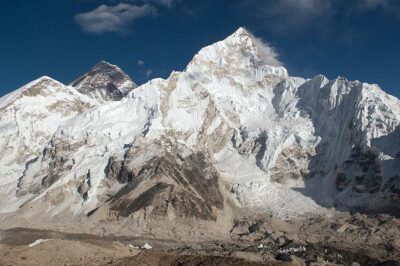
Day 8 is your Everest Base Camp day. You trek to the base camp area from Gorakshep, witness the Khumbu Glacier and the icefall zone, then return to Gorakshep afterward.
This is often the most emotionally intense day, and it is not just about the photo. The base camp zone feels like a hub of expeditions, logistics, and hope, even during off-peak periods. The included time at Everest Base Camp is set around 30 minutes, and that is usually just enough to soak it in without exhausting yourself before the longer return and cold evening at Gorakshep.
Because you also visit Gorakshep on the same day, you get a “gateway feel.” It is a staging stop, not a final destination. When you are already cold and tired, that helps keep expectations realistic.
If you are chasing the clearest mountain visuals, this is the day to be flexible about timing, because visibility can shift quickly with weather. Still, the structure works well. You hike out, you reach base camp, you see what you came for, then you keep moving before the cold settles deeper.
Kala Patthar: Why This View Is the Real Ending

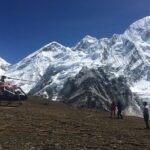
Day 9 starts with the last big walk, up to Kala Patthar for 360-degree panoramic views of the Khumbu mountains, including Everest. After that, the plan switches you from trekking mode into transport mode, with the group sharing helicopter ride back to Kathmandu.
Kala Patthar is where the trek turns into a full-picture moment. Base camp is specific. Kala Patthar is broader. You see the ridgelines, the ice patterns, and the scale that makes the whole region feel enormous. The itinerary builds in time for that moment, with an included focus on the viewpoint.
Then comes the payoff: you do not have to hike back down the route all over again. The helicopter return is not just comfort. It is a clean break, so you can end the trip with less physical drain and more mental clarity.
What $3,400 Buys You (and What You Still Handle)
At $3,400 per person for an approximately 10-day trip, you should think in terms of what costs are removed from your plate. This price covers a lot of high-friction pieces for Everest treks: flights to Lukla, the helicopter return, tea house accommodation during the trek, guide and porter support, most meals while trekking, and the permits. It also includes airport transfers in Kathmandu.
Here is what stands out as value for your day-to-day experience:
- Flights and helicopter are included: plane Kathmandu to Lukla, then heli from the Gorekshep side to Kathmandu on a group sharing basis.
- Food is handled during the trekking portion: breakfast, lunch, and dinner are included on trek days.
- Guide and porter support: an English-speaking trekking guide plus porters (1 porter for 2 trekkers), with transportation, food, accommodation, salary, equipment, and insurance handled.
- Permits and official cards are included: Everest Trek permit and TIMS card.
- Gear support is included: duffle bag, down jacket, sleeping bag, and walking pole.
Now, what you still need to plan for:
- Lunch and dinner in Kathmandu are not included, so you will budget for city meals.
- Nepal entry visa fee is not included, and it requires accurate USD cash and two passport photographs for faster service.
- Drinks and personal expenses are not included, including phone use, internet, laundry, hot showers, and bar bills.
- Tipping is expected but not mandatory, so you should set aside a tip amount in your own budget even if it is not required.
The other thing I like about this pricing structure is that it is built for a small group (max 15). In Everest country, you want less chaos, not more. When logistics are pre-arranged, you lose less time to confusion and more time to the trail.
Guides, Porters, and the Small-Group Difference
This trek runs with an experienced English-speaking trekking guide and porters. That matters because Everest routes are not just about walking. They are about timing, altitude awareness, and keeping your day on schedule when conditions shift.
Based on what you can see from past group experiences, guides and assistant staff can make a big difference. Names like Dipak, Ram, Rabi, Binayak, Ramesh Sapkota, and porters like Santos show up when people talk about smooth communication and helpful support. Even if your exact team differs, the service goal is consistent: keep you safe, organized, and moving with confidence.
Also, the porter ratio is meaningful. Carrying your own pack on Everest hikes can be doable, but it is heavy and slow. With the 1 porter for 2 trekkers structure, you can focus on walking and acclimatizing instead of paying for fatigue with every step.
Who Should Book This Everest Base Camp Trek
This is a good fit if you:
- Want a 10-day format that reaches Everest Base Camp without turning it into a two-week endurance test.
- Prefer all-in logistics like flights, permits, tea house stays, and meals to reduce planning stress.
- Are comfortable with moderate fitness levels and ready for altitude hiking.
- Care about ending strong, because the helicopter return saves you from a tiring backtrack.
It may not be ideal if you:
- Want a slower acclimatization approach with more “rest days” than this schedule offers.
- Get anxious when weather affects travel. This experience requires good weather, and the operator states weather can drive date changes or refunds.
Should You Book It, or Keep Looking?
If you want the Everest Base Camp experience with a smarter finish, I think this is a strong choice. The best argument is simple: you get the big walking, you reach base camp, you do Kala Patthar, then you exit by helicopter. That is the rare combo where effort and comfort both make sense.
I’d book it when you match the fitness level and you can be flexible with weather. You also value support that handles flights, permits, and meals, instead of building your own plan.
I’d pause if you are easily stressed by altitude pacing or you need a slower rhythm than a tight 10-day itinerary provides. In that case, you might prefer a longer trek where acclimatization has more breathing room.
FAQ
What is the duration of this Everest Base Camp trek?
The trek is 10 days (approximately).
Where does the trip start?
The experience starts in Kathmandu, with airport arrival and hotel transfer on Day 1, and a meeting point start time of 6:15 am.
Are flights and the helicopter ride included?
Yes. The package includes a flight from Kathmandu to Lukla by plane, and a group sharing helicopter ride back to Kathmandu after the trekking portion.
What kind of lodging do you use during the trek?
You stay in tea houses, also called guest houses or lodges, during the trek.
Are meals included?
During the trek, breakfast, lunch, and dinner are included. Lunch and dinner in Kathmandu are not included.
Is a guide and porters included?
Yes. You get an experienced English speaking trekking guide and porters, with a ratio of 1 porter for 2 trekkers. Their transportation, food, accommodation, salary, equipment, and insurance are included.
Are permits included?
Yes. The Everest Trek permit and TIMS card are included.
What trekking gear is provided?
The trip includes a duffle bag, down jacket, sleeping bag, and walking pole.
How many people are in the group?
It is a small group tour with a maximum of 15 travelers.
What happens if weather is poor?
This experience requires good weather. If it is canceled due to poor weather, you will be offered a different date or a full refund.
More Helicopter Tours in Kathmandu
More Hiking & Trekking Tours in Kathmandu
More Tour Reviews in Kathmandu
Not for you? Here's more nearby things to do in Kathmandu we have reviewed


Helicopter Tours, compared.
 ★ 5.0Everest Base Camp Helicopter Tour landing at Everest View HotelFrom $1,575668 reviews
 ★ 5.0Everest Base Camp Helicopter Tour landing at Hotel Everest ViewFrom $1,600218 reviews
 ★ 5.0Everest Base Camp Trek with Helicopter Return from Gorakshep to LuklaFrom $3,000161 reviews
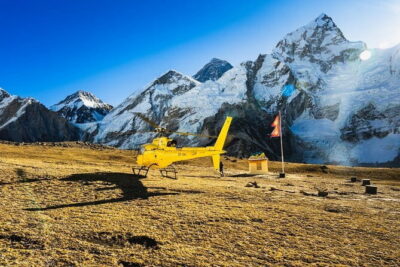 ★ 5.0Everest Base Camp helicopter tour with landingFrom $1,60061 reviews
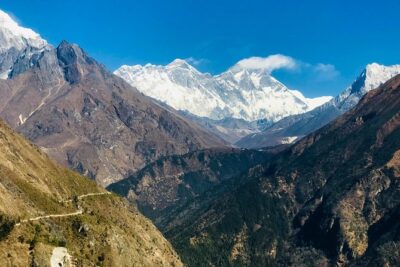 ★ 5.0Everest Base Camp Helicopter Tour with Hotel Everest View LandingFrom $1,49052 reviews
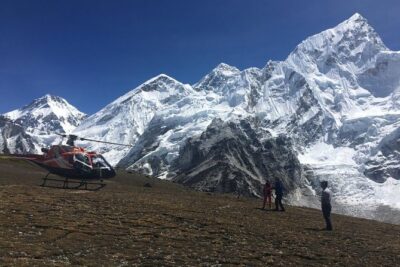 ★ 5.0Guaranteed Landing at Everest Base Camp Kalapathar by HelicopterFrom $3,50038 reviews
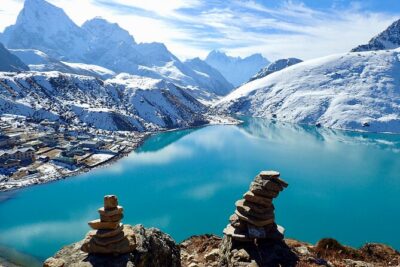 ★ 5.0Everest Base Camp Trek with Helicopter Return to Lukla – 10 DaysFrom $79934 reviews
★ 5.0Everest Base Camp Helicopter Tour landing at Everest View Hotel.From $1,98534 reviews
★ 5.0Everest Base Camp Trek with Helicopter Return to Lukla – 10 DaysFrom $79934 reviews
★ 5.0Everest Base Camp Helicopter Tour landing at Everest View Hotel.From $1,98534 reviews
Browse the lists this tour appears in