

REVIEW · EVEREST HELICOPTER TOURS FROM KATHMANDU
Everest Base Camp Helicopter Tour With Sharing Flight
One flight can rewrite your idea of scale. This Everest Base Camp heli tour is designed for big views from the air, with passes over the Everest region, the dramatic Khumbu Glacier, and out toward shimmering Gokyo Lake. You get picked up in the Kathmandu Valley, fly on a shared service, and return with your head still tilted up.
What I like most is how smooth the whole operation feels, with professional coordination and a calm, capable pilot experience. I also like that the price bundles in essentials such as insurance coverage, governmental and local taxes, and fuel surcharge, so you are not doing math mid-trip.
One real consideration: the tour runs early (start time is 5:45 am) and depends on good weather. If conditions are poor, your flight may be swapped to a different date or fully refunded, so build in a little flexibility.
Key things to know before you fly

- Shared heli comfort, not crowd chaos, with a maximum of 5 travelers
- Insurance included, so you are covered while you fly
- Aerial focus, built around Everest Base Camp views plus Khumbu Glacier and Gokyo Lake
- Hotel pickup and drop within Kathmandu Valley, which saves time and stress
- Passport required, so handle that before you come
- Base costs include taxes and fuel, but some optional add-ons are extra
How this helicopter tour really works (and why it’s worth it)

This is the kind of Everest experience that saves you months of trekking time. You are not hiking up switchbacks or waiting for altitude to stop making decisions feel hard. Instead, you get the mountain’s size and geometry in a way ground views rarely deliver. From the sky, Everest reads like a shape first, then a skyline, then a whole weather system.
You also get to see why the Khumbu region feels so different from place to place. The glacier looks like carved glass from above, and the lakes around the route add a strange contrast, water sitting quietly beside ice and rock. That contrast is part of the payoff of flying rather than just looking at photos.
Value matters here. At $1,550 per person, this is not a casual add-on. The good news is that the price includes the sharing heli service with insurance coverage, plus hotel pickup and drop in the Kathmandu Valley, all governmental and local taxes, and a fuel surcharge. You are paying for flight time and overhead, not only a ticket and a bunch of surprises later.
The trade-off is that you are buying a weather-dependent slot. Helicopter aviation in the Himalaya is not like scheduling a city bus. If visibility or conditions are off, plans change. That is normal, but it does affect your confidence level, so plan this early in your Nepal days and do not stack it with another must-do that cannot move.
A few more Kathmandu tours and experiences worth a look
Price and logistics you should understand before booking
You are paying for a premium format: a short-duration flight built around major Everest-area landmarks. The duration is listed as about 4 hours, which is a good reality check. Even with pickup, safety briefing, and return time, this is a concentrated experience, not a long day out in the mountains.
Here is what is included, based on the tour details:
- Sharing heli service with insurance coverage
- Hotel pickup and drop, or pickup anywhere in the Kathmandu Valley
- Governmental and local taxes
- Fuel surcharge
- Everest helicopter flight service
Here is what is not included:
- Breakfast (optional, listed at $30 each)
- Everest national park fees (listed as $30 each)
- Personal expenses
- Passport (required)
I suggest you treat the total cost like this: start with the base price, then decide whether you want the optional breakfast and budget for the park fees. That way you avoid that late-night “wait, is that extra?” moment.
Also note the format: it is a shared flight, and the group size is capped at 5 travelers. That cap is important. Big groups mean more noise, more waiting, and more sitting in the same spot while you wish you had better angles. A small cap makes the experience feel more personal without turning it into a private tour.
Finally, start time is 5:45 am. Early mornings in Kathmandu are not always fun, but they are often when weather windows are better. If you hate mornings, this is still doable, but you will want to go to bed early.
The morning flow in Kathmandu, from pickup to lift-off
Your day begins with pickup at 5:45 am. The tour includes hotel pickup and drop, or pickup anywhere in the Kathmandu Valley, so you are not trying to coordinate taxis while you are half-asleep. If you are staying outside the central hotel zone, confirm your pickup point with the operator ahead of time so you get the exact start you expect.
You will receive confirmation at booking time, and the tour uses a mobile ticket. That matters in Nepal, because it reduces paper handling and keeps you from hunting for a printed voucher the morning you are already focused on one thing: getting into the helicopter.
What you should pack is simple. Bring your passport, because it is explicitly required. Beyond that, dress for cold air exposure at altitude. Even when skies look clear from Kathmandu, helicopter flights can bring chilly gusts and quick changes in temperature once you climb.
For timing, think in terms of being ready before you feel ready. Helicopter operations run on their own tempo, especially with weather and flight planning. If you are the type who needs a lot of buffer, you will enjoy this more.
Flying over Everest Base Camp area, and why aerial views hit differently
The core promise is Everest Base Camp from the air. That does not mean the experience looks like a postcard. It means you get the way the mountains stack, the way valleys narrow, and the way weather layers move over the ridgelines.
From the helicopter, Everest reads as a system. The summit looks like a point, but the surrounding slopes tell the real story, the textures and the break lines, how ice transitions into rock. On the ground, you can miss that structure because you are fighting distance, angle, and heat haze. From above, those details feel closer and more immediate.
Even with a short flight window, you get perspective on scale that changes how you picture the Khumbu region. It is not just one peak. It is a whole wall of terrain that seems to keep going until the clouds decide to erase it.
One practical note: because this is a flight-based tour, you should not assume every second is a perfect hover for photos. You are moving through airspace, and the pilot is planning for safe approach and visibility. If you want the best pictures, you will get them by staying alert during key passes and having your camera ready without fumbling.
Khumbu Glacier flyby, the ice that looks sculpted
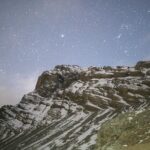
Next comes the Khumbu Glacier. This is one of those places where helicopter views make the world feel slightly unreal. The glacier does not look like a single slab of ice. It shows patterns, creases, and textures that look carved rather than frozen.
From above, you also see how the glacier interacts with surrounding landforms. You can spot where the ice flows into darker shadows, where rock and snow seams create natural lines, and where the light changes how far you can see. The effect is both scientific and emotional. You are watching a natural process, but it feels like you are flying through a giant diagram.
The drawback here is simple: weather and visibility dictate what you truly see. If clouds hang low or visibility drops, the glacier can turn into silhouette. That is not the fault of the tour. It is simply what flying in the Himalaya means. Because the experience is short, you have less time to “wait out” improving conditions compared to a trek.
If you are hoping for a crisp, high-contrast view, this is where your best bet is a clear weather day. The tour’s weather dependence is built into their cancellation and rescheduling approach, so flexibility helps.

Gokyo Lake viewpoints, where water and ice share the frame
You also get Gokyo Lake views from the air. Lakes in this region can look deceptively calm from ground level, but from the helicopter, they appear like a color note in a much larger cold palette.
This contrast is a big reason I like adding this stop to an Everest-focused day. Everest is all about height and ice. The lakes add a different dimension, a sense of geography and movement, how water sits in basins while ice and ridges dominate around it.
From a photography standpoint, lakes can be tricky, but in a good way. They reflect light, and that reflection can make the surrounding ridges stand out. If the skies are bright, you get a clean separation. If cloud cover thickens, the scene can shift to moody and low-contrast, still beautiful but less “wow color.”
Again, the flight plan and current conditions shape the final picture quality. Your best attitude is expecting variability, then enjoying the result when the weather cooperates.
What to expect from the sharing flight (and how to make it better)
Since the group maximum is 5 travelers, you can expect a more controlled, less chaotic vibe than big group tours. Still, it is a shared service, so your angle and seat position are not fully under your control.
My advice: be ready for quick movements. Wear something comfortable that lets you shift for photos. Keep your jacket zipped, gloves accessible if you get cold, and avoid bulky bags that crowd your space.
What I also appreciate is the human side that comes through in the service style. The operation is described as smooth and professional, and the pilot is treated as a key part of the experience, not just a function. Owners like Dip are noted for planning things carefully and tailoring the experience when possible. In practice, that usually means clearer coordination on the ground and more confidence in the air.
One more important point: one review mentions a dream of stepping and walking for a few steps, tied to an operator name (Air Dynasty Helicopter). That suggests there may be scenarios where you can get out briefly. But it is not guaranteed in the info provided here, so if walking time matters to you, ask the operator directly whether your specific flight includes any landing or short exit opportunity.
Practical value: what you get, what you trade off
Let’s be honest about the math. $1,550 for a half-day is a lot. But you are not buying a view from a distant road. You are buying:
- direct aerial access to Everest’s most dramatic features
- a short trip window that fits into an itinerary without burning weeks
- included taxes, fuel surcharge, and insurance, which protects you financially and logistically
You trade off two things. First, you trade off time on the mountain. This is not slow travel where you can adjust plans day by day while trekking. Second, you trade off total control over the exact look and timing, because weather is a major variable for helicopter operations.
If you hate risk, the good news is that the tour uses an insurance-inclusive sharing model and offers weather-related rescheduling or refund options. Also, free cancellation is available up to 24 hours in advance, so you can keep decision power until closer to your flight date.
For me, the biggest value is cognitive, not just visual. This tour gives you a new map of the Khumbu region in your head. After you fly, you can look at images differently, you can understand how glaciers feed landscapes, and you can grasp why people commit their lives to trekking routes here.
Who this tour fits best
This heli tour is a strong match if:
- you want Everest-area scenery but cannot trek
- you prefer short days over long physical challenges
- you value included essentials like pickup, taxes, and insurance
- you are comfortable with early mornings
It is also a good option if you are traveling with limited time in Nepal but want a high-impact experience. A 4-hour duration helps you keep the rest of your schedule intact.
If you are prone to motion sickness or hate cold air exposure, take that seriously. The info here does not specify comfort measures inside the aircraft, so plan for possible chilly wind and bumpy flight moments. If you are unsure, ask your provider what to expect before you commit.
Tips that will make your flight day go smoothly
A few simple moves can make the day feel less stressful:
- Bring your passport well ahead of time, do not assume you will be able to sort it last-minute
- Dress in layers for cold air and keep a warm layer accessible
- Start your day rested, since 5:45 am is not negotiable
- Keep your camera or phone ready, but stay calm. You only get one take at each angle
- Plan your Everest day with buffer time. Weather can shift flight schedules
Also, keep expectations flexible. Helicopter tours are weather-driven. When the day is clear, the scenery can feel unreal. When it is not, you still get mountain geography, but it can be more muted.
Should you book the Everest Base Camp helicopter tour from Kathmandu?
Book this tour if you want a high-impact Everest experience without trekking, and you value a package that already includes insurance coverage, pickup in Kathmandu Valley, and core fees like taxes and fuel surcharge. If your schedule can handle early mornings and potential weather swaps, you are a great fit.
Skip it, or at least think twice, if $1,550 is too much for a half-day flight, or if you cannot adjust your plans if weather changes. Also consider it less ideal if walking time is your top priority, since the info provided does not guarantee landing or exit moments.
If you do book, go in with one goal: enjoy the geometry of the Himalaya. From the air, Everest is not just a peak. It is a whole system of ice, valleys, and weather, and seeing it that way is exactly why this tour stays on so many short-list itineraries.
More Helicopter Tours in Kathmandu
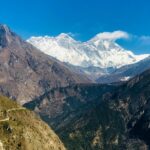
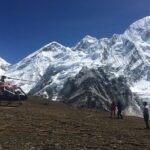
More Tours in Kathmandu

More Tour Reviews in Kathmandu
Not for you? Here's more nearby things to do in Kathmandu we have reviewed


Everest Helicopter Tours from Kathmandu, compared.
 ★ 5.0Everest Base Camp Helicopter Tour landing at Everest View HotelFrom $1,575668 reviews
 ★ 5.0Everest Base Camp Helicopter Tour landing at Hotel Everest ViewFrom $1,600218 reviews
 ★ 5.0Everest Base Camp helicopter tour with landingFrom $1,60061 reviews
 ★ 5.0Everest Base Camp Helicopter Tour with Hotel Everest View LandingFrom $1,49052 reviews
★ 5.0Everest Base Camp Helicopter Tour landing at Everest View Hotel.From $1,98534 reviews
★ 5.0Everest Base Camp Helicopter Tour with Hotel Everest View LandingFrom $1,49052 reviews
★ 5.0Everest Base Camp Helicopter Tour landing at Everest View Hotel.From $1,98534 reviews
 ★ 4.9Everest Base Camp Helicopter TourFrom $1,86330 reviews
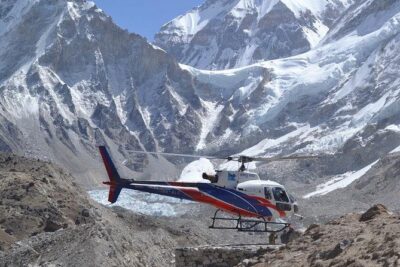 ★ 5.0Everest base camp Helicopter TourFrom $1,70026 reviews
★ 5.0Everest Base Camp Helicopter TourFrom $1,60024 reviews
★ 5.0Everest base camp Helicopter TourFrom $1,70026 reviews
★ 5.0Everest Base Camp Helicopter TourFrom $1,60024 reviews
Browse the lists this tour appears in