
REVIEW · EVEREST HELICOPTER TOURS FROM KATHMANDU
Everest Base Camp Helicopter Tour
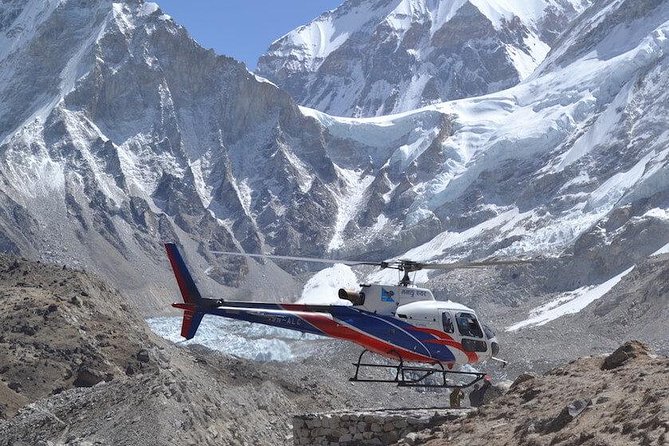
Flying to Everest is fast, and unreal. This half-day helicopter tour from Kathmandu is built for maximum sights per minute, including flyovers and real landing options at base camp or Kalapatthar when helipad conditions allow. It also uses a clever route plan that helps you get good views of the Everest wall and the surrounding peaks.
I love two things most. First, the flying is genuinely short over the higher drama, about 1 to 2 minutes in the key flight moment, so you’re not stuck watching the clock. Second, the day includes multiple touchdown points, not just a quick pass, so you get real photo stops and a better sense of scale. My only real caution is that this trip is weather dependent, so if skies are bad, your timing and landing plans can change.
Key things to know before you fly
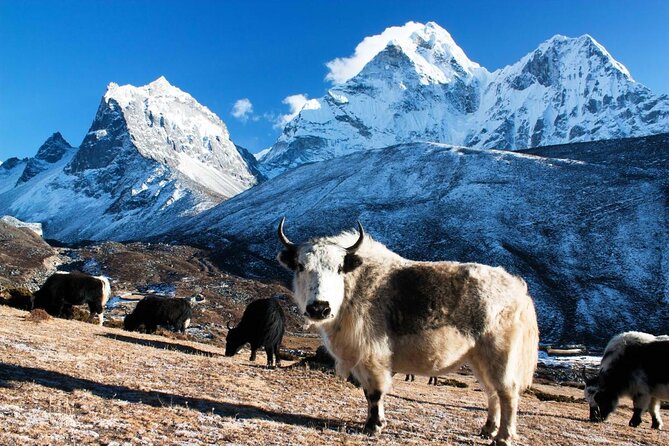
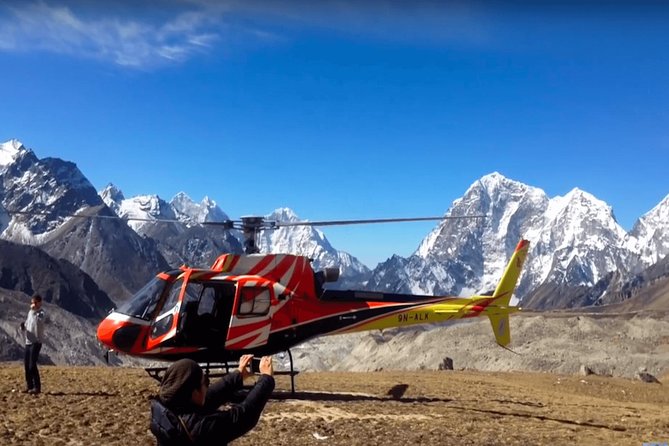
- Two aircraft options are listed: Airbus H125 Eurocopter 350, so expect a modern, stable ride but with a small-cabin feel.
- You start early in Kathmandu, with pickup arranged to match a 7:15 am departure rhythm.
- Lukla is a quick fuel stop, around 10 minutes, and it’s the same high-mountain airport many trekkers know well.
- A Pheriche split helps window seating: if the group size is over 3, people may fly in two parts to keep window seats for the base camp segment.
- Syangboche Marg can mean a landing break at Hotel Everest View, usually up to about an hour, but only when weather cooperates.
Kathmandu to Everest Base Camp, the “fast” part that still feels big
This is a short, high-impact way to see the Everest region without the weeks of trekking that usually come with it. You’ll be picked up from your hotel in Kathmandu, then taken to Kathmandu airport for a morning departure. The tour is offered in a joining group format (sharing with other passengers) and the company also mentions private options, so you can choose based on how much control you want over the flight.
The day is built around quick transitions. Even though the total experience is listed as about 4 to 6 hours, the most intense flying and viewing happens in brief bursts. That’s the trade: you get dramatic altitude views without spending all day in transit, but you also have less time standing around at each place.
A few more Kathmandu tours and experiences worth a look

The aircraft and group size, why it matters for your comfort
This is not a giant sightseeing bus in the sky. The experience is described as a joining group with about 5 to 6 passengers and a pilot, and the maximum group size is listed as 6. That small scale matters for two reasons.
One, you tend to get quicker adjustments during the flight process. Two, small groups usually mean fewer moving parts on the ground, which helps the schedule stay tight. You also have a practical time benefit: the tour is designed as a morning loop, not a multi-day operation.
There’s also a physical reality check. The tour says a moderate physical fitness level is appropriate, and it is not recommended for children under 10. You also have to meet weight limits: the listing states a maximum body weight of 95 kg (209 lbs), and if you’re over 100 kg, extra payment is required.
Stop 1 in the air: Kathmandu departure, then a high flyover toward the base camp area
From Kathmandu airport, you begin with a helicopter departure that includes a flyover of the highest viewpoint in the base camp area. Then the route continues on toward Lukla by helicopter. This is where the “why” of the tour shows up.
A flyover before the main landing segment helps you orient fast. You get the geometry of the valleys, the shape of ridgelines, and the overall layout of the peaks before you’re down on the ground taking photos. That’s a major quality-of-life improvement if you’re seeing Everest for the first time and you want to understand what you’re looking at.
This section also tells you what kind of traveler the experience is for. If you like big views more than long guided stops, you’ll probably enjoy the rhythm. If you prefer long time on the ground, this won’t feel like a full exploration day.
Lukla fuel stop: short ground time, big meaning for your photos
Lukla is where trekkers commonly land when starting the Everest route, and the plan here includes a quick stop for fuel of about 10 minutes. You’re not going there for sightseeing, but you are going to a place with immediate context.
Photo tip: use this stop to look at the airport setting and the surrounding terrain from the angle you’ll later see from the air. Even a brief touchdown can help your brain connect the dots between the map idea of the route and the real-world steepness around it.
The drawback is simple: it’s short. If you’re hoping for a longer pause to stretch, chat, or wander, you should adjust expectations. Treat it as a functional hop, not a sightseeing stop.
Pheriche split and window-seat strategy, a small detail that helps a lot
After Lukla, the tour includes a stop in Pheriche, about 25 minutes. Here’s the clever part. The tour notes that Pheriche is an older splitting point if there are more than three passengers flying together. People may be flown in two batches, such as two people first and then three people, and the goal is window seats for the Everest base camp portion only.
Why this matters in practice: window placement changes your photo success rate on a glacier-splattered, peak-filled horizon. If you care about video and photos (and most people do on this route), having a window seat specifically during the base camp segment is a smart operational choice.
You’ll spend time on the ground here, but the intent is clear: keep the flight segment organized and protect your best viewing positions during the key sight moment.

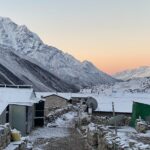
The base camp or Kalapatthar moment: what you see, and why landing conditions rule everything
The experience highlights the chance to witness Everest in real, with landing at base camp or Kalapatthar depending on helipad conditions. That’s not just marketing language. It’s the heart of the value.
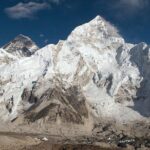
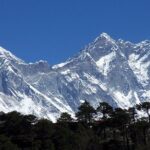
On the flight portion meant for base camp viewing, you’re set up to see Mount Everest along with Pumori, Lhotse, and Nuptse clearly. The tour also encourages you to take videos and photos during the flyover segment, because this is when the peaks line up for visibility.
What you should understand before booking: helipad condition and weather can determine whether you land where you dreamed. Even if you end up with the alternate option, you’re still in the Everest zone, and the overall viewpoint is the point. The difference is how close you get to the base camp feeling versus the Kalapatthar-style vantage.
Syangboche Marg and Hotel Everest View, the breakfast stop that turns the flight into a break
The plan includes a landing at Syangboche Marg, described as a breakfast point during the flight. This often means stopping at Hotel Everest View, and the listing says it depends on weather. It typically includes up to about one hour, with an optional set breakfast for USD 31 per person.
This is one of the few stretches of the day that feels like a real pause. Even if the main helicopter segment is brief, this break gives you a chance to reset, warm up, and get more relaxed photos from a calmer spot. Also, you’re closer to the “place” moment, not just the airplane window moment.
Practical note: the tour says to carry the USD 31 per person if you want the set breakfast. Also, dress for cold air. The guidance mentions winter temperatures around -10°C for higher points and summer around -5°C, so bring layers.
Return to Kathmandu: the route home can change with fuel
After the base camp segment, you head back to Kathmandu via helicopter with landings. The tour describes returning to Tribhuvan International Airport, with the route from Hotel Everest View to Kathmandu via Lukla taking about one hour. The captain can fly either via Lukla or directly depending on the fuel situation.
That means your flight path can differ slightly on the way back, even on the same day type. The good news is you’re still in the Everest region logic, so you’ll likely keep getting mountain angles on the return. The operational reality is that aviation always has constraints, and this plan is designed to stay flexible within them.
Price and value: what USD 1,700 buys you, and what it does not
The listed price is $1,700 and the tour is framed as a premium alternative to trekking. Is it worth it? It can be, if you match the experience to your priorities.
Included in the price:
- Hotel pickup and drop-off (you provide your hotel name and address for pickup time)
- A joining group helicopter trip (sharing with about 5 to 6 passengers and a pilot)
- Multiple landing points and scenic viewing opportunities
- Mobile ticket
- The company also asks you to message possible dates so they can fly you on a nice day
Not included, and you should budget for:
- Optional breakfast at Hotel Everest View (USD 31), subject to weather
- Compulsory fees around USD 50 for national park, airport tax, and Khumbu village development fees
- Passport copy documentation (a picture on your phone works, no original needed)
- Extra cost if you are over 100 kg
- Food and drinks beyond the optional breakfast
Where the value really shows: you’re paying for time compression. Instead of spending weeks in the Everest logistics chain, you get a morning loop that places you near base camp with real viewpoints. If your schedule is tight, that compression is the main selling point.
If you’re on a tight budget, the helicopter cost is hard to justify. But if you want Everest without the full trek, the price starts making sense as a “pay to skip hardship” trade.
Weather reality, cold clothing, and what to pack for the sky-to-ice day
The experience requires good weather. The tour notes that if it’s canceled due to poor weather, you’ll be offered a different date or a full refund. That tells you the system is not trying to push you into bad conditions.
For packing, the tour gives a clear temperature range to plan for: dress for -5°C in summer and -10°C in winter for the higher points. That means layers, and gear that handles wind chill. Keep it simple and warm. You won’t have long time on the ground in every location, but exposure still adds up.
Also check documentation readiness. You don’t need your original passport for this, but you should carry a passport copy, and the listing says a phone picture works.
Guides and local care, what their track record suggests
Even though the helicopter tour itself is pilot-led, service quality still matters: pickup timing, on-the-ground coordination, and how smoothly the flight segments run.
In the feedback associated with this operator, strong guide names come up in the broader Nepal planning experience. I saw mentions of guides like Bishal and Bashu (tied to Kathmandu and the Everest area in separate contexts), plus Mohan as an Everest-focused guide. There are also mentions of Devendra coordinating a longer trek plan and Dipendra being highly recommended as a guide. If you pair this helicopter day with extra Kathmandu time or an Everest-area add-on, these names suggest you’re likely to get real explanations, not just directions.
Bottom line: for a trip with short, timed segments, good coordination is the difference between smooth and stressful.
Who should book this helicopter tour, and who should skip it
This is ideal for:
- People who want an Everest connection fast, without trekking weeks
- Travelers who enjoy photos and videos but don’t need long ground time
- Anyone with limited time in Kathmandu who still wants a credible Everest experience
You might skip it if:
- You want lots of time at each stop
- You’re traveling with young children, since it is not recommended under age 10
- You’re above the weight limit threshold, because extra cost applies after 100 kg
- You’re not comfortable with very cold conditions, since the tour explicitly expects winter-like temperatures at altitude
Also, because the tour is weather dependent, build in flexibility in your overall Nepal schedule if you can.
Should you book Everest Base Camp by helicopter?
If your top goal is to see Everest and you want it in a single morning style window, this can be a great fit. The combination of a flyover, a base camp segment, and possible landing options at base camp or Kalapatthar is exactly the kind of time-saving experience that can feel worth it when you compare it to the full trek.
But treat it like a high-speed nature viewing experience, not a slow travel day. You’re buying access and viewpoints, plus a couple of landing breaks like the Syangboche Marg stop, and you’re accepting that weather can change the landing plan.
If you’re a fit match, book. If you’re hoping for guaranteed landing no matter what, or you’re going in expecting unlimited time, adjust your expectations first.
FAQ
What time does the Everest Base Camp helicopter tour start?
The start time is listed as 7:15 am.
How long is the tour?
The duration is listed as about 4 to 6 hours.
How much is the flight time during the experience?
The flight time is listed as 1 to 2 minutes.
Do they pick you up from your hotel in Kathmandu?
Yes. Hotel pickup and drop-off are included. You provide your hotel name and address to get a pickup time.
Is this tour shared or private?
The operator says it runs both sharing and private tours, and the joining group sharing format is described as about 5 to 6 passengers plus a pilot.
Are there landing stops, or is it only a flyover?
The tour includes multiple landing points. It also describes landing options at base camp or Kalapatthar depending on helipad conditions, plus a possible stop at Hotel Everest View at Syangboche Marg subject to weather.
Is breakfast included?
No. Breakfast is optional. The tour mentions a set breakfast at Hotel Everest View for USD 31 per person, subject to weather conditions.
What about required fees and passport documents?
The tour notes compulsory national park, airport tax, and Khumbu village development fees of around USD 50. It also says you can carry a passport copy, and a picture on your phone works, with no need for the original passport.
What are the weight requirements?
The listing states a maximum body weight limitation of 95 kg (209 lbs). If a traveler is more than 100 kg, extra payment is required.
More Helicopter Tours in Kathmandu
More Tours in Kathmandu

More Tour Reviews in Kathmandu
Not for you? Here's more nearby things to do in Kathmandu we have reviewed


Everest Helicopter Tours from Kathmandu, compared.
 ★ 5.0Everest Base Camp Helicopter Tour landing at Everest View HotelFrom $1,575668 reviews
 ★ 5.0Everest Base Camp Helicopter Tour landing at Hotel Everest ViewFrom $1,600218 reviews
 ★ 5.0Everest Base Camp helicopter tour with landingFrom $1,60061 reviews
 ★ 5.0Everest Base Camp Helicopter Tour with Hotel Everest View LandingFrom $1,49052 reviews
★ 5.0Everest Base Camp Helicopter Tour landing at Everest View Hotel.From $1,98534 reviews
★ 5.0Everest Base Camp Helicopter Tour with Hotel Everest View LandingFrom $1,49052 reviews
★ 5.0Everest Base Camp Helicopter Tour landing at Everest View Hotel.From $1,98534 reviews
 ★ 4.9Everest Base Camp Helicopter TourFrom $1,86330 reviews
 ★ 5.0Everest base camp Helicopter TourFrom $1,70026 reviews
★ 5.0Everest Base Camp Helicopter TourFrom $1,60024 reviews
★ 5.0Everest base camp Helicopter TourFrom $1,70026 reviews
★ 5.0Everest Base Camp Helicopter TourFrom $1,60024 reviews
Browse the lists this tour appears in