
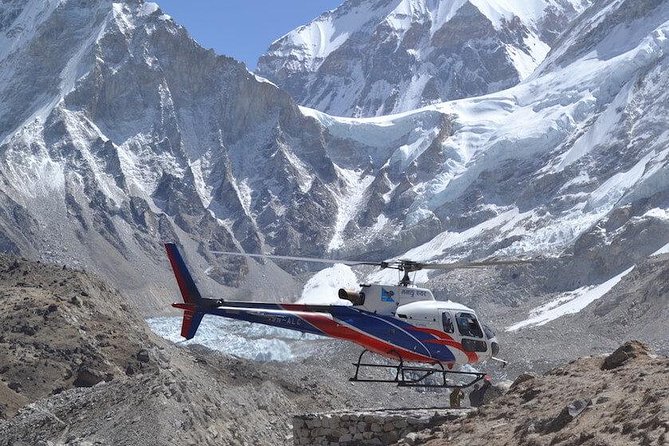
REVIEW · EVEREST HELICOPTER TOURS FROM KATHMANDU
Everest Base Camp Helicopter Tour
Three hours to see Everest up close.
This half-day helicopter tour is built for one big goal, an Everest view without weeks of trekking. You fly out from Kathmandu with an early start, then come back to where you started, which makes it a smart add-on when your Nepal time is tight. I also like the practical setup, a small group with a maximum of 2 travelers.
My other favorite part is breakfast at Hotel Everest View. You get a proper sit-down start, about 40 minutes, with the mountain right there in front of you, not something you hope for from a distant viewpoint.
The main consideration is that this experience depends heavily on weather. And yes, the price is steep at $1,800 per person, so you want to be comfortable with paying for time saved and views gained, especially since the top landing stop is brief.
Key takeaways before you fly
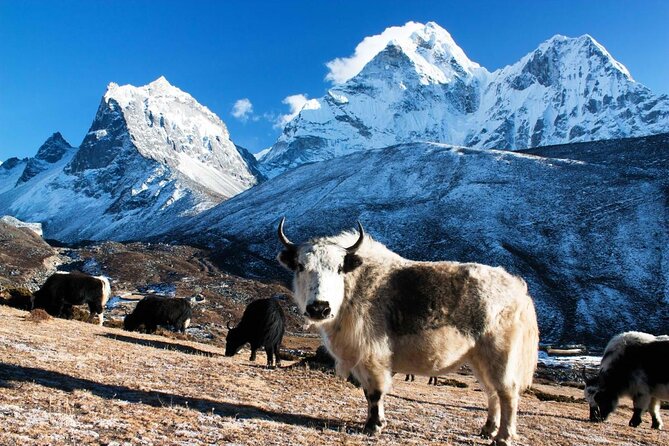
- Small group, maximum 2 travelers, so the experience feels less like a cattle call.
- Early morning start around 6:15 am, which is exactly when the skies give you a better shot.
- Breakfast at Hotel Everest View, a rare chance to do the iconic morning ritual with Everest in your line of sight.
- Kala Patthar landing at 5,644.5 m, the high point stop designed for the closest feeling from this route.
- Weather-dependent, with options to reschedule or refund if conditions cancel the flight.
- Magical Nepal coordination, known for keeping communication clear and staying on top of changing conditions.
Why take a helicopter to Everest instead of hiking?
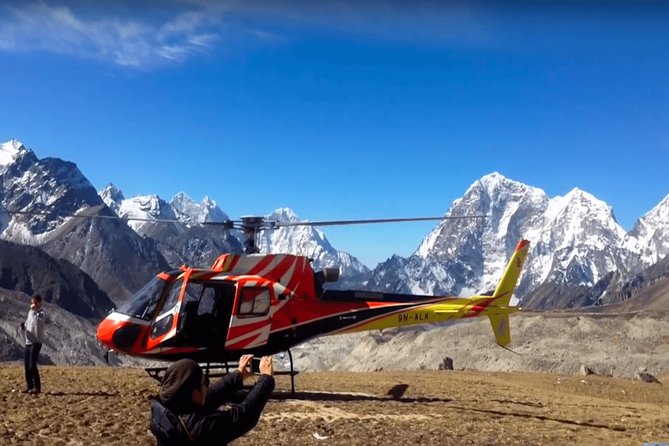
Most people don’t really want a helicopter. They want the payoff. And a helicopter is the shortcut to the payoff.
Here, the idea is simple: trade altitude days and trail logistics for a fast, scenic route with key viewpoints. Instead of spending days working up to Everest region elevations, you get an out-and-back format that can fit into a single morning. If you are traveling with limited time, have limited mobility, or just do not want to commit to a full trek, this is the kind of option that changes what is possible.
There is also something psychologically different about arriving by air. You start seeing the region as connected, valleys feeding into ridges, settlements tucked into terrain, and the sheer scale of the mountains from angles walking routes can only hint at. Even when your time on the ground is short, you come away with a clearer mental map of the Khumbu area.
A few more Kathmandu tours and experiences worth a look

The Kathmandu morning: start time, meeting point, and timing realities
Your day begins early. The start time is 6:15 am, and the meeting point is Tribhuvan International Airport, Ring Rd, Kathmandu 44600, Nepal. The tour ends back at the meeting point, so you are not scrambling for transportation afterward.
The total duration is about 4 hours 30 minutes. That sounds long when you read it, but helicopter days move fast. Expect a schedule that flows from briefing to flight to two main stops, then a return. Because the itinerary centers on a morning view, you will feel that every minute has a job, sky time and viewpoint time.
Two more practical notes matter here. First, pickup is offered, so you may be able to avoid the hassle of getting yourself to the airport area at dawn. Second, the tour includes a mobile ticket, which is one less thing to print or lose.
If you hate early starts, plan this morning carefully. Do not schedule a late-night dinner the night before. You want your brain fresh, not rushing and frazzled in the dark.
Stop 1 at Hotel Everest View: breakfast with Everest in your frame
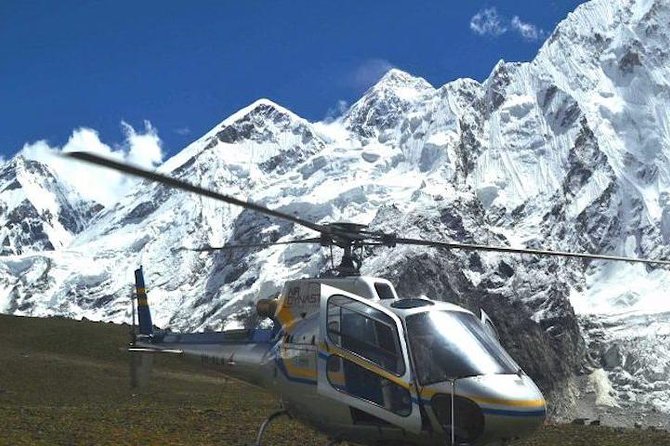
The first stop is Hotel Everest View, where you eat breakfast and take in the mountain view. The time here is about 40 minutes, and it is designed to give you a real break from the rush.
This stop is valuable for two reasons. One, breakfast turns the experience from an adrenaline sprint into something calmer. You get to sit, look, and actually let your eyes adjust to what you are seeing. Two, it is a viewpoint experience that does not rely only on flight views. A lot of helicopter tours are all air time. Here, you get a grounded moment.
There is also a quiet advantage: you are less likely to feel rushed into photo-taking. With 40 minutes, you can do the full sequence, quick establishing shots, a slow look from different angles, then a second round when you understand where the mountain sits relative to the hotel viewpoint.
If the weather is good, this is usually where the magic becomes real. The mountain feels less like a distant icon and more like a presence.
Stop 2 at Kala Patthar: high altitude, short time, big payoff
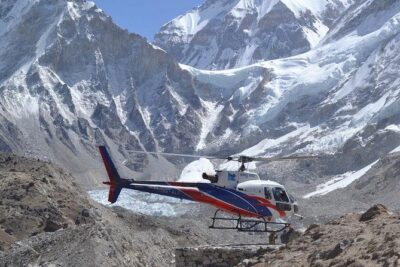
Next comes Kala Patthar, with a landing at 5,644.5 m (18,519 ft). You have about 10 minutes on the ground here.
Ten minutes can sound short, but at this altitude stop, it is often the right length. Your main job is to look, photograph quickly, and soak in the geometry of Everest from a high vantage. The goal is the closest view feeling the route can offer without trekking.
What I like about this stop is that it is specific. You are not just flying overhead and hoping for a lucky angle. You are actually landing at a known high point, built for seeing.
Photo strategy tip, keep your plan simple. One set of wide shots for context, then tighten for Everest framing. And if clouds move in and out, watch the horizon and wait a few breaths before you take your final pictures.
What the flight gives you from the air, beyond just seeing Everest
Yes, Everest is the headline. But the helicopter also gives you perspective on the wider region.
From the sky, you start noticing how rivers carve the valleys and how ridgelines guide where people settle. You also get a bird’s eye view of paths and villages in a way you cannot easily replicate from a bus window. This matters even if you have no trekking plans, because it helps you understand how routes connect in the Everest region.
Another reason air views are powerful: they make your later decisions easier. If you are debating whether a trek is right for you, this tour gives you a quick, visual reality check. You see what would be a climb, what would be a traverse, and where the major corridors run.
If you are a first-time helicopter rider, the flight itself can be part of the memory. The operation is known for keeping things organized, and pilots often act like the practical guide in the air, helping you follow what you are looking at.

Small group, real coordination: Magical Nepal and the human factor
This is not a massive bus tour. The activity lists a maximum of 2 travelers, which changes the feel.
With a small group, timing tends to be easier to manage. You also get more flexibility for how the crew handles last-minute weather changes, and you are less likely to feel lost in a crowd when you are trying to listen for instructions.
Magical Nepal is the operator, and names like Pradeep and Saugat come up when people talk about how the experience gets planned. What that suggests to me is that you are not just buying a flight, you are buying coordination.
In places like this, where clouds can shut everything down, that coordination is not a luxury. It is the whole point. You want someone who checks conditions and communicates clearly so you can make decisions quickly.
Safety and comfort: what to expect when you are not a helicopter person
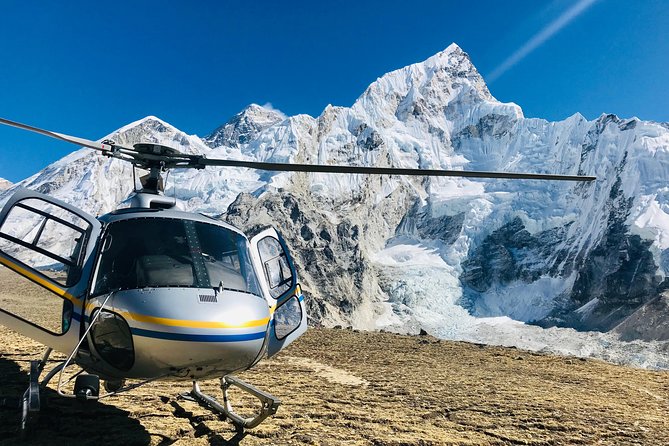
Helicopter tours can feel intimidating, especially if you have never flown in one. What matters most is how the crew handles the ride and your confidence.
From the way the experience is described, the flight is treated as a safety-first activity with an experienced pilot, and the pilot is willing to guide you through what you are seeing. You also tend to notice that the operation prioritizes clear communication, which reduces the nervous energy that comes from uncertainty.
Comfort-wise, think of this as a compact, early-morning adventure rather than a lounge-style tour. You will be outside the hotel setting briefly for boarding and ground moments at the stops. Keep your expectations aligned with the format: short stops, a lot of sky time, then back to Kathmandu.
If you are prone to motion discomfort, it is smart to check your own limits ahead of time. The data here does not spell out medical guidance, so I cannot promise how you will feel. I can only say that being comfortable with the flying matters for a tour that is mostly in the air.
Price and value: is $1,800 per person worth it?
Let’s talk money plainly. At $1,800 per person, this is not a budget move. It is a premium purchase: you are paying for access, time savings, and a high-impact viewpoint experience without the trek.
So where does the value come from?
- Time: Instead of planning weeks, you get an about 4.5-hour window starting at 6:15 am. If your Nepal trip is short, this can be the difference between seeing Everest or missing it entirely.
- Effort: You are not signing up for days of trekking. For many people, that is the core value, especially if you want the sight without the physical drain.
- Itinerary payoff: Breakfast at Hotel Everest View and the Kala Patthar landing at 5,644.5 m are not just symbolic. They are designed stops, not random scenic pulls.
The drawback to value is also simple. If you are coming to Nepal for a slower, hiking-centered experience, this may feel expensive for the time you spend on the ground. You are buying a viewpoint, not a trek story.
My practical rule: if Everest is your number one goal and you cannot or do not want to hike, this can be a strong use of your travel budget. If you want the culture of the trail and multiple nights outside, a trekking-focused trip may feel like better value.
Weather risk: the Everest helicopter rule you should plan for
This tour requires good weather. If it is canceled due to poor weather, you are offered either a different date or a full refund.
That is not a minor fine print detail. In the Everest region, visibility can change fast. The early start exists for a reason, and the operation is built to react to changing forecasts.
So how should you plan around it?
- Give yourself a little flexibility in Kathmandu, if you can.
- Avoid stacking other major activities that depend on a fixed morning.
- If you are making connections or tight travel deadlines, consider how you would handle a reschedule.
This is also where having clear communication from the operator matters. When flights are weather-driven, you want quick updates and options.
Who should book this Everest Base Camp helicopter tour?
This tour fits best if you want Everest views without trekking. It is also listed as suitable for most travelers, with pickup offered and the meeting point near public transportation access in the airport area.
Book it if:
- You have limited time and want a meaningful Everest experience in a single morning.
- You want the high point viewpoint at Kala Patthar without the physical challenge of hiking.
- You prefer a small-group outing rather than a large group tour.
You might skip it if:
- You are traveling on a super tight budget and cannot justify a premium $1,800 per person cost.
- Your schedule cannot handle a weather-related change.
- You want a multi-day trekking journey with overnight village life.
Should you book this tour or not?
If Everest is the main goal and trekking is not in your cards, I think this is an easy yes to consider. The mix of breakfast at Hotel Everest View and the Kala Patthar landing makes the experience feel anchored, not just like a scenic flight.
But only book if you can handle the two tradeoffs. First, the weather dependency. Second, the premium price for a short window. If those two fit your trip style, you are likely to leave with the kind of Everest memory that stays vivid for years.
If one of those tradeoffs does not fit, consider a trekking alternative or a different Everest-area sightseeing approach that matches your pace and budget better.
FAQ
How long is the Everest Base Camp helicopter tour?
The tour duration is approximately 4 hours 30 minutes.
What time does the tour start and where do we meet?
The start time is 6:15 am. The meeting point is Tribhuvan International Airport, Ring Rd, Kathmandu 44600, Nepal.
Does the tour offer pickup?
Yes, pickup is offered.
What are the main stops during the tour?
The tour includes a stop at Hotel Everest View for breakfast and a landing stop at Kala Patthar.
How high is the Kala Patthar landing?
Kala Patthar is listed at 5,644.5 m (18,519 ft).
How many travelers can be on this activity?
This activity has a maximum of 2 travelers.
Does the tour end back at the meeting point?
Yes, the activity ends back at the meeting point.
Is the tour dependent on weather?
Yes. The experience requires good weather. If canceled due to poor weather, you are offered a different date or a full refund.
What is the cancellation refund policy?
Cancellation is free. You can cancel up to 24 hours in advance for a full refund. If you cancel less than 24 hours before the start time, the amount you paid is not refunded.
More Helicopter Tours in Kathmandu
More Tours in Kathmandu

More Tour Reviews in Kathmandu
Not for you? Here's more nearby things to do in Kathmandu we have reviewed


Everest Helicopter Tours from Kathmandu, compared.
 ★ 5.0Everest Base Camp Helicopter Tour landing at Everest View HotelFrom $1,575668 reviews
 ★ 5.0Everest Base Camp Helicopter Tour landing at Hotel Everest ViewFrom $1,600218 reviews
 ★ 5.0Everest Base Camp helicopter tour with landingFrom $1,60061 reviews
 ★ 5.0Everest Base Camp Helicopter Tour with Hotel Everest View LandingFrom $1,49052 reviews
★ 5.0Everest Base Camp Helicopter Tour landing at Everest View Hotel.From $1,98534 reviews
 ★ 4.9Everest Base Camp Helicopter TourFrom $1,86330 reviews
 ★ 5.0Everest base camp Helicopter TourFrom $1,70026 reviews
★ 5.0Everest Base Camp Helicopter TourFrom $1,60024 reviews
Browse the lists this tour appears in