
Everest feels close when you only need a few hours. This Everest Base Camp heli tour gives you high-altitude views of Mt. Everest, the Khumbu Ice-fall, and the Everest Base Camp area, plus a short step onto Kala Patthar for photos.
I love the tight small-group setup, with helicopter seating capped at 5 passengers, which helps the schedule feel calmer. I also like the landing at Hotel Everest View for a breakfast stop with big mountain views. One drawback to plan for, the entire day depends on weather, and the highest moments are brief, so you need to be ready for quick photo time and cold air.
Key Highlights That Make This Heli Tour Worth It
- A true half-day format that targets Everest sights without days of trekking
- Kala Patthar photo stop (about 10 to 15 minutes) at around 5,500m
- Everest Base Camp views from the air at 5,364m, plus the Khumbu Ice-fall area
- Hotel Everest View landing for breakfast, with time to slow down and look out
- A Pheriche shuttle plan when helicopters can’t carry more than three passengers above 4,500m
- Very small groups, since the helicopter tour maximum is 5 travelers
Why This Everest Base Camp Heli Tour Feels Special
This is not a slow journey. It is a fast hit of Everest scenery, designed for people who want the highlights but cannot commit to weeks on foot. You trade long trails for windows, quick landings, and the kind of views that make your brain short-circuit, even if you have seen Everest photos before.
What makes this tour work is the sequence. You start early from Kathmandu, fly the Everest corridor, then hit the two “wow” anchors on the route: Everest Base Camp area and the Kala Patthar photo moment. Even with limited time on the ground, you still get multiple angles of the Khumbu region in one go.
The other reason it feels worthwhile, you are not just flying past named places. You get a breakfast landing at Hotel Everest View, which gives you a small break from altitude and lets you actually enjoy the view for a bit, not just snap pictures through glass.
You can also read our reviews of more tours and experiences in Kathmandu.

The 5:45am Start: Kathmandu Transfers and Why Timing Matters
The day begins early, with pickup around 5:45am from your hotel area, then a ride to Tribhuvan International Airport. You will go through the necessary airport formalities at the domestic terminal, and then you are in the air for the high-altitude part of the experience.
This matters more than it sounds. Early flights help with weather stability, and mountain flying is tightly tied to conditions. It also means you should treat this like a mission day, not a leisurely breakfast day in Kathmandu.
The tour is built for a small group, with a maximum of 5 travelers, and helicopter seating is limited to 5. That usually keeps boarding and movement more organized than bigger group tours. The tradeoff, you should still plan to be flexible if operations adjust due to the flight and air-traffic reality around Lukla and the higher zones.
Flying the Route: Lukla Airport, Refuel Time, and The Reality Check
One of the stops is Lukla, at 2,804m, also known as Tenzing Hillary. The tour notes Lukla airport as one of the deadliest airports in the world, which is a reminder that this is not an ordinary flight path. You are dealing with serious mountain aviation conditions, so the calm parts of your trip are really about operations done right.
You get about 15 minutes at Lukla. That is enough time to look around, confirm you are really in the Everest neighborhood, and get your bearings before the next flight segment. It is also short enough that you will not feel trapped waiting around while cold air and altitude hit.
The practical tip here is simple: dress for the air you are going to feel, not the air you imagine. Even if your helicopter takes you quickly to higher points, the ground time at places like Lukla can still feel sharp.
Everest Base Camp Area: What You’ll See From the Air
Everest Base Camp is listed at 5,364m, and the tour highlights that around 40 thousand people visit the base area each year, including mountaineers and trekkers. For most people, that number reads like a fun fact. From this tour format, it becomes a reality check: you are seeing an icon that is busy in peak seasons, even though your visit is quick.
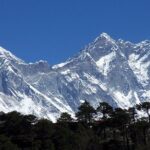
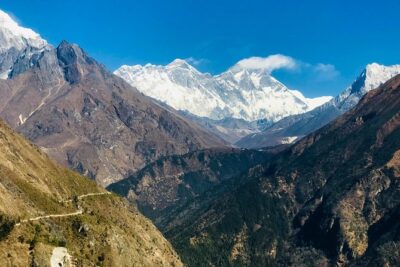
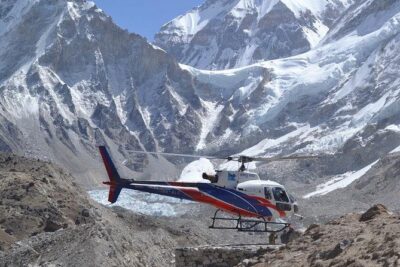
From your helicopter perspective, you will witness the Everest Base Camp area and the Khumbu Ice-fall. The big benefit of flying here is scale. You can take in glacier systems and massive ridgelines in minutes, something that takes trekkers days of climbing and looking back for.
The limitation is also real: you will not experience base camp like a trek. You get a view and a short moment of connection, not hours of walking between tents, prayer flags, and the slow rhythm of acclimatization. If your goal is to feel the ground-level camp atmosphere, this will feel more like a high-altitude photo safari than a full EBC immersion.
Still, if your goal is to see Everest Base Camp area plus the icefall in one fast, high-impact day, flying is exactly the tool you want.
Kala Patthar Photo Time: Quick Steps at 5,500m
Kala Patthar is the peak tied closely to the highest point reached on the Everest Base Camp trek. In this tour, you land and step out for photo ops for about 10 to 15 minutes. That short window is the entire point: you get the iconic angles without losing the whole day to time on the ground.
Kala Patthar sits around 5,500m on this route. At that height, every minute counts. Your body may feel it, even if you are not hiking. The helicopter can move you quickly, but it cannot eliminate the cold, the thin air, and the quick fatigue that can show up when you stop moving.
So how do you make the most of it? Treat this moment like a checklist moment:
- Have your camera ready before you land.
- Put extra layers on right away, not after you start shivering.
- Breathe slow. Don’t sprint to the perfect viewpoint.
The other consideration is the weather dependency. If visibility is poor, the photo payoff shrinks. That is why the tour being weather-dependent is not a footnote, it is the core risk you should accept.

Hotel Everest View Breakfast Stop at 3,880m
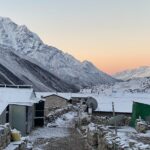
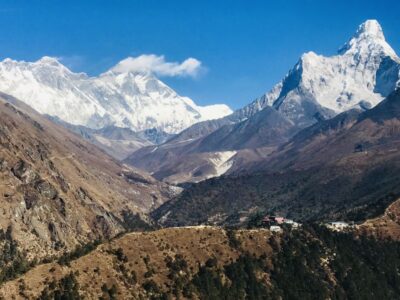
After the high points, you fly to Everest View Hotel, at 3,880m, and the tour gives you a 1 to 2 hour stop. There is a delightful breakfast stop here, and the description calls out magnificent views of the Himalayas along with glacier scenery in the Khumbu area.
This landing is valuable for two reasons. First, you get time to warm up and sit down, which helps after the intense altitude zones. Second, you get a slower perspective on the mountains. Helicopters are about fast viewing, but a hotel terrace (or dining area) turns it into a calmer experience where you can actually look without constantly thinking about your next boarding step.
One caution: the included list mentions landing at Everest View Hotel for breakfast, but the price breakdown also says breakfast is not included. That means you should confirm what breakfast means for your exact booking, and whether it is included or paid on-site. You do not want a surprise bill when you are already tired and cold.
Pheriche Shuttle and the Small-Seat Helicopter Reality
Pheriche is part of the route and gets about 15 minutes. Here is the key operational detail: the helicopters cannot land and take off with more than three passengers above 4,500m. If your group is 5 travelers, you are shuttled through Pheriche in smaller groups, such as splitting into 3 and 2.
That detail is not just technical. It affects how you will feel the day. You might do a short regrouping moment, and your exact timing could shift based on how those segments are arranged. In other words, do not interpret every minute strictly as a guarantee. You are on mountain time, guided by aviation constraints.
The practical takeaway, if you are traveling with others, agree on a simple plan in advance. Decide how you will stay together if you split. Know who has what documents and how you will communicate if you are separated briefly.
Price and What You Truly Get for $1,800
At $1,800 per person for about 5 to 6 hours, this tour is expensive by Kathmandu standards and still a bargain compared to the typical cost of accessing Everest viewpoints via multiple flights and special aviation services. The value is in the helicopter segments and the fact that the tour bundles a lot of the admin and aviation costs for you.
Included items cover:
- Airport pickup and drop by tourist vehicle from your hotel
- Helicopter seating limited to 5 passengers
- Round trip helicopter flight fare between Kathmandu and Everest Base Camp
- Landing at Everest View Hotel for breakfast (confirm what that means for your booking)
- All administrative expenses and government taxes
- Fuel surcharge
Not included items include:
- Breakfast (as listed in the not included section, which again you should confirm)
- Alcoholic beverages
- Personal gear and a down jacket
- Sagarmatha National Park fees and Pasang Lhamu RM fees (NPRS 6,000)
- Airport tax (NPRS 500)
- Any costs caused by flight delays
So the real value question is: are you okay paying for speed and views instead of a longer, slower trek? If you want the Everest icons in one day, this price starts to make sense fast. If you want to spend a lot of time at base camp, learn the trail life, and acclimatize gradually, you will likely feel the price is buying a shortcut.
Also, because fees are partly excluded, budget for the NPRS park and airport charges. Those are small compared to the helicopter cost, but they can still surprise you if you plan on paying only the headline figure.
Guides, Care, and What the Service Looks Like in Practice
Ace the Himalaya runs the experience, and the service quality shows up in the way guides support different travelers. The feedback I see points to guides such as Madan, Raj, Narayan, and Nimesh being praised for safety, organization, and care. There is also mention of a team structure that includes strong local support, including porters led by Kaji in one account.
That matters because high-altitude tours are not only about scenery. They are about pacing, getting people dressed and ready for cold air, and keeping everyone calm when operations run on schedule uncertainty. When you are dealing with a helicopter day, having staff who can keep things organized is half the win.
If you are traveling with kids or older family members, it helps to know this operator has supported groups with mixed ages and abilities. You still need to be realistic about altitude exposure and short stops, but the human side of planning looks solid.
Who Should Book This and Who Should Skip It
This tour says most travelers can participate, and you should believe that it is designed to be accessible compared to trekking days. The tour is also a good fit if you have limited time in Nepal, you want the Everest Base Camp and Kala Patthar highlights, and you can handle early mornings and cold.
You should consider skipping or rethinking if you:
- Are uncomfortable with quick, brief stops at high altitude (10 to 15 minutes at Kala Patthar is not long)
- Do not want weather-based scheduling risk, since this experience requires good weather
- Are over the stated weight limit of 176 lbs, because the tour lists a total weight per passenger cap
Who it suits best:
- Couples and friends who want a once-in-a-lifetime Everest hit
- Families who cannot do the long trek but still want the big icons
- Travelers who hate long travel days but love photos, glacier views, and dramatic mountain scale
Should You Book This Everest Base Camp Heli Tour?
Book it if your Everest goal is visual impact, and your time is short. This tour stacks the key names in one day: Everest Base Camp area, Kala Patthar, and a breakfast break at Hotel Everest View. You also get a small-group helicopter setup, with seating capped at 5, which makes the day feel more controlled than big tours.
Hold off if you want a deep trekking-style experience at base camp, or if you cannot tolerate weather risk and fast altitude moments. Also, confirm the breakfast detail before you go, since the included and not included lists conflict on breakfast language.
If you are ready for a high-speed Everest day, this is a strong option. Just treat it like what it is: not a hike, but a very focused mission to see Everest from the air and step onto one of the most famous viewpoints for a short, memorable photo window.
FAQ
What time does the Everest Base Camp heli tour start?
The start time is 5:45 am. Pickup from your hotel and transport to Tribhuvan International Airport domestic terminal happens before the flight.
How long is the tour?
The duration is about 5 to 6 hours.
Are airport transfers included?
Yes. The tour includes airport pickup and drop by tourist vehicle from your hotel, and the experience ends back at the meeting point.
How many people are on the helicopter?
The helicopter seats are capped at a maximum of 5 people, and the tour maximum is 5 travelers.
Where does the tour fly during the route?
You fly from Kathmandu to Lukla, then towards Everest Base Camp and Kala Patthar, with shuttle at Pheriche if needed, and then you fly to Hotel Everest View for a breakfast stop. You return to Lukla for refueling and continue back to Kathmandu.
Is breakfast included at Hotel Everest View?
The tour description includes landing at Everest View Hotel for breakfast, but the price breakdown also lists breakfast as not included. You should confirm what your booking includes for breakfast.
What fees are not included in the $1,800 price?
Sagarmatha National Park and Pasang Lhamu RM fees (NPRS 6,000) and airport tax (NPRS 500) are listed as not included.
More Tours in Kathmandu

More Tour Reviews in Kathmandu
Not for you? Here's more nearby things to do in Kathmandu we have reviewed


Everest Helicopter Tours from Kathmandu, compared.
 ★ 5.0Everest Base Camp Helicopter Tour landing at Everest View HotelFrom $1,575668 reviews
 ★ 5.0Everest Base Camp Helicopter Tour landing at Hotel Everest ViewFrom $1,600218 reviews
 ★ 5.0Everest Base Camp helicopter tour with landingFrom $1,60061 reviews
 ★ 5.0Everest Base Camp Helicopter Tour with Hotel Everest View LandingFrom $1,49052 reviews
★ 5.0Everest Base Camp Helicopter Tour landing at Everest View Hotel.From $1,98534 reviews
★ 5.0Everest Base Camp Helicopter Tour with Hotel Everest View LandingFrom $1,49052 reviews
★ 5.0Everest Base Camp Helicopter Tour landing at Everest View Hotel.From $1,98534 reviews
 ★ 4.9Everest Base Camp Helicopter TourFrom $1,86330 reviews
 ★ 5.0Everest base camp Helicopter TourFrom $1,70026 reviews
★ 5.0Everest Base Camp Helicopter TourFrom $1,60024 reviews
★ 5.0Everest base camp Helicopter TourFrom $1,70026 reviews
★ 5.0Everest Base Camp Helicopter TourFrom $1,60024 reviews
Browse the lists this tour appears in