
REVIEW · TOURS
Thamel Rickshaw tour
Riding a cycle rickshaw makes Kathmandu feel close. I love the street-food route that links morning market life with quick hits of classic snacks, and I also like getting Kathmandu Durbar Square on the same half-day plan, including the timed chance to view the Kumari Ghar balcony. The main drawback to think about: it is a ride in city traffic, so you should not count on luggage space or fit the health limits listed for the tour.
This is a private group Thamel-focused experience priced at $14 per person for about 3 to 4 hours, with your $5 food challenge as an optional add-on. The value comes from hands-on movement through real neighborhoods, plus the chance to support rickshaw drivers directly at a time when digital platforms reduced their work.
Key things I would zoom in on
- Ason Market Square breakfast-style wandering, with spices and small temples mixed in
- Kathmandu Durbar Square highlights, including the royal-era landmarks tied to the living goddess area
- Rickshaw driving firsthand, short, tense, and fun in the way only local streets can deliver
- The optional $5 street-food challenge stops that go beyond one safe snack
- Shree Gha Stupa as a quieter reset near Thamel, with butter lamps and prayer wheels
- Support for rickshaw drivers, who get direct bookings and better pay through the program
How the Thamel rickshaw tour works, and what timing to expect
The tour is designed as a half-day flow, starting in the morning window. You can choose a start time within about 09:30 to 12:30, and the plan runs roughly 3 to 4 hours. Pickup is from Thamel hotels or a nearby point, and you meet your representative where your booking confirmation directs you.
You ride in a traditional cycle rickshaw, guided by a driver who speaks English, Nepali, and Hindi. That matters more than you might think, because you will be asking questions on the move, and the driver can also help you read what you are seeing.
One practical note: the tour does not allow luggage or large bags, and it also has health and mobility limits. If you carry a camera bag, keep it small enough to handle without stuffing it between your feet.
You can also read our reviews of more tours and experiences in Kathmandu.

Ason Market Square: breakfast culture, spice alleys, and temple sightlines
Ason Market Square is one of Kathmandu’s oldest and most lively market areas, and it works perfectly for the first leg of this rickshaw tour. Instead of starting with big monuments, you begin with everyday life: narrow alleys, produce and spices, and handmade goods. The pace is the point. You get a feel for how food and daily shopping overlap with neighborhood religion.
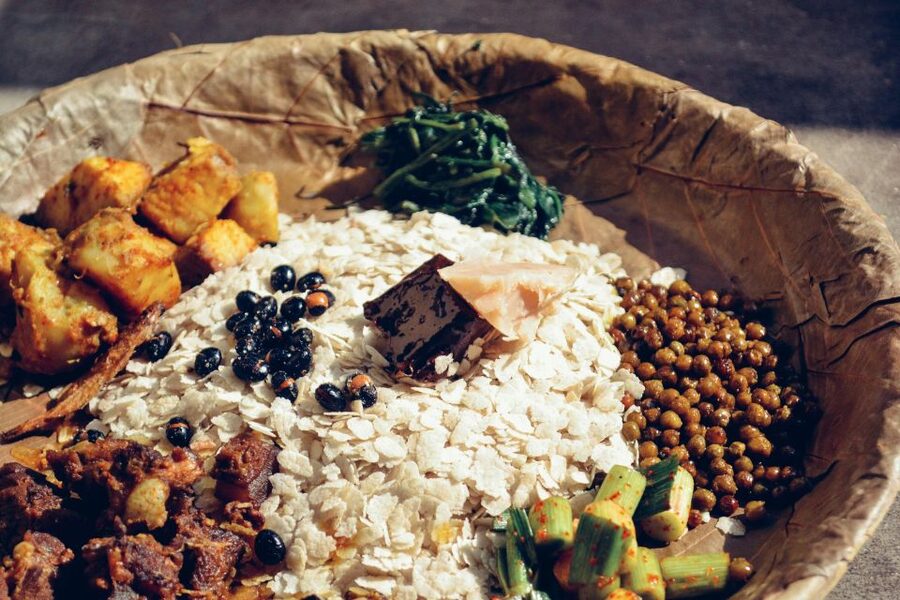
The route gives you the option to eat breakfast-style Nepalese favorites such as sel roti (rice doughnuts) and samosas, plus masala chai. Your best strategy is simple: follow the plan for where to stand and what to look at, then order what you are hungry for. Since foods are not listed as included, treat this as a “tasting opportunity” where you pay for what you choose.
A nice extra here is the nearby temple context, including Annapurna and Ganesh. Even if you do not go inside every doorway, you get that sense of Kathmandu where faith is not separate from the market.
What to consider: A market morning can mean tight spaces and lots of people moving in different directions. If you do not like crowds, you will still get value, but you may want to move slowly and keep your balance on the busiest turns.
Kathmandu Durbar Square: UNESCO landmarks and the Kumari Ghar timing puzzle
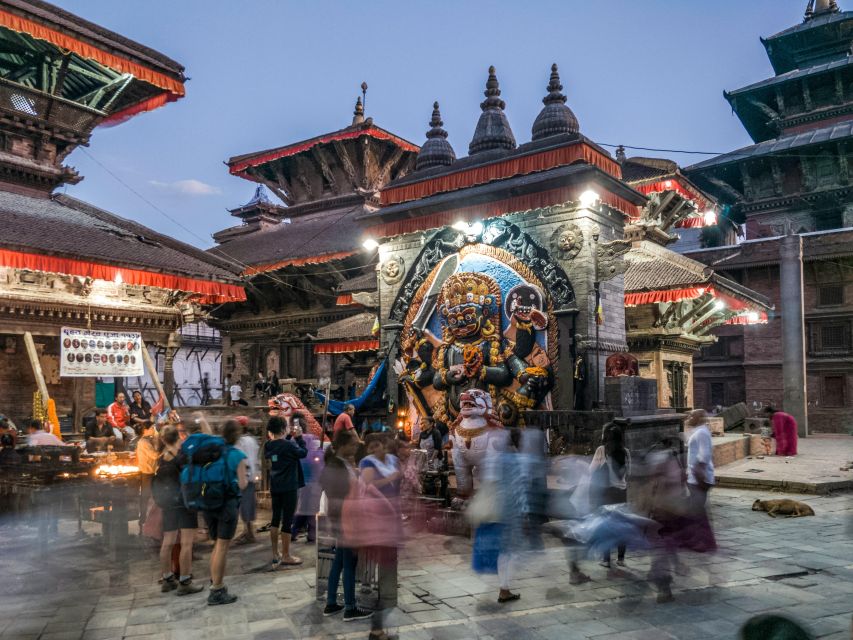
After Ason, you head to Kathmandu Durbar Square, a UNESCO-listed site that acts like a hub of royal and religious architecture. This is where the tour shifts from snack-and-stroll energy to “look longer than you planned” energy.
The main highlights you will encounter around this area include:
- Hanuman Dhoka Palace, which now houses a museum
- Kumari Ghar area, where you may be able to spot the Living Goddess from her balcony during specific hours
- Kasthamandap, an ancient wooden structure
- Taleju Temple, connected to worship by the Malla kings
- Gaddi Baithak, a neoclassical building
- Freak Street, now a lively mix of locals and visitors
The living goddess component is the one timing detail you should actually care about. The Kumari Ghar balcony viewing is listed for 9 to 11 AM and 4 to 6 PM. This tour runs in the morning window, so your chances depend on your exact start time. If you really want that moment, it is worth choosing your morning start carefully and arriving ready to focus for the relevant window.
Another good reason this stop is worth your time: Kathmandu Durbar Square is not just a single photo stop. You are walking among layers of history, and the mix of palace, temples, and carved structures helps you understand how royal power and religious practice were stitched together.
What to consider: entry fees are not included. So if you want museum access or paid viewpoints, bring cash and be flexible. Also, self-guided time is part of this segment, so you should be comfortable moving through at least some areas without constant interpretation.
Freak Street and Indrachowk, plus the optional $5 street-food challenge
This is the part food lovers tend to remember. If you want the challenge option, it is listed as an extra, with the $5 Food Challenge treated as personal expenses. That means you should go into it knowing you are paying for the food plan, and you do not get a “fully included” meal from the tour price.
The challenge route centers around spots like Freak Street and Indrachowk, and it includes named items such as:
- Momos and pani puri
- Cake at Snowman Cafe
- Suju Corn Dog
- Lassi from Janakpur Dahi Lassi Bhandar
- Newari cuisine at Bhatti Restro
- Tea at Mama Chiya
- Plus, the stop list includes traditional options along the way, not just one trend snack
Even if you skip the $5 challenge, Freak Street and Indrachowk are still useful to visit. They help you connect the heritage sites to the food side of Kathmandu. This is not “random wandering,” it is a route built around where people actually line up for specific bites.
A quick caution that is explicitly relevant to health limits: the tour is marked as not suitable for people with lactose intolerance. Since lassi is specifically listed on the food challenge menu ideas, that warning is probably there for a reason. If dairy bothers you, do not roll the dice on the plan.
Shree Gha Stupa: a calm change of pace with butter lamps and Tibetan snacks
After the louder market and heritage energy, you get a more serene stop at Shree Gha Stupa. It is described as a small, peaceful stupa near Thamel and Kathmandu Durbar Square, and this is one of the smartest moments in the whole route because it lets your brain cool down.
Here you can:
- light butter lamps
- spin prayer wheels
- try Tibetan street foods such as laphing (cold noodles) and keema noodles
- and pick up kulfi, a traditional Nepali ice cream
This segment is valuable even if you are not deeply religious. Ritual spaces have a way of slowing people down. And because this is near Thamel, you will feel the contrast before you end up back in the tourist corridor.
What to consider: foods are not included, so treat this as another opportunity to order. Also, prayer wheel and lamp activity can draw attention from others doing the same, so keep your movements respectful and unhurried.
The rickshaw ride through Thamel: how the route wraps up
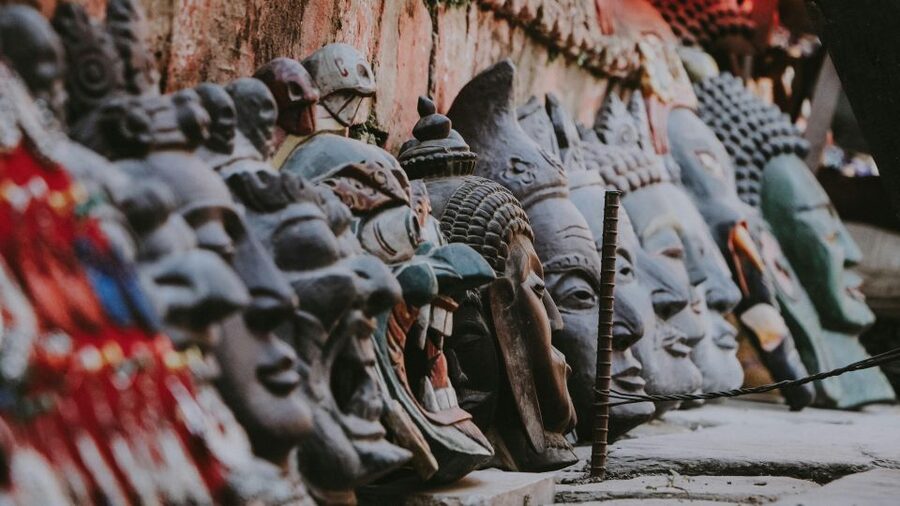
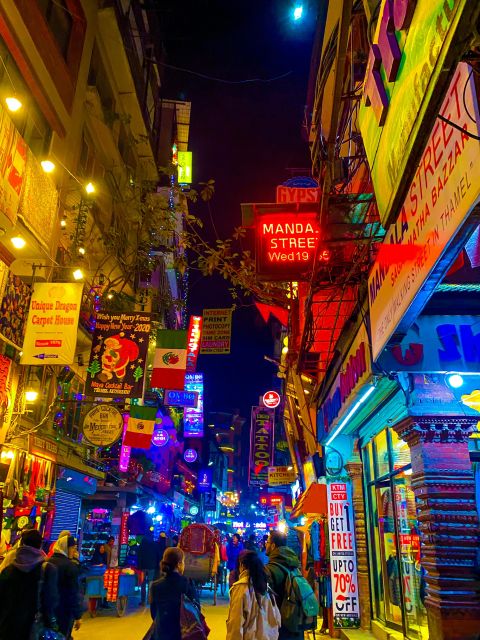
Once you have done the main sights, you end with a scenic rickshaw ride through Thamel, Kathmandu’s well-known tourist area. This is the “take in the atmosphere” stretch, with colorful markets, cafes, and shops sliding by as the rickshaw glides through busy streets.
This last part matters because Thamel can be a blur if you only do it at night. A daytime ride helps you see how shops and everyday foot traffic actually look when the city is in motion.
When the tour ends, you get a return rickshaw to your hotel or a pre-arranged drop-off point.
Price and value: what $14 buys, and what adds up later
At $14 per person for about 4 hours, this tour is priced like a practical local experience rather than a high-cost guided-sightseeing product. The included pieces are:
- rickshaw pick-up and drop
- allowances
- all taxes and service charge included
What you should budget separately:
- entry fees
- the tour guide cost (the listing lists tour guide under not included)
- foods
- the $5 Food Challenge, treated as personal expenses
So the honest value equation looks like this: you are paying for transport and route coverage, plus the driver experience. If you want multiple paid entries and a full food challenge, your total day will rise. If you keep meals controlled and stick to a few snacks, you can keep costs low and still get a memorable cross-section of Kathmandu.
Your money supports rickshaw drivers, not just sightseeing
One of the best reasons to book this type of Thamel rickshaw tour is the driver-focused purpose. The program is explicit about the situation: rickshaw drivers were once a major part of tourism in Thamel, but digital platforms reduced their ability to reach clients and earn steady work. Many drivers could not sustain livelihoods as a result.
Here, the tour partnership is meant to counter that by offering direct bookings and better pay than drivers usually get. It also includes an effort to improve driver communication so that interaction with tourists gets smoother over time.
In plain terms, this is not charity. It is a business arrangement that tries to make the rickshaw trade viable again. If you care about who benefits from your trip spending, this detail is worth your attention.
Who this Thamel cycle rickshaw tour fits best
This tour is a strong match if you want:
- a short, guided-feeling route without spending all day
- market and heritage in one morning flow
- street-food culture at names you can actually find again later
- a private format where you can ask questions and adjust your pace within reason
You should skip it, or at least think twice, if any of the tour limitations affect you. It is marked not suitable for:
- children under 5
- wheelchair users
- people with mobility impairments, hearing impairment, or heart problems
- people with back problems or high blood pressure
- people over 243 lbs (110 kg)
- people over 95 years
- people with lactose intolerance
Also, the tour has a strict “no large luggage” approach, and it prohibits alcohol and drugs, littering, jumping, alcohol in the vehicle, and making fire. If you come prepared with a small day bag and a calm, steady ride mindset, you will have a much easier time.
Should you book this Thamel rickshaw tour?
Book it if you want Kathmandu at street level, not just from ticket windows. The mix of Ason Market Square, Kathmandu Durbar Square, optional $5 street food, and a calmer Shree Gha Stupa stop gives you variety in just a few hours.
Skip it if you need a fully accessible, low-effort experience, if you have medical concerns related to the listed health restrictions, or if you dislike paying for food and entry fees on the spot.
And if you go, pick your start time with the Kumari Ghar viewing hours in mind, come with a small bag only, and make the food challenge optional rather than mandatory. That way, the $14 price stays true to its value.
More Tours in Kathmandu
More Tour Reviews in Kathmandu
Not for you? Here's more nearby things to do in Kathmandu we have reviewed


Tours, compared.
 ★ 5.0Private Kathmandu Sightseeing Tour | UNESCO World Heritage sitesFrom $17756 reviews
 ★ 5.0Everest Base Camp Helicopter Tour landing at Everest View HotelFrom $1,575668 reviews
 ★ 5.0Full Day 7 UNESCO Tour with Lunch – Private/GroupFrom $10415 reviews
 ★ 5.0Private Bhaktapur and Nagarkot Day Tour From KathmanduFrom $20305 reviews
 ★ 5.0Full Day Top 4 UNESCO Tour with Lunch – Private/GroupFrom $10269 reviews
 ★ 5.0Kathmandu Food and Drink Walking TourFrom $36266 reviews
 ★ 5.0UNESCO Seven World Heritage Tour in KathmanduFrom $180253 reviews
★ 4.9Full-Day 7 UNESCO Tour with Lunch – Private/GroupFrom $5247 reviews
★ 5.0UNESCO Seven World Heritage Tour in KathmanduFrom $180253 reviews
★ 4.9Full-Day 7 UNESCO Tour with Lunch – Private/GroupFrom $5247 reviews