

REVIEW · TOURS
Kathmandu: Kailash Mansarovar Yatra Tour 2025
Mount Kailash changes your pace. This 15-day journey centers on the Kailash Kora and Lake Mansarovar, plus a trek that crosses Droma La Pass. Along the way, you get temple days in Nepal and Tibetan plateau life that feels very different from South Asia.
I love how the tour blends spirituality with real on-the-ground travel. You start with UNESCO World Heritage sites in Kathmandu, then shift to Patan and Bhaktapur to see Newari craftsmanship up close. I also like that everything is kept manageable with private transport, English support on the Nepal side, and an English-speaking Tibetan guide in Tibet.
The main consideration is physical effort and remoteness. Expect high-altitude trekking in changing weather, and know that the most sacred overnight stops are in shared guest houses that are basic by design.
Quick Key Takeaways Before You Go

- Kailash Kora as the emotional core, with a multi-day trek timed around the pilgrimage route
- Droma La Pass as the big altitude test, where you earn every view with effort
- Lake Mansarovar rituals and calm time on the Tibetan plateau, including time for sacred lake moments
- Small group (up to 10), which helps with pacing on rough roads and narrow trail days
- Practical guiding support, including permits and an English-speaking Tibetan guide for the Tibet portion
Kathmandu First: UNESCO Temples, Newari Cities, and a Sobering Pace

Your tour begins in Kathmandu, and the first thing you notice is how quickly the trip starts mixing daily life with sacred space. Day 1 is arrival and rest. By Day 2, you are working both logistics and sightseeing at the same time, since you submit your passport for visa processing and still fit in major temples.
In Kathmandu, you visit four UNESCO World Heritage sites: Kathmandu Durbar Square, Swayambhunath (Monkey Temple), Boudhanath Stupa, and Pashupatinath Temple. Even if you are not the devotional type, these places help you understand why this entire region is pilgrimage fuel. They also create a useful mental reset before you go higher, because the sights force you to slow down and pay attention.
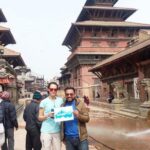
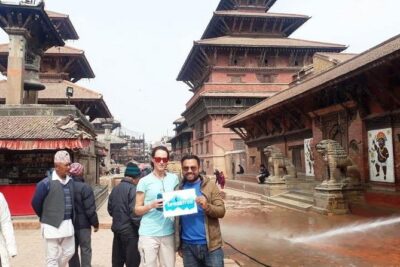
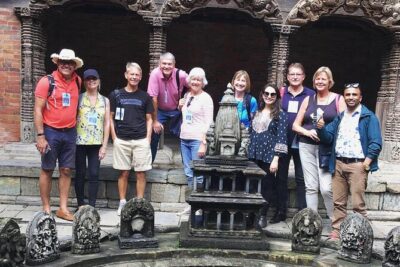
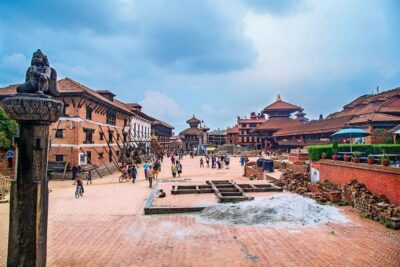
I like the way the itinerary builds in cultural context instead of just ticking off buildings. Day 3 takes you to Patan and Bhaktapur for their Durbar Squares. This is where you get more Newari architecture and a calmer feel than the busiest temple corridors. It is also a smart buffer day, since you are about to start the long travel toward Tibet.
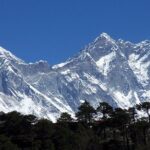
Then comes Day 4, a hike from Bhaktapur to Nagarkot. It is a day trip, but it matters because it teaches you something you will need later: walking steadily while watching for weather shifts. If the mountains are clear, Nagarkot rewards you with Himalayan vistas that help you understand what kind of scale you are chasing.
You can also read our reviews of more tours and experiences in Kathmandu.
Why this Kathmandu setup is good value
You are not paying for temple names on a postcard. You are paying for a structured acclimation rhythm: gentle walking in Nepal, culture to ground you, and private transport so you are not losing energy to delays.
Rasuwagadhi to Kerung: Crossing Borders and Letting Altitude Do Its Work
Days 5 through 7 focus on getting you into Tibet the slow, real way. You drive to Rasuwagadhi, with a scenic route through the Langtang region. This matters because road travel in this part of the world is part of the experience, but also part of the challenge. The turns and elevation changes are not subtle.
On Day 6, you cross the border and drive to Kerung. Kerung is your first introduction to Tibetan town life, and the guide time here helps you understand what you are seeing. You also visit local temples, which keeps the spiritual thread alive even while you are still in travel mode.
Day 7 continues deeper with a drive toward Saga. The goal is altitude management and gradual acclimatization, so you do not just “arrive and rush.” You get plateau views along the way, and you will see the Brahmaputra River corridor in the distance, which helps the whole region start to make geographic sense.
A real-world heads-up on the road
Weather and land events can disrupt the schedule. One recent group was delayed by a landslide and spent extra time in Kerung, with additional costs they had to cover. That is not a reason to avoid the trip, but it is a reason to plan your personal schedule with some slack.
Lake Mansarovar: The Sacred Lake, the Silence, and the Meaning

Day 8 is the payoff day for many people: you drive to Lake Mansarovar. Here, the trip shifts from movement to stillness. The lake sits in a high, open basin where the sky dominates your view. You participate in spiritual rituals by the lake and get time to absorb the atmosphere.
If you are curious about what people call purification in this region, this is where you feel it. The rituals are not just “photo moments.” They pull you into a rhythm of respect, patience, and quiet attention. Even if you do not follow the same faith background, it is hard not to notice how the place changes people’s behavior.
Day 9 takes you to Darchen, the gateway point for the Mount Kailash Kora. It is a short drive, but it is important because it is your staging time. You prepare for the upcoming circumambulation, which means physically ready, mentally calm, and logistically organized.
What you should expect in practical terms
- You will be in remote zones, so your comfort level will be shaped by location, not luxury standards.
- The tour includes breakfast during all nine mornings in Tibet, which is a big help because you are relying on consistent meal timing at altitude.
Darchen to Derapuk: Beginning the Kailash Kora with North-Face Views

On Day 10, you start the Kora with a trek to Derapuk. This is where the journey becomes unmistakably about Kailash. You will be walking in a defined sacred route, and the landscape feels dramatic even on days with clouds.
One of the most motivating details is the north-face views of Mount Kailash that you get along this segment. You are not just hiking for distance. You are hiking for a sequence of sight lines and spiritual checkpoints that pilgrims have followed for generations.
This day also teaches trail basics you will use later: consistent pace, managing breath, and staying alert for weather changes. High altitude can make every small decision matter, like when to drink water or how to adjust layers.
Accommodation reality check
You will stay in simple settings near the pilgrimage route. That is not an excuse to ignore comfort, but it is a reminder to pack for cold nights and to keep expectations aligned with the remoteness.
Droma La Pass and Zutulpuk Monastery: Where Effort Meets Meaning

Day 11 is the serious day. You trek to Zutulpuk via Droma La Pass, the highest point of the trek. This is the segment that forces you to be honest about fitness. It is not just steep, it is altitude demanding, and you will feel it in your breathing and energy reserves.
The payoff is reflection time at a place pilgrims treat as significant. You are also visiting Zutulpuk Monastery, which adds a different flavor than the outdoor Kora route. The monastery stop gives your mind somewhere to rest after physical strain.
Day 12 is your completion day for the Kora, followed by a drive back to Darchen and onward to Saga. Finishing the circumambulation has a different emotional tone than starting it. After days of focus, the return travel feels both like relief and like a quiet ending.
A note on guidance and safety
The tour is designed around safety and comfort with experienced guides. At altitude, that is not a slogan. It translates into pacing, route management, and practical decisions when conditions shift.
Back Through Tibet and Into Kathmandu: Ending the Circle, Not Just the Trip

Day 13 drives you back toward Kerung. This is a long transit day where you get last glimpses of Tibetan terrain. You can use this time to review what you learned about your own limits and patience.
Day 14 is the border crossing back into Nepal and the drive to Kathmandu. After being in high-altitude space for days, Kathmandu feels loud, busy, and close again. Day 15 ends with transfer to the airport and your flight home.
Plan for a buffer on the last days in Kathmandu
If weather turns the itinerary choppy, you need flexibility at the end. One group recommended adding extra days in Kathmandu after the tour, since rain and other disruptions can cause you to return later than expected. Even if everything goes smoothly, extra time helps you decompress.
Price and Value in 2025: What You Pay For, What You Must Pay Separately

The listed price is $4,013 per person for a 15-day itinerary. For this kind of trip, you are not just paying for transportation. You are paying for:
- Permits and entry paperwork, including Tibet Travel Permit and Tibet-side entrance fees
- Private logistics, including Kathmandu UNESCO transfers and private jeeps in Nepal to and from Rasuwagadhi
- English-speaking guidance, including a Tibetan guide in Tibet
- Consistent basics, like breakfast during all Tibet mornings and organized accommodation distribution
Where the cost makes sense, in my view, is that it reduces your stress at the exact points where things can go wrong: border crossing timing, permit handling, and coordinating remote transport.
Now the costs you should not ignore:
- International airfare and travel insurance are not included.
- Nepal visa fees are not included, and the Chinese visa is listed as USD 250 for American, Canadian, and British passport holders.
- Kathmandu stay and meals in Kathmandu are included only as lodging and breakfast, not lunch and dinner.
- Lunch and dinner during the Kailash portion are not included.
- Optional comfort options cost extra: helicopter is not included (USD 1,600 private or USD 320 shared, if you choose it).
- For the trek, porter services are optional (USD 350 for three days, carrying up to 12 kgs including food and accommodation), and ponies are optional (USD 600 for three days, if needed).
Accommodation is another value factor. You get 3-star hotels in Tibet for six nights, then shared guest houses for three nights near key pilgrimage areas (Mansarovar, Darchen, Zutulpuk). That blend is typical for the route, but it is good to budget for basic conditions and cold.
Practical Tips That Will Save You Friction on This Yatra

This is where small details matter. Follow the tour’s guidance and you will feel much better day to day.
What to pack
Bring:
- Passport
- Comfortable shoes
- Warm clothing and a hat
- Sunscreen and water
- Snacks
- A camera
Carry cash too. ATMs may not be available, so you need money for personal expenses.
What not to bring (and why this matters)
You cannot treat Tibet like a normal sightseeing box. During the Tibet portion, you are strictly forbidden to carry items such as photos, books, CDs, DVDs, or digital devices related to the Dalai Lama or other Tibetan leaders. You are also prohibited from sharing or posting content about the Dalai Lama on social media platforms like Facebook, Twitter, or YouTube.
If that feels surprising, take it seriously. The goal is to avoid problems at checkpoints. Keep your phone use and content simple and follow your guide’s instructions.
Health and physical limits
This trip is not suitable for:
- Children under 10
- Pregnant women
- People with back problems or heart problems
- Wheelchair users
The trek demands good fitness, and acclimatization days are included. Still, altitude can affect you even if you are athletic, so be honest about your health and your pacing.
Cultural respect rules
Alcohol and drugs are not allowed. Littering is not allowed. You are also expected to respect local customs and traditions. On pilgrimage routes, your behavior signals your understanding.
Should You Book the Kathmandu Kailash Mansarovar Yatra Tour 2025?

If you want a bucket-list spiritual journey that still feels grounded and organized, this is a strong fit. The standout strengths are the Kailash Kora experience, the Lake Mansarovar ritual atmosphere, and the fact that the trip stays practical through English guidance and private transport. The small group size (up to 10) helps keep your days from turning into a chaotic scramble.
However, book only if you can handle:
- High-altitude trekking with the big test of Droma La Pass
- Basic accommodations at sacred overnight points
- Possible disruptions from weather or land events, where extra costs might fall to you
Timing can help. One group noted that May to August is best. September can still work, but plan for rain and mountain schedule changes.
My quick decision rule:
- Book if you have solid fitness, you respect the cultural rules, and you want the real pilgrimage rhythm.
- Skip if you want comfort-first travel, you struggle with altitude, or your schedule cannot absorb delays.
If that sounds like you, this is the kind of trip that gives you more than photos. It gives you a new way of looking at distance, time, and faith.
FAQ
What is the duration of the Kathmandu Kailash Mansarovar Yatra Tour 2025?
The tour lasts 15 days.
Where does the tour take place?
It includes Kathmandu and nearby areas in Nepal, plus Tibet sites related to Mount Kailash and Lake Mansarovar.
How many people are in the group?
The group is limited to 10 participants.
What is included for accommodation and meals in Tibet?
You get 9 nights of accommodation in Tibet, with six nights in 3-star hotels and three nights in shared guest houses (Mansarovar, Darchen, Zutulpuk). Breakfast is included for all nine mornings in Tibet.
Are meals included during the Kailash part of the trip?
Lunch and dinner during the Kailash tour are not included.
Do I need a Chinese visa?
Yes. The Chinese Visa is listed at USD 250 for American, Canadian, and British passport holders.
Is a helicopter ride included?
No. A helicopter ride from Kathmandu to Rasuwagadhi is optional and costs extra if you choose it.
Is a porter or pony available for the Kora trek?
Porter services are optional (USD 350 for three days). Pony hiring is optional (USD 600 for three days) if needed.
What should I bring for the trip?
You should bring your passport, comfortable shoes, warm clothing, a hat, a camera, snacks, sunscreen, and water.
Are there restrictions on what I can carry in Tibet?
Yes. While on the Tibet tour, you are strictly forbidden to carry items such as photos, books, CDs, DVDs, or digital devices related to the Dalai Lama or other Tibetan leaders, and you are prohibited from sharing or posting content about the Dalai Lama on social media platforms. Alcohol and drugs are also not allowed.
More Tours in Kathmandu
More Tour Reviews in Kathmandu
Not for you? Here's more nearby things to do in Kathmandu we have reviewed


Tours, compared.
 ★ 5.0Private Kathmandu Sightseeing Tour | UNESCO World Heritage sitesFrom $17756 reviews
 ★ 5.0Everest Base Camp Helicopter Tour landing at Everest View HotelFrom $1,575668 reviews
 ★ 5.0Full Day 7 UNESCO Tour with Lunch – Private/GroupFrom $10415 reviews
 ★ 5.0Private Bhaktapur and Nagarkot Day Tour From KathmanduFrom $20305 reviews
 ★ 5.0Full Day Top 4 UNESCO Tour with Lunch – Private/GroupFrom $10269 reviews
 ★ 5.0Kathmandu Food and Drink Walking TourFrom $36266 reviews
 ★ 5.0UNESCO Seven World Heritage Tour in KathmanduFrom $180253 reviews
★ 4.9Full-Day 7 UNESCO Tour with Lunch – Private/GroupFrom $5247 reviews
★ 5.0UNESCO Seven World Heritage Tour in KathmanduFrom $180253 reviews
★ 4.9Full-Day 7 UNESCO Tour with Lunch – Private/GroupFrom $5247 reviews