
Three days in Pokhara can feel perfect. This short trip works hard for you, mixing a scenic bus ride from Kathmandu with big-view stops, from Sarangkot sunrise to the World Peace Stupa.
I especially like the balance here: a full Pokhara day with an English-speaking guide and a private car, then a separate sunrise window that starts early enough to catch the Annapurna range from Sarangkot. You also get iconic sights like Devi’s Fall, Gupteswar Gupha, and time at Phewa Tal.
The main consideration is travel time. The round-trip bus can mean 8 hours each way on bumpy roads, and the day ends can run late, so you will want to confirm exactly where you will be dropped back in Kathmandu.
Key highlights worth your attention
- Early Sarangkot pickup at 5:30 am from Lakeside for a real Annapurna-range sunrise shot
- English-speaking guide plus private car for the full Pokhara sightseeing loop
- World Peace Stupa viewpoint over Pokhara with big mountain energy
- Devi’s Fall and Gupteswar Gupha for waterfall plus natural cave exploration in one go
- Phewa Tal lake time with a rowing boat hour and an easy-paced setting
- Small group cap (max 25), plus a sharing tourist bus between Kathmandu and Pokhara
From Kathmandu to Pokhara by tourist bus, what to expect
Your trip starts with pickup in Kathmandu, then a transfer to the bus station. From there, you ride a tourist bus to Pokhara, with the drive time listed at about 8 hours.
Eight hours is a long stretch, especially if the roads feel rough. If you are prone to motion sickness, pack what helps you. Also bring layers. Bus rides on cooler mornings or after sunset can feel chilly, even when the day in Nepal is warm.
The upside is that you do not have to plan transport yourself. You also avoid the hassle of switching between multiple tickets and vendors. Still, go in knowing this is not a quick hop. This tour is best when you are okay trading comfort for time saved on planning.
A few more Kathmandu tours and experiences worth a look

Day 1: arrive in Pokhara and get your bearings
Day 1 is mainly the transfer and hotel check-in. After you arrive in Pokhara, you move to your hotel and get the rest of the day to settle.
This matters more than it sounds. Pokhara is spread out around the lake area and hillside viewpoints, so having some breathing room on arrival helps you enjoy the next morning’s early pickup for sunrise.
If you can choose, aim for a hotel area that makes morning logistics easy. Since sunrise starts at 5:30 am from the Lakeside area, staying close to the lake can reduce stress when the alarm goes off.
Day 2: Devi’s Fall, Gupteswar Gupha, and the World Peace Stupa viewpoint
Day 2 is your main sightseeing day, and it is built like a best-of Pokhara route. You start with Devi’s Fall, then move through Gupteswar Gupha, World Peace Pagoda, and Sarangkot, before finishing with lake time and a mountaineering museum.
Devi’s Fall
You stop for about 20 minutes at Devi’s Fall. It is known as a dramatic water feature, and the time is short but focused.
What I like about this stop is that it gives you a real sense of Pokhara’s natural water forces without turning your day into a long hike. The drawback is also clear: if you want slower walking and deeper photo time, your 20 minutes will feel quick. Wear shoes you can move in comfortably.
Entrance fees are not included, and the tour notes an estimated total entrance cost around US$10 for the visit sites.
Gupteswar Gupha
Next is Gupteswar Gupha, a natural cave experience with about 40 minutes on site.
Caves have a way of turning a simple stop into something memorable. You get a change of pace from waterfalls and open views, and you can usually move at your own rhythm. Still, this is not a museum tour. It is a physical space, so take care with footing and keep an eye on where your group is going.
Entrance fees also are not included for this stop.

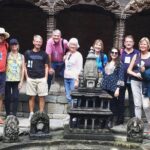
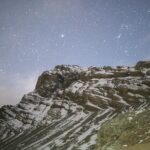
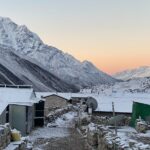
World Peace Pagoda (World Peace Stupa)
Then you head to the World Peace Pagoda, also called the World Peace Stupa. The description is clear: it is a Japanese Buddhist temple up on a hill with impressive views of the Annapurna area.
This stop is the payoff for anyone who likes viewpoints but does not want to spend half a day hiking. It also helps that the time is listed at about 1 hour. That is long enough to do photos, slow walking, and still catch your breath after the cave.
If you are sensitive to cold, remember hilltop temperatures can feel different than lake-level Pokhara. Bring something light, especially if the weather looks changeable.
Sarangkot sunrise at 5:30 am, the real reason to book
Sarangkot is the headline for many people, and it is scheduled like it matters. You need to start at 5:30 am from your hotel in the Lakeside area.
This is not optional “when you feel like it” sunrise. You will be on the road early because the best chance at a clear view over the Annapurna ranges depends on timing.
What makes Sarangkot work
Sarangkot gives you the vantage point. You can stand, scan the sky, and wait for light to roll in. The listed time is about 1 hour, which is short but realistic, because sunrise windows pass fast.
What can trip you up
The main risk is weather and cloud cover. The tour can only control timing, not the sky. If you show up without layers, early morning will feel cold. If you show up without patience, you might feel rushed.
Also note how the pickup is tied to staying in the Lakeside area. If your hotel is far from where the pickup happens, double-check your meeting point the day before.
Phewa Tal lake time plus the International Mountain Museum
After sunrise, the day keeps moving, but you get a more relaxed vibe with the lake.
Phewa Tal
You stop at Phewa Tal, with about 1 hour allocated. The overview for this tour includes a rowing boat hour on the lake, which is exactly the kind of low-effort activity that balances the earlier starts.
Boat time on Phewa Tal is a good match for this itinerary because it resets your pace. You go from caves and viewpoints into open water and easier movement. It is also one of the best chances to enjoy Pokhara without rushing.
International Mountain Museum
Next is the International Mountain Museum, about 1.5 hours.
This is where the trip gets smarter instead of just scenic. If you care about how Nepal’s mountaineering culture works, a museum stop adds context. Even if you are not a hardcore climbing fan, it helps you understand why the Annapurna area draws climbers from around the world.
Entrance fees are not included here, so factor that into your budget alongside the estimated US$10 entry costs.
Day 3: your scenic return to Kathmandu
Day 3 brings the return ride. After breakfast at 7:00 am, you transfer to the bus station and take the tourist bus back to Kathmandu. The driving time is listed as about 8 hours.
This is another long travel day. If you are the type who needs sleep to function, consider planning your next day in Kathmandu lightly. Also, keep your energy up the night before, because you will not have much flexibility once the bus is leaving.
One important practical note: while the tour includes hotel pickup and drop off in Kathmandu, at least one past traveler reported being dropped on the roadside after dark instead of directly back at a depot or their exact stop. That is not the standard plan, but it is enough of a red flag that you should confirm your exact return drop location when you receive the final details.
Price and value: is US$540 a fair deal for 3 days
At US$540 for about 3 days, this is positioned as a convenience-heavy, organized highlights tour. The value comes from three things you are paying for:
1) Tourist bus transport round trip between Kathmandu and Pokhara, handled for you
2) Hotel pickup and drop off in Kathmandu, plus local guiding inside Pokhara
3) A packed, time-efficient Pokhara day with private car service and an English-speaking guide
Meals are not included, and entrance fees are estimated around US$10, so you need a little cash for food and sites. The tour also lists gratitude as optional, so budget a small amount only if you want to.
If you compare this to DIY travel, you would still have to manage buses, local transport, and timing for sunrise. Paying the premium makes sense if you want your days to flow and you do not want to spend half your trip figuring out routes.
If you hate long bus rides, the value drops. This tour’s strength is organization and sightseeing density, not comfort or speed.
Who this Pokhara tour fits best
This plan works best if you want a short Pokhara hit with minimal planning. Specifically:
- You want Annapurna sunrise at Sarangkot and are okay waking up early
- You prefer a structured route with an English-speaking guide and private car transport in Pokhara
- You like mixing natural sights (waterfall, cave, lake) with at least one context stop (mountaineering museum)
- You are fine with 2 long travel days in exchange for saving time on logistics
- You want a small group experience, with a cap of 25 travelers
If you are hoping for a slow, romantic Pokhara weekend, this may feel rushed. If you want beach time or days of hiking at your own pace, you will likely want to add extra nights.
Should you book this 3-day Pokhara tour from Kathmandu?
I would book it if your top goal is seeing Pokhara’s core highlights in a tight window, especially Sarangkot sunrise plus World Peace Stupa and lake time at Phewa Tal. The pacing is efficient, and the structure saves you from coordinating transport.
I would hesitate if you are very sensitive to bus comfort, motion, or late arrival timing. The route is built around long driving days, and sunrise logistics depend on being in the Lakeside area.
My practical advice: before you lock it in, confirm your hotel pickup and your exact return drop point in Kathmandu. That single detail can turn an organized trip into a smooth one, or into a late, inconvenient end.
If you are okay with that, this is a strong way to make Pokhara count fast.
FAQ
How long is the Pokhara tour from Kathmandu?
The tour runs for about 3 days.
Where does the tour start and end?
It starts with pickup from your hotel in Kathmandu and ends with return transfer back to Kathmandu.
Is transportation between Kathmandu and Pokhara included?
Yes. You get a round trip sharing tourist bus transfer from Kathmandu to Pokhara and back.
Do I get pickup and drop off in Kathmandu?
Yes. Hotel pickup and drop off in Kathmandu are included.
Is there an English-speaking guide in Pokhara?
Yes. The entire Pokhara sightseeing portion includes an English-speaking tour guide and is done in a private car.
Are entrance fees included for the stops?
No. Entrance fees are not included, with an approximate total mentioned around US$10 for the places you visit.
Is sunrise at Sarangkot included, and what time does it start?
Yes. You leave at 5:30 am from your hotel in the Lakeside area to see sunrise from Sarangkot.
Are meals included?
Lunch and dinner are not included.
What is the cancellation policy?
You can cancel up to 3 days in advance for a full refund.
More 3-Day Experiences in Kathmandu
More Tours in Kathmandu

More Tour Reviews in Kathmandu
Not for you? Here's more nearby things to do in Kathmandu we have reviewed


Pokhara Trips from Kathmandu, compared.
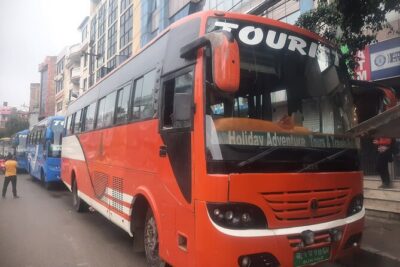 ★ 4.0Kathmandu to Pokhara Tourist Bus Tickets reservationFrom $2225 reviews
 ★ 5.02 Night 3 Days Pokhara City TourFrom $10022 reviews
 ★ 5.0Private Car Service from Kathmandu to PokharaFrom $7710 reviews
6 Days/5 Nights Private Kathmandu Pokhara TourFrom $2,4479 reviews
 ★ 4.57 Day Kathmandu Pokhara TourFrom $3805 reviews
 ★ 4.0Ac Toyota Coaster Deluxe Coach Kathmandu to PokharaFrom $305 reviews
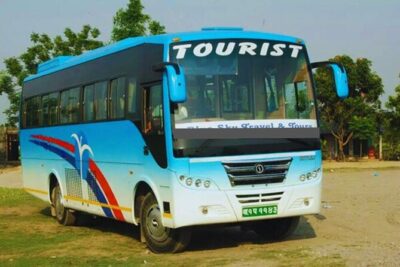 ★ 3.5Tourist Bus Tickets: Kathmandu to Pokhara or Pokhara to KTMFrom $165 reviews
 ★ 5.0Luxury Sofa Bus from Kathmandu to PokharaFrom $223 reviews
Browse the lists this tour appears in