
REVIEW · TOURS
12 Days Overland Tour to Upper Mustang
Jeep tracks in the forbidden kingdom. This 12-day Upper Mustang overland trip turns Kathmandu and Pokhara into warm-up acts, then puts you on rugged road and ancient places, from Kagbeni monasteries to the Chhoser sky caves and the almost 3,000-year-old Shija Jhong cave.
What I like most is how tightly it focuses on places you would normally need a lot of time and effort to reach. You go by private Jeep with an English-speaking guide, and the tour is set up for just your group, so the pace feels more like a real conversation than a bus schedule.
One drawback to plan for: the travel days are long. Several days are listed at about 12 hours on the road, and Upper Mustang driving can get bumpy. If you are also aiming for December, keep in mind one traveler noted it is not the best season, so expect colder and harsher conditions than peak spring.
Key reasons I’d pick this Upper Mustang Jeep trip
- Private group driving: it is just your party, with a guide who can tailor the flow to your comfort.
- Permits handled: ACAP and Lo Manthang Special Permits are included (USD 534).
- Caves and monasteries by road: Chhoser sky caves plus Shija Jhong cave visits without needing a full hiking plan.
- Kagbeni and Lo Manthang with context: you see the sites tied to local practice, like the Pitri-Puja tradition.
- Family-run support style: past guests highlighted first-hand help from a Thamel-based agency.
- Long-seat reality: you cover real distance, so build in patience and motion-sickness planning if needed.
Day 1 in Kathmandu: a clean start at Tribhuvan, then straight to orientation
You land at Tribhuvan International Airport in Kathmandu, and a representative from Adventure Glacier Treks meets you at the arrival gate. From there, you get transferred to your hotel, then you have a briefing so you are not guessing how the trip works once the road days begin.
I like the first-night setup because it reduces the biggest early-trip stress. You can focus on getting oriented, sleeping, and asking questions. This is especially helpful for Upper Mustang, where logistics and permits matter and you want everything aligned before you leave the Kathmandu Valley routine behind.
If you have never visited Nepal before, give yourself one extra reason to stay flexible today. Jet lag hits hard, and Kathmandu altitude can still make you feel a little off. The tour structure helps, but you still want a calm first evening.
You can also read our reviews of more tours and experiences in Kathmandu.
Kathmandu Valley sightseeing: culture prep before the Mustang changes
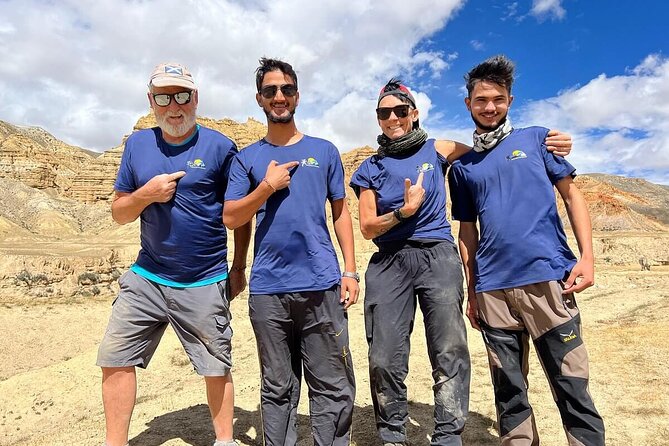
The next morning you are out for Kathmandu Valley sightseeing with your guide. The focus is monuments, culture, and art, which is a smart pre-load before you head toward a Tibetan-influenced region where monasteries are central to daily life.
This day is valuable even if you have been to Kathmandu before. It gives you a baseline of Nepalese temple styles and cultural patterns, so later you can spot what is similar and what looks different in Mustang. I also like that the tour keeps admission as free for the activities listed, so you can budget your spending toward the road and meals instead of surprise tickets.
Practical note: keep your camera charged and a small bag ready. You will likely be walking uneven pavement, and Kathmandu crowds can make it easy to lose track of small items.
Pokhara to the west: switching from city rhythm to countryside pace
After breakfast, you take a private jeep trip from Kathmandu to Pokhara. This is a long drive day, and the point is not just to get to Pokhara. You start to see Nepal shift into greenery, rivers, villages, and farm life along the way.
I like this segment because it is where you get used to the “overland mindset.” It is not a quick hop, so you settle in early, find a comfortable position in the jeep, and let the trip feel like a moving road story instead of a checklist.
In real terms, Pokhara also gives you a calmer base before the Mustang run. Even if you already know Pokhara, coming in for one night after Kathmandu often helps your body and mind handle the tougher driving that follows.
Following the Kali Gandaki route: Beni to off-road progress toward Mustang
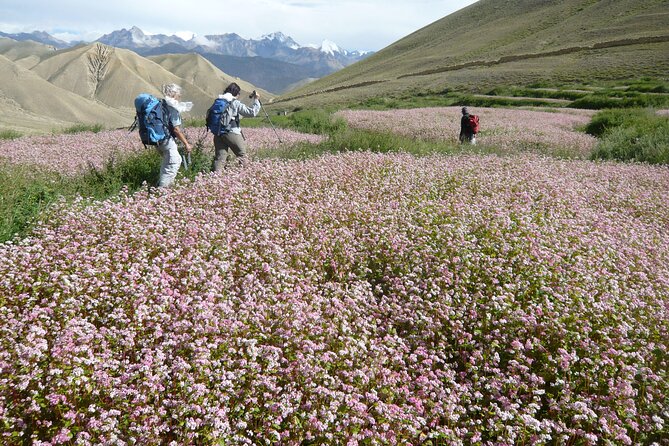
The journey toward Mustang starts after breakfast from Pokhara by private jeep. You follow the Kali Gandaki River corridor, first along blacktop toward Beni, then the road goes off-road after Beni.
That blacktop-to-off-road shift matters. On blacktop, your body can relax. On off-road stretches, you get more vibration, steering changes, and that constant attention to the road surface. You will feel it in your shoulders and lower back if you are not used to long vehicle days.
Your itinerary places you at Tatopani for the stop that day. Even without overthinking it, treat Tatopani as your “reset point” on the journey west. Stretch, hydrate, and eat something simple. This is when the trip transitions from scenic day-drive to a more remote, rugged feel.
Muktinath and the village stops: apples, markets, and Kagbeni as the threshold
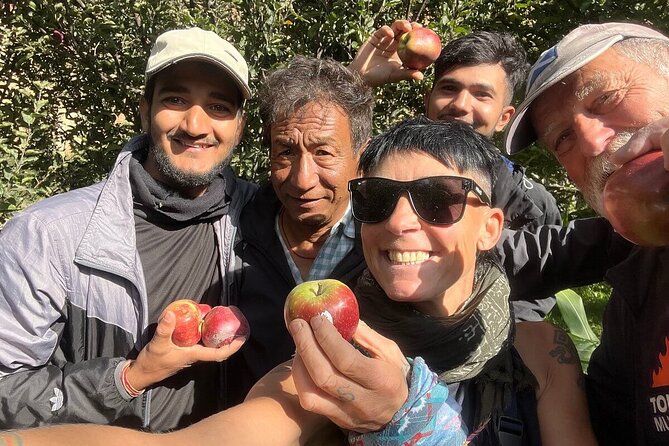
After breakfast, you drive via nearby villages of Kalopani and Ghasa. You stop to see how apples are grown, and you visit a local market in Jomsom. Then the drive continues past Kagbeni toward Muktinath.
What I like here is the variety in stopping points. You are not only hitting viewpoints. You see agriculture in the area, then you get a market window into how locals trade and live day-to-day. For many people, that is one of the most memorable parts of Upper Mustang, because the region is famous for ancient sites, but the living culture is what makes it real.
Muktinath is also a key spiritual destination, and it is a good day to go slow and notice details. Your guide can help you read what you are seeing so it does not just become a photo stop.
Then you reach Kagbeni, which feels like a real threshold in the experience. It is where the trip begins to look and feel more Mustang and less Nepal-in-general. If you want an “I arrived” moment, Kagbeni is it.
Kagbeni monasteries and Pitri-Puja: seeing religion as part of daily life
After breakfast, you tour Kagbeni Monastery. Kagbeni is famous for Pitri-Puja, also called Pitri-Moksastala. The tour description connects this practice to saving lost souls of ancestors from hell and helping them get to a better place.
You should treat this as more than a fact to memorize. When you stand around monastery spaces during a season connected to major rites, the whole region makes more sense. People are not just performing for visitors. They are maintaining a worldview.
If you are sensitive to crowds or religious ceremonies, talk to your guide early about timing and how to move respectfully. This kind of stop can be emotionally strong, and the best experience comes when you follow local cues instead of rushing for the best angle.
The practical win: Kagbeni is close enough to make this a meaningful morning stop, without forcing you to spend the whole day only on one site.
Lo Manthang: monasteries, the walled city feel, and the God House moment
On the main Lo Manthang day, you visit several important monasteries and landmarks: Lo Gager Ghar Gompa, Charang Monastery, Lo-mang Thang City, Jampa Gompa, the oldest monastery called God House, plus additional monastery and city features.
Lo Manthang is where Upper Mustang starts feeling fully like its own world. You stop thinking of it as “remote Nepal” and start thinking of it as a place with its own religious and cultural rhythms. Walking through the city area with a guide helps you sort what is what, and what dates and traditions are attached to each site.
I also like that the day includes multiple stops instead of one long temple marathon. You get variety, and you can let each place land before the next one starts.
One tip: build time for photos, but do not treat every doorway like a product shoot. In monasteries, you will often do better with slow looking, listening, and asking what is appropriate. Your guide is there for that.
Chhoser sky caves and Shija Jhong: ancient walls you can actually see
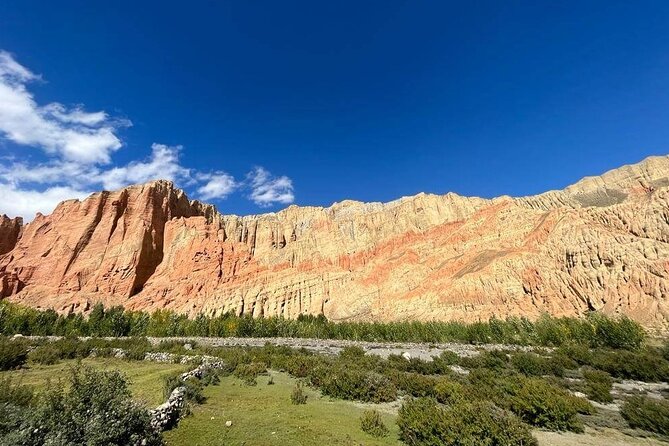
The next day is about monastery spaces plus caves. You visit Namgyal Gompa, then the Chhoser sky caves, and the Shija Jhong cave, described as almost 3,000 years old and explored by archaeologists from around the world.
This is one of the big reasons to choose this trip style. By Jeep tour, you can get to far-flung cave areas and still keep the day structured. It is not a spontaneous scramble. You have a plan, timing, and local context.
When you reach cave sites, pay attention to the difference between what you are feeling and what you are seeing. Cave air can feel cooler or stale. The space can feel tighter than your brain expects from the words. Move carefully, keep a steady pace, and do not rush the inside moments just to get back out for the next stop.
Chhoser sky caves can also be a visually striking stop. The main value is that you are learning how cave spaces connect to community memory and religious storytelling. Your guide’s job is to help you connect the physical site to why it matters to people living nearby.
Jomsom on the way back: river corridor views and a market evening
After breakfast, you drive back to Jomsom. Along the route you pass nearby villages, the Kali Gandaki River, Buddhist stupas, and monasteries. Then you have time to explore the local market in the evening.
This is a good day for “use it or lose it” energy. Driving days can dull you, but the river corridor and smaller village views keep the scenery moving. Stupas and small monastery markers also help you notice religious presence in places that might not look like major sights.
In the evening, the Jomsom market is a nice release valve. It gives you a chance to buy small souvenirs, snack, and talk to locals, but without requiring you to schedule another major monastery visit.
If you tend to get carsick, this is where you should use whatever you normally use. The return day still has a full travel load, so do not wait until you feel awful.
Pokhara recovery day: lakeside time, rest, and a gentle wrap-up
You drive from Jomsom to Pokhara. Then the next day you have time for a Pokhara lakeside city tour, plus the option to rest if you want.
I like having a recovery slot here, because Upper Mustang is not just pretty photos. It is altitude exposure, long driving, and emotional intensity from religious sites and ancient architecture. Resting in Pokhara gives your body time to even out.
This is also a good day to review photos and notes while it is fresh. You will remember cave details and monastery impressions more clearly if you look at your images while the route is still in your head.
Day 12 back to Kathmandu: finishing on road time, not on fatigue
On the final day you drive from Pokhara to Kathmandu, about seven hours depending on road conditions. The journey is described as countryside filled with greenery, rivers, villages, farms, and mountain scenery.
This final transfer is where patience pays off. Road conditions can shift, and after 11 previous days of motion, even a “short” day can still feel long. Plan to keep snacks and water handy, and use the drive as a quiet decompression.
When you return to Kathmandu, the tour ends back at the meeting point. That matters because you are not forced into another day of transportation planning.
Price and what you actually get for $2,600 per person
At USD 2,600 per person for roughly 12 days, you are paying for a package that includes more than just a seat in a vehicle. The big value elements are:
- ACAP and Lo Manthang Special Permits are included (USD 534). This is a major cost driver for restricted areas, and having it handled is one less headache.
- English speaking guide who can explain what you are seeing and manage timing across multiple sites.
- Private ground transportation by vehicle for the overland route.
- Accommodation as mentioned in the program plus breakfast (11).
To judge value, I look at how much you would have to independently organize if you did not buy this package. Permits, local guiding, vehicle logistics, and the back-and-forth between Kathmandu, Pokhara, Jomsom, and Mustang are the kinds of details that add time and stress quickly. Here, you pay for coordination upfront.
One note from past guests: a reviewer praised Adventure Glacier Treks for being family-run and based in Thamel, with first-hand information and competitive prices. That kind of local knowledge often shows up in small decisions, like how the day flows or how issues are handled when road conditions change.
If you care about comfort more than extra free time, the private format tends to be worth it. If you hate rigid schedules and want full independence, you might feel boxed in by the structure.
Jeep-heavy driving: how to make this route feel easier on your body
Because this is a private Jeep overland route, you should assume you will spend a lot of time seated. Several days are listed around 12 hours, so comfort is not a luxury, it is part of the trip.
Here is how I would prepare in a practical way:
- Bring a small seat comfort item if you use one at home, especially if you have back issues.
- Pack layers. Even if days feel warm, higher elevation areas can cool fast.
- Keep water and simple snacks accessible for long stretches, since personal expenses are not included.
Also, respect that road time affects everything. Stops, pacing, and how you experience sites can depend on conditions. The tour description even notes that the final day drive can take around seven hours depending on road conditions.
Who should book this Upper Mustang Jeep tour
This is a strong fit if you want:
- Caves and monasteries in Upper Mustang without doing a fully trekking-focused plan.
- A private trip style where your guide can set a tone for your group.
- A structured route that still includes meaningful stops in towns like Kagbeni and markets like Jomsom.
You might want to rethink if:
- You strongly prefer walking every day and dislike vehicle time.
- Long driving hours would likely derail you physically.
- You are going in a colder month and you are not prepared for tougher conditions, since one traveler noted December is not the best season.
FAQ
How long is the Upper Mustang Jeep tour?
The tour runs for about 12 days.
Where does the tour start and end?
It starts at the Best Tour & Travel agency in Kathmandu, and it ends back at the same meeting point.
What permits are included in the price?
ACAP and Lo Manthang Special Permits are included, for USD 534.00.
Is there an English speaking guide?
Yes, the package includes an English speaking guide.
What meals are included?
Breakfast is included for 11 days.
Is this a private tour?
Yes, it is a private tour, and only your group participates.
Do I get a mobile ticket?
Yes, the experience includes a mobile ticket.
Can I get a full refund if I cancel soon?
You can cancel up to 3 days in advance for a full refund. Canceling less than 3 days before the start time is not refundable.
Should you book this Upper Mustang Jeep trip?
I would book it if you want to see Lo Manthang, Kagbeni, Muktinath, Chhoser sky caves, and the Shija Jhong cave while keeping logistics handled and your group private. The permit inclusion alone makes it feel more organized and less risky for your budget.
I would think twice if your body really struggles with long seat time, or if you are planning travel in a colder month without flexibility. For a lot of people, the payoff is worth it, especially if you enjoy slow, serious looking at monasteries and caves, not just moving from viewpoint to viewpoint.
More Tours in Kathmandu
More Tour Reviews in Kathmandu
Not for you? Here's more nearby things to do in Kathmandu we have reviewed


Tours, compared.
 ★ 5.0Private Kathmandu Sightseeing Tour | UNESCO World Heritage sitesFrom $17756 reviews
 ★ 5.0Everest Base Camp Helicopter Tour landing at Everest View HotelFrom $1,575668 reviews
 ★ 5.0Full Day 7 UNESCO Tour with Lunch – Private/GroupFrom $10415 reviews
 ★ 5.0Private Bhaktapur and Nagarkot Day Tour From KathmanduFrom $20305 reviews
 ★ 5.0Full Day Top 4 UNESCO Tour with Lunch – Private/GroupFrom $10269 reviews
 ★ 5.0Kathmandu Food and Drink Walking TourFrom $36266 reviews
 ★ 5.0UNESCO Seven World Heritage Tour in KathmanduFrom $180253 reviews
★ 4.9Full-Day 7 UNESCO Tour with Lunch – Private/GroupFrom $5247 reviews
★ 5.0UNESCO Seven World Heritage Tour in KathmanduFrom $180253 reviews
★ 4.9Full-Day 7 UNESCO Tour with Lunch – Private/GroupFrom $5247 reviews