

REVIEW · 1-DAY TOURS
1 day with our women empowerment and children development project
A cooking class that turns into community time. This day with the Human Welfare Committee in Kathmandu is interesting because you jump into real routines, not a staged performance. I love the hands-on Nepali cooking led by women in the project, and I love the jewelry-making workshop where you create a bead craft you can keep. One thing to consider, though, is that it is a long, full stretch with a 30-minute walk and an active afternoon with kids, so comfortable shoes and a patient mindset help.
I also like how the program is run by someone on the ground, with Tenzing (the coordinator) involved during the day. It gives you a clearer sense of how the organization works, and why this kind of women and children support matters beyond the moment.
Key takeaways
- Dal bhat or momo cooking, with women teaching step by step
- Lunch together, then right into beadwork
- Make your own colorful jewelry using beads, for yourself or as a souvenir
- Play and conversation with children after school, including games, sports, walks, dancing, and singing
- Private group experience, so it feels more personal than a big tour bus day
First impressions at Human Welfare Committee, and why this day feels different

This is the kind of Kathmandu activity that swaps typical sightseeing for direct community time. You start at We handicraft in Paknajol, then spend the day with the Human Welfare Committee, which focuses on support for children and women from underprivileged communities.
The day is built around participation. You are not just watching from the edge. You cook. You make something with your hands. Then you spend time with children after school in a way that is playful and active. If you like travel that feels human scale, this works well.
Also, this is a private tour/activity, meaning only your group participates. That matters in places where group size can change the tone of an interaction fast.
A few more Kathmandu tours and experiences worth a look
The schedule that keeps you moving, from cooking to kids after school
Your day runs for about 8 to 10 hours (the plan is roughly 9 hours). The structure is simple and easy to follow, with clear blocks of time:
- 11:00 am to 1:00 pm: Nepali cooking class with women
- 1:00 pm to 2:00 pm: Lunch together
- 2:00 pm to 4:00 pm: Jewelry-making workshop with women
- 4:00 pm to 4:30 pm: Walk together to the main center
- 5:00 pm to 7:00 pm: Activities with children (games, sports, walk, painting)
- 7:00 pm to 8:00 pm: Dinner with children
- 8:00 pm: Farewell and end of program
That flow does two useful things. First, it keeps you busy in a good way, so you are not standing around wondering what to do. Second, it gives you a natural transition from women-led activities in the morning to the children program in the afternoon.
There is a short late-afternoon walk, so plan for a little foot time. This is not a sit-and-smile experience.
Cooking Dal Bhat or momo with local women, and what you gain

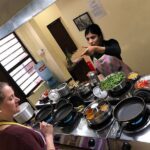
The cooking class is the first real highlight. You will learn how to cook a traditional Nepali dish, either Dal bhat or momo. Those are staples for a reason: they are everyday comfort food, not “tourist only” dishes.
What you are likely to enjoy most is the format. It is not just watching someone else cook. The program is designed for hands-on involvement with women in the project, so you learn by doing, and you get to ask questions in the moment.
In practical terms, this is also a great Kathmandu choice if you are tired of bargaining and hustling for every small purchase. In this setting, your attention goes to technique, ingredients, and the rhythm of a shared meal.
Possible drawback? If you are expecting a quiet, museum-style workshop, this is more lively and social. Cooking is work, and Nepali hospitality tends to come with conversation.
Lunch together, where the day’s tone shifts from skills to connection
After the cooking class, lunch comes right away (1:00 to 2:00 pm). This is more than a meal stop. It is the moment where you sit down, slow down a bit, and share food with the same women who taught you earlier.
That shared lunch is valuable because it turns the day from a “class” into a relationship. You get to see how the women talk about everyday life and food, and you get to eat the dish you helped make.
If you have ever done a cooking class where you leave immediately after tasting, this will feel different. The program keeps you at the table long enough to make the interaction real.
Bead jewelry workshop from 2 to 4 pm, and why making something matters

At 2:00 pm, you shift into the jewelry-making workshop using colorful beads. The women guide you through the process, and the best part is that you make your own jewelry, either for yourself or as a souvenir.
This is the second major “hands-on” block of the day, and it is a smart complement to cooking. Cooking teaches you about food culture. Beadwork teaches you about craft and personal style. And since you can take the result home, it gives you a tangible memory that is not just a photo file.
A useful consideration: beadwork can require fine motor concentration. If your hands get tired easily, pace yourself and do not rush the details. The point here is participation, not speed.


Walking to the main center, and how that short transfer sets the pace

Around 4:00 to 4:30 pm, you walk together to the Human Welfare Committee main center. The start is at We handicraft Paknajol, and the main center is at Manjushree Galli.
That half-hour walk is small, but it affects the feel of the day. You are moving from the women’s program space to the children’s area, so it works like a switch from craft and cooking to energy and play.
Bring water, and wear comfortable shoes. Kathmandu streets can be uneven, and you want to stay focused on people, not foot pain.
Children after school, games to dancing, and the heart of the day

After the walk, the schedule brings in the children for the main activities. The plan lists 5:00 to 7:00 pm for games and connection, plus painting as an option, and the broader overview also includes sports, walks, dancing, and singing.
This section is where the “empowerment and development” part stops being a slogan and becomes real time. You get to connect through play, not lectures. Kids respond best to movement and attention, and the program builds in exactly that.
One thing to keep in mind: kids have their own timing. Even when a schedule exists, expect spontaneity. The best approach is to join in with a relaxed attitude and follow the lead of the staff and the children themselves.
Dinner and farewell, how the day closes without rushing you out

Dinner happens from 7:00 to 8:00 pm with the children. Sharing a meal at the end changes how the day lands. It is a final moment of connection, rather than an abrupt “thanks, bye.”
Then the program ends with a farewell at 8:00 pm.
This ending matters for two reasons. First, it signals respect, not extraction. Second, it gives you a chance to mentally process what you experienced before heading back into Kathmandu’s normal pace.
Some days may also include visits connected to local culture. One past participant mentioned a Buddhist temple visit as part of their day, so if that fits the day’s flow, you might see something like that too. The key point is that it is still part of the community schedule, not a separate tourist stop.
Price and value, what $120.13 buys you in Kathmandu

The price is $120.13 per person, and the experience includes an admission ticket. It is also described as being booked about 79 days in advance on average, which tells you this is a popular slot for people who want something more meaningful than a standard tour.
So what makes the value feel real?
- Time and structure: about 9 hours, with multiple hands-on segments.
- Local leadership: women lead the cooking and jewelry-making workshop.
- Food and shared moments: lunch and dinner are built into the day.
- Direct interaction: you spend focused time with children after school.
- Private group: your group participates without mixing into a large crowd.
Could the same money buy you a full day of sightseeing and a fancy restaurant bill? Sure. But if your goal is to experience how Kathmandu communities work day to day, this day is built for that, and you should feel that difference.
If your travel style is only about must-see monuments and long viewpoints, this might feel too small scale. If your travel style is about people and participation, it is a strong use of your time.
Who should book this women and children empowerment day
This is a good fit if you:
- want a day that supports a local nonprofit organization
- like hands-on activities, cooking and crafts especially
- prefer meaningful interaction over distant observation
- are comfortable with an active afternoon
- want a private, focused group experience
Most people can participate, and it is near public transportation, which helps if you are pairing it with other Kathmandu plans.
If you are someone who needs everything perfectly quiet and predictable, remember this is a community program. It will feel alive.
Practical tips so your day goes smoothly
A few simple things can make the experience more comfortable:
- Wear comfortable shoes for the 30-minute walk and active play time.
- Bring a small amount of cash only if you like buying small items or paying for personal extras, since the program itself is ticketed.
- Expect conversation and guidance. Even if your Nepali is limited, smiles and curiosity go far.
- If you are taking photos, ask first and follow the lead of the people running the program.
Should you book this Human Welfare Committee day in Kathmandu?
If you want a Kathmandu day that is about real routines, hands-on learning, and time with children after school, I think this is a strong booking. The reason is simple: the day is structured around doing, not watching, and it is guided by women and staff connected to the Human Welfare Committee.
Skip it if you only want major sights, if you get stressed by energetic kids, or if you cannot do a full 8 to 10 hour commitment.
If you fall somewhere in the middle, this is still worth serious consideration. It is one of those rare experiences where the value is not just what you learn, it is how you show up.
FAQ
Where does this experience start and end?
It starts at We handicraft Paknajol, Kathmandu 44600, Nepal. The program ends at Human Welfare Committee, Manjushree Galli, Kathmandu 44600, Nepal.
What time does the day program run?
The schedule is roughly 11:00 am to 8:00 pm. The full activity lasts about 8 to 10 hours.
What dishes do you learn to cook?
The cooking class focuses on a traditional Nepali dish, either Dal bhat or momo.
Is there lunch during the program?
Yes. Lunch is scheduled from 1:00 pm to 2:00 pm.
What happens in the jewelry-making workshop?
From 2:00 pm to 4:00 pm, you join a jewelry-making workshop with colorful beads and make your own jewelry for yourself or as a souvenir.
Do you spend time with the children, and when?
Yes. The children’s activities are scheduled from 5:00 pm to 7:00 pm, and dinner with the children is scheduled from 7:00 pm to 8:00 pm.
Is this a private experience?
Yes. It is a private tour/activity, so only your group will participate.
Do I receive a ticket on my phone?
The experience uses a mobile ticket.
What is the cancellation policy?
You can cancel for a full refund up to 24 hours in advance of the experience start time. If you cancel less than 24 hours before, the amount you paid is not refunded.
More 1-Day Tours in Kathmandu
More Tour Reviews in Kathmandu
Not for you? Here's more nearby things to do in Kathmandu we have reviewed


1-Day Tours, compared.
 ★ 4.97 UNESCO Sites Tour in 1 Day (Private Tour)From $4204 reviews
 ★ 5.0Day Trip to Bhaktapur and Panauti from KathmanduFrom $34184 reviews
 ★ 5.0The Most Beautiful 1 Day Experience in Kathmandu NepalFrom $8084 reviews
 ★ 4.0Nagarkot Sunrise & Bhaktapur Heritage Tour -Private Full Day TripFrom $6042 reviews
 ★ 5.01 Day Kathmandu Valley Sightseeing TourFrom $3537 reviews
 ★ 4.5Chandragiri Hill Day Trip from KathmanduFrom $6525 reviews
 ★ 5.0Amazing 1 Day Trekking Experience in Kathmandu NepalFrom $13024 reviews
 ★ 4.0Himalayan White Water Rafting Day Trip from KathmanduFrom $5222 reviews
Browse the lists this tour appears in