

REVIEW · BHAKTAPUR DAY TOURS FROM KATHMANDU
Patan and Bhaktapur Boutique Tour
Two UNESCO squares in one smooth, guided day. This Patan and Bhaktapur boutique tour is interesting because you get Newar architecture explained stop by stop, from the painted Patan Dhoka gate to the serene Golden Temple, and you also see how Bhaktapur’s craft and temple power still shapes daily life. The main drawback to plan for is that some key sites (including Durbar Square areas) have entrance fees not included, so you’ll want cash and a flexible mindset.
I like that it’s built for a small group, up to 10 people, with an air-conditioned vehicle and WiFi on board. You’ll start around 8:30 am from the Kathmandu Guest House area, and the day feels structured but not rushed, with time to walk the old lanes and stop for lunch and coffee (not included). If your guide is someone like Shreya Karki or Santosh, you’re likely in good hands, since past guests singled out their culture and history storytelling.
Key highlights you should care about

- Small group size (up to 10): more time to ask questions, less time stuck behind crowds.
- Patan Dhoka gate details: Asta Matrika (eight mother goddesses) paintings set the tone fast.
- Nag Baha Galli (serpent courtyard): you’ll hear how worship and community events connect here, including Samyak Mahadan.
- Golden Temple (Hiranya Varna Mahavihar): a quiet three-story pagoda with a gilded roof and Buddhist dedication.
- Bhaktapur Durbar Square focus: 55-Window Palace, Golden Gate, and the big temple landmarks you actually came to see.
- Cash-ready entrance fees: Durbar Square and a couple of museum or temple stops require extra payment on the ground.
Patan and Bhaktapur in one day, starting from Thamel

This is the kind of day trip that works when you want “big sights” without a chaotic free-for-all. You leave Kathmandu early, ride in an air-conditioned vehicle (a win in Nepal’s heat), and then spend the middle of the day walking temple squares, courtyards, and old streets.
The best part is that Patan and Bhaktapur are both UNESCO World Heritage sites, but they don’t feel like copies of each other. Patan often hits you with the artistic precision of Newar carving and Buddhist and Hindu landmarks threaded together. Bhaktapur feels more like a working museum, where the streets and craft lanes still function as places where people make things and worship.
You’re also not alone in the logistics. You get a guide and onboard WiFi, plus a mobile ticket. That means less rummaging around for paper and more time focusing on details that matter once you’re there, like why certain courtyards are dedicated to specific deities or why water spouts are treated like monuments.
You can also read our reviews of more tours and experiences in Kathmandu.


Value and pricing: what $40 really buys you
At $40 per person, the value comes from how you package transport plus guidance. The tour includes an air-conditioned vehicle, WiFi on board, and a guide for about 9 hours 30 minutes total. That matters because Patan and Bhaktapur are not just “look and leave” places. You’ll be moving across city zones, and you’ll want someone to connect what you see to the traditions behind it.
You should still treat entrance fees as the one likely extra cost. Durbar Square access is listed as NRP 1000 in cash at the entrance (about US$9), and there’s a recommendation to give a minimum of NRP 100 as a donation to the Royal Kumari. On top of that, Golden Temple (in Patan) and Patan Museum have admissions not included.
So the smart way to think about the price is this: you’re paying for the ride, the guidance, and the time. Then you pay for entry to the places where the locals expect a ticket or donation. If you show up with some cash and a calm plan, the $40 feels fair.
The logistics that make or break a Kathmandu day trip
This tour runs from 8:30 am. Your meeting point is in the Kathmandu Guest House area, near Filli chai. The activity ends back at the meeting point, which is handy when you’re trying to keep your day organized.
Two other practical notes:
- Small group (max 10): you’ll likely be able to adjust your pace with the group and hear explanations without playing phone-tag.
- Moderate walking: you should have a moderate physical fitness level. The streets can be uneven and you’ll spend a chunk of the day moving between courtyards and squares.
Also, there’s an age limit: minimum age is 9. The tour notes that children under 9 cannot be brought due to insurance rules, since they cannot sit on your lap. If you’re traveling with kids, plan carefully around that.
Stop-by-stop Patan highlights: Dhoka, courtyards, Golden Temple

Patan Dhoka (Patan Gate)
You start at Patan Dhoka, the historic gate marking the entrance to old Patan. This is not just a “photo moment.” The gate is decorated with paintings of the Asta Matrika, the eight mother goddesses. It gives you a quick framework for how religious symbolism and city identity blend in this area.
It’s also a good opening because the gate is already storytelling. Once you see the theme, the rest of the day reads more clearly. You start noticing patterns in architecture and sculpture rather than just collecting landmarks.


Pimbahal
Next comes Pimbahal, where you get a sense of everyday life as it used to be. The focus here is practical, like how ancient visitors, pilgrims, and traders cooked their food, fetched water, and rested. You also learn the story of Gaya Baje, a Hindu priest.
I like this stop because it shifts your mind from monuments to routine. It reminds you that these sacred places were part of normal human movement, not only backdrops for special occasions.
Nag Baha Galli
Then you reach Nag Baha Galli, a special courtyard dedicated to serpents. The big reason it matters is that you’ll hear about Samyak Mahadan, a celebration of giving that happens every five years.
Even if you’re not visiting during the festival, the site makes sense of why certain courtyards exist. Serpent worship and giving rituals aren’t random here. They connect community, generosity, and local religious traditions in a place designed for gathering.
Golden Temple (Hiranya Varna Mahavihar)
The day’s spiritual centerpiece in Patan is the Golden Temple, a three-story pagoda with a gilded roof and intricate carvings. It’s dedicated to Gautam Buddha, which creates an interesting blend of architectural style and devotional focus.
Plan for the Golden Temple admission because it’s not included. If you budget a little extra, this stop becomes one of the calmest parts of the day. You’re not just walking through busy street life, you’re stepping into a sanctuary where you can slow down.
Manga Hiti and Patan Museum: small details, big meaning

Manga: Water Stone Spout (Manga Hiti)
Manga Hiti, also known as Manga Dhara, is one of those stops that can surprise you in a good way. This historic stone water spout was built during the Lichhavi period and features carvings of gods and intricate designs.
It’s easy to overlook water infrastructure when you travel fast. But once someone points out that these spouts are built with craftsmanship and religious symbolism, you start seeing old cities as engineered with devotion. Water is life, and here it was treated like something worthy of art.
This stop is short, but it’s the kind of detail that makes the day feel textured instead of checklist-y.
Patan Museum
Patan Museum is housed in a restored Malla-era palace, and that matters because the building itself is an example of traditional Nepali architecture. The museum supports Nepal’s art, culture, and history through exhibits.
Admission is not included, so treat this as optional in your budget. If you’re even slightly curious about context, this is where the city’s symbols start to click. Without it, you’ll still enjoy the squares, but you might miss some of the “why” behind the design choices.
Patan Durbar Square (UNESCO World Heritage)
Patan Durbar Square is the major UNESCO stop in this side of the route. It’s filled with intricately carved temples, peaceful courtyards, and the layers of royal palace history of the Malla kings.
This stop also comes with the ticket reality: Durbar Square entrance has an NRP 1000 cash fee, and you’re recommended to add a small donation linked to the Royal Kumari. So go prepared, not frustrated.
If you want one practical strategy, it’s this: don’t try to see everything in perfect lines. Let your guide steer you toward the most meaningful carvings and architectural features, then circle back for photos. The square becomes more rewarding when you understand what you’re looking at.
Bhaktapur Durbar Square, Pottery Square, and Taumadhi Temple

Bhaktapur is where the tour shifts gears. Patan is great for carving and palace-court atmosphere. Bhaktapur brings you the sense of everyday continuity: craft lanes, temple landmarks, and public spaces that people still use.
Bhaktapur Durbar Square (UNESCO World Heritage)
At Bhaktapur Durbar Square, you’ll see classic power-and-ritual landmarks tied to Newar architecture. The overview mentions the 55-Window Palace, the Nyatapola Temple area, and the Golden Gate. This is also the second UNESCO World Heritage focus of the day.
If you only have the energy for one “big square” later in the day, make it this one. It’s the most concentrated area for iconic architecture, and your guide can connect the symbolism behind what you’re looking at.
Pottery Square
Then you move into Pottery Square, known for traditional pottery making. This is where you’ll see artisans working and selling handmade clay pottery.
I love this kind of stop because it keeps the tour from feeling too temple-heavy. You get a living craft economy, not just preserved stone. Even if you don’t buy anything, watching how pieces take shape gives you a different kind of appreciation for why these cities are so culturally distinct.
Taumadhi Square and Nyatapola Temple
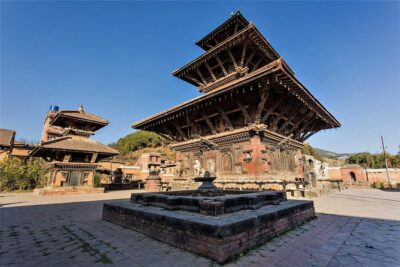
Taumadhi Square is known for the five-story Nyatapola Temple, dedicated to the goddess Siddhi Lakshmi. It’s described as one of the tallest and most beautiful temples in Nepal, with stunning carvings.
This is a place where height and detail work together. Even if you’re not a “temple person,” you’ll probably find yourself looking up and then back down at the workmanship. Again, plan for admissions not included at some stops, and let your guide guide your timing so you don’t feel stuck outside waiting.
Dattatraya Temple and the Patan back-lane wander

Dattatraya Temple (Peacock Window)
Dattatraya Temple is in Dattatraya Square, dedicated to a Hindu god who embodies the unity of Brahma, Vishnu, and Shiva. The square is famous for the Peacock Window.
This stop is a good reminder that the day is about both Hindu and Buddhist cultural spaces. The artwork and the symbolism are what you’re really after here. The peacock motif is the kind of detail that makes a guide’s explanation worth listening to because it ties a decorative element to meaning.
Patan’s narrow lanes and open spaces
You’ll also get time to go through narrow, connected pathways and wide open spaces in Patan, with chances to spot an ancient palace, stupas, and peaceful temples. There’s also a note that you may get a chance to taste local treats like tea.
This “wandering” portion is valuable because it shows you what Patan and Bhaktapur feel like beyond the headline sights. It’s also where you get your best street photos, since the light and angles change fast in these old neighborhoods.
What to bring and how to handle entrance fees

Bring comfortable walking shoes. This tour is paced for moderate physical fitness, and the old-city surfaces can be uneven.
For money, the big thing is cash for entrance fees. Durbar Square entrance is listed as NRP 1000 in cash, and you’re recommended to donate a minimum of NRP 100 to the Royal Kumari. Golden Temple and Patan Museum have admissions not included, so it helps to have extra small notes.
Also plan on lunch and coffee being part of the schedule, but they’re not included in the tour price. That’s normal for a city day trip, but it does mean you should budget for food separately.
One more tip: if you’re carrying a small bag, keep essentials easy to reach. You’ll stop at multiple places, and it’s better to grab water and your cash than to dig through luggage at each checkpoint.
Who this tour is best for (and who should skip it)
This fits you best if you:
- want a guided walk through two major UNESCO old cities without DIY planning stress
- enjoy Newar art and architecture, especially carved temple details and palace-court layouts
- like a mix of temples, courtyards, and a craft stop like Pottery Square
You might want to skip it if you:
- hate paying on-site entrance fees, since you’ll likely pay cash at key stops
- need a fully seated experience, since walking is part of the day
If you’re traveling with family, note the minimum age of 9 and that younger kids can’t come because they can’t sit on laps for insurance reasons. If you’re a solo traveler, you’ll likely appreciate the small-group format.
Should you book Patan and Bhaktapur Boutique Tour?
If you want a single day that covers major architecture without turning into a sprint, I’d book it. The $40 price makes sense when you factor in transport plus a guide, and the stops are well chosen for both big monuments and specific culture details, like the Asta Matrika paintings, the serpent courtyard focus, and the water spout craft.
But go in prepared: bring cash for Durbar Square and other sites, and accept that lunch and coffee are on your own dime. If you do that, this tour has the right rhythm, and it’s the kind of day where you end with more context than you started with.
FAQ
What time does the tour start?
The tour starts at 8:30 am.
How long is the tour?
It runs about 9 hours 30 minutes (approx.), including transportation and time for lunch and a coffee stop.
What is included in the $40 price?
The tour includes an air-conditioned vehicle, WiFi on board, and a guide.
Are entrance fees included?
No. Entrance to Durbar Square has a cash fee (NRP 1000 about US$9). Some sites also have admissions not included, including the Golden Temple in Patan and Patan Museum.
Is lunch included?
No. Lunch is not included.
How big is the group?
The tour has a maximum of 10 travelers.
Is it suitable for children?
Minimum age is 9. Children under 9 cannot be brought due to insurance reasons.
Is there a cancellation option?
Yes, free cancellation is available up to 24 hours in advance for a full refund.
More Tours in Kathmandu
More Tour Reviews in Kathmandu

Not for you? Here's more nearby things to do in Kathmandu we have reviewed


Bhaktapur Day Tours from Kathmandu, compared.
 ★ 5.0Private Bhaktapur and Nagarkot Day Tour From KathmanduFrom $20305 reviews
 ★ 5.0Day Trip to Bhaktapur and Panauti from KathmanduFrom $34184 reviews
 ★ 5.0Bhaktapur & Patan Durbar Square Day ToursFrom $50122 reviews
 ★ 5.0Nagarkot Sunrise & Bhaktapur UNESCO Heritage Private TourFrom $5066 reviews
 ★ 4.7Private Patan and Bhaktapur Sightseeing TourFrom $4964 reviews
 ★ 4.9Bhaktapur & Nagarkot Day Tour with Lunch – Private/GroupFrom $562 reviews
 ★ 4.0Nagarkot Sunrise & Bhaktapur Heritage Tour -Private Full Day TripFrom $6042 reviews
 ★ 5.0Kathmandu and Bhaktapur Cities Guided TourFrom $7034 reviews
Browse the lists this tour appears in