REVIEW · KATHMANDU
Discover Ranjana Lipi the Traditional Newari Script
Ranjana Lipi class turns writing practice into real culture, not just watching. I love the hands-on feel of learning with a bamboo pen and ink, and you also get a full Newari food moment built into the same 3-hour session.
This is also a smart value deal for $42, because you leave with your own Ranjana script framed as a memento, not a souvenir made elsewhere. One thing to consider: instruction may rely more on demonstrations than English, so go with patience and focus on the shapes and strokes.
What makes this workshop work so well

- Bamboo pen, ink, and canvas paper: you practice the real tools used for the script
- Step-by-step Ranjana Lipi strokes: teachers guide letter rules so you can standardize what you’re writing
- Sagun welcome snacks plus a traditional drink: you get a Newari start before the writing begins
- Samay Baji built into breaks: the meal is part of the flow, not an afterthought
- Small group limit (max 15): more time with the instructor and less waiting around
- Your framed script to take home: a lasting reminder that you made it, not just attended
Entering Kirtipur, with writing tools and hunger ready
The experience is based in Kathmandu Valley, with the meeting point at Jatra Restaurant on Chithu Rd in Kirtipur. The session runs about 3 hours, with two options: morning from 8 am to 11 am, or evening from 5 pm to 8 pm. You end back at the same meeting point, so you are not wandering city blocks while your ink dries and your stomach negotiates.
Kirtipur is a nice choice for this kind of workshop because you are not juggling big sightseeing plans in the same time window. Instead, your brain gets to focus on one goal, learning a script, then rewarding yourself with a Newari meal. It is simple, direct travel: arrive, learn, eat, and leave with something tangible.
Also, since the meeting point is near public transportation, it is easier to plan without needing a private car. And with a maximum of 15 people, it has a small-class feel that helps when you need quick corrections on your strokes.
You can also read our reviews of more tours and experiences in Kathmandu.


Price and value: $42 is what you pay for, and what you keep

The price is $42 per person for the full 3-hour experience. On paper, that sounds like a learning activity, but the value comes from how much is included.
Here is what the ticket covers:
- Newari Samay Baji platter for lunch (or you can think of it as a full meal component depending on the session timing)
- A drink with the meal, offered as alcoholic or non-alcoholic
- Sagun welcome snacks plus a drink when you arrive, again with alcoholic or non-alcoholic options
- Materials: bamboo pens, ink, and papers
- Instruction by a Ranjana Lipi specialist
- Your framed Ranjana script memento
That last part matters more than people expect. Lots of cultural workshops give you a certificate or a photo. Here, you leave with framed writing that you practiced. That turns the session from a one-off activity into something you can actually display or gift.
What is not included is also important for budgeting: coffee and tea, plus personal expenses and tips, and private transportation. If you want coffee afterward, plan for it. If you are traveling with friends and sharing a vehicle, factor that in.
The start at Jatra Restaurant: Sagun snacks and the calm before the strokes
Before you touch ink, you start with a welcome. The session begins at Jatra Restaurant, where you are greeted with Sagun, a traditional Newari snack set, along with a drink choice (alcoholic or non-alcoholic).
This is a small but smart setup. Starting with something traditional helps your body settle into the experience. You are not just being served food, you are being introduced to the rhythm of Newari hospitality.
Then comes a traditional drink served in an earthen cup. That detail might sound minor, but it changes the mood. Earthenware feels grounded and old-school, and it is a nice counterpoint to the modern habit of gulping something quickly and moving on.
If you have never done a script workshop before, this is a good time to slow down. Let your eyes adjust to how people hold the pen, how they position the paper, and how they pause between strokes.
Learning Ranjana Lipi: bamboo pen technique and letter rules

The core of the workshop is the Ranjana Lipi (Newari script) practice. Local experts teach you how to write the script using a customary bamboo pen and ink on canvas paper. You will be practicing letter strokes, not just tracing for a few minutes.
What I appreciate about this format is that you get feedback where it counts. One written account notes that instructors helped standardize letter knowledge and rules, which is exactly what you want. Scripts fail when you learn random-looking shapes. You need guidance so your letters stay consistent.
You also get taught the practical mechanics:
- how the pen moves,
- how curves and angles form,
- how to control the flow of ink so your writing stays legible.
Even if your language skills are limited, writing is visual. The workshop’s structure helps, because you learn by copying shapes and timing, not by memorizing long explanations.
One extra cultural layer can show up during the lesson. In at least one past session, a participant studying Buddhist philosophy noticed connections between the script and phrases like OM Mani Padme Hoon, which can appear in Buddhist contexts such as scriptures and thangka paintings. That kind of example gives your practice meaning beyond aesthetics.
A quick reality check for first-timers
Ranjana Lipi is not a “scribble and done” alphabet. You are training your hand to make unfamiliar forms. That is normal. Go in expecting that your first attempts might look awkward, and trust the teacher’s step-by-step guidance.


Break for Newari food: Samay Baji and a real taste of the culture

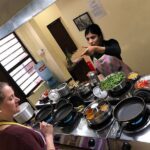
Between writing segments, you take breaks to eat. The most notable meal component is Samay Baji, served as part of the included platter. You are also provided welcome snacks earlier, so by the time you are deep into practice, you are fueled.
Why Samay Baji matters here is simple: it is not just a meal you eat nearby, it is built into the learning flow. Food and culture are paired, which helps the script feel like part of a living tradition.
Also, the workshop mentions that dishes are served during break time, including Samay Baji. That means you do not have to interrupt your session to hunt for lunch. Your energy stays stable, and you keep focus on the writing.
You will also be offered drinks with both the welcome snacks and the meal. Options include alcoholic or non-alcoholic, so you can choose what fits you best.
How to enjoy the meal without losing your place
If you are sensitive to spicy food, consider pacing yourself. Samay Baji is a Newari platter style, and those plates often come with a mix of flavors. Keep your water nearby, and do not rush. Coming back to the paper matters, and a calm break helps.
Your memento: framed Ranjana Lipi that proves you learned

At the end of the writing and feasting, you do not leave empty-handed. You take home your own Ranjana script framed as a special memento.
That framing makes the difference between a practice sheet you fold away and something you can display. It also gives you a real sense of closure. You spent time learning strokes, now you keep a finished example of your work.
This is also the kind of souvenir that makes follow-up easier. If you want to keep practicing later, you can compare what you wrote to your framed example. Even if you only practice a little, you will have a reference point.
Morning vs evening: how to choose the right time window

You have two start times:
- Morning session: 8 am to 11 am
- Evening session: 5 pm to 8 pm
Both are about 3 hours. The difference is mostly your energy and your schedule.
If you like mornings and want a fresh brain for fine-motor practice, go with 8 am. Writing requires steady attention, and the earlier time can feel less rushed.
If you prefer a later start and like the idea of ending your day with a meal and cultural activity, the 5 pm to 8 pm slot can be a great fit. Evening sessions can also work well if you are sightseeing earlier and want one focused cultural stop without a full-day commitment.
Who this workshop is best for

This is ideal if you:
- want hands-on culture, not a passive museum stop
- like combining learning with eating
- enjoy small group activities with practical instruction
- are interested in Newari culture and traditional script arts
It is also a good choice for couples or friends, because you can share the same writing challenge and compare your results afterward.
If you do not know much about Ranjana Lipi in advance, you should still feel comfortable. The format is structured, and teachers guide you through strokes. One written account specifically described the experience as a fascinating introduction, particularly for people who arrive without prior knowledge.
If you need highly verbal, detailed English instruction, take note of the one consideration mentioned earlier. Some instructors may not speak English much, but the work is still learnable through demonstrations and careful pen guidance.
Practical tips to make your 3 hours go smoothly
A few things will help you get the most from the session.
First, wear clothes that let you move comfortably. You will be focused on your writing position and hand control, and you do not want to spend the session fidgeting with tight cuffs or slippery sleeves.
Second, go in with a patient mindset. Scripts take time. Expect a learning curve in your handwriting, not perfection on the first letter.
Third, plan for the included food schedule. You do not need to find lunch or dinner in the middle. You do want to be hungry, or at least ready to eat when the break comes.
Fourth, remember what is not included. If you love tea or coffee, bring a plan to get it before or after, since coffee and/or tea is not included.
Finally, this experience requires good weather. If weather turns, your session may be canceled and rescheduled or refunded. So check conditions around your start time.
Should you book Discover Ranjana Lipi in Kathmandu?
I think you should book it if you want a short, high-quality cultural experience with real participation. The best part is the combination: you learn a traditional script with the real writing setup, and you eat Newari food during the session. The framed memento is the kind of takeaway that makes the effort feel worth it.
You might skip it if you need lots of English-heavy instruction and struggle with hands-on learning. You could still enjoy the visuals, but the script workshop relies more on demonstrations than long language explanations.
For most people looking for authentic Kathmandu Valley culture without a full day commitment, this is a smart pick, and the $42 price feels fair because it includes materials, instruction, multiple snack and drink moments, Samay Baji, and a finished framed piece you can keep.