

REVIEW · KATHMANDU UNESCO HERITAGE TOURS
Kathmandu: Guided -Day Tour of World Heritage Sites
One day in Kathmandu Valley feels short, so I love a tight, well-planned route through the UNESCO sites, especially with a private car and an English-speaking guide. I like that the stops are spread across the valley in places that would take real effort to connect on your own, and the guides I’ve seen named like Ramesh and Sujan focus on meaning, not just photos. A possible drawback is that sightseeing entry fees are not included, so your total day cost can creep up once you add tickets and optional food and drinks.
This tour is built for first-time visitors who want the big cultural hits without spending hours figuring out directions, timing, and local etiquette. You also get hotel transfers, with common pickup points like Hotel Nepalaya in Kathmandu and the Thamel area, so the day starts smoothly. If you hate long drives or you prefer totally free time, you might want to consider doing fewer sites on a slower schedule.
Key things that make this tour worth it

- UNESCO sites in one day across Kathmandu Valley, organized by a guide so you do not miss the point
- Hotel pickup and drop-off plus a private car, useful in a sprawling city
- Pashupatinath Temple on the Bagmati River, including a pagoda-style, two-storied design
- Boudhanath Stupa scale you can actually appreciate up close (around 100 m across and 40 m high)
- Swayambhunath hilltop views and the story of the valley before it was a valley
- Patan Durbar Square with temples, palaces, and carved stone and wood details
Why Kathmandu Valley UNESCO sites make sense in a single day

Kathmandu Valley is small on a map, but in real life it sprawls. Temples, stupas, and monasteries sit across different districts, and without a guide you can burn time just getting your bearings. A guided day tour is a practical way to see the highlights while you are still learning the city.
What makes this route especially useful is the mix of Hindu and Buddhist heritage. You are not just ticking boxes. You are moving between places that show how Nepal’s religious life shapes daily rhythms, architecture, and sacred spaces. For me, that is where value lives: the tour saves you stress and replaces it with context.
You can also read our reviews of more tours and experiences in Nepal.

Hotel transfers and private driving: the real comfort value
This is a private car day, not a bus shuffle. That matters in Kathmandu because traffic can turn a simple hop into a long wait. With hotel pickup and drop-off, you also avoid the common problem of standing around early in the morning trying to find a meeting point.
Pickup options are straightforward: you can be picked up from Hotel Nepalaya in Kathmandu or from Thamel, plus there are options listed within Kathmandu. The driver meets you at your hotel at the tour start time, and you keep your day moving without the extra friction of public transport.
You also get an English-speaking guide (with languages listed as English, Hindi, and Nepali). In practical terms, that helps when you want more than a quick explanation at each stop, and it also helps if you want to ask your own questions while you walk.
Pashupatinath Temple on the Bagmati River: pagoda style and power

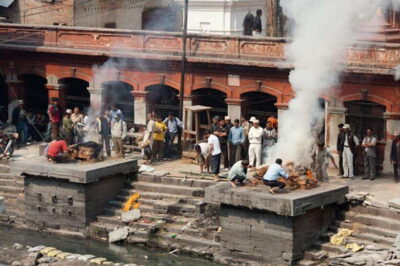
Pashupatinath Temple is one of the most important Hindu temples in Nepal, built along the Bagmati River. The complex was inscribed as a UNESCO World Heritage Site in 1979, and it is still a working sacred place, not a museum set.
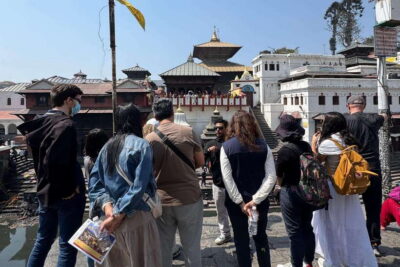
The defining architectural detail here is the two-storied temple built in pagoda style. If you like architecture, this is the spot where the craftsmanship becomes obvious because the structure stands out and is meant to be seen in context with the river setting.
This stop includes a photo stop, guided visit, and walking time, plus scenic drive time. One of the strongest takeaways from actual visits is that timing can allow you to see a cremation ceremony. If that is something you want to understand respectfully, it is worth keeping your expectations realistic: you are observing a real ritual in progress, not a staged performance.
Practical note: you will be walking, and this is a place where you should plan for standing, looking, and moving slowly. Comfortable shoes matter more than you think.
Boudhanath Stupa: why its size becomes unforgettable
Boudhanath is often described as one of the largest stupas, and the numbers help you understand what you are looking at. The stupa is about 100 m in diameter and around 40 m high, and it dominates the skyline in the area.
This is a UNESCO World Heritage Site, and it is considered holy for both Hindus and Buddhists from around the world. That blend is part of the appeal. You are not locked into one religious lens as you explore the structure and its surrounding sacred space.
The tour includes a guided visit and time for photos. What I like about this stop on a one-day route is how your viewpoint changes as you approach. Even if you have seen photos online, seeing the scale in person is the kind of reminder that makes travel feel real.
If you are the kind of traveler who enjoys calm observation, this is a great balance after more activity-heavy stops.
Swayambhunath Monkey Temple: hilltop history and panoramic payoff
Swayambhunath is located on a hillock in the northwest part of Kathmandu Valley, which is why it is often called the Monkey Temple. The location matters because it gives you a different feeling than the river and street-level sacred spaces.
One of the most interesting parts of this stop is the origin story: it is believed the stupa was built when the Kathmandu Valley was still a lake over 2,000 years ago. That kind of timeline gives your day a deeper layer. You start thinking about the valley as something ancient and evolving, not just a modern city with landmarks.
You also get panoramic views from Swayambhunath, which is perfect for first-time visitors. After you spend the day among detailed temples and large stupas, a viewpoint helps you connect the dots and understand where the sites sit in relation to each other.
As a practical point, plan for stairs and uneven walking typical of temple hilltops, even if the exact route is not listed. Again, comfortable shoes are your best friend here.

Patan Durbar Square in Lalitpur: carving, palaces, and a slower gaze

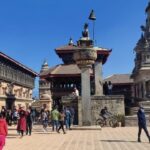
Patan is the oldest of the three cities in Kathmandu Valley, and it is also known as Lalitpur. Patan Durbar Square is packed with ancient temples, palaces, and monuments, and the standout feature is the wonderful carving of wood and stone.
This stop helps balance the day. Pashupatinath and Boudhanath can feel like big spiritual anchors, while Patan gives you time to focus on details. If you like to look closely, you will enjoy how the craftsmanship rewards a slower pace.
The tour experience here is guided, with you getting a clearer sense of what you are seeing and why it matters. It also helps you break the day into sections, instead of rushing from one enormous landmark to the next.
The only consideration is pacing. In a one-day schedule, you might not get as much quiet time at Patan as you would like if you are very detail-oriented. If you have a short attention span or you dislike stairs and uneven ground, you may want to move through faster and save the deep looking for another visit.
Price and logistics: what $37 gets you, and what to budget for
The price is listed at $37 per person for a one-day tour. On paper, that is not a huge number. In value terms, it is helped by what is included: hotel pickup and drop-off, a private car, and an English-speaking guide, plus government tax and service charge.
What is not included is food and drinks, sightseeing entry fees, and personal expenses. That is the main place where your final total can change. If you plan to eat between sites, budget for lunch and water, and if entry fees apply at specific places you visit, expect to pay those separately.
My practical take: for first-time visitors, the guide and the private transport can be worth a lot because they reduce wasted time. But if you already have a driver, you are on a tight budget, or you only want one or two of the sites, you might compare costs with other options.
What to bring (and what to skip) for a smooth UNESCO day
You do not need much, but the basics really help. Bring a passport and either a passport or ID card, plus comfortable shoes and water.
From the rules: drones are not allowed, and alcohol and drugs are not allowed. If you plan to take photos, you can do it during photo stops, but follow any on-site restrictions you encounter while you are there.
If you are a solo traveler, this kind of organized day can feel safer and simpler because you are not figuring everything out alone. That is consistent with what many people say after a first day in a new country.
Who this tour suits best
This one-day UNESCO run is ideal if you:
- have limited time in Kathmandu Valley and want the main spiritual and historical anchors
- prefer a guide to explain what you are seeing, not just point it out
- want hotel pickup and private driving so you can focus on the sights
It may feel less ideal if you:
- want a slower pace with lots of free time at each stop
- hate walking during temple visits and hilltop sightseeing
- have to watch every cent and want zero add-ons for entry fees and meals
Should you book this Kathmandu Valley World Heritage day tour?
I would book it if your priority is a fast, organized introduction to Kathmandu Valley’s UNESCO sites. The combo of hotel transfers, private car time, and an English-speaking guide is exactly the kind of structure that helps your first day feel productive instead of chaotic.
One more confidence boost is the consistency of praise around smooth organization, punctual pickup, and safe driving. Names like Ramesh and Sujan show up in guide experiences, and drivers such as Tirtha are mentioned for professional, careful driving.
The only real reason to hesitate is if you dislike tours that pack multiple major sites into one day, or if you know entry fees will strain your budget. If that is you, consider a shorter route or save one site for a separate day.
FAQ
How long is the Kathmandu Valley World Heritage day tour?
It is listed as a 1-day tour.
What sites are included in the tour?
The tour includes visits to Pashupatinath Temple, Boudhanath Stupa, and Swayambhunath (Monkey Temple). Patan Durbar Square is also part of the World Heritage experience described for the route.
Are sightseeing entry fees included?
No. Sightseeing entry fees are not included in the tour price.
Is hotel pickup and drop-off included, and where are pickups offered?
Yes. Hotel pickup and drop-off are included. Pickup options listed include Hotel Nepalaya in Kathmandu and Thamel, with Kathmandu also listed as a pickup area option.
What should I bring for the tour?
Bring a passport and passport or ID card, comfortable shoes, and water.
What is not allowed during the tour?
Drones are not allowed, and alcohol and drugs are not allowed.
More Tours in Nepal
More Tour Reviews in Nepal
Not for you? Here's more nearby things to do in Nepal we have reviewed
Kathmandu UNESCO Heritage Tours, compared.
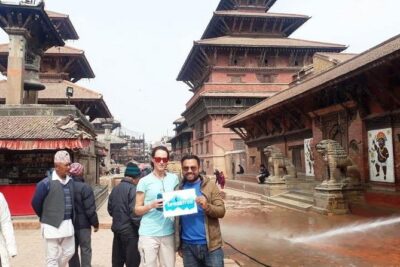 ★ 5.0Private Kathmandu Sightseeing Tour | UNESCO World Heritage sitesFrom $17756 reviews
 ★ 5.0Full Day 7 UNESCO Tour with Lunch – Private/GroupFrom $10415 reviews
 ★ 5.0Full Day Top 4 UNESCO Tour with Lunch – Private/GroupFrom $10269 reviews
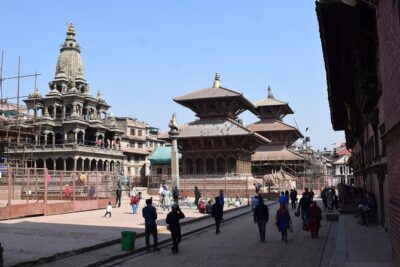 ★ 5.0UNESCO Seven World Heritage Tour in KathmanduFrom $180253 reviews
★ 4.9Full-Day 7 UNESCO Tour with Lunch – Private/GroupFrom $5247 reviews
★ 5.0UNESCO Seven World Heritage Tour in KathmanduFrom $180253 reviews
★ 4.9Full-Day 7 UNESCO Tour with Lunch – Private/GroupFrom $5247 reviews
 ★ 4.97 UNESCO Sites Tour in 1 Day (Private Tour)From $4204 reviews
 ★ 4.9Top 4 UNESCO Tour with Lunch – Private/GroupFrom $5181 reviews
 ★ 5.0Kathmandu Private Sightseeing Tour | UNESCO World Heritage SitesFrom $35109 reviews
Browse the lists this tour appears in